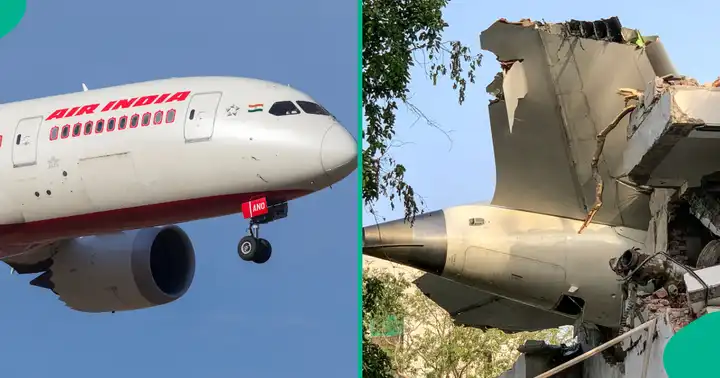
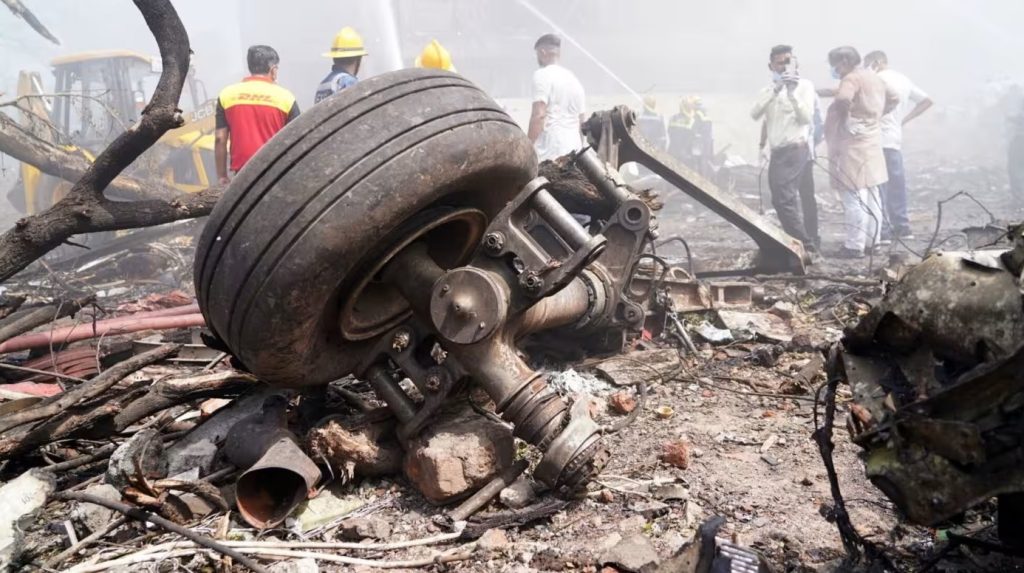
In a year already weighed down by tragedy, India was once again plunged into grief on June 12, 2025, when Air India Flight AI171 crashed minutes after taking off from Ahmedabad airport. Bound for London Gatwick, the Boeing 787 Dreamliner never made it past the city limits. Instead, it fell into the grounds of a prominent medical college, igniting a firestorm that took at least 270 lives, including passengers, crew, and civilians.
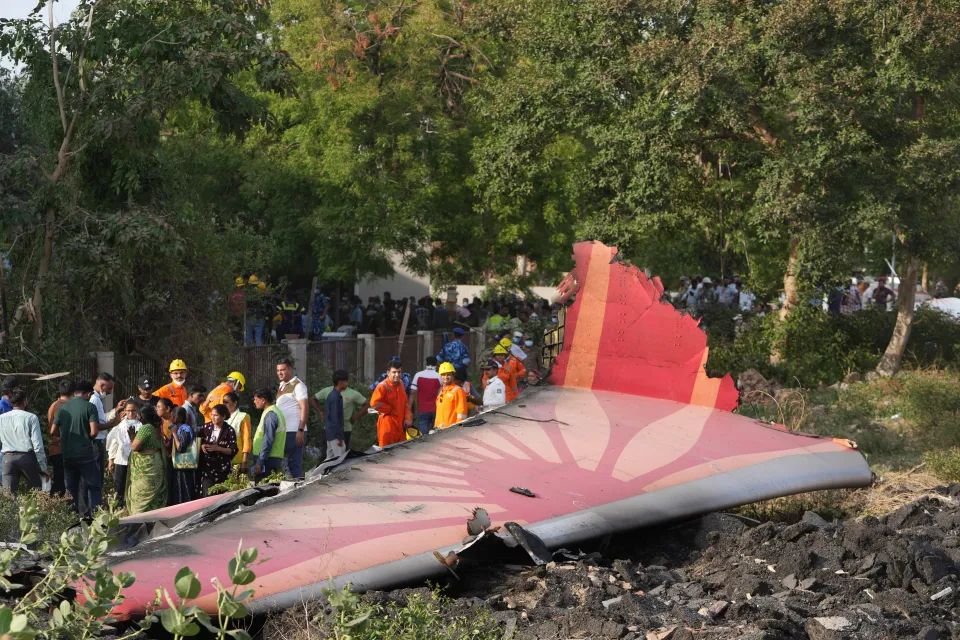
This was not just an aviation disaster; it was a moment that seared itself into the consciousness of an entire country. Families, doctors, students, and children became victims of a catastrophe that unfolded in seconds but will be felt for years.
The aircraft, carrying 242 people, lost contact shortly after departure and descended rapidly, crashing just over two kilometres from the runway. The only passenger to survive, a 40-year-old British national named Vishwashkumar Ramesh, recounted in an interview with Indian state broadcaster DD News how he found the strength to crawl out of the wreckage. Seated in 11A, he said, “I managed to unbuckle myself, used my leg to push through an opening in the fuselage, and crawled out.” Ramesh’s survival has been described as nothing short of miraculous. Yet his relief is heavy with loss—his brother, who had travelled with him to India, was among the victims.
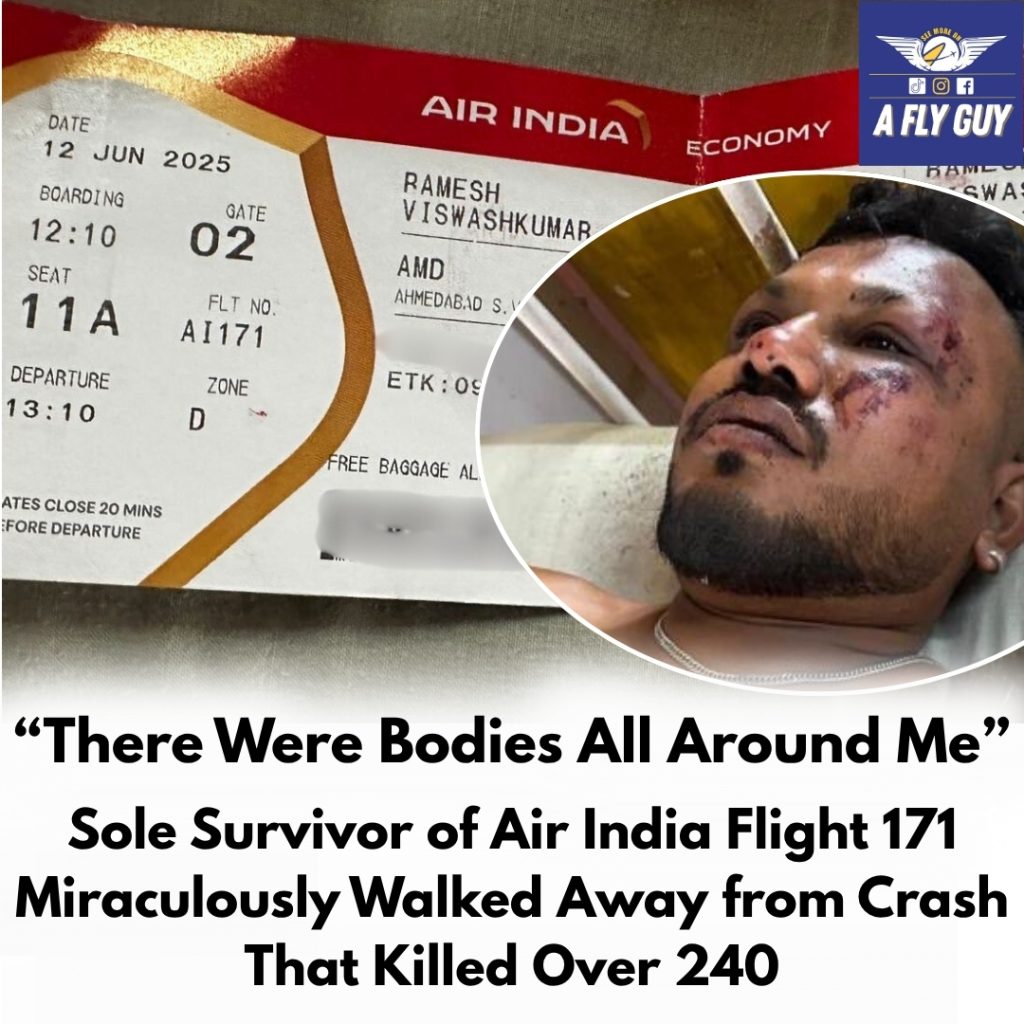
Among those killed on the ground were medical students and staff members at B.J. Medical College, gathered for lunch in the hostel dining hall when the plane tore through the building. What should have been a normal day of study and routine was reduced to devastation in an instant. For many, the fact that these lives were lost in the safety of their own campus makes the pain even harder to accept.
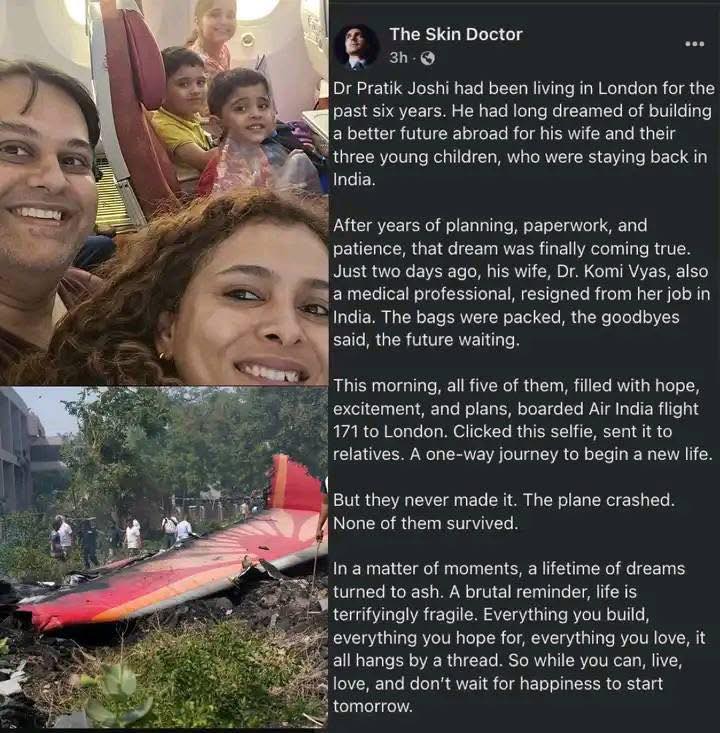
One particular photo has come to symbolise the deep personal losses suffered in this tragedy. Just moments before takeoff, a family of five from Rajasthan captured a cheerful selfie on board the aircraft. Dr. Komi Vyas, who had recently resigned from her post in Udaipur, was moving to London to reunite with her husband Prateek Joshi and begin a new chapter. The image, shared by their relatives and later widely circulated online, shows the couple and their three children smiling, unaware that this would be the last photo ever taken of them. Their sudden loss has moved many across India and beyond, with social media users calling it “one of the saddest photos ever taken.”
The emotional impact of the incident extended far beyond the crash site. Footage captured on phones and CCTV cameras showing the explosion and towering smoke spread across the internet within minutes, sparking waves of sorrow from India’s cities to its global diaspora. The human stories that followed — parents lost, children orphaned, dreams cut short — have been impossible to ignore.
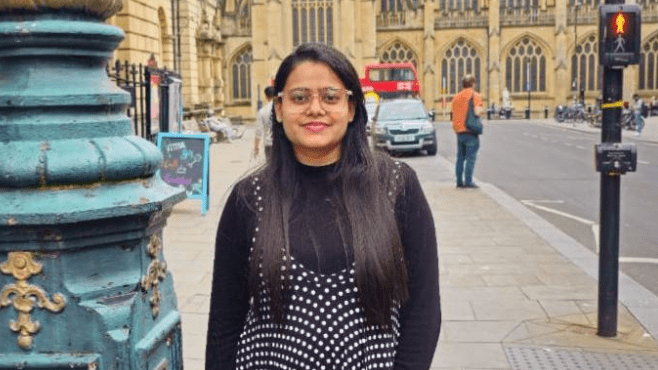
Bhoomi Chauhan, a business administration student based in Bristol, narrowly avoided becoming another name on the flight’s manifest. She missed the flight by just ten minutes due to heavy traffic en route to the airport. Angry and frustrated at the time, she later described being overwhelmed by guilt and shock after learning the fate of the aircraft she had meant to board. “That ten-minute delay changed everything,” she told local media.

As officials work to uncover the causes behind the crash, early evidence points to a possible technical failure. Investigators have noted that the aircraft’s emergency power system activated, a move typically triggered by serious engine or electrical issues. Both the cockpit voice recorder and the flight data recorder have been retrieved and are undergoing analysis with support from international aviation experts.
In response, Air India has scaled back its international operations, conducting safety checks across its wide-body fleet and putting over 80 flights on hold through mid-July. The incident has raised pressing questions not only about aircraft reliability but also about the infrastructure supporting India’s growing aviation sector.
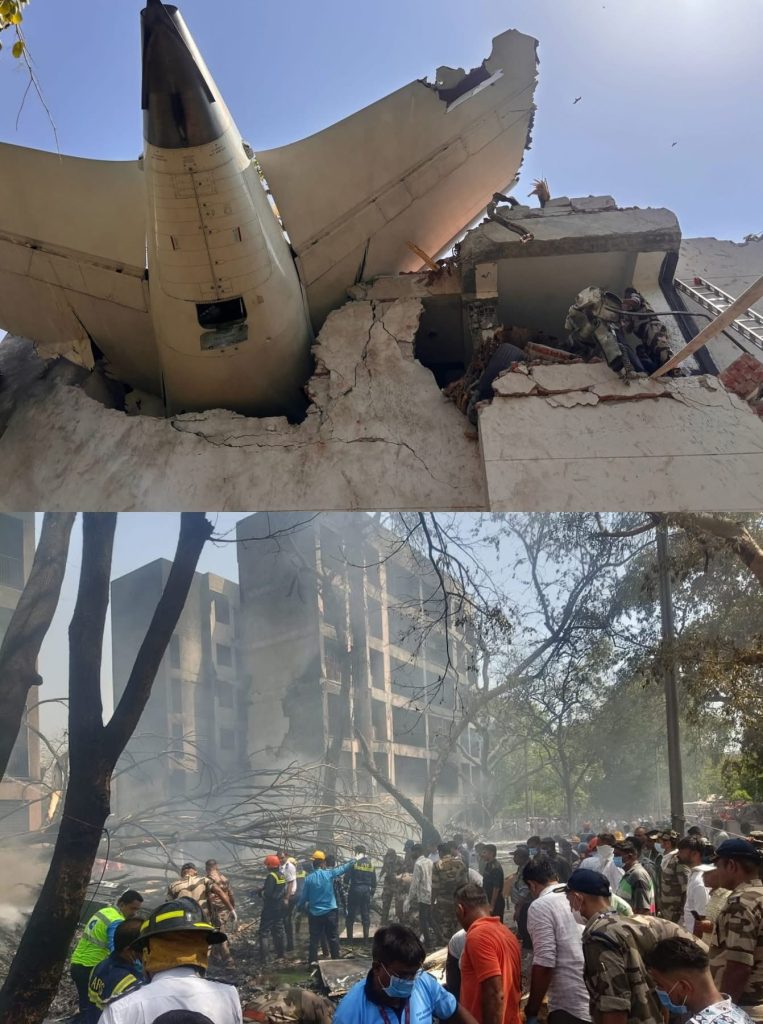
This is the first fatal accident involving a Boeing 787 since the aircraft entered service, and it lands at a particularly sensitive time for both the manufacturer and India’s flag carrier. As Air India undergoes a historic transformation under new ownership, this incident casts a shadow over its plans to modernise and expand.
But the crash of AI171 is more than a corporate or technical failure. It represents a national heartbreak during a year already marred by loss. From fatal stampedes during major public events to violent unrest and terror attacks, India has been reeling from one blow after another. In this context, the crash has come to symbolise something even deeper, a growing sense of vulnerability in an increasingly uncertain world.
The questions now extend beyond aviation. How can a country protect its people when tragedy strikes so often, and so randomly? What safety measures are truly in place for passengers, citizens, and even students in their own classrooms?
For now, the answers remain incomplete. But what is certain is this: every life lost on June 12 was part of a greater story, one of aspiration, resilience, and connection across borders. The nation mourns not just the passengers and the students, but the future they were supposed to help shape.
As India reflects on this devastating loss, the demand for accountability is growing louder. But so too is the need for compassion, solidarity, and a shared commitment to honour those who were taken too soon.