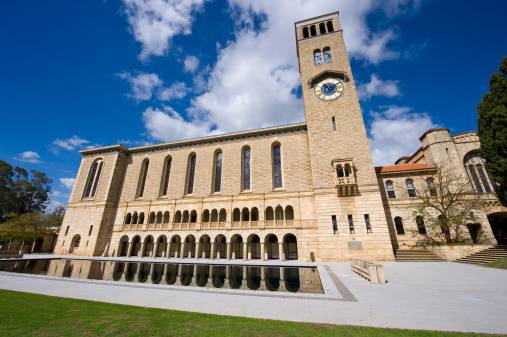
Mumbai/Chennai, India – In a landmark move under India’s National Education Policy 2020, The University of Western Australia (UWA) has received formal approval from the University Grants Commission (UGC) to establish two international branch campuses in India—making it the first Group of Eight (Go8) Australian university to achieve this distinction.
The new campuses, set to open in Mumbai and Chennai, will offer a suite of undergraduate and postgraduate programs, primarily in STEM and Business, to meet the growing demand for globally relevant, high-quality education within India.
“This milestone reflects our shared commitment to academic excellence, innovation, and global collaboration,” said Professor Amit Chakma, UWA Vice-Chancellor. “It also reaffirms our vision to be a leading institution in the Indo-Pacific region.”
A First-Mover Advantage in India’s Emerging Education Market
While other Australian universities such as Deakin University and the University of Wollongong have announced their intent to operate in India, UWA is the first Go8 university—the country’s coalition of top research-intensive institutions—to receive UGC approval for an International Branch Campus (IBC). This gives UWA a first-mover advantage in one of the world’s fastest-growing higher education markets.
India’s plan to position cities like Mumbai and Chennai as global education hubs aligns closely with UWA’s strategy to expand its international presence and deepen its ties with key Indo-Pacific partners.
Strategic Collaborations for Impact
UWA’s expansion is backed by a series of strategic partnerships designed to ensure both educational excellence and social impact.
The university has joined hands with Avasara Academy, a philanthropic institution focused on empowering young women from low-income backgrounds. Through this partnership, UWA will offer full scholarships to academically promising girls who might not otherwise have access to global-standard education.

“This initiative is about equity and opportunity,” said Professor Chakma. “It’s about building talent pipelines that are inclusive and future-focused.”
Additionally, UWA has signed a Memorandum of Understanding with HCLTech, one of India’s leading global technology companies. The partnership will focus on co-developing short courses, as well as establishing innovation hubs that connect academic research with real-world entrepreneurship and digital transformation initiatives. These hubs will be located across UWA’s campuses in India and Western Australia.

“This collaboration bridges academia and industry, creating a dynamic space for students, startups, and researchers to thrive,” said Professor Guy Littlefair, UWA’s Deputy Vice-Chancellor (Education and Student Experience).
A Pathway to Global Credentials
UWA’s Indian campuses will uphold the same academic standards and quality assurance frameworks as its home campus in Perth. Students in India will be able to access globally recognised credentials at more accessible tuition rates, with options to transfer to the Perth campus for further study, offering the best of both worlds—local affordability and international opportunity.
Strengthening Australia–India Ties
The university’s India initiative is the result of high-level dialogues between UWA leadership and Indian government officials, reflecting the growing strategic importance of education in the Australia–India bilateral relationship.
By creating new opportunities for student mobility, joint research, and industry collaboration, UWA’s expansion supports broader aspirations of both nations to strengthen intercultural and intergenerational ties across the Indo-Pacific.
“This is not just about exporting a curriculum,” Professor Chakma emphasised. “It’s about building a meaningful, long-term presence in India—one that creates value for students, communities, and both countries.”
As India continues to open its doors to global institutions, UWA’s pioneering presence could serve as a model for international education partnerships that are inclusive, innovative, and future-ready.