How one man from village of Lakshmikantapur, 24 Parganas became the backbone and voice of the Congress Party in Murshidabad
In 1954, the Indian National Congress (INC) hosted a landmark gathering in Kalyani, a young and promising township in West Bengal. Dr. Bidhan Chandra Roy, the second Chief Minister of West Bengal and a close confidante of Prime Minister Jawaharlal Nehru, was the key host of the event. The gathering brought together towering political figures such as Vijay Lakshmi Pandit-diplomat, politician, and the 8th President of the United Nations General Assembly (1953–54)-and Padmaja Naidu, who would go on to serve as Governor of West Bengal in 1956.
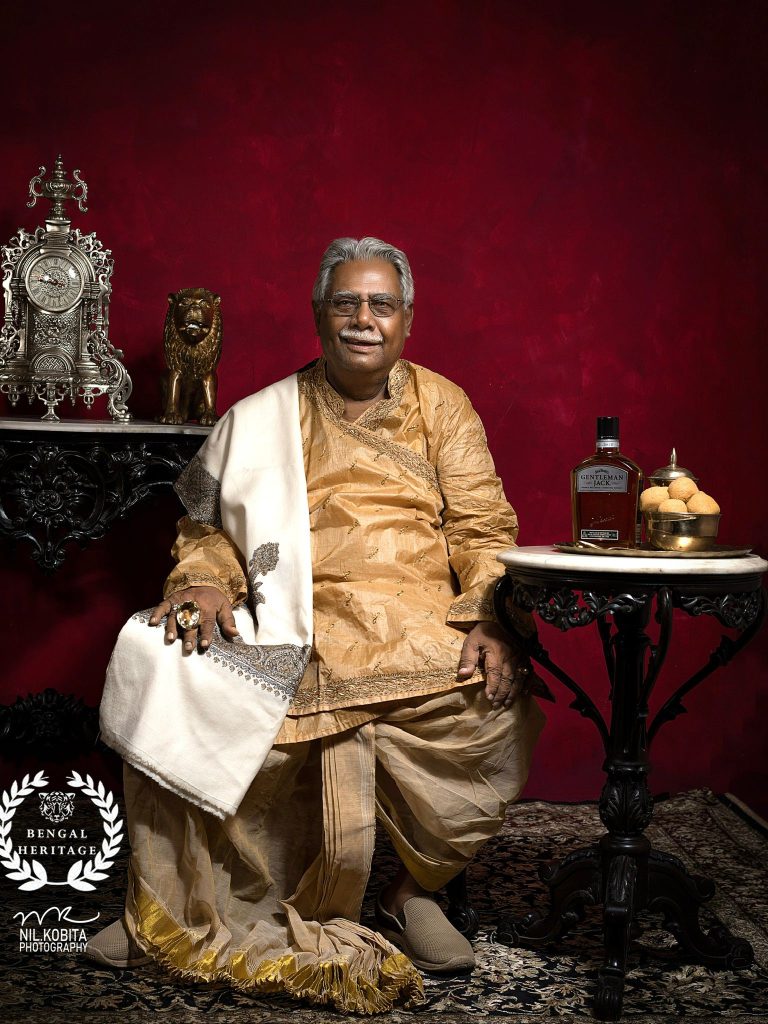
Amidst the sea of seasoned politicians and idealistic youth, one young volunteer stood quietly-eager, observant, and full of dreams. A teenager from Lakshmikantapur in 24 Parganas, my dad, Chidananda Halder, had traveled to Kalyani to lend a hand as part of Seva Dal.He welcomed guests, helped with accommodations, and above all, listened-intently-to discussions about a newly independent India, industrialization, infrastructure, and governance. And the use of technology from the global phenomenon of first moon landing also took shape in his mind too. Congress Seva Dal had once nurtured by leaders like Kamaladevi Chattopadhyay, and later came under the guidance of Nehru himself. For my father, this was an unbelievable beginning.
From Industry to Influence :
That experience opened his eyes to the larger purpose of politics: service. He grasped the profound responsibility of leadership and the power of ruling parties to shape lives in a vast, diverse, and newly liberated nation with huge debt.
Years passed. Life moved forward. My dad started working full-time while raising a young family and pursuing higher education. He went to study for a Diploma Certificate in MBA from the prestigious Indian Institute of Social Welfare and Business Management (IISWBM)-the first management institute of its kind in Asia, established under the visionary leadership of Dr. B.C. Roy. Among his professors was Prof. Dipendrakumar Sanyal, a close friend of Dr. Roy who pioneered Indian business education for India’s brighter business future. In 1973, after graduation, dad left billionaire Oil and Natural Gas Company (ONGC )to dedicate himself to nation-building.
Armed with a business degree, dad diligently choose to launch his own business in the Hume Pipe industry to supply pipes for infrastructure development in hundreds of Gram Panchayat (village council) cross West Bengal. He was one of the first few people in India to receive the margin money to start heavy industry.

He built three major manufacturing bases-in Kadhi, Behrampore (Murshidabad district), and another in West Dinajpur. His Hume pipes went for the development of sewage system across different districts of West Bengal and Calcutta city too. He provided jobs to hundreds of locals. His own family members Asit Halder, Kishor Boron Halder and Suvendu Halder stayed with him for a while to look after the Hume Pipe business.
On his manufacturing plots of land, he also planted hundreds of trees which supplied year long fruits to labourers and maintain a sustainable eco friendly environment. And helped local clubs and villagers with their needs. His success in business was matched by his deepening commitment to the locals, Indian National Congress, especially in Murshidabad, where he chose to dedicate his political energies.
Behrampore: Part of Life :
Settling in Behrampore, Murshidabad became his karma bhumi-the land of his duty. In 1970s, our neighborhood was full of vibrant personalities and creative minds. Ritwik Kumar Ghatak, the legendary filmmaker and Padma Shri awardee, lived from time to time with his mother, Indubala Devi,in her modern Art Deco home. She was our favourite. We also lived next to Mr. Singha, a municipal councillor who was jovial soul.
Mukerjee family was the other neighbour in the Lal Dighi area who could play Western Classic in their grand piano while the retired veterinarian down the road had the most amazing rose garden, used methane from cow dung to produce electricity for his house. Sudip Roy, won a Gold Medal at the 1982 All India Fine Arts Exhibition was a neighbour, I distinctly remember. His art teacher Basudev Roy, a gifted watercolor artist, gold medalist and godson-in-law of the Tripura Royal Family, often painted Bengal landscapes with my mother, the late Kamala Chowdhury Halder. Some of her watercolour paintings now adorn my Australian residence.
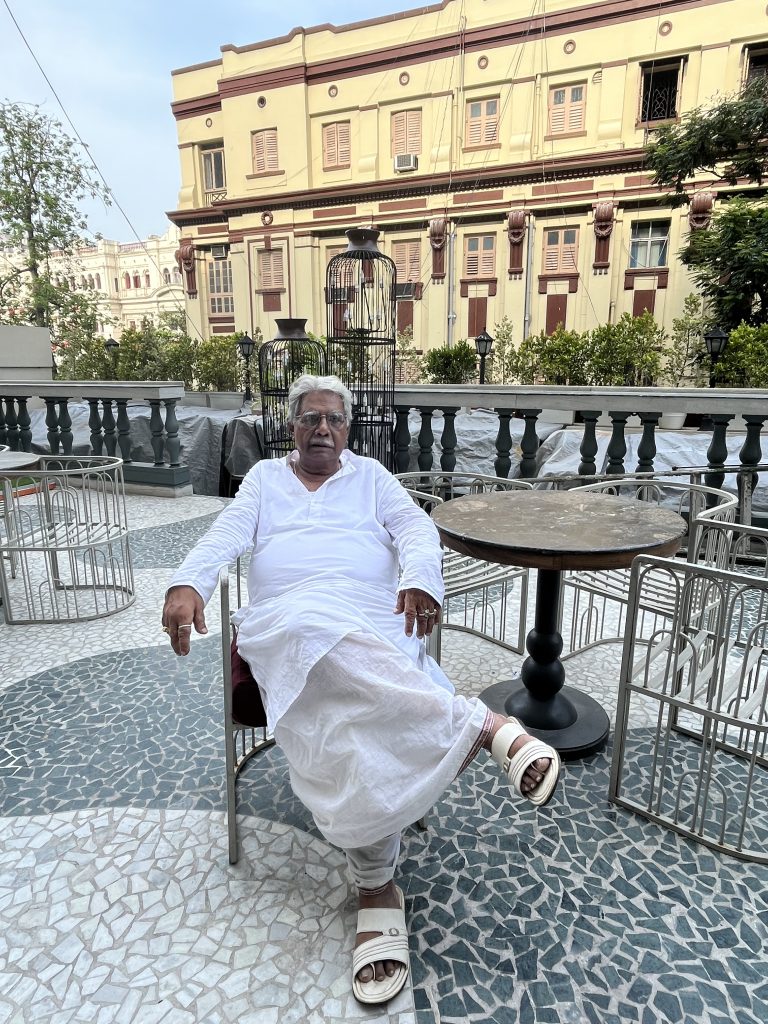
My dad married my mother, who other than being a passionate painter, was a Jadavpur University graduate deeply knowledgeable about the history of Murshidabad. Though aware of her ancestral link to the rulers of Karnasuvarna-capital of the ancient Gauda Kingdom under King Shashanka in the 7th century-she remained humble. My father only came to know about her ancestry during his political campaign in one of the villages in Murshidabad district. He consciously chose not to have an arranged marriage with a woman from the 300 year traditional Mondal family of Bawali Rajbari and settled in the life of luxury. Instead, he wanted to play a role on the development of Murshidabad. He focused on building a meaningful life rooted in service, values, and purpose.
My later mother, a girls’ school headmistress who took responsibly actions to prepare the students for brighter future and remained a backbone to dad’s business venture; her father, Haricharan Chowdhury, a mathematician from Calcutta University who wrote books to educate students in mathematics and became headmaster at Lalgola Maharaja’s school named Mahesh Narayan Academy; and her sister, Anjali Ghosh, graduated in applied physics from Calcutta University. She taught at Calcutta’s renowned Lady Brabourne College and Bethune College.Her brother in-law, Subhas Chandra Ghosh was the first batch of graduates from Civil Engineering College, Indian Institute of Engineering Science and Technology, Shibpur, Howrah and did roaring business with Japanese business consortium to develop India. In the same college, assistant professor Pritindu Chowdhury was one of her brother, who taught mathematics and was married to the daughter of Sukumar Chandra Sirkar. Mr Sirkar was a genius student who worked with CV Raman for his noble prize winning research. And Murshidabad district Magistrate SN Chowdhury was her cousin while Atanu Chowdhury became the chief general manager of eastern telecom projects (Bharat Sanchar Nigam Limited). I visited him several times, in his bungalow near the East India Company era army cantonment with cannons. And her niece late Dr Tandra Roy (obstetrician & gynaecologist) dedicated herself to women and infants’ health in Murshidabad district. All worked for the service to the nation
with core value of ethics, social benefits and accountability. They inspired dad to do more for Murshidabad. He even became president of one of the Kadhi textile producing units and continuously empowered Murshidabad silk weavers especially women to be part of nation development.
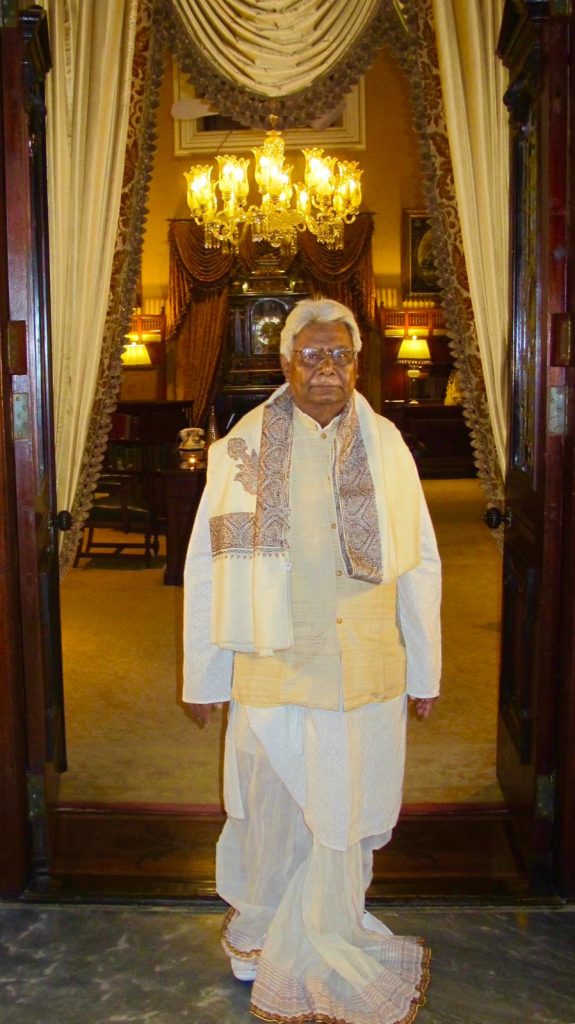
A Political Life Shaped by Murshidabad :
In 1970s, his friendship with Atish Chandra Sinha-Maharaja of Khadi, Congress MP, former deputy Industry Minister, and Leader of the Opposition in West Bengal-was pivotal. And Sankar Das Pal mentored and helped him rise in the ranks of the Congress Party. In 1947, Dr. Syama Prasad Mukherjee played critical role to make sure Murshidabad district remained in India during the brutal and violent Bengal partition.
Throughout the years, Murshidabad remained the heartbeat of Bengal’s Congress politics-and my father, its tireless lobbyist. He stood alongside Qari Habibur Rahman, Kumar Dipti Sen, and Maya Rani Paul, all notable Member of Legislative Assembly (MLAs) who were
Murshidabad political circle. He even communicated with Suniti Chattaraj, who was an Indian National Congress candidate from Birbhum, who became MLA and was appointed as Electricity, Irrigation and Water Resource State Minister of West Bengal. West Bengal Chief Ministers like Siddhartha Shankar Ray who also supported Murshidabad, became troubleshooter for national Congress other then holding positions as a governor of Punjab and ambassador to United States and Prime Ministers like Indira Gandhi also made her way to Murshidabad to ensure the district remained her strong hold, and my dad was always there-strategizing, organizing, and working behind the scenes with the best of his abilities. A black and white photo of my dad standing behind Mrs Ghandhi as she took a break from her election campaign in Murshidabad, hanged on our Ballygunge residence wall.
He also knew and appreciated the work Adhir Ranjan Chowdhury, (leader of the Indian National Congress and Member of Parliament from Beharampore), Tridib Chaudhuri (leader and founder of the Revolutionary Socialist Party), and Sankar Das Pal(Beharampore MLA and Municipality Chairman) in Murshidabad’s development to elevate poverty and food on the plate. Together, they were all champions who dreamt of making Murshidabad great again. It used to be in the richest province in the world, until East India Company took over in 1757. Company greed, inhumane treatment and neglect, left the district with limited infrastructures, poor standard of living and lack of jobs. In 1970s, people from Murshidabad started migrating to Middle East for better wages. And dad knew one of the only ways to reduce drainage of labourers, was by continuing industrial development in Murshidabad. He was always for strong lobbying with as many representatives from Murshidabad and West Bengal state in Delhi parliament to be the voice of the vulnerable people who deserved more.
Legacy of a True Lobbyist :
Trips to Delhi became regular, and soon he was meeting national leaders. He would meet Margaret N Alva who was the vice-chairman of Rajas Sabha (Upper House) and Minister of Human Resources Development and Sam Pitroda who returned to India on the invitation of Mrs Gandhi to start the Center for Development of Telematics. He also caught up with Dr. Shyam Sunder Mahapatra, a zamindar from Odisha, elected to the Lok Sabha (Lower House) and a senior figure in the Congress whenever he was in Delhi. Dr Mahapatra was also a regular in the Congress MLA hostel of Calcutta and dad was by his side. He was later appointed General Secretary of the All India Congress Committee and Chairman of the External Affairs Department, established protocols with international political parties from Argentina to Sweden to Russia, just to name a few countries. He treated my father like an old friend and introduced our family to Prime Minister Indira Gandhi at 10 Janpath after her morning walk. He lived right opposite her bunglow. I still remember the warmth in Mrs Gandhi’s smile and the quiet pride in my father’s eyes. She invited us for 1982 Asian Games.
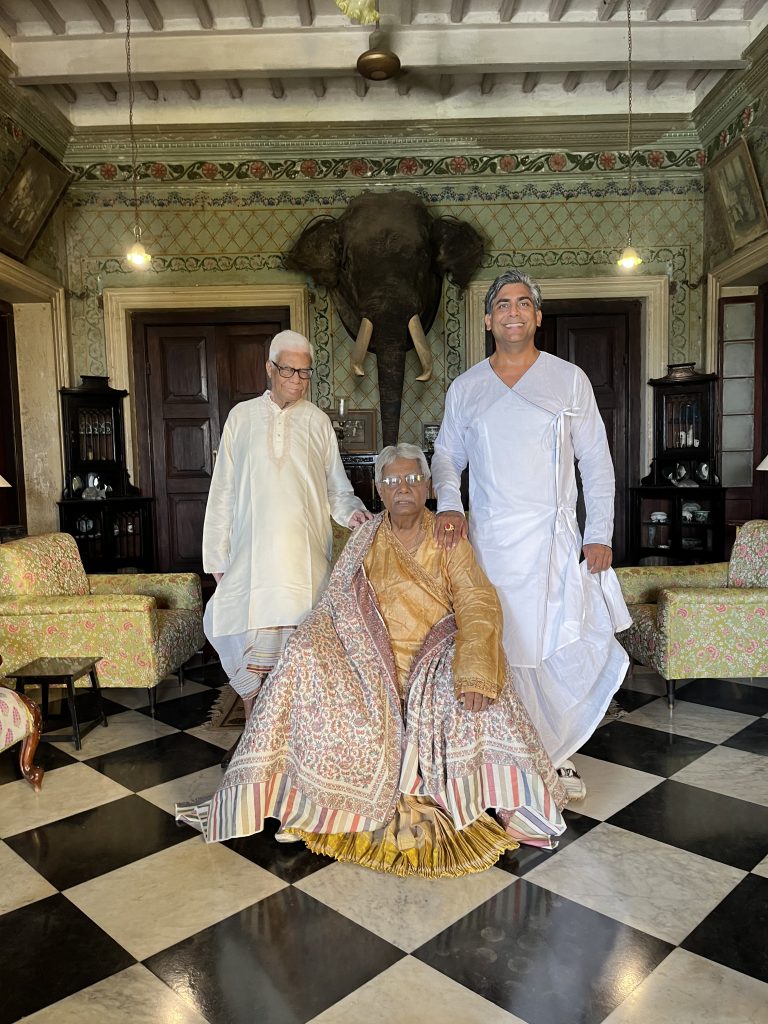
Murshidabad remained a Congress stronghold, sending several leaders to the national stage:
- A.B.A. Ghani Khan Choudhury, Railway Minister
- Abdus Sattar, Agriculture Minister and State Deputy Chief Minister (CM)
- Pranab Mukherjee, who became Finance Minister and later the President of India
My father was there through it all-as Vice President in Murshidabad distance when Atish Chandra Sinha and Abdus Sattar were the President respectively. As a loyal party worker, and as a proud supporter of many nominations from Murshidabad and attending hundreds of public rallies to develop the district. In the grand red coloured colonial Beharampore town hall, at a party gathering with Abdus, Atish and other Congressmen, he gave his speech on industrial development of Murshidabad.
In Delhi, he would do the same, when he met current West Bengal CM Mamata Banerjee, was then an energetic young woman from Calcutta representing Congress party. He recalled how J Mukherjee introduced Pranab Mukerjee to Indira Gandhi who helped him to get nominated in the upper house of Parliament of India. How he would affectionately called him, Pranabda as he held a seat from Murshidabad to continue his potential political ambitions. He meet him, as he held many ministerial positions and remained most popular Congress party veteran in Delhi. Many decades later Mr Mukerjee became the first Bengali to became Indian president and also know to convince Dr. Manmohan Singh to join Congress-a move that would change the course of Indian politics and staggering economic development.
My dad worked alongside with other stalwarts like Madhavrao Scindia, a prince, minister and Indian politician in Delhi while lobbying for Murshidabad. Mr Scindia, invited our entire family to his Gwalior estate and offered me and my brother Partha Pratim Halder seats at the elite Scindia School, where his mother was a board member. Instead we moved from Beharampore to the affluent suburb of Ballygunge, Calcutta for our schooling but kept lobbying for Murshidabad’s development as he shuttled between Beharampore, Calcutta and Delhi.
A Humble Patriot :
While my dad never sought public attention or office, he was the bridge between the grassroots and the party elite. His story is a reminder that political change is not always led by those at the podium, but also by those who work tirelessly in the background.
His was a life of purpose, rooted in Murshidabad and reaching far beyond it. He stood for value driven leadership. Whether helping Congress campaign logistics, hosting visiting ministers, or voicing Murshidabad’s needs in Delhi, he remained a committed lobbyist, loyal friend, and humble patriot. He spent his time, experience and finance towards building India’s future. Our ambassador car transported many dignitaries in Murshidabad for public gatherings and guests would stay at the red colonial Beharampore Lodge from time to time. Today, Murshidabad is a center for agriculture, handicrafts, and sericulture. Autonomous institution like Management Development Institute (MDI) has dedicated resources to agri-business, entrepreneurship and Artificial Intelligence(AI) in the district. It now has its own medical collage, university and many more educational institutions. The region has became the beedi (a type of cheap cigarette made of unprocessed tobacco wrapped in leaves), sericulture and heritage tourism hub and have attracted more heavy industry in West Bengal.
Behind the business success and political influence was a man of unwavering commitment, humility, and belief in public service. To me, he wasn’t just a lobbyist. He was a visionary, a community builder, and a father who turned his passion for politics into meaningful work for the people of Murshidabad.
And we are proud to call him our dad-Chidananda Halder, the perfect lobbyist for the Congress Party from Murshidabad when think tank didn’t exist.