When anti-immigration rallies unfolded across Australia under the banner “March for Australia,” they began as a seemingly domestic expression of discontent-at least until online storm clouds gathered. These demonstrations, held in capitals stretching from Sydney to Perth, rapidly morphed into manifestations of a global far-right narrative, co-opted and amplified with alarming efficiency through digital channels.
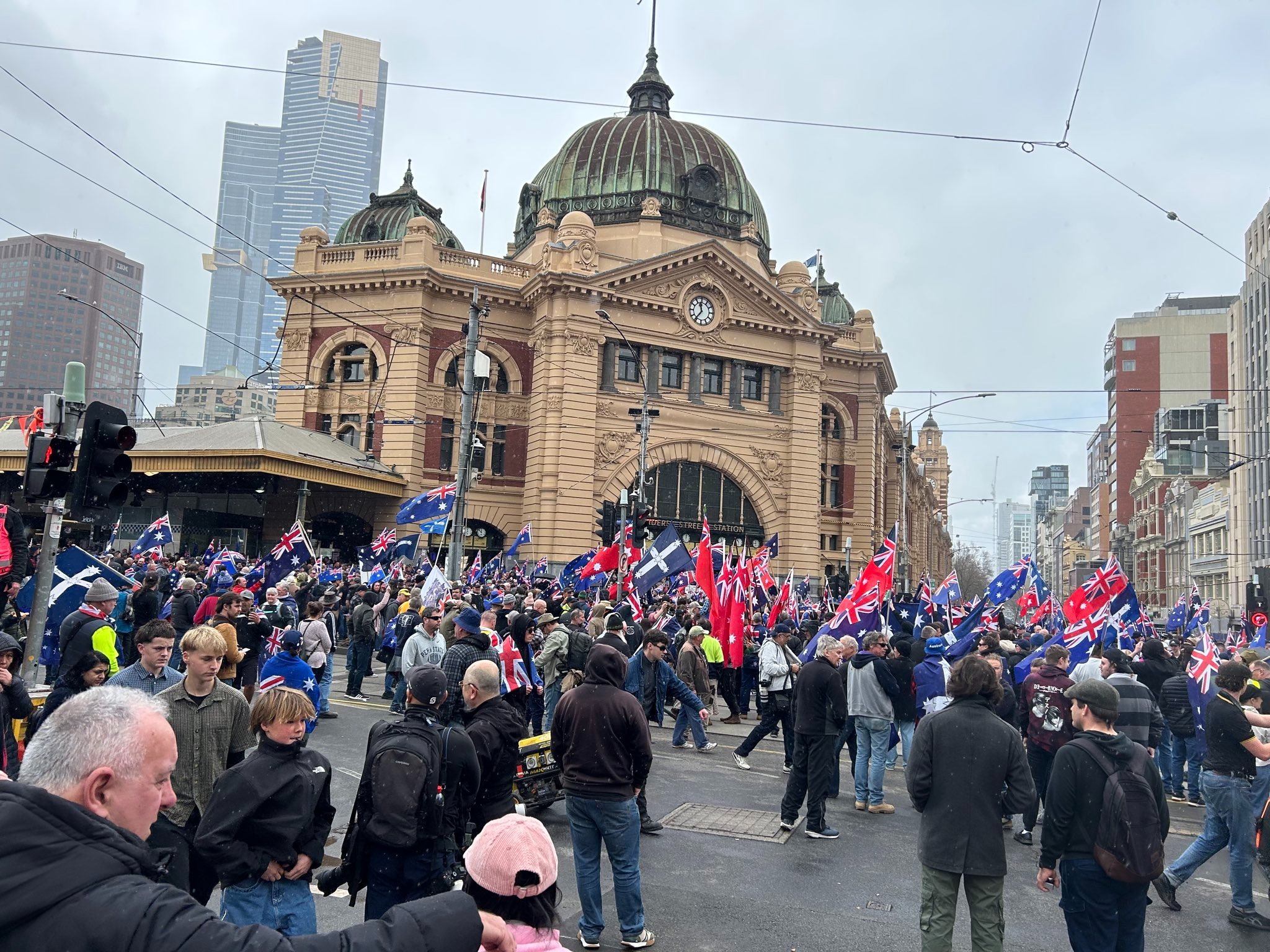
The rallies found backing from international far-right figures like Alex Jones, Tommy Robinson, Jack Posobiec, and even Elon Musk, whose retweets inflated the perception of turnout and lent fringe events undue legitimacy. What started as local rallies became de facto nodes in a transnational anti-immigration ecosystem, fueled by memes and slogans such as “remigration” and “Great Replacement” that echo extremist ideology cloaked in populist language
The UN Replacement Migration Program Has AWOKEN THE SLEEPING GIANT! https://t.co/EraeThkWgN
— Alex Jones (@RealAlexJones) August 31, 2025
It wasn’t just online endorsement. At street level, neo-Nazis from groups such as the National Socialist Network marched front and centre at the Melbourne and Sydney rallies, waving symbolic flags and shouting slogans that left no illusion about their motives. Although organisers attempted to distance themselves from extremist groups, their denial rang hollow amidst this proximity.
The natives across the west have had enough of forced population replacement as anti immigration protests hit Australia 🇦🇺 pic.twitter.com/zZobuK1neJ
— Tommy Robinson 🇬🇧 (@TRobinsonNewEra) August 31, 2025
The resulting fallout was tangible. Violence erupted in Melbourne, where neo-Nazis stormed Camp Sovereignty-a sacred site for Indigenous protest-and vandalised flags. In other cities, counter-protesters clashed with participants, forcing police intervention. Flyers promoting racial misinformation-such as comparisons between Indian and European migration-surfaced, highlighting that Indian communities had become direct targets of these rallies.
The people are demanding the deportation of illegal immigrants. 🇬🇧🇦🇺🇯🇵 pic.twitter.com/APLZjv3uPN
— DogeDesigner (@cb_doge) September 1, 2025
Australia’s multicultural society pushed back. Political leaders across the spectrum, including Prime Minister Albanese and Multicultural Affairs Minister Anne Aly, condemned the rallies as hate-fueled, far-right activity. They denounced the extremism and reaffirmed their commitment to diversity and unity in the face of these divisive events.
The real threat, analysts warn, lies in the far right’s mastery of blending mainstream grievances-like immigration and infrastructure-with extreme ideologies, relabeled into seemingly moderate messaging. The online spread of slogans such as “Make Australia Grouse Again,” and the clever use of memes, are emblematic of how the digital realm has become a tool for extremist normalization.
This article was originally published on The Conversation.
Callum Jones (Associate research fellow, Deakin University)
Kurt Sengul (Research fellow, far-right communication, Macquarie University)