Quantum physics is quietly reshaping the world around us. From quantum computers that promise unimaginable computing power to sensors that could detect diseases long before symptoms appear, the quantum age is no longer a distant dream. It is here, and it is changing everything from medicine to security to artificial intelligence.
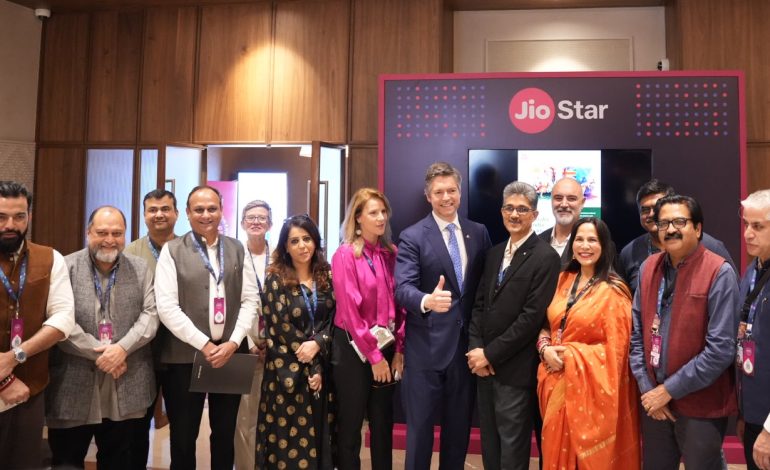
During my recent trip to India, I discovered that this revolution is not confined to Silicon Valley or European Organization for Nuclear Research (CERN), India has stepped into the quantum frontier too. Bengaluru based startup QiAl unveiled Kaveri, a 64 qubit superconducting quantum processor, the first indigenously built quantum chip in India. Supported by the Department of Science and Technology under the National Quantum Mission, this achievement places India among only six nations building quantum hardware.
It was a proud moment for the country, but being born a Bengali in Kolkata, as I wandered through the city’s lanes, I felt a deeper realisation forming in my mind, did India’s quantum journey start in Bengaluru’s laboratories, No, it began much earlier, in the lecture halls, attics, and humble research rooms of Bengali scientists whose curiosity transcended the boundaries of their time, place and culture.
Quantum Beginnings, A Personal Spark
My fascination with quantum physics did not start with a textbook or a classroom lecture. It began with a story, one told by my Aunt Anjali in 1986, who used to speak about the mysterious quantum world long before it became a buzzword. And even earlier came the stories of my maternal uncle’s father in law, Dr Sarkar, a scientist who worked under the legendary C V Raman, the first Asian Nobel laureate in Physics from Kolkata. That connection made the quantum world feel even more personal, almost ancestral.
Years later, in 2025, when I was invited to a lecture on quantum physics at Macquarie University in Australia to celebrate the International Year of Quantum Physics, I could not help but think of Bengal, of the countless unsung minds who laid the groundwork for what we now call quantum science.
As I traced their stories, I realised something profound, the Bengali contribution to quantum physics is not a footnote, it is a foundation.

Even today, a young Bengali from India who has made global headlines is Hirak Bandyopadhyay from the Indian Institute of Science Education and Research, Kolkata, working at CERN’s Large Hadron Collider. He won the 2025 Breakthrough Prize in Fundamental Physics, jointly awarded to the four major experimental collaborations at CERN’s Large Hadron Collider, ATLAS, CMS, ALICE, and LHCb, for their work on the Higgs boson and other fundamental particles using data from the LHC’s Run 2. He once again proves that as a Bengali, he has made quantum physics a part of his academic legacy, just like other Bengali physicists who paved extraordinary paths in this field.
Satyendra Nath Bose, The Forgotten Father of Quantum Statistics
If quantum physics were a symphony, Satyendra Nath Bose would be one of its original composers.
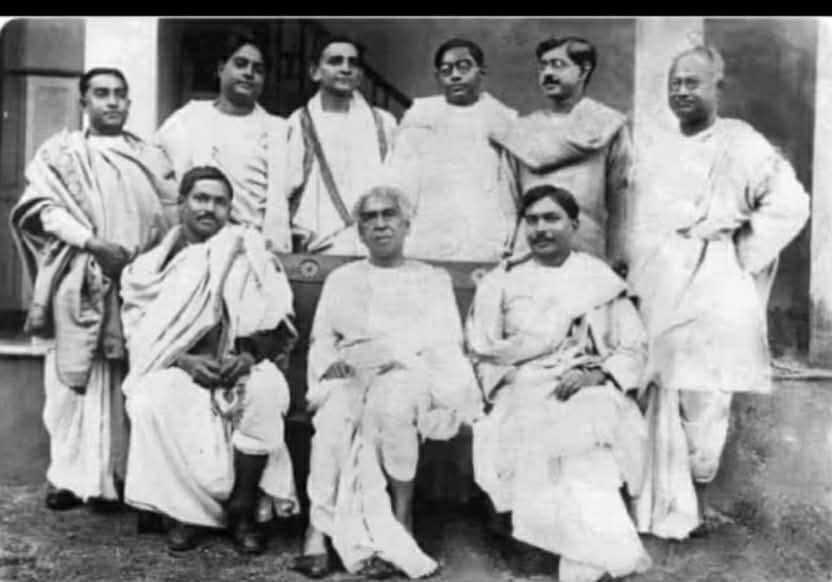
Born in 1894 in Kolkata, Bose was fascinated by numbers and patterns. While working at the University of Dhaka, now Bangladesh, he attempted to explain why light behaves both like a wave and a particle, a mystery that had confounded physicists for decades. His revolutionary paper in 1924 re derived Planck’s radiation law by treating photons as indistinguishable particles, giving birth to what is now known as Bose Einstein statistics.
Albert Einstein recognised the brilliance of Bose’s idea and personally translated his paper into German. From that collaboration emerged a new kind of matter, the Bose Einstein Condensate, and a new family of particles called bosons, named in Bose’s honour. These bosons form the basis of everything from the Higgs Boson, also known as the God Particle, to the quantum states that power today’s qubits and drive the quantum revolution.
Bose’s genius was not limited to theory. He fought colonial neglect of Indian science, built laboratories from scratch, and inspired generations of physicists around him. Long before the word quantum became fashionable, Bose had already laid its foundation in the classrooms of Kolkata.
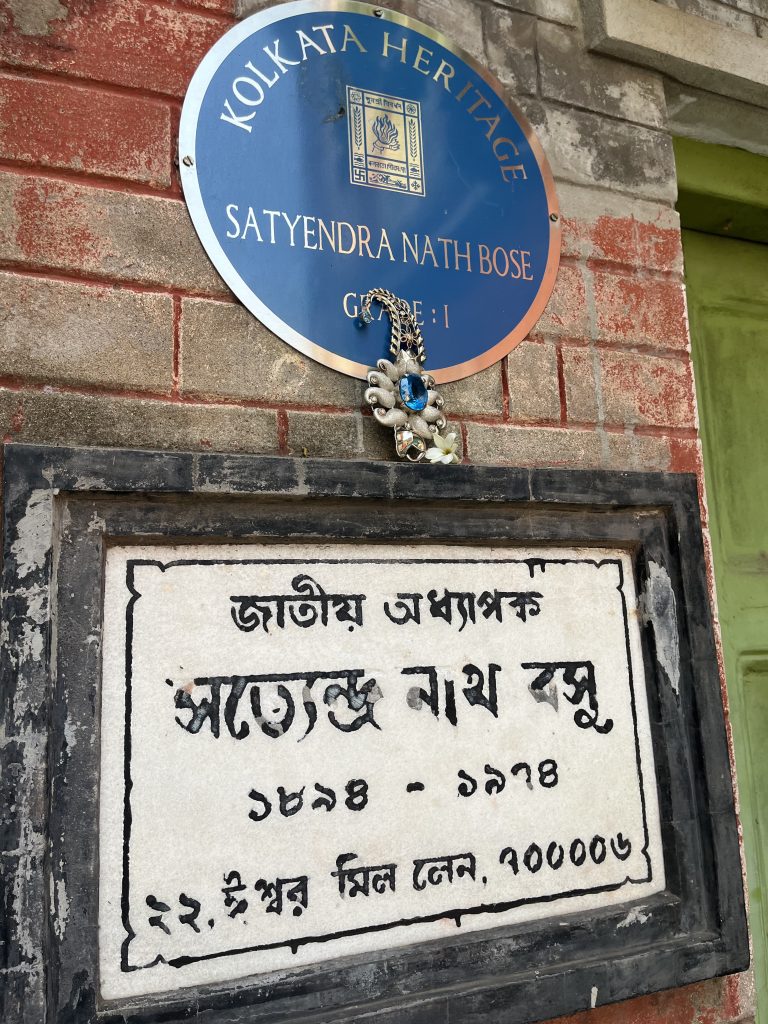
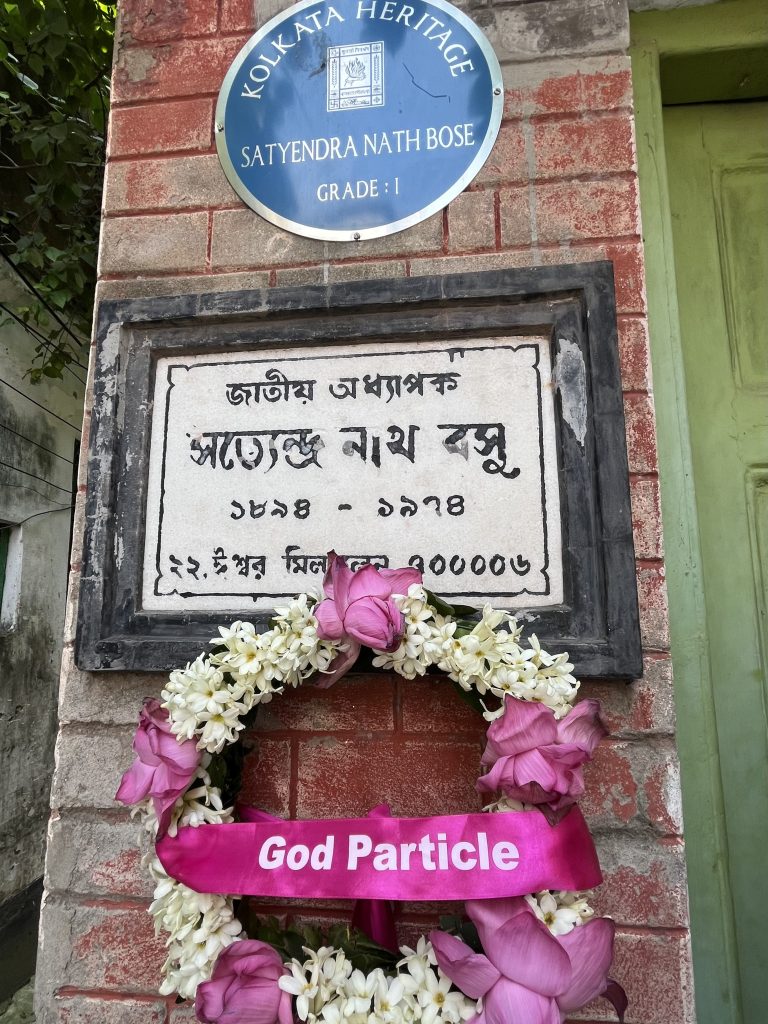
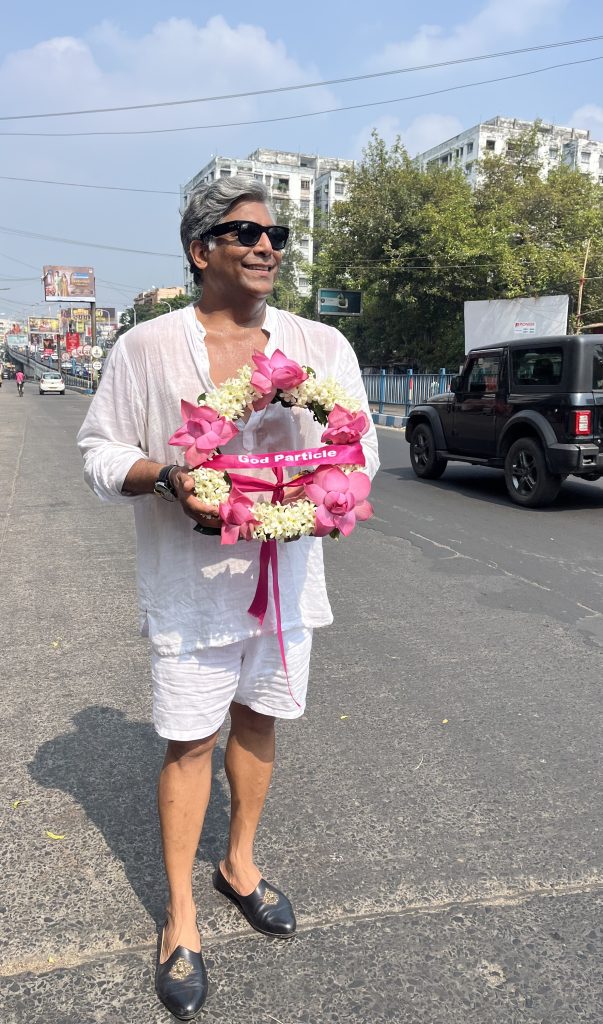
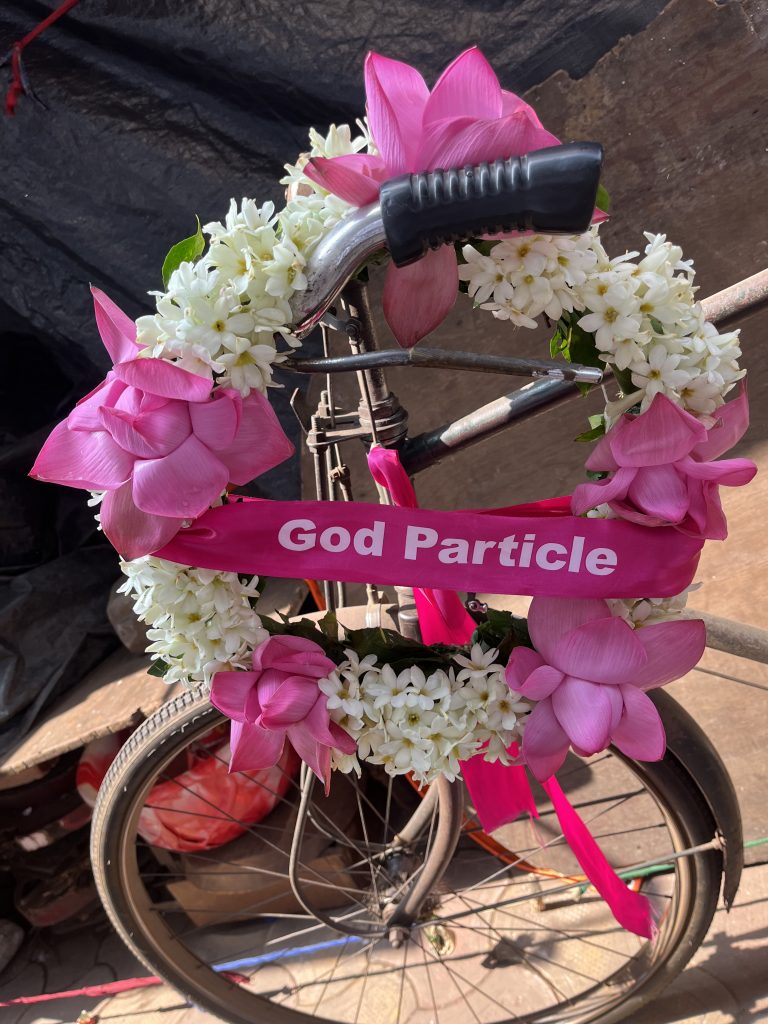
I could not ignore the opportunity to pay my respects by laying a wreath at Bose’s North Kolkata mansion, located in a lane adjacent to Scottish Church College. The wreath carried a ribbon with the words God Particle, a symbolic reminder of Bose’s extraordinary vision that much of the Western scientific establishment still chooses to politely overlook.
Meghnad Saha, The Quantum Link Between Stars and Atoms
While Bose explored photons, Meghnad Saha looked to the stars.
Born in 1893 in Dhaka, Saha rose from poverty through sheer brilliance and determination. His greatest contribution, the Saha Ionisation Equation, explained how atoms in stars become ionised under extreme heat.
Although this may sound like pure astrophysics, its foundation lies deeply rooted in quantum physics, particularly the idea that atoms possess discrete energy levels and transitions governed by quantum probabilities. Without quantum theory, the Saha Equation would not exist.
This equation transformed astrophysics, allowing scientists to decode stellar spectra and understand the composition of stars. Saha also played a major role in institution building, founding the Institute of Nuclear Physics in Kolkata, later renamed the Saha Institute of Nuclear Physics, and contributing to India’s scientific planning post independence.
Calling him merely an astrophysicist does not capture his legacy. Saha bridged the quantum and the cosmic, proving that the same principles guiding subatomic particles also govern the hearts of stars.
Debendra Mohan Bose and the Lost Discovery
Among the lesser known yet brilliant Bengali physicists was Debendra Mohan Bose, born in 1885, a visionary whose research anticipated several major twentieth century breakthroughs.
A nephew of Acharya Jagadish Chandra Bose, he studied in Cambridge, worked at the Bose Institute in Kolkata, and later became its Director. Along with his colleague Bibha Chowdhuri, he studied cosmic rays, high energy particles from outer space.
In 1937, using photographic emulsion plates and magnetic fields, Bose and Chowdhuri observed unusual particle tracks, suspecting they were mesons, the particles responsible for nuclear forces.
Due to wartime disruptions and limited resources, they were unable to confirm the discovery. Ten years later, in 1947, C F Powell in England used improved photographic emulsions to identify the pi meson, work that earned him the 1950 Nobel Prize in Physics. Powell acknowledged Bose and Chowdhuri’s earlier observations, noting they had been strikingly close.
History, however, rewards resources as much as insight. Bose and Chowdhuri never received full recognition, yet their experiments remain among the earliest glimpses into the subatomic world predicted by quantum theory.
Bibha Chowdhuri, India’s First Woman Quantum Physicist
If courage had a face in Indian science, it would be Bibha Chowdhuri.
Born in 1913 into an educated Bengali family, she defied norms at a time when women were almost absent from scientific research. She completed her MSc in physics in 1936 from the University of Kolkata as the only woman in her class. At the Bose Institute, she became a central figure in the cosmic ray studies with Debendra Mohan Bose.
In 1945, she travelled to England for her PhD at Manchester University under P M S Blackett, who later won the 1948 Nobel Prize. Her groundbreaking research on cosmic ray showers placed her at the frontier of particle physics.
Upon returning to India, she was personally recruited by Homi Bhabha to the Tata Institute of Fundamental Research, making her the first woman researcher at the institute. She later continued her work at the Saha Institute of Nuclear Physics in Kolkata, publishing until her final days.
Her legacy is not just scientific, it is inspirational, a story of brilliance, resilience, and the refusal to be erased. Bibha Chowdhuri deserves to be remembered as India’s first woman quantum physicist.

Acharya Jagadish Chandra Bose, The Spirit of Curiosity
No account of Bengal’s scientific heritage is complete without Acharya Jagadish Chandra Bose, the polymath whose pioneering experiments transformed modern science in India.
Decades before quantum theory took shape, Bose was experimenting with millimetre waves and radio signals. In 1895, he demonstrated wireless communication, predating Marconi. Although he did not receive the Nobel Prize, his work was fundamentally quantum in spirit, exploring the wave nature of matter and the fine threshold between living and non living systems.
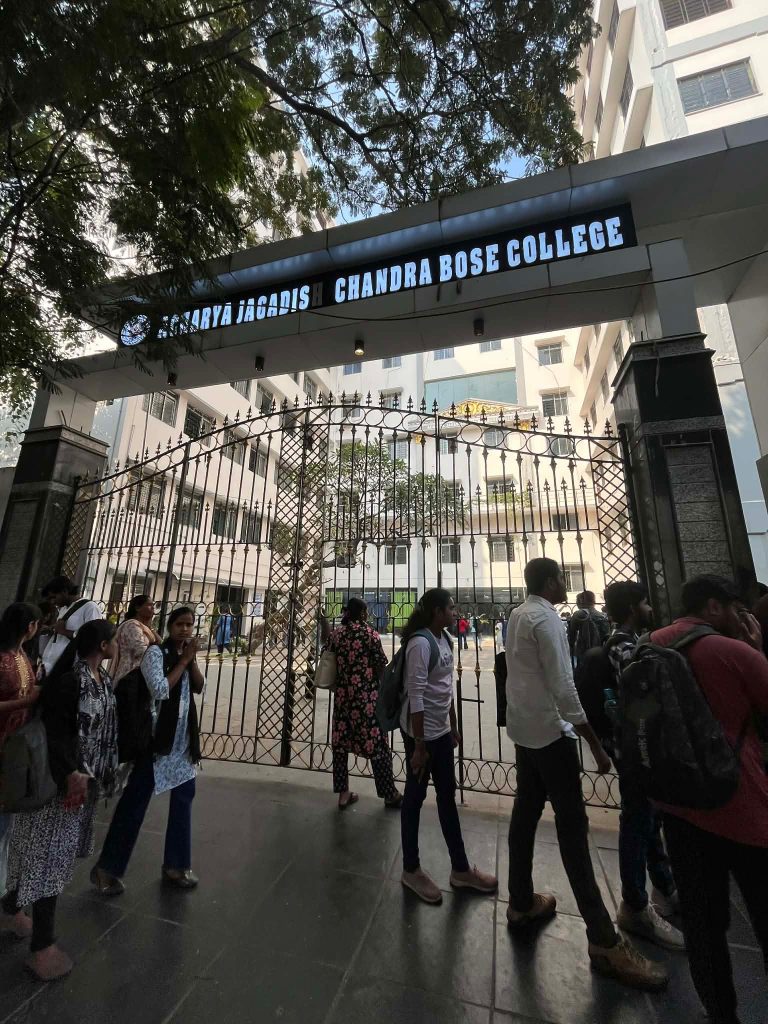
A crater on the Moon now bears his name, a tribute to his cosmic curiosity. Walking past Acharya Jagadish Chandra Bose College in Kolkata, I felt a deep pride in his remarkable legacy.
Heisenberg Met Tagore, Consciousness and Quantum Reality
The connection between Bengal and quantum thought extends beyond laboratories into philosophy.
In 1929, Werner Heisenberg, pioneer of quantum mechanics and the uncertainty principle, visited Kolkata and met Rabindranath Tagore. Their conversations explored science, consciousness, and the nature of reality.
Heisenberg later wrote that Tagore’s worldview influenced his understanding of the observer effect, the idea that measurement alters outcomes. Even today, quantum experiments echo this insight, including a 2019 Oxford study showing that particles behave differently depending on the expectations of the observer.
Their dialogue bridged Eastern philosophy and Western science, shaping the conceptual heart of quantum theory.
The Observer, Luck, and Quantum Possibility
The observer effect suggests that consciousness influences physical reality. Modern psychology also echoes this idea. Studies in Zurich reveal that people who believe they are lucky notice more opportunities, a behavioural reflection of quantum probability.
Quantum physics teaches that the universe is a field of possibilities, and observation shapes outcomes. Perhaps this explains why Bengali scientists, working with limited means, achieved so much, they believed in possibility.
The Quantum Continuum, From Bose to Bengaluru
Bengal’s contribution did not end in the early twentieth century. Kolkata’s scientific institutions, including the Saha Institute of Nuclear Physics, the Bose Institute, and the S N Bose National Centre for Basic Sciences, remain active contributors to global research.
Physicists from these institutes have participated in major experiments at CERN’s Large Hadron Collider, including the ALICE and CMS collaborations, which shared the 2025 Breakthrough Prize in Fundamental Physics. Their involvement reflects Bengal’s enduring presence in the quantum frontier.
From Bose’s equations to Kaveri’s qubits, the quantum lineage remains vibrant.
Why Bengal Belongs in the International Year of Quantum Physics
As UNESCO and global institutions celebrate the International Year of Quantum Science and Technology, it is crucial that Bengal’s contributions be recognised because they built the foundations. Without Bose’s statistics or Saha’s ionisation equation, modern physics would look very different. They proved brilliance can flourish anywhere, even in colonial India with scarce resources. They represented diversity, from Bibha Chowdhuri’s pioneering journey to Saha’s institution building. They bridged science and philosophy, as seen in the Heisenberg Tagore dialogue. They continue to inspire new generations.
This is not nostalgia, it is justice.
Quantum Legacy and the Human Spirit
Quantum physics teaches us that the universe is full of possibilities. Bengal’s scientists lived that truth. They worked with limited tools but limitless curiosity. They made discoveries that reshaped our understanding of the universe.
From Bose to Saha, from Debendra Mohan Bose to Bibha Chowdhuri, from Acharya Jagadish Chandra Bose to today’s young quantum researchers, Bengal’s brilliance has crossed continents and centuries.
As we step into a new quantum era, the story of the Bengali Quantum League deserves its rightful place in global scientific history.
“Science knows no country, because knowledge belongs to humanity,” wrote Louis Pasteur.
So does brilliance.
And Bengal’s brilliance, shining across generations, reminds us that the quantum world has always been closer to Kolkata than we think.
The article is dedicated to Tapas Debray, Sydney.
– Indra Halder

indra-halder
Corporate Medical Sales Consultant, Global Heritage Tourist, Writer, Video Producer, former ambassador for the India Australia Business & Community Alliance (IABCA) and polo enthusiast.