BreastScreen NSW will expand its use of machine reading technology to all first-time participants, following a highly successful 12-month trial that has reduced unnecessary call-backs while maintaining strong cancer detection rates.
Initially introduced to assess selected mammography images from women aged 50–59, the technology has already analysed more than 20,000 images and helped detect over 130 cancers. The enhanced accuracy has significantly eased stress for women who may otherwise have been asked to return for additional tests such as ultrasounds or needle biopsies.

Health authorities estimate that by the end of 2025, about 500 women-roughly 20 per cent fewer first-time screeners-will avoid unnecessary call-backs as a direct result of the technology’s performance.
A First for Australia
BreastScreen NSW is the first population-based screening program in Australia to implement this advanced technology to support radiologists with an additional layer of analysis.
NSW Chief Cancer Officer and CEO of the Cancer Institute NSW, Professor Tracey O’Brien AM, said extensive groundwork was undertaken before the program’s rollout.
“We did the groundwork to ensure this innovative technology would benefit women and radiologists. The results so far have exceeded our expectations,” Professor O’Brien said.
“Fewer women are now experiencing stress and anxiety as they aren’t being called back for testing. At the same time, we are ensuring care and support is being given to the women who need it most.”

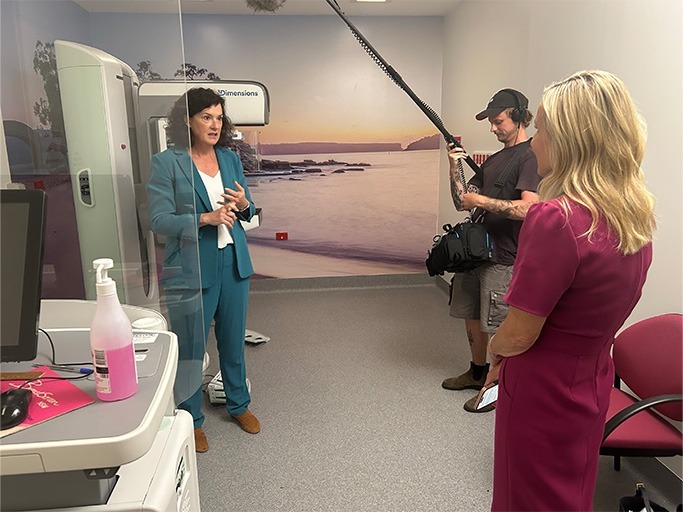
Despite the use of machine reading, every image continues to be read by at least one radiologist, ensuring that expert clinical oversight remains at the centre of the screening process.
A Priority for Women’s Health in NSW
NSW Health Minister Ryan Park described the expansion as a major step forward in improving access to life-saving screening.
“This technology has delivered excellent results, and expanding its use means more women have access to world-leading care,” Mr Park said.
“Reducing the impact of breast cancer in NSW remains a priority, and I’d like to thank the BreastScreen NSW team for their exceptional work.”
The Power of Early Detection
For women aged 50–74, a breast screen every two years remains the most effective method of detecting breast cancer early-often before it can be seen or felt. Aboriginal and Torres Strait Islander women are encouraged to begin screening at age 40.
Early detection dramatically increases survival rates and can reduce the need for invasive treatments such as mastectomy. Women who notice any breast changes, including lumps, are strongly advised to consult their doctor without delay.
Professor O’Brien urged the community to take the threat of breast cancer seriously.
“We all have a role to play in lessening the impact of breast cancer. Talk to the women in your life and support them to be screened,” she said.
“In one simple moment, our lives could be turned upside down. That’s why I urge all women not to take their health for granted and to make time for the simple screening test that could save your life.”
A Survivor’s Story
For Donna, who was diagnosed at age 60 after a routine screen, early detection made all the difference. With two sisters also diagnosed with breast cancer, screening became part of her routine.
“Fortunately my cancer was caught early through a breast screen, and now I tell everyone-if the BreastScreen NSW bus comes to your area, go get checked,” she said.
“The first time can be a bit of a shock, but after that it becomes routine-something you do for your health and your life.”

She encourages any woman feeling hesitant:
“The earlier cancer is found the better. If you’re uncertain, I say what I tell my friends: ‘Come on-I’ll go with you.’”
Book a Lifesaving Screen
Women can book a screening appointment at a local BreastScreen NSW clinic or mobile van by calling 13 20 50 or visiting the BreastScreen NSW website.
Early detection saves lives-and the expansion of machine reading technology is set to ensure more women receive accurate, reassuring, and timely care across New South Wales.