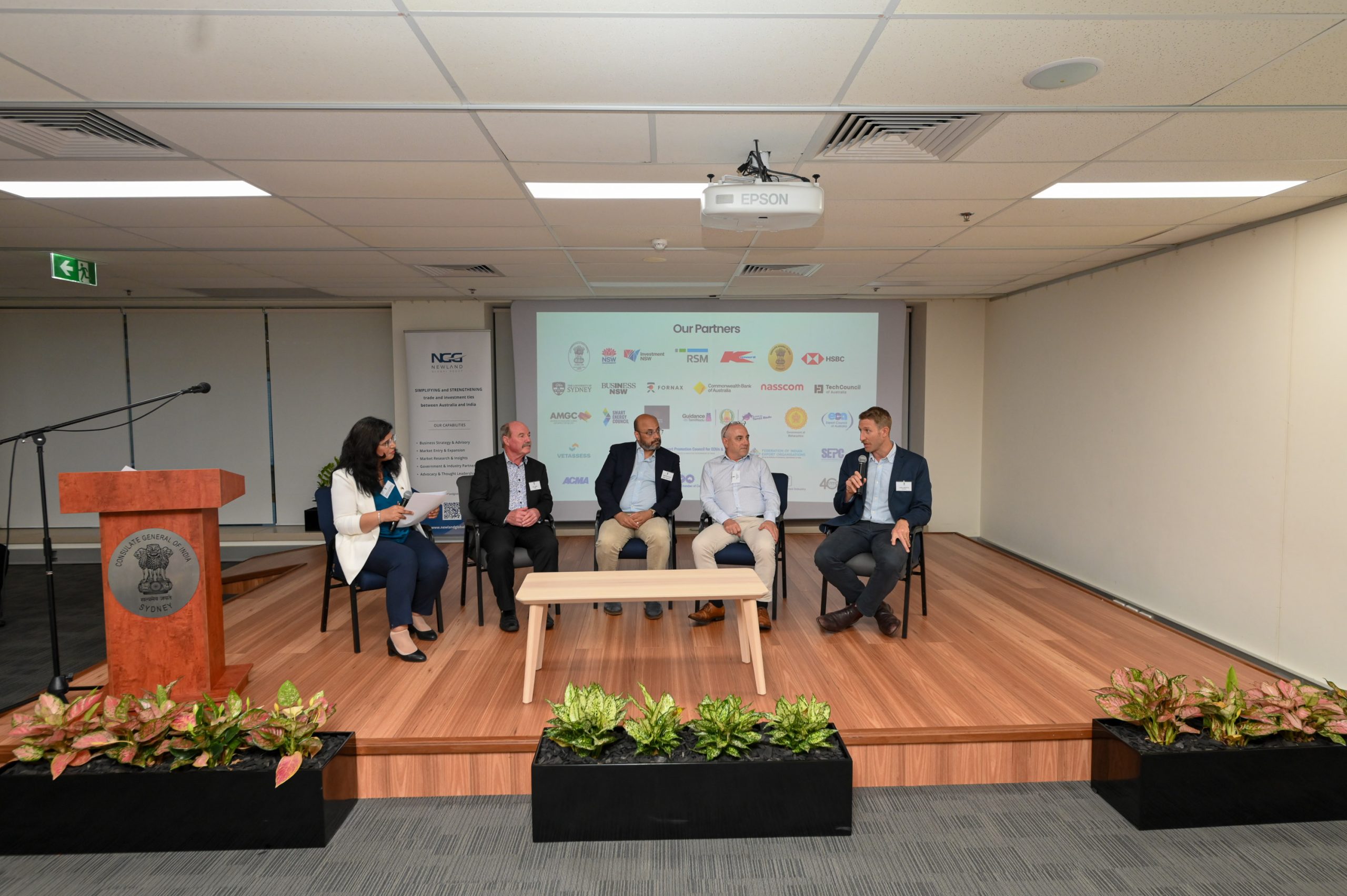
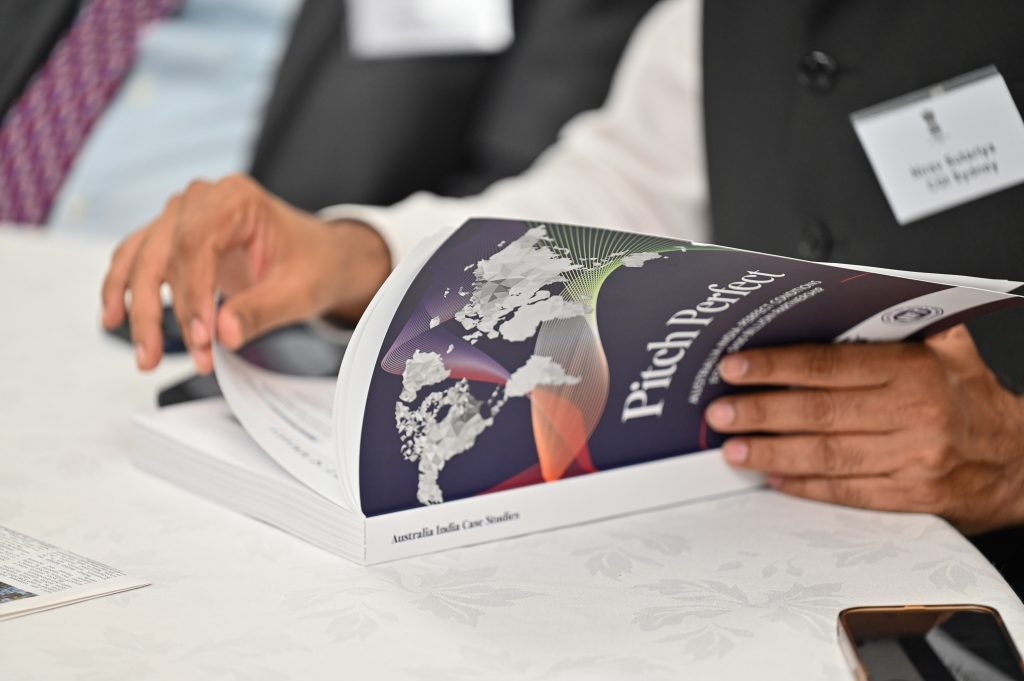
Sydney and Melbourne recently hosted the national launch of the 2nd Edition of the Australia–India Business Case Studies, a data-driven compendium mapping how companies are entering, scaling, and operating across one of Australia’s most important emerging economic partnerships. Developed by Newland Global Group (NGG) in collaboration with the Indian Institute of Foreign Trade (IIFT) under India’s Ministry of Commerce & Industry, the report provides an evidence-based view of commercial models, policy impacts, and market shifts shaping the bilateral business landscape.
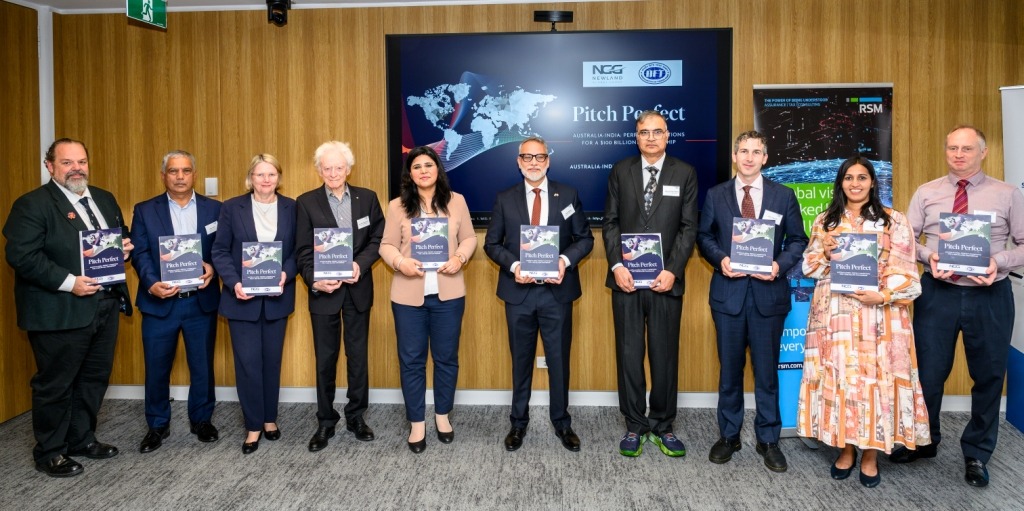
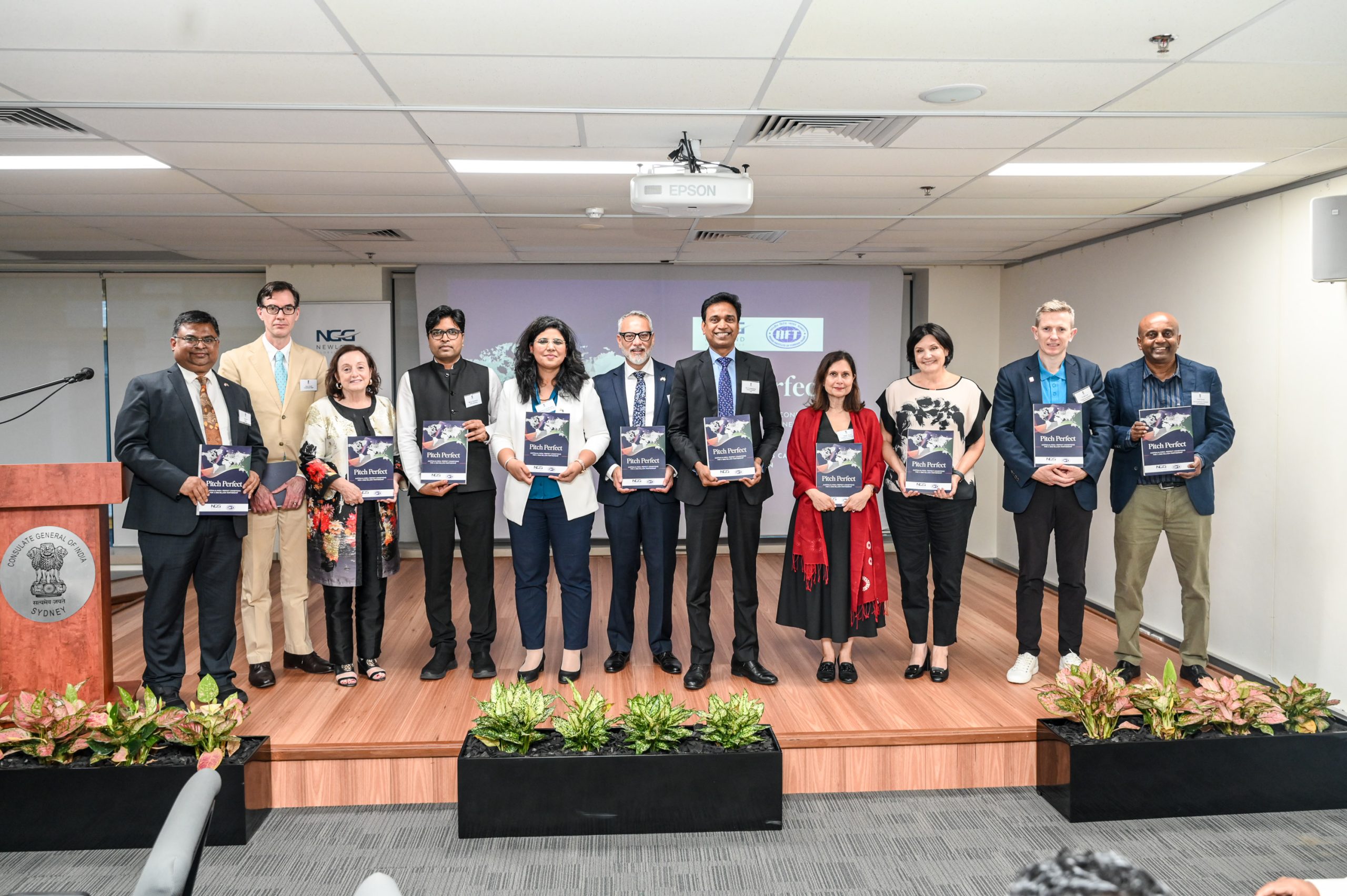
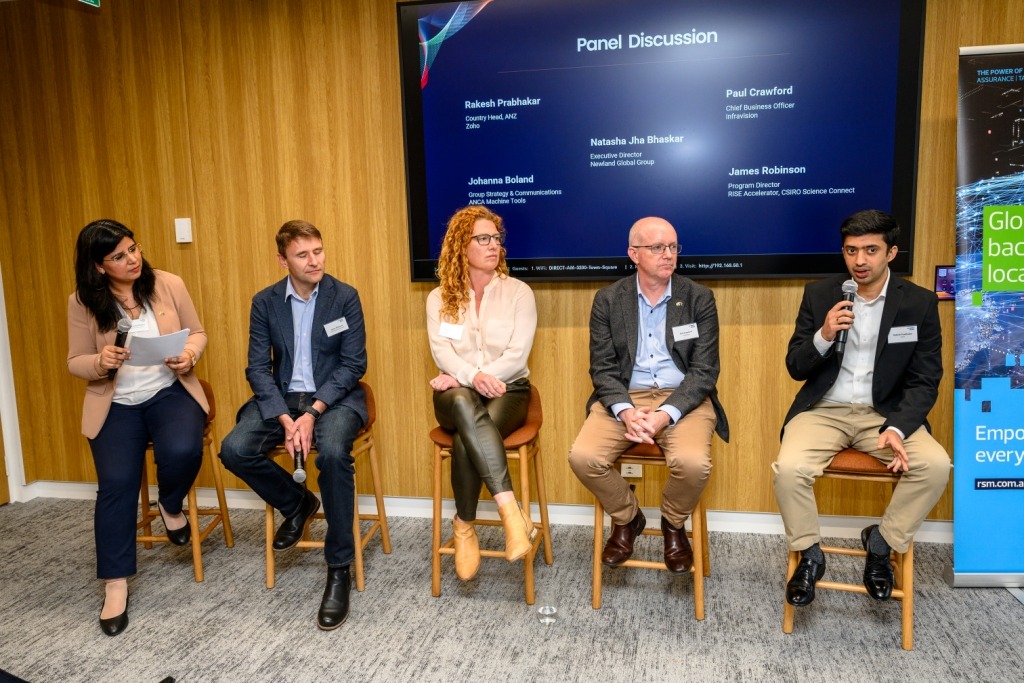
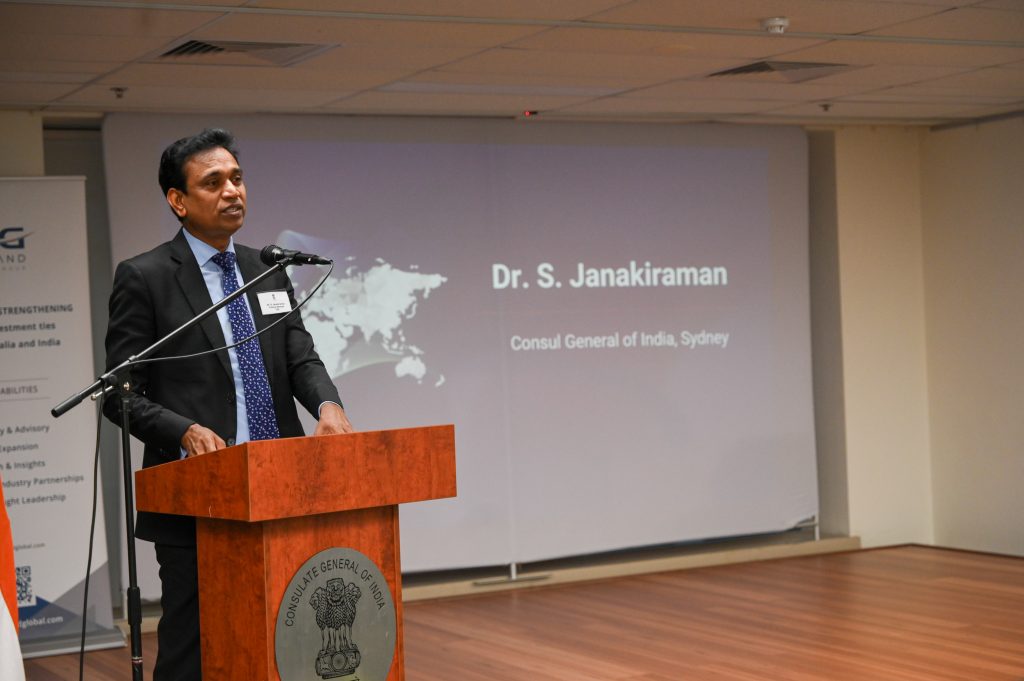
Senior leaders from government, industry, and academia attended the launch events, including Dr S. Janakiraman (Consul General of India, Sydney), Swati Dave (Chair, Centre for Australia–India Relations), Edan Corkill (Director, Priority Markets, Investment NSW), and Dr Robin Batterham AO (Former Chief Scientist of Australia; Chair, Australia–India Strategic Research Fund). Panel discussions brought together executives from companies including InQuik, Noumi, Flinders Biomedical Enterprises, Space Machines Company, Zoho, Infravision, ANCA Machine Tools, and the RISE Accelerator, who shared practical insights on market entry, operating models, and scaling strategies in the Australia–India corridor.
A Data-Driven View of the Corridor
The 18-month project draws on 30 new case studies, primary surveys, and executive interviews, benchmarking against companies from the inaugural edition. Key findings include:
- AI-ECTA impact: 70% of companies cite the agreement as a catalyst for faster recovery, improved mobility, and lower tariff friction.
- Trade growth: Two-way trade increased 43%, reaching $49.1B in 2024.
- Export performance: New entrants recorded 3.8× growth, with average annual export growth of 24%.
- Market traction: Companies achieved 25–30% faster traction post-ECTA.
- Operating models: 92% now run joint or hybrid onshore-offshore models, ~80% leveraging hybrid delivery.
- Employment impact: Every $1M in exports supports 6.25 jobs across both economies.
- Forward outlook: Achieving a $100B partnership requires 12.6% annual growth, consistent with current momentum.
The study also highlights structural trends across four key themes: Trade & Market Access, Technology & Innovation, Energy Transition, and Advanced Manufacturing.
Voices from Leadership
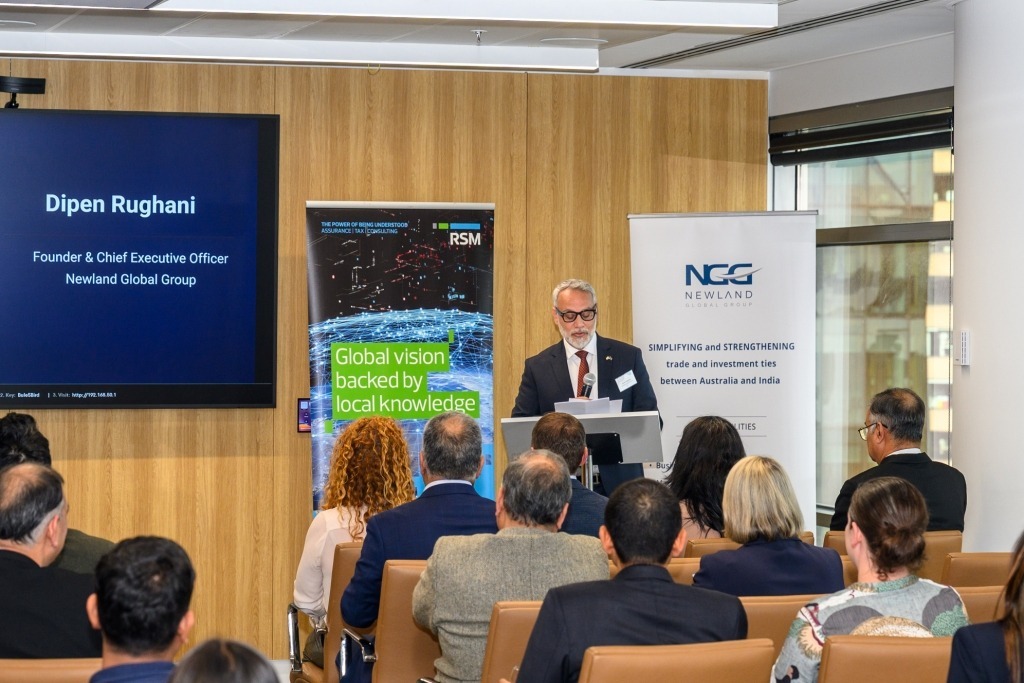
Dipen Rughani (CEO, Newland Global Group) emphasized the significance of the report:
“This is the most comprehensive, evidence-based business literacy document ever produced between Australia and India. The data is clear: the corridor is accelerating, companies are scaling faster, and the transition from aspiration to execution is already underway.”
Natasha Jha Bhaskar (Project Director & Executive Director, NGG) added:

“The insights reveal where companies are winning, how strategies evolve, and the patterns that define successful entry, localisation, and scale. This compendium turns real-life experience into actionable evidence.”
Dr S. Janakiraman highlighted India’s economic rise and global relevance, noting that opportunities favour companies that understand context, adapt fast, and execute with discipline.
Swati Dave and Edan Corkill underscored the importance of data-driven intelligence, strategic capability, and partnership-building in driving successful market outcomes.
A Strategic Perspective
For Australia’s business and Indian diaspora communities, the report confirms that the economic corridor is no longer just a diplomatic aspiration. It is now a commercially active, rapidly expanding ecosystem. Companies are repositioning toward India not only for opportunity but also for economic security and resilience amid global supply chain diversification and rising geopolitical risks.
Beyond trade figures, the compendium illustrates the broader impact of the corridor: every $1 million in exports generates 6.25 new jobs, with sectors like advanced manufacturing, clean energy, and technology showing the fastest gains.
The national launch in Sydney and Melbourne sets the stage for the India launch series across Delhi, Mumbai, and Chennai in early 2026, convening business leaders, policymakers, investors, and universities to translate insights into actionable outcomes.
The Australia–India partnership is no longer aspirational; it is measurable, actionable, and rapidly growing. The compendium provides a roadmap for companies seeking to participate in this $100 billion opportunity and highlights the strategic, operational, and cultural considerations essential for success.