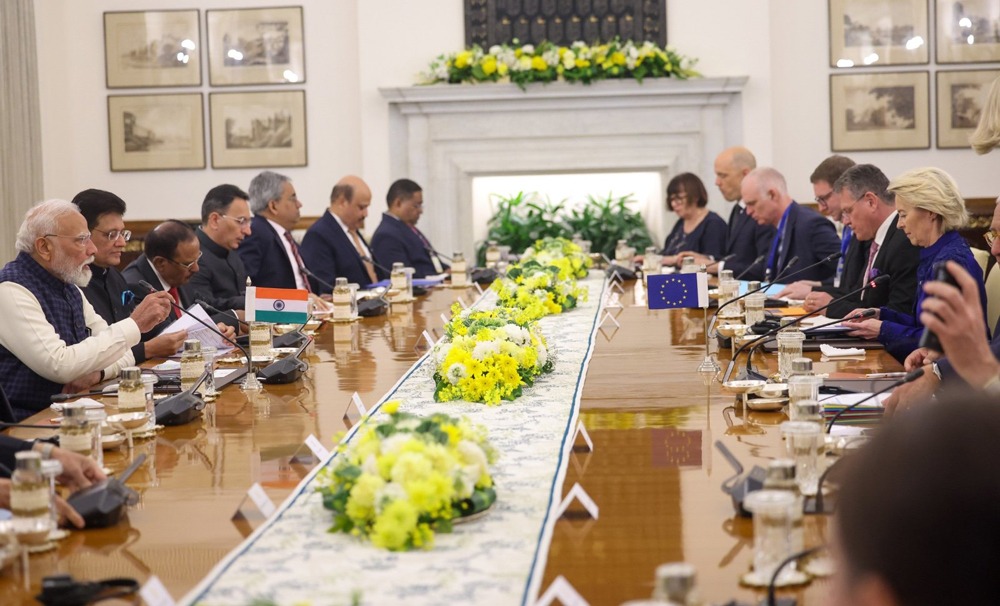
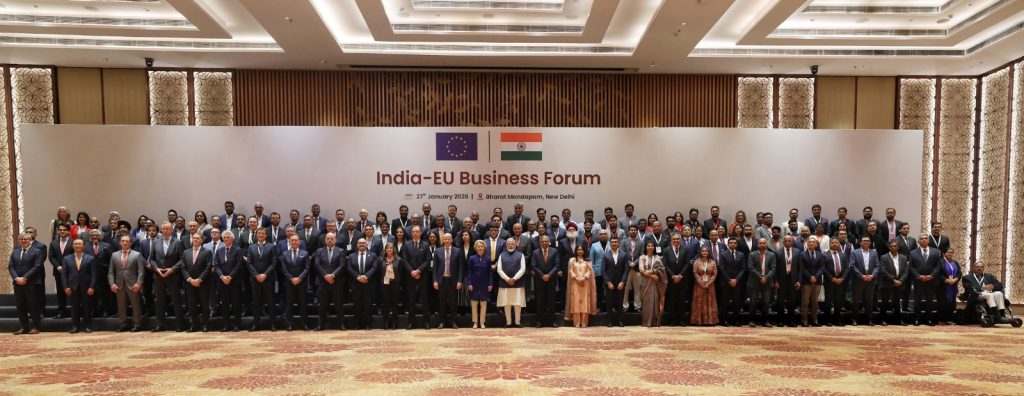
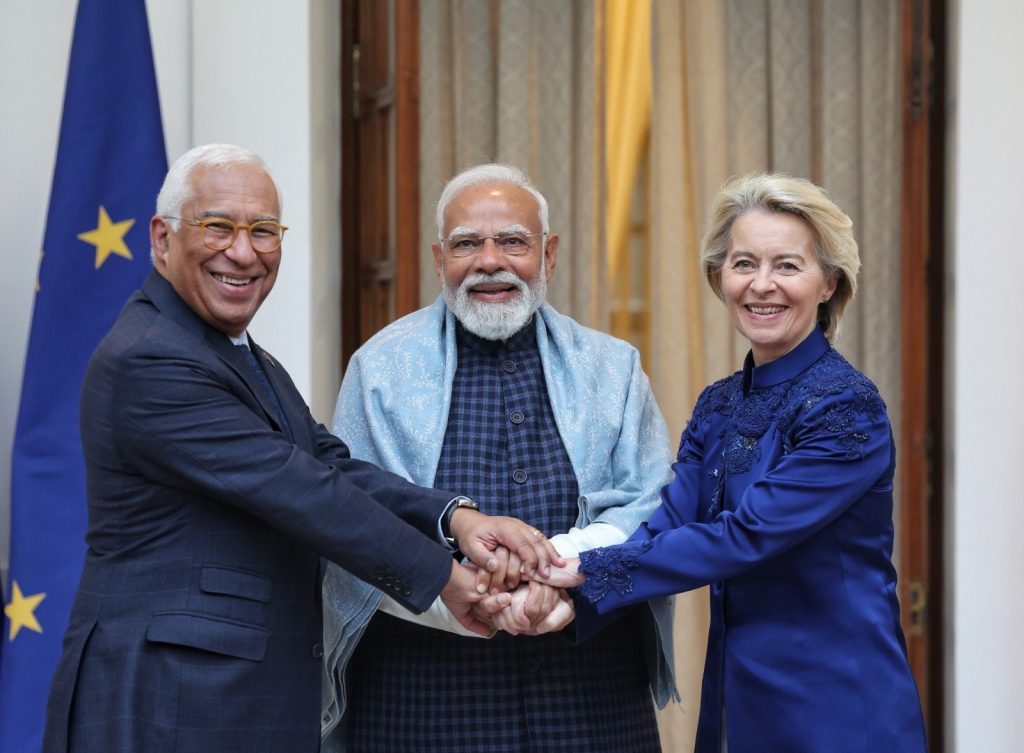
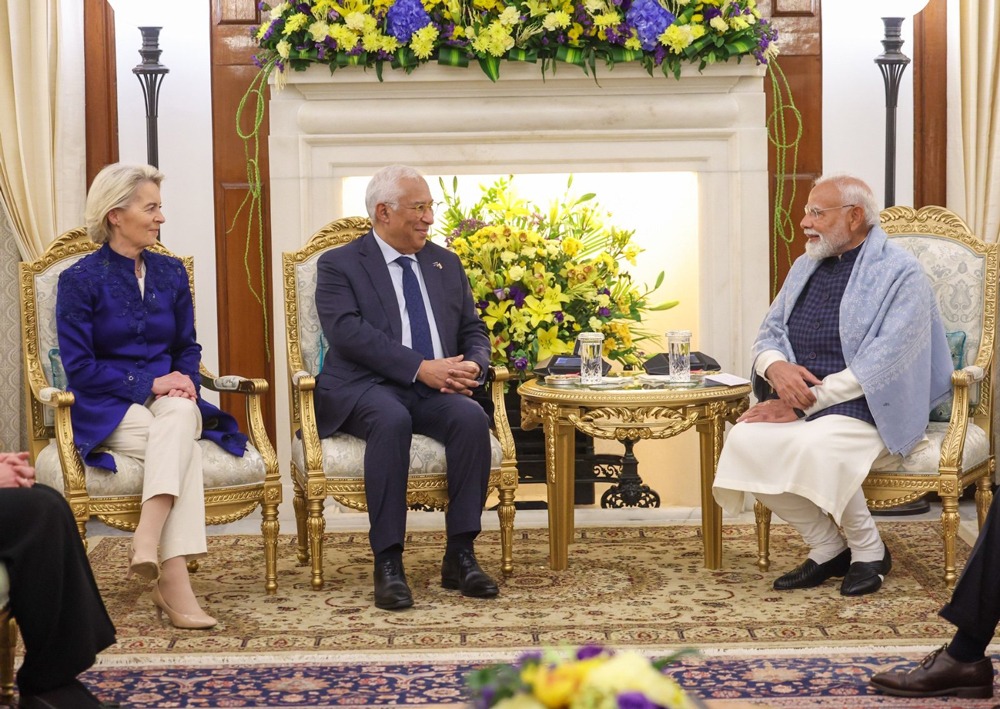
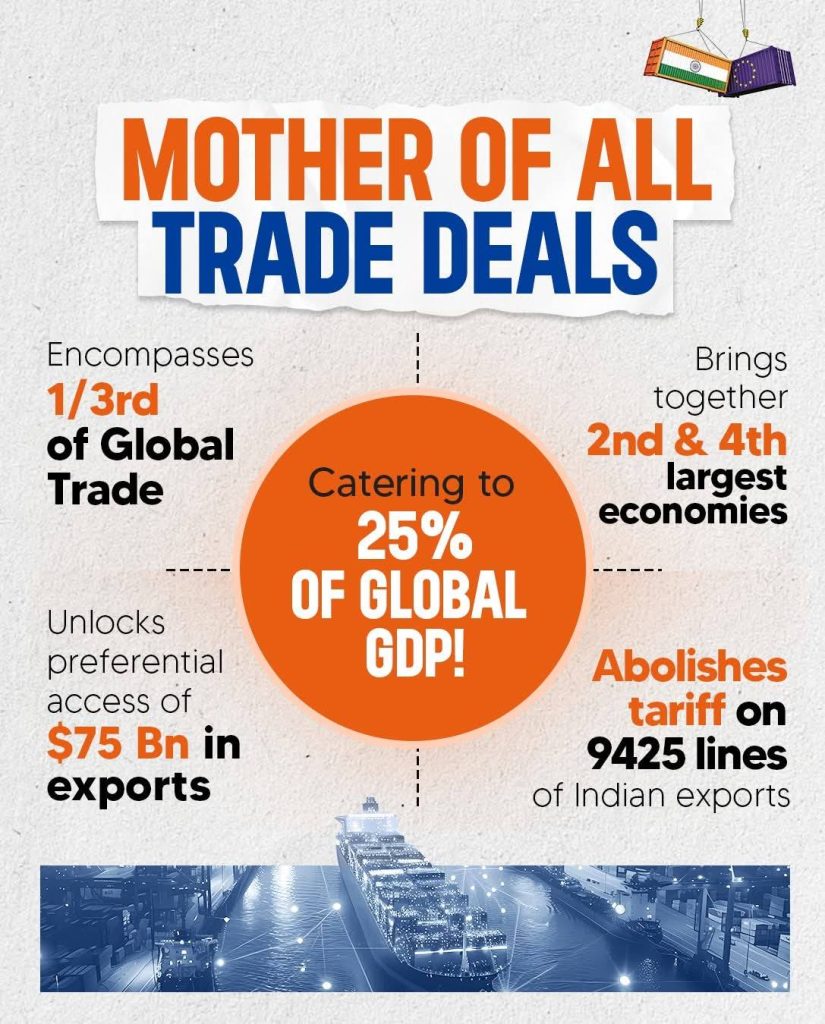
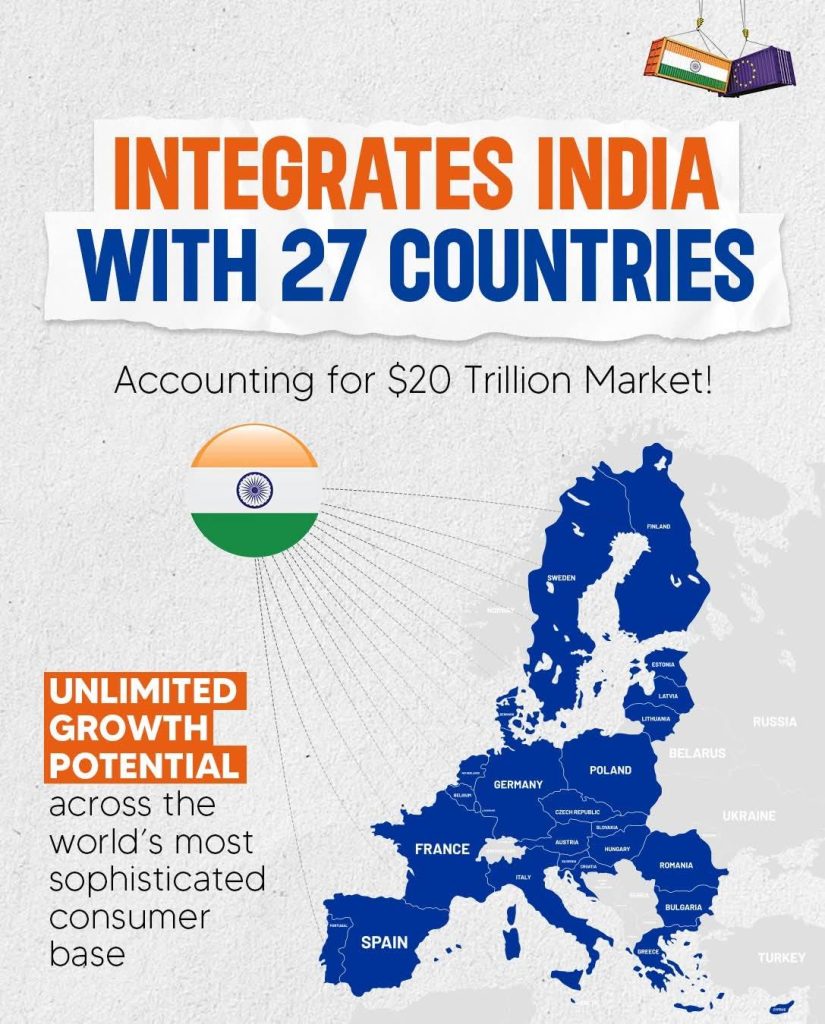
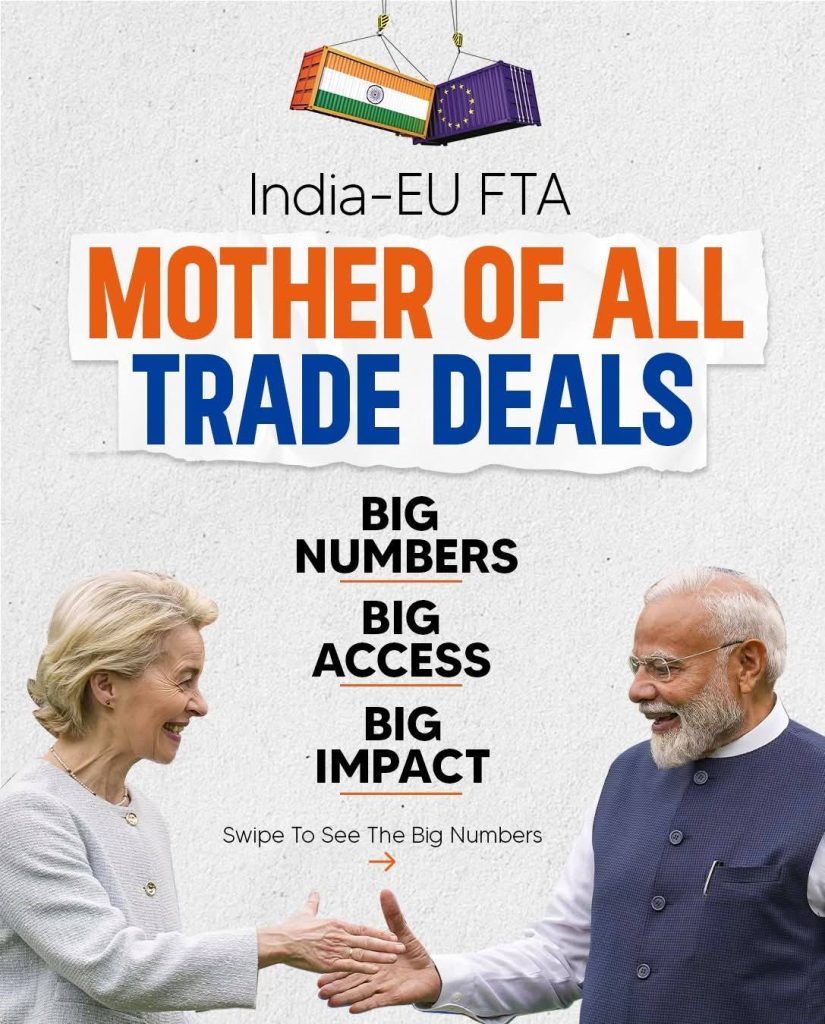
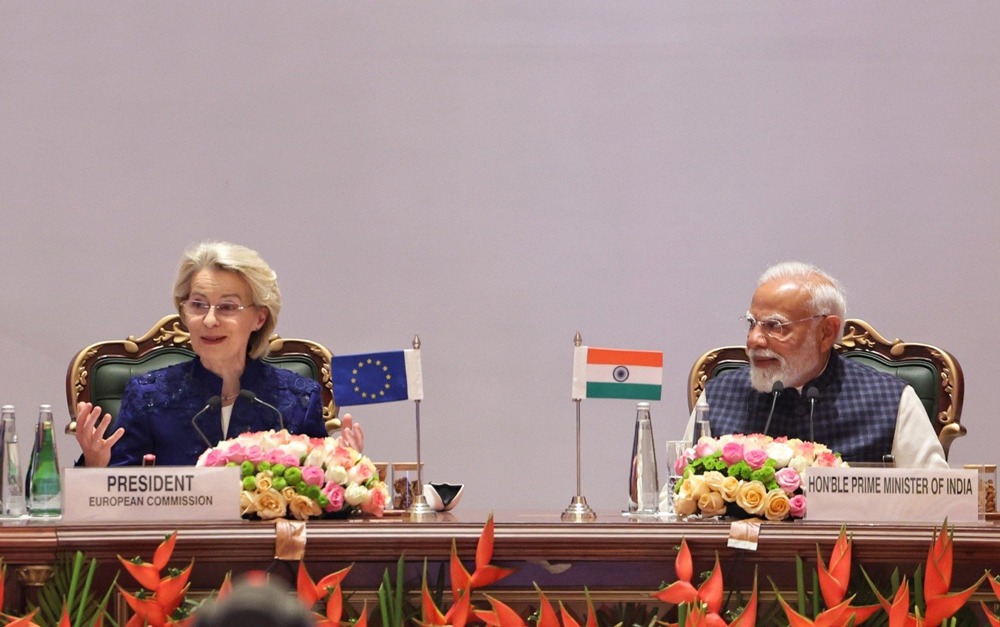
India and the European Union have concluded one of the most consequential free trade agreements of the decade, marking a historic reset in global trade alignments amid rising protectionism and geopolitical uncertainty. Announced at the 16th India–EU Summit by Prime Minister Narendra Modi and European Commission President Ursula von der Leyen, the India–EU Free Trade Agreement (FTA) brings together the world’s fourth- and second-largest economies, representing nearly 25% of global GDP and one-third of global trade.
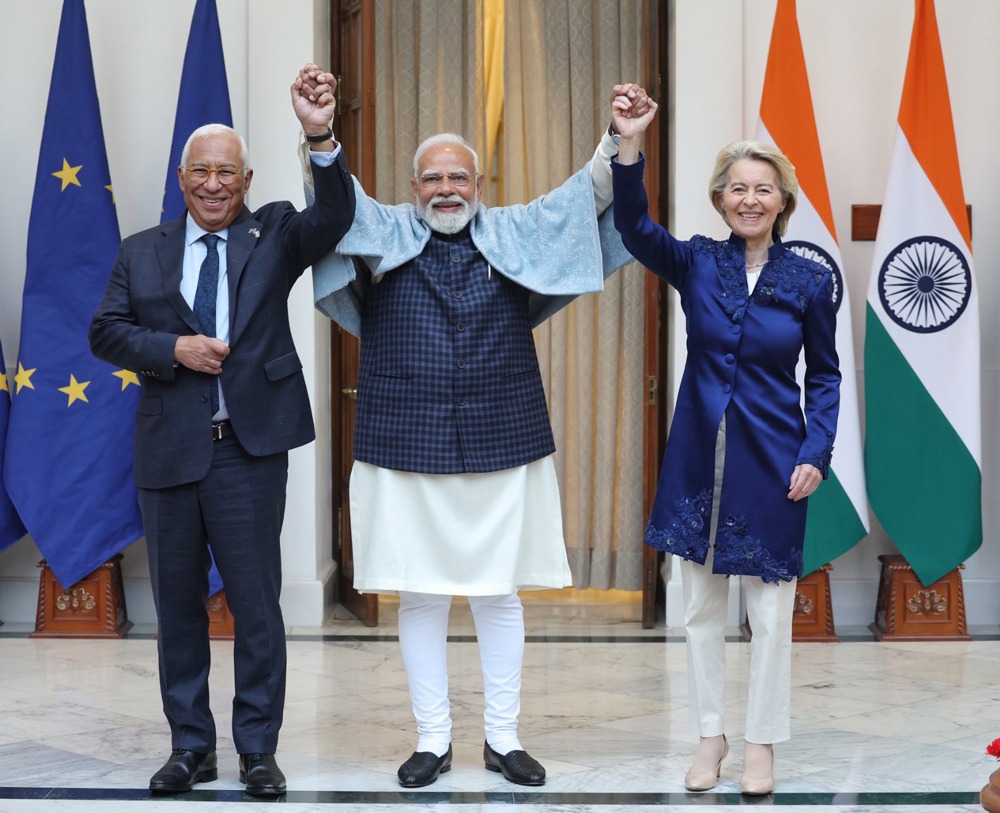
Described by von der Leyen as the “mother of all deals,” the agreement affects a combined population of around 2 billion people and signals a strategic convergence between two major democratic economies seeking stability, diversification, and long-term growth.
Unprecedented Market Access
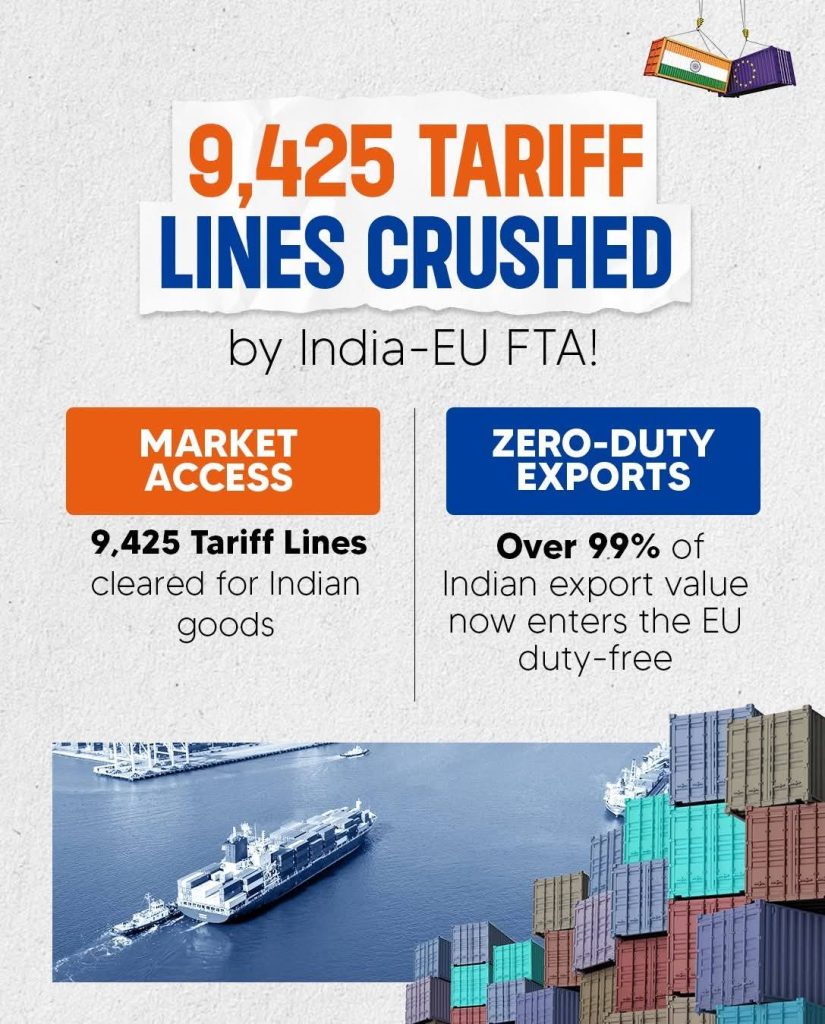
At the heart of the deal is sweeping tariff liberalisation. Over 99% of Indian exports by value will receive preferential access to the EU, while the EU will eliminate or reduce tariffs on 96.6% of its goods exported to India. For European exporters, this is expected to generate annual customs savings of roughly €4 billion.
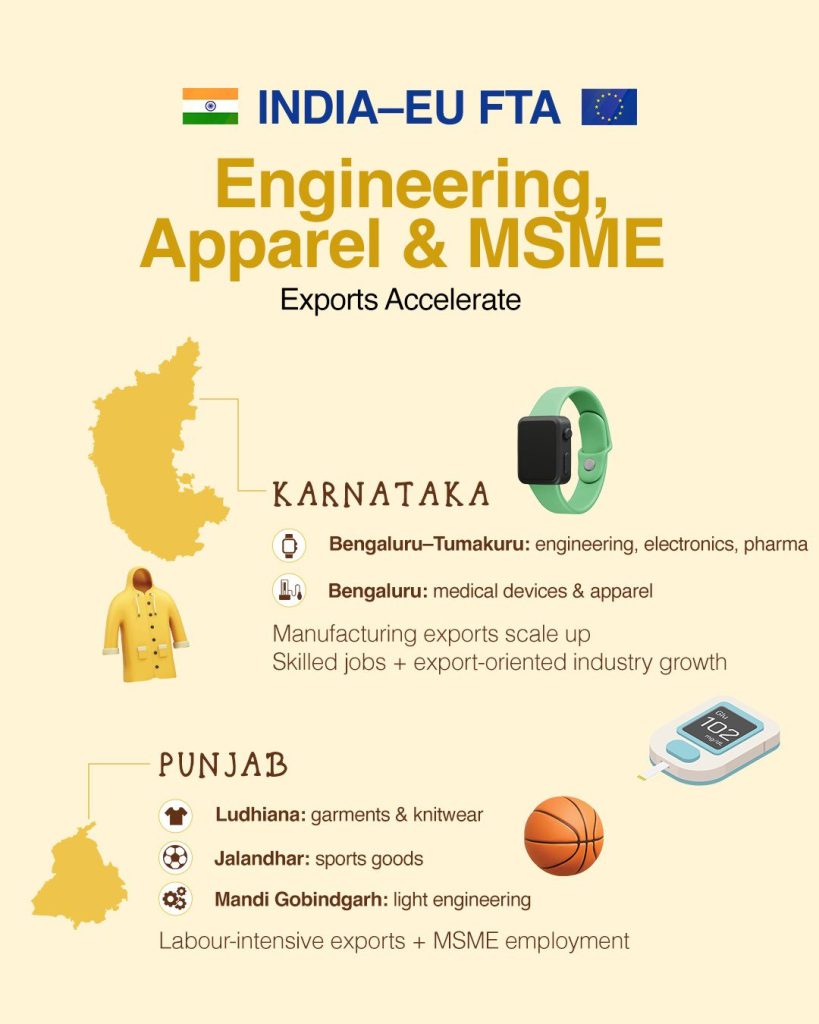
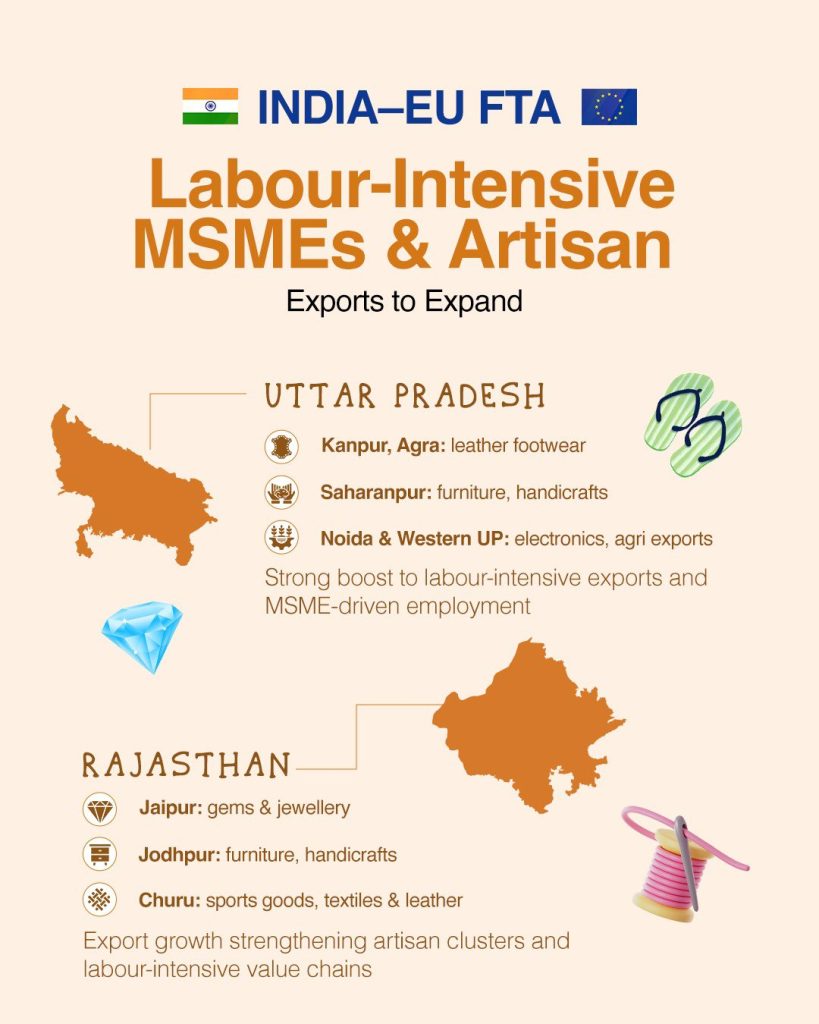
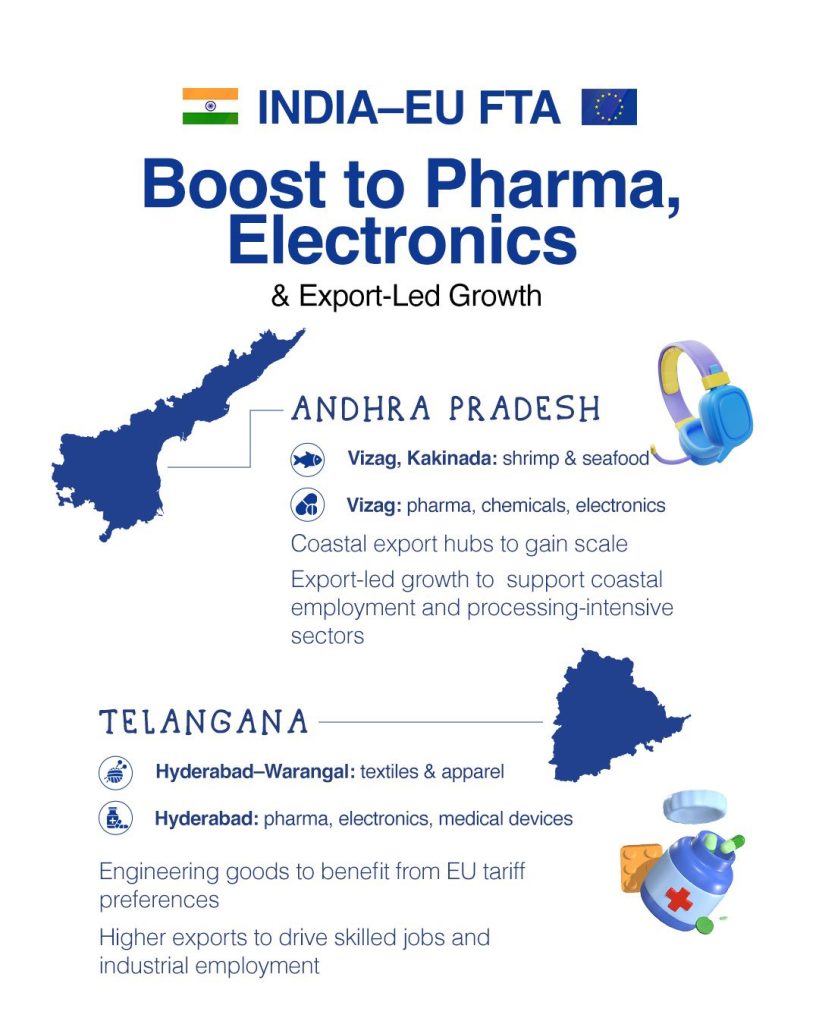
India’s labour-intensive sectors stand to benefit immediately. Exports worth approximately USD 33 billion from textiles, apparel, leather, footwear, marine products, gems and jewellery, handicrafts, and engineering goods will see tariffs reduced to zero upon entry into force. These sectors are expected to create jobs across MSMEs, women-led enterprises, artisans, and youth-driven industries.
Automobiles, Agriculture and Industry
The automotive sector is a headline winner for Europe. Tariffs on European vehicles-currently as high as 110%-will be gradually reduced to as low as 10% under a carefully calibrated quota system covering up to 250,000 vehicles annually. To protect domestic manufacturing, lower-priced cars remain shielded, while electric vehicles receive a five-year transition period.

India, meanwhile, secures reciprocal access for India-made automobiles into the EU and safeguards sensitive domestic sectors. Dairy, cereals, poultry, soymeal, and select fruits and vegetables remain excluded from liberalisation, balancing export growth with food security and farmer protection.
India’s agricultural and processed food exports-such as tea, coffee, spices, fruits, vegetables, and value-added foods-are expected to gain competitiveness in the EU, strengthening rural livelihoods and agrarian enterprises.
Services, Mobility and Talent
Beyond goods, the agreement delivers ambitious outcomes in services-now the fastest-growing component of both economies. The EU has opened 144 service subsectors to Indian providers, including IT and IT-enabled services, professional services, education, finance, tourism, construction, and research and development. India has offered access in 102 subsectors, enabling high-value EU investment and expertise to flow into India.
A future-ready mobility framework enables short-term and business travel, intra-corporate transfers, contractual service suppliers, and independent professionals across dozens of sectors. Importantly, the deal provides working rights for dependents, supports student mobility and post-study opportunities, and opens pathways for practitioners of Indian traditional medicine in EU member states where such practices are recognised.
Strategic and Environmental Dimensions
The FTA goes beyond tariffs, addressing non-tariff barriers through regulatory cooperation, streamlined customs procedures, and stronger sanitary and technical standards. It also includes forward-looking provisions on the EU’s Carbon Border Adjustment Mechanism (CBAM), ensuring dialogue, technical cooperation, and support for India’s transition toward lower-carbon production without imposing immediate punitive measures.
The agreement reinforces intellectual property protections under TRIPS, recognises India’s Traditional Knowledge Digital Library, and promotes cooperation in emerging fields such as artificial intelligence, clean technologies, and semiconductors.
Who Gains More?
In the short to medium term, the EU secures faster commercial gains through improved access to one of the world’s fastest-growing large markets, particularly in high-value sectors such as automobiles, machinery, chemicals, wine and spirits. India’s gains, while less immediate, are more structural-strengthening export competitiveness, supporting “Make in India,” and positioning the country as a credible alternative manufacturing and supply-chain hub amid shifting global trade patterns.
As one trade economist observed, “The EU gets quicker commercial returns; India gains long-term industrial positioning.”
What It Means for Australia
Australia is set to benefit indirectly as EU-India trade and investment deepen. Expanded industrial cooperation is likely to increase demand for Australian raw materials, critical minerals, energy, and agricultural inputs, particularly in green technologies and advanced manufacturing. Australian firms may also find new opportunities as third-country partners within EU-India value chains, especially in education, mining services, logistics, and professional services.
Strategically, the deal reinforces open, rules-based trade in the Indo-Pacific and adds momentum to Australia’s own trade ambitions with both India and the EU.
A New Chapter in Global Trade
The India–EU FTA is not merely a commercial agreement; it is a strategic statement. Concluded amid rising US tariffs, trade diversion risks, and global uncertainty, it signals that major economies are choosing deeper partnerships over isolation. Aligned with India’s vision of “Viksit Bharat 2047,” the agreement lays the foundation for inclusive, resilient, and future-ready growth—not just for India and Europe, but for the broader global trading system.