
A guide for South Asian parents in Australia
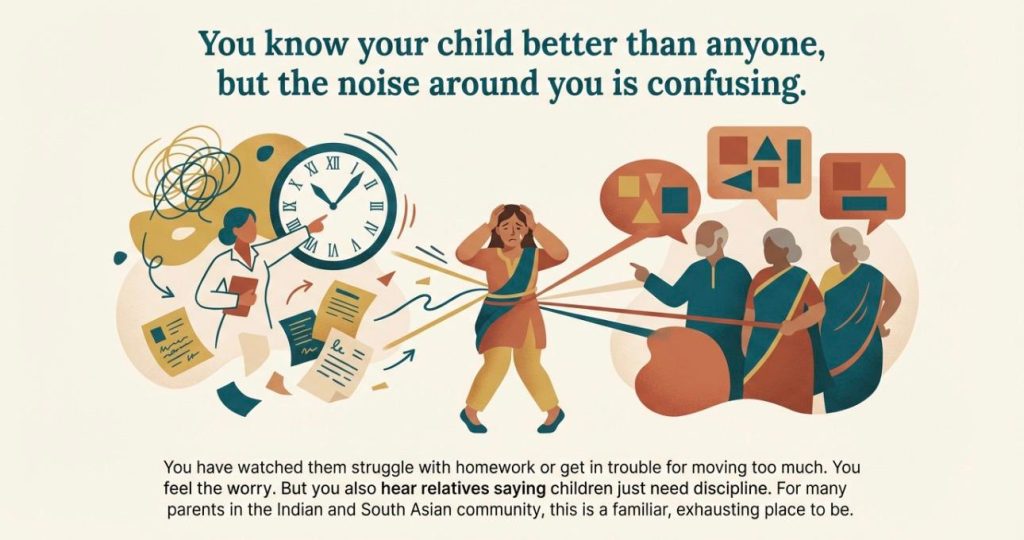
You know your child better than anyone. You have watched them struggle at school, become overwhelmed by homework, or find it hard to meet expectations in the classroom. You have heard the teachers. You have felt the worry. And maybe you have also heard from family members that you are being too soft, or that children just need more discipline.
For many parents in the Indian and South Asian community, this is a very familiar and very exhausting place to be.
If your child has ADHD, the problem is not discipline. It is not your parenting. It is a medical condition, and your child deserves support. In New South Wales, new reforms are now making it easier to get that support. Here is what you need to know.
What is ADHD?
ADHD stands for Attention Deficit Hyperactivity Disorder. It is a brain condition that affects how a child focuses, controls their impulses, and manages their energy. It is not laziness. It is not bad behaviour. It is not a reflection of how they were raised.
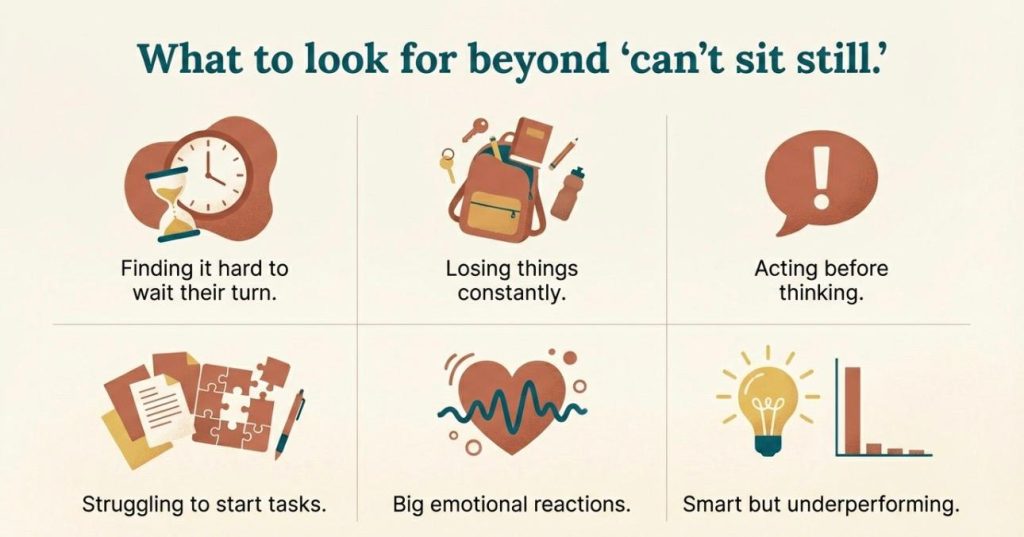
Children with ADHD may:
- Find it very hard to sit still or wait their turn
- Lose things constantly, even things they care about
- Find it hard to pause before acting, and become distressed when things go wrong
- Struggle to start tasks, or get stuck halfway through
- Experience intense emotions that take time to settle
- Be extremely bright but not performing as expected at school
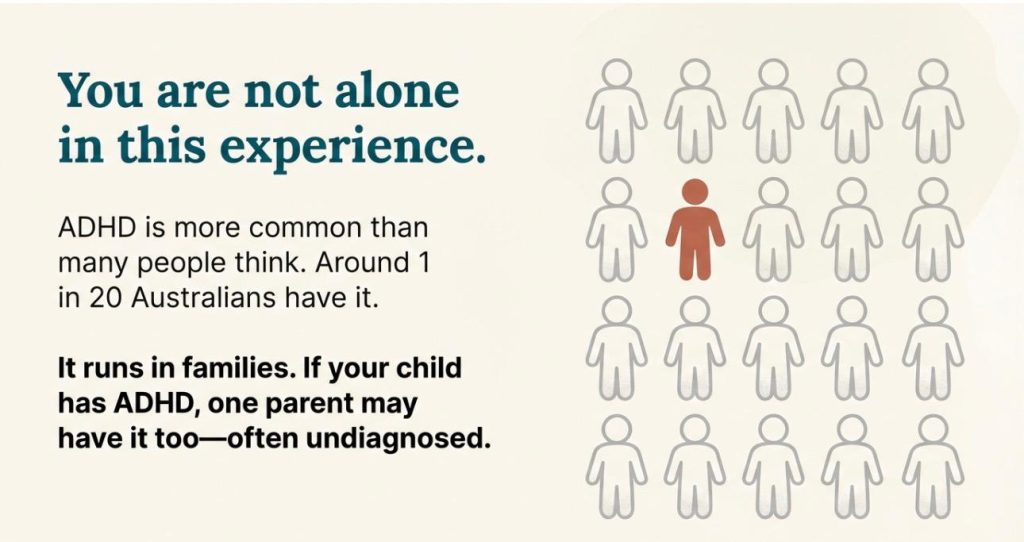
ADHD is more common than many people think. Around 1 in 20 Australians have it. It runs in families, so if your child has ADHD, one parent may have it too, often undiagnosed.

Why is it so hard to get help in our community?
Many South Asian parents face pressure from two directions. On one side, there is the Australian school system flagging concerns about their child. On the other side, there are relatives saying the child just needs to try harder, or that ADHD is not real, or that seeking help will bring shame to the family.
This pressure can cause parents to delay getting help, sometimes for years. In the meantime, the child falls further behind at school, their confidence and wellbeing can suffer, and the whole family is under strain.
There is also the matter of cost and waiting times. Before the new reforms, seeing a psychiatrist to get an ADHD diagnosis could mean waiting 12 to 18 months or longer, and spending a lot of money.
Getting a diagnosis is not giving up on your child. It is opening a door to the right kind of support.
What are the new NSW ADHD Reforms?
In 2025, the NSW Government introduced reforms to make ADHD diagnosis and treatment more accessible. These changes are especially helpful for families with children.
Key changes include:
- More specialists can now diagnose ADHD in children, including certain paediatricians. This means shorter waiting times.
- The specialist and GP work together as a team. The specialist makes the diagnosis and starts your child’s treatment plan. Then a GP who has completed specific ADHD training, called an ADHD Continuation Prescriber, takes over the ongoing care and repeat prescriptions. This means fewer trips back to the specialist once things are stable. Not all GPs have this training, so ask your GP if they are an ADHD Continuation Prescriber, or ask for a referral to one who is.
- Telehealth options have expanded, so you can access appointments from home. This is helpful for parents managing work and school schedules.
- The reforms aim to reduce overall costs and delays across the system.
These changes will not solve everything overnight. But they are a real step forward, and they mean your family does not have to wait as long or spend as much to get the support your child needs.
What can you do right now?
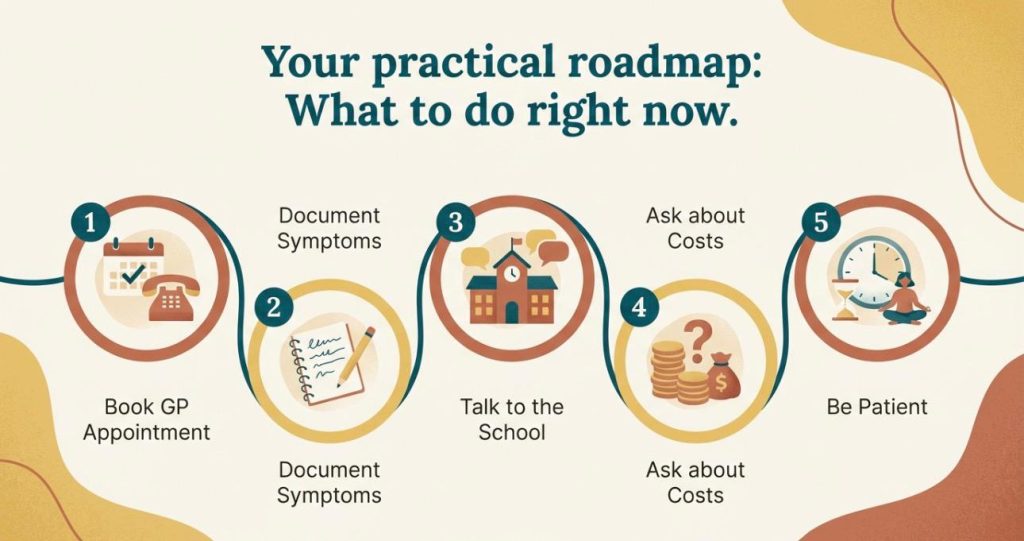
If you are worried about your child, here are practical steps to take:
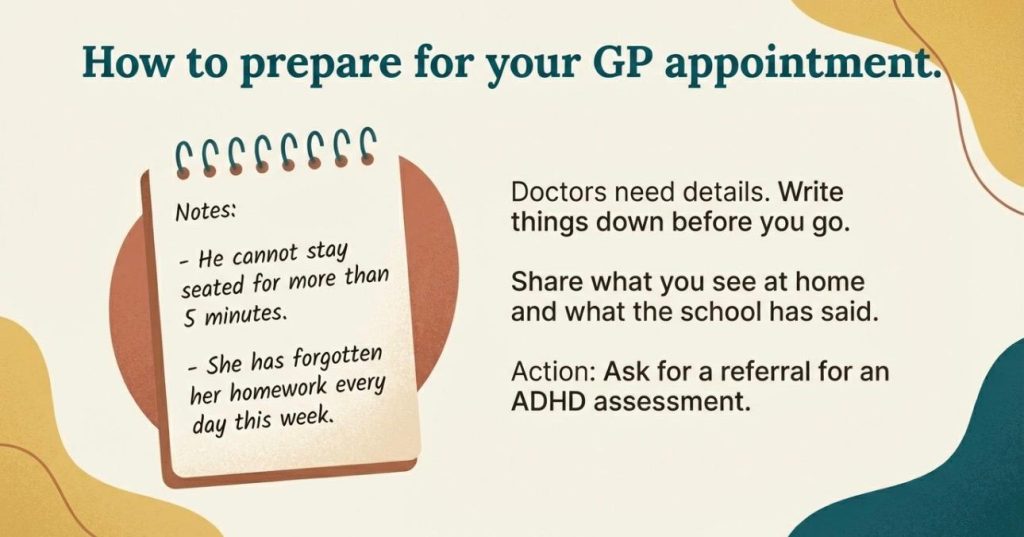
- Start with your GP. Book an appointment and share your concerns. Tell them what you are seeing at home and what the school has said. Ask for a referral for an ADHD assessment.
- Write things down before the appointment. Specific examples help. For instance: “He cannot stay seated for more than five minutes” or “She has forgotten her homework every day this week.” Doctors need details.
- Talk to the school. Ask the teacher or school counsellor if they have noticed anything. Schools can provide a written report that supports the assessment process.
- Ask about costs. Some assessments and services are covered by Medicare. Your GP can explain what is available.
- Be patient with yourself. Navigating this system is hard work. You are doing the right thing by seeking answers.
If your child is diagnosed, what happens next?
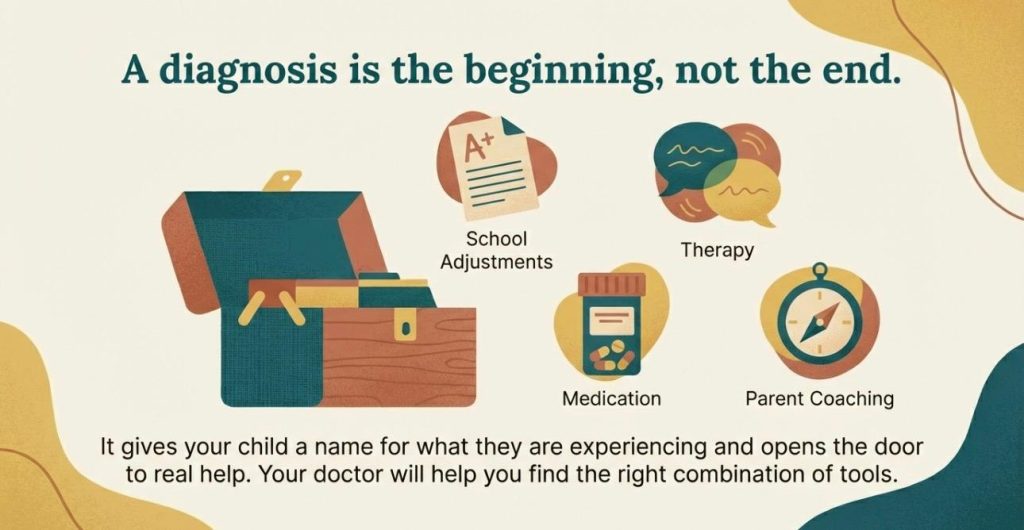
A diagnosis is the beginning, not the end. It gives your child a name for what they are experiencing and opens the door to real help.
Support for children with ADHD can include:
- Strategies and adjustments at school, such as extra time in exams or a quieter space to work
- Therapy to help with focus, organisation, and managing emotions
- Medication, which many families find helpful alongside other support
- Parent coaching, to help you understand your child’s brain and respond in ways that work
Every child is different. What works for one may not work for another. Your doctor and specialists will help you find the right combination.
A word to parents who are struggling
Parenting a child with ADHD can feel tiring. It can feel like you are managing many challenges at once. It can strain your relationship with your partner, with your child, and with yourself.
You are not failing. Your child is not failing. You are both navigating something that is genuinely hard, without always having the right map.
Please reach out for help. Speak to your GP. Connect with other parents in similar situations. You do not have to do this alone.
Helpful resources:
- ADHD Australia: adhdaustralia.org.au
- Your GP: always the first step
- headspace: for young people aged 12 to 25 (headspace.org.au)
- Beyond Blue: for mental health support (beyondblue.org.au)
- Raising Children Network: raisingchildren.net.au (search ADHD)
Note: This article is for general information only. Please speak with a qualified health professional for advice about your child’s situation.
– Dr Jaspreet Saini

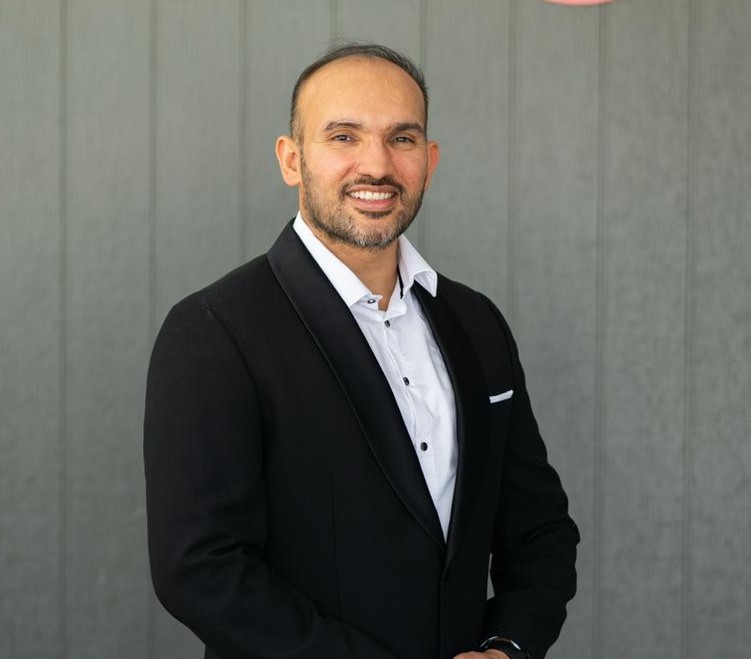
Dr Jaspreet Saini
Dr Jaspreet Saini is the Principal GP and Practice Owner at Rosedale Medical Practice in West Pennant Hills. He has a special clinical interest in ADHD care for children and adults and offers ADHD continuation prescribing under the NSW GP reforms, providing ongoing treatment for patients already diagnosed with ADHD.