After eight years of negotiations, Australia and the European Union have finally sealed a landmark free trade agreement, marking a major shift in global trade relations. While the deal promises economic benefits and stronger ties, it has also triggered concern among local producers – particularly those in Australia’s booming prosecco industry.
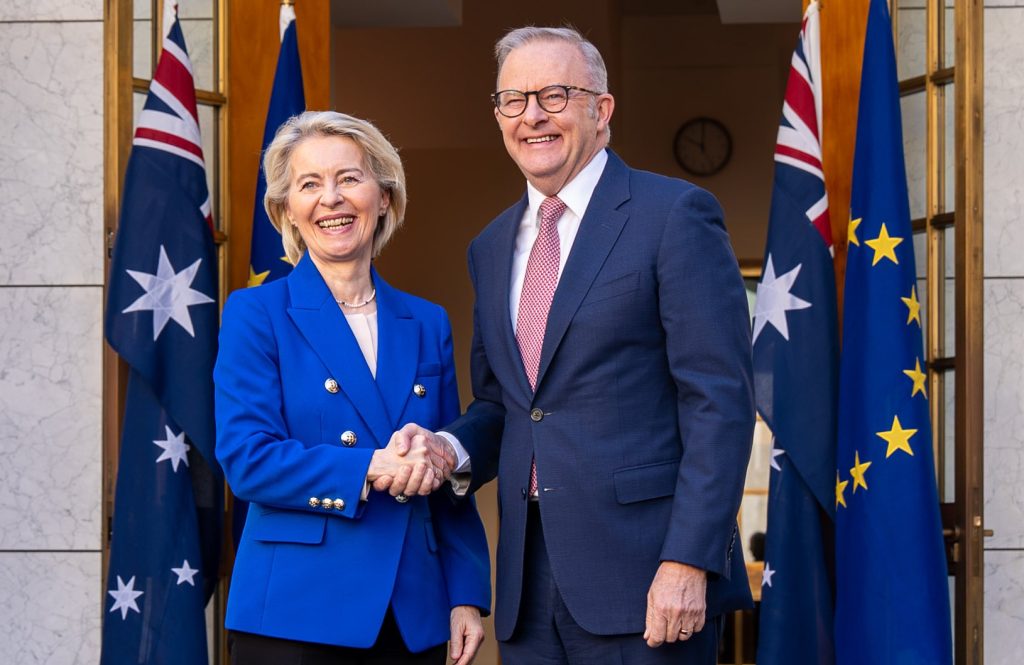
The agreement is expected to deliver significant economic gains, with estimates suggesting it could add around A$10 billion annually to Australia’s economy while removing tariffs on a wide range of goods. This includes improved access for sectors like wine, seafood and agriculture, alongside cheaper European imports for Australian consumers.
However, one of the most contentious issues throughout the negotiations has been the use of “geographical indication” (GI) names – including products like prosecco, parmesan and feta. The EU has long pushed to protect these names, arguing they are tied to specific European regions and heritage.
For Australian winemakers, especially those producing prosecco in regions like Victoria’s King Valley, the debate has been deeply personal. Local producers have built entire businesses around the name, which they consider a grape variety rather than a protected European label.
Worlds apart, but now closer than ever 🇦🇺🇪🇺
— Anthony Albanese (@AlboMP) March 24, 2026
Australia and Europe are taking our relationship to the next level with a once in a generation Free Trade Agreement and Security and Defence Partnership.
More jobs. More security. More local products in global markets.
And in an… pic.twitter.com/vmGHfgGcAR
While earlier fears suggested Australian producers could lose the right to use the name “prosecco,” recent developments indicate a more complex outcome. Reports suggest compromises have been reached that may allow existing producers to continue using the label, though concerns remain about long-term restrictions and market positioning.
Beyond the wine industry, the deal has drawn mixed reactions across sectors. Agricultural groups have expressed disappointment, arguing the agreement does not deliver enough meaningful access to European markets for products like beef and lamb. Meanwhile, critics say the deal may favour European exporters in key areas.
At the same time, the government has defended the agreement as a major step forward. Officials argue it will boost exports, create jobs and strengthen Australia’s position in global trade, especially as supply chains shift and countries seek new economic partnerships.

The deal also reflects broader geopolitical trends, with both Australia and the EU looking to diversify trade relationships amid global uncertainty. Strengthening ties in areas like clean energy, critical minerals and technology has been a key part of the agreement’s long-term vision.
For the Indian and multicultural diaspora in Australia, the development highlights how global trade decisions can directly impact local industries and communities. From family-run wineries to export-driven businesses, the ripple effects of such agreements are felt far beyond policy rooms.
As the deal moves toward implementation, the spotlight will remain on how it balances economic opportunity with the protection of local industries. For Australia’s prosecco makers, the outcome represents both a challenge and a turning point in defining the future of their identity in the global wine market.