Prime Minister Narendra Modi has received the prestigious ‘Guardian of the Blue Horizon’ award from Seychelles, recognising his contribution to environmental conservation, sustainable development and global climate leadership. The honour adds to a growing list of international recognitions acknowledging India’s expanding role in addressing climate change while promoting sustainable economic growth and international cooperation.
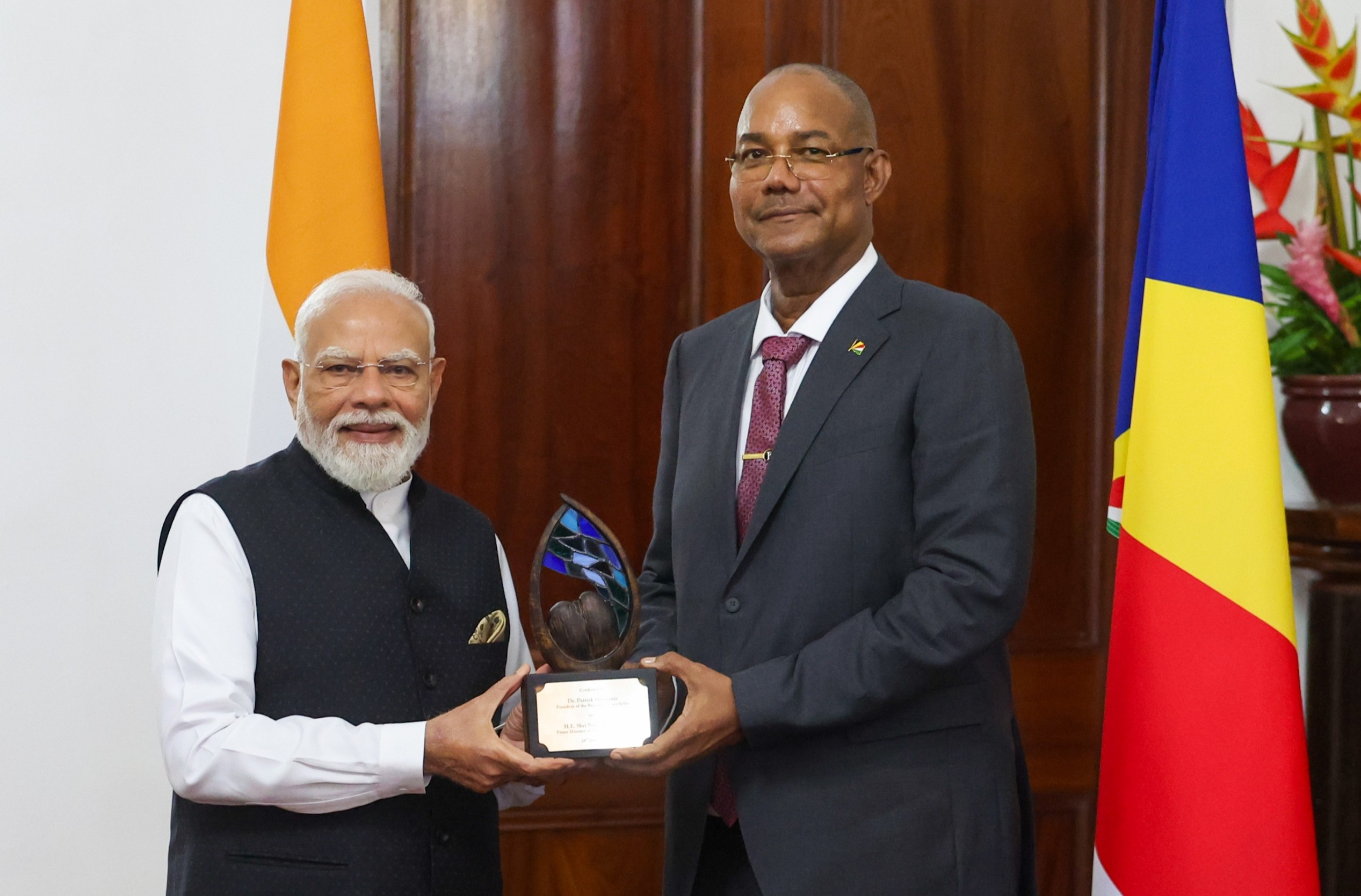
The award reflects the international appreciation of Modi’s long-standing focus on balancing economic development with environmental responsibility. Over the past decade, India has emerged as one of the world’s leading voices on renewable energy, climate resilience and sustainable development, with several initiatives launched under Modi’s leadership attracting global participation and recognition.
The latest recognition follows another major international honour earlier this year when the Food and Agriculture Organization (FAO) presented Prime Minister Modi with the Agricola Medal for his contribution to strengthening global food security, promoting sustainable agriculture and supporting agricultural transformation. Together, these honours underline India’s growing influence in shaping global conversations around sustainability and climate action.
Climate leadership has been a defining feature of Modi’s international engagement. In 2018, he received the United Nations Champions of the Earth Award, the UN’s highest environmental honour, for championing the International Solar Alliance and supporting efforts to reduce the use of single-use plastics. The same year, he was also awarded the Seoul Peace Prize for advancing sustainable economic growth, inclusive development and international cooperation.
One of the most significant achievements during Modi’s tenure has been the launch of the International Solar Alliance (ISA), a global initiative bringing together countries to accelerate the adoption of solar energy. India has also championed the ambitious One Sun, One World, One Grid vision, aimed at creating interconnected renewable energy networks that enable countries to share clean electricity across borders and reduce dependence on fossil fuels.
Beyond renewable energy, Modi has consistently promoted community-led approaches to sustainability. His Mission LiFE (Lifestyle for Environment) campaign encourages individuals around the world to adopt environmentally responsible lifestyles through simple daily actions. Rather than placing responsibility solely on governments, the initiative positions citizens as active participants in the global response to climate change.
Recognising the growing vulnerability of island nations to climate change, India also launched the Infrastructure for Resilient Island States (IRIS) initiative during the COP26 Climate Summit in Glasgow. Developed in partnership with the United Kingdom, Australia and Small Island Developing States, the initiative seeks to strengthen climate resilience and disaster preparedness for countries most exposed to rising sea levels and extreme weather events.

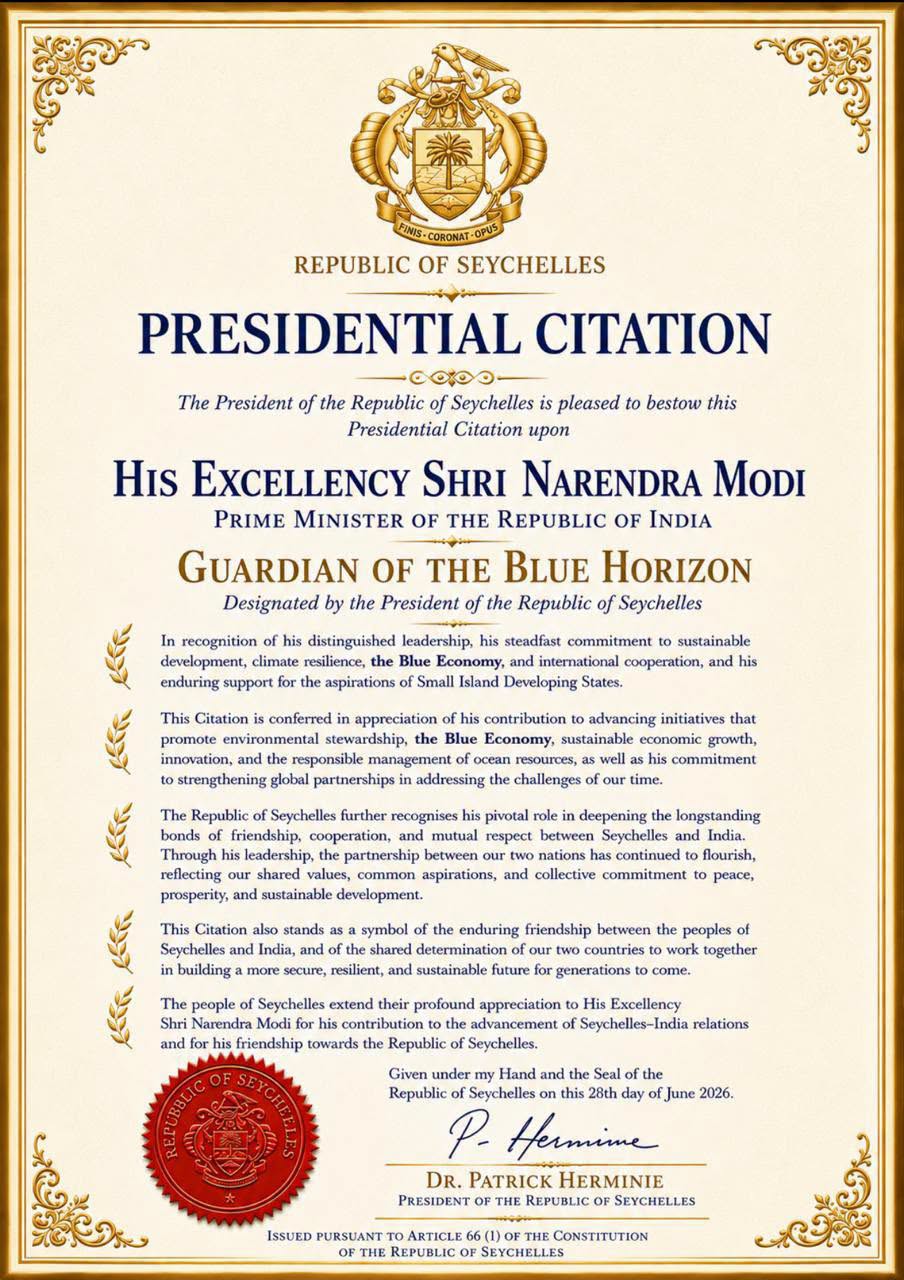
India’s domestic progress has also contributed to its growing environmental reputation. According to the document, the country achieved more than 50 per cent cumulative installed electricity capacity from non-fossil fuel sources in 2025, reaching its Paris Agreement target five years ahead of schedule. India is now the world’s third-largest producer of renewable energy, while its installed solar power capacity has increased dramatically over the past decade. Biodiversity conservation has also received renewed attention through initiatives such as the International Big Cat Alliance, reinforcing India’s broader environmental commitments.
Modi’s environmental vision extends beyond government policy into public participation. Campaigns such as ‘Ek Ped Maa Ke Naam’, encouraging people to plant a tree in honour of their mothers, have transformed environmental conservation into a community movement while strengthening India’s climate diplomacy internationally. His emphasis on practical, scalable and people-driven solutions continues to shape India’s approach to sustainable development both at home and abroad.
The conferment of the ‘Guardian of the Blue Horizon’ award by Seychelles serves as another milestone in India’s expanding global environmental engagement. As nations increasingly seek collaborative solutions to climate change, renewable energy and sustainable growth, the recognition highlights the importance of international partnerships in addressing shared global challenges. It also reinforces India’s position as an influential voice advocating that economic progress and environmental stewardship can advance together to create a more sustainable future.