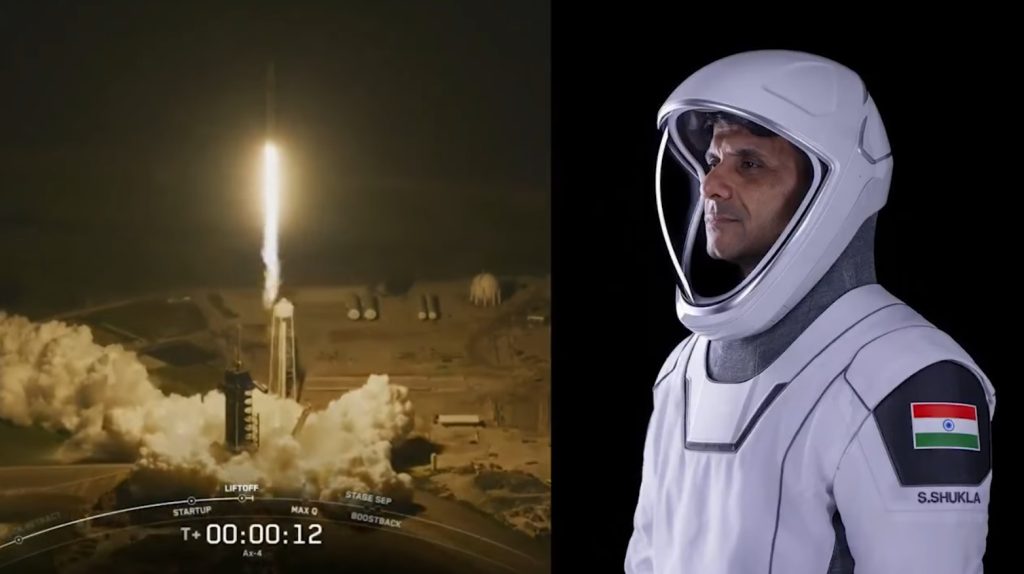
In a moment of immense national pride and historic significance, Group Captain Shubhanshu Shukla of the Indian Air Force has become the first Indian to set foot on the International Space Station (ISS). This monumental achievement marks India’s re-entry into human spaceflight after a 41-year gap, since the legendary journey of Wing Commander Rakesh Sharma in 1984.
Upon entering the ISS, Shukla’s first words were filled with emotion and symbolism:
“What a ride! Namaskar mere pyare deshvasiyo! I have my Tricolour on my shoulder, reminding me I’m never alone. This is not just the beginning of my personal journey, but the dawn of India’s human spaceflight programme. Let us begin this journey together. Jai Hind. Jai Bharat.”
A Journey from 1984 to 2025: Connecting the Legacy
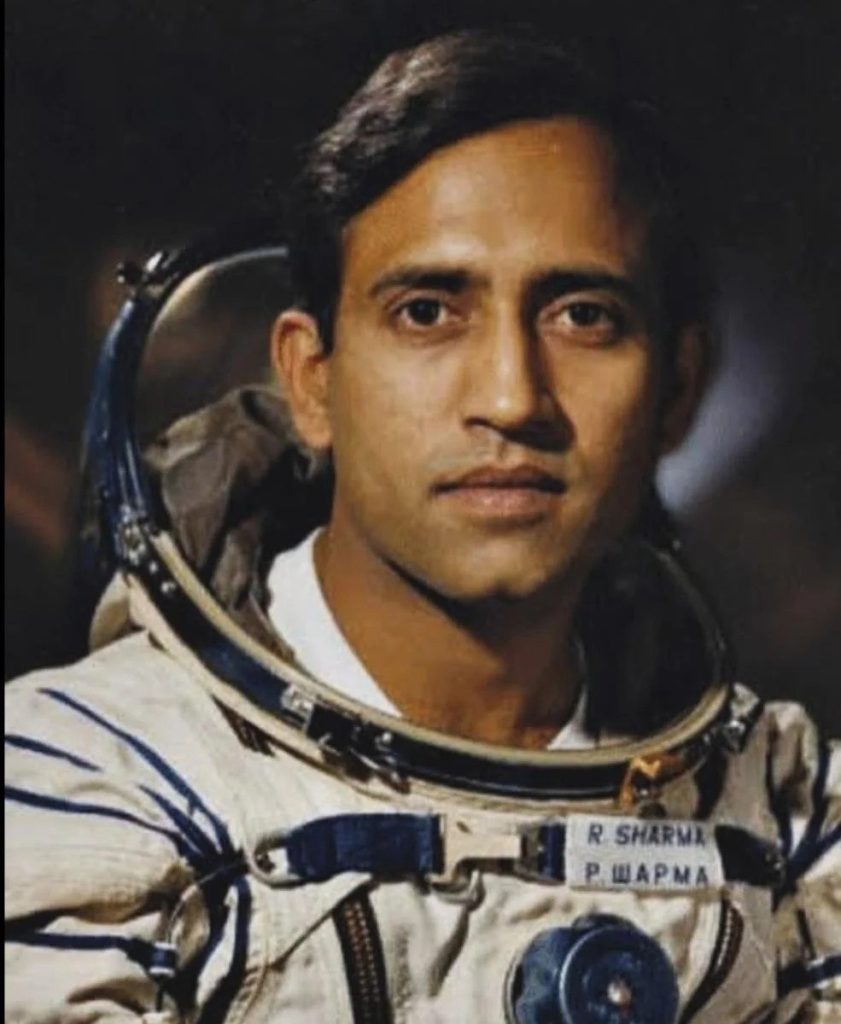
For many Indians, especially those who had just stepped into adulthood in the 1980s, memories of Rakesh Sharma’s spaceflight aboard the Soviet Soyuz T-11 remain vivid. On April 3, 1984, Sharma made history as the first Indian in space, spending 8 days aboard the Salyut-7 space station. His now-iconic words, describing Earth’s view from space—“Saare jahaan se acchha”—have become part of the national consciousness.
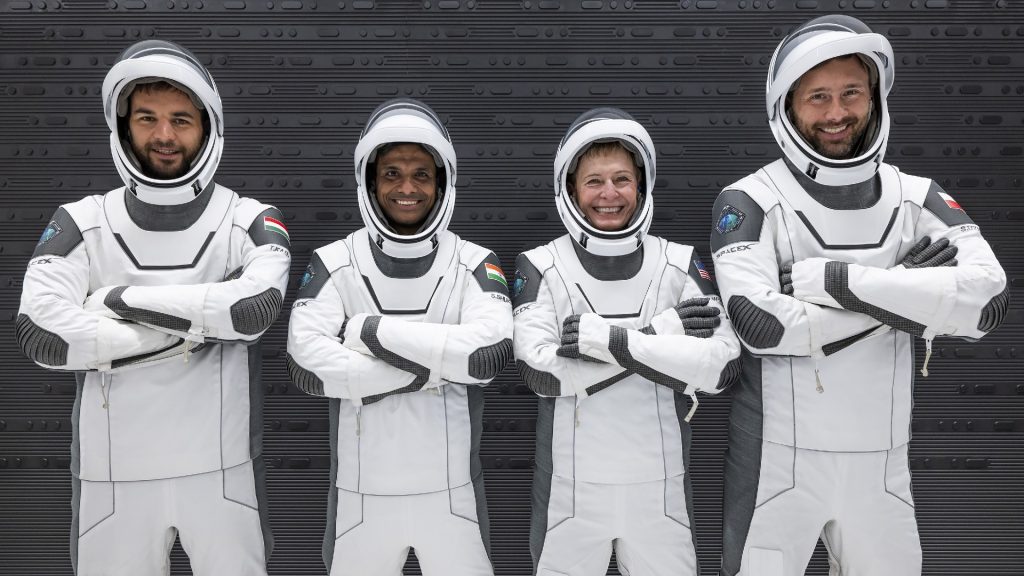
Now, on June 25, 2025, India turns another page in its space history. Shukla, piloting the SpaceX Falcon 9 rocket and Crew Dragon capsule as part of the Axiom-4 (Ax-4) Mission, has entered the ISS as a symbol of India’s growing role in global space exploration. He is joined by Commander Peggy Whitson, and mission specialists Sławosz Uznański-Wiśniewski of Poland and Tibor Kapu from Hungary.
The mission launched from NASA’s Kennedy Space Center in Florida at 2:31 a.m. EDT (12:01 p.m. IST) and docked successfully with the ISS’s Harmony module the next day, boosting the total crew count aboard the ISS to 11.
Carrying the Dreams of 1.4 Billion Indians
As Shukla embarked on this milestone journey, he carried not just India’s flag, but the hopes and ambitions of 1.4 billion Indians around the world. His voyage is more than just a personal triumph—it represents a national revival in space exploration.
A heartfelt social media post captured the emotion of the moment perfectly:

“Our chest swells with pride as Group Captain Shukla carries the dreams and ambitions of 1.4 billion Indians across the globe to the ISS, after a gap of more than 40 years. We wish him and his team all the best in their mission and a safe return to terra firma.
Wing Commander Rakesh Sharma and Group Captain Shukla are the shining forerunners of many future Gaganyatris who will venture into space in the coming years.
We are fortunate to belong to a generation that has witnessed both these historic events in our lifetime.”
Science, Strategy & Symbolism
The Ax-4 crew is expected to spend two weeks aboard the ISS conducting over 60 scientific experiments, including seven led by the Indian Space Research Organisation (ISRO). Shukla’s key focus will be on food science, space nutrition, and pioneering research into microalgae cultivation in microgravity—a crucial area for future long-term space missions.
ISRO, which invested ₹5 billion (about USD 59 million) in securing Shukla’s place on the mission, views this as an invaluable stepping stone toward its ambitions to launch a manned mission (Gaganyaan) by 2027, establish a space station by 2035, and ultimately send an Indian astronaut to the Moon by 2040.
A Voice from the Stars
Shortly after the rocket’s second stage separation—roughly 10.5 minutes after liftoff—Shukla’s message came through loud and clear:
“What a ride! Namaskar mere pyare Deshvasiyo. We’ve returned to space after 40 years, and it’s been an incredible journey. We’re currently orbiting Earth at a velocity of 7.5 km/sec. I carry the Tricolour with me, a reminder that I am with all of you. This is the beginning—not just of my mission, but of India’s human spaceflight journey together. Jai Hind. Jai Bharat.”
He later reflected on his early hours in space, saying:
“It’s been amazing to just float here. I feel like a baby—learning to walk, eat, and read all over again. I wasn’t feeling great during launch, but I’ve been sleeping a lot—which, I’m told, is a good sign!”
Floating beside him was a plush white toy swan named Joy, the mission’s whimsical zero-gravity indicator, dancing through the cabin as a symbol of both fun and functionality.
A Glimpse of Tomorrow
Shukla also brought a touch of home to orbit, packing Indian delicacies like gajar ka halwa, moong dal halwa, and mango nectar—a reminder of the culture he represents.
Dr. S. Somanath, former ISRO Chairman, summed it up best:
“With Group Captain Shukla on board, India is not just a passenger—we are a partner in shaping humanity’s future in space.”
From “Saare Jahaan Se Acchha” to “What a ride!” — India’s space story is far from over. In fact, it’s only just beginning.