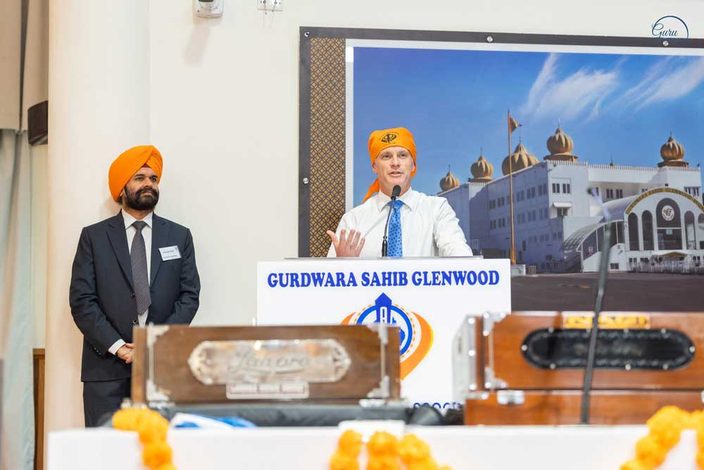
Former Indian Union Cabinet Minister Smriti Zubin Irani has held a series of meetings with Australian political leaders, business executives, academics and policy representatives during a visit aimed at strengthening cooperation between India and Australia.
The visit, conducted under the Australian Government Department of Foreign Affairs and Trade’s Special Visits Program, has focused on education, trade, investment, regional security, research, skills development and women’s economic participation.
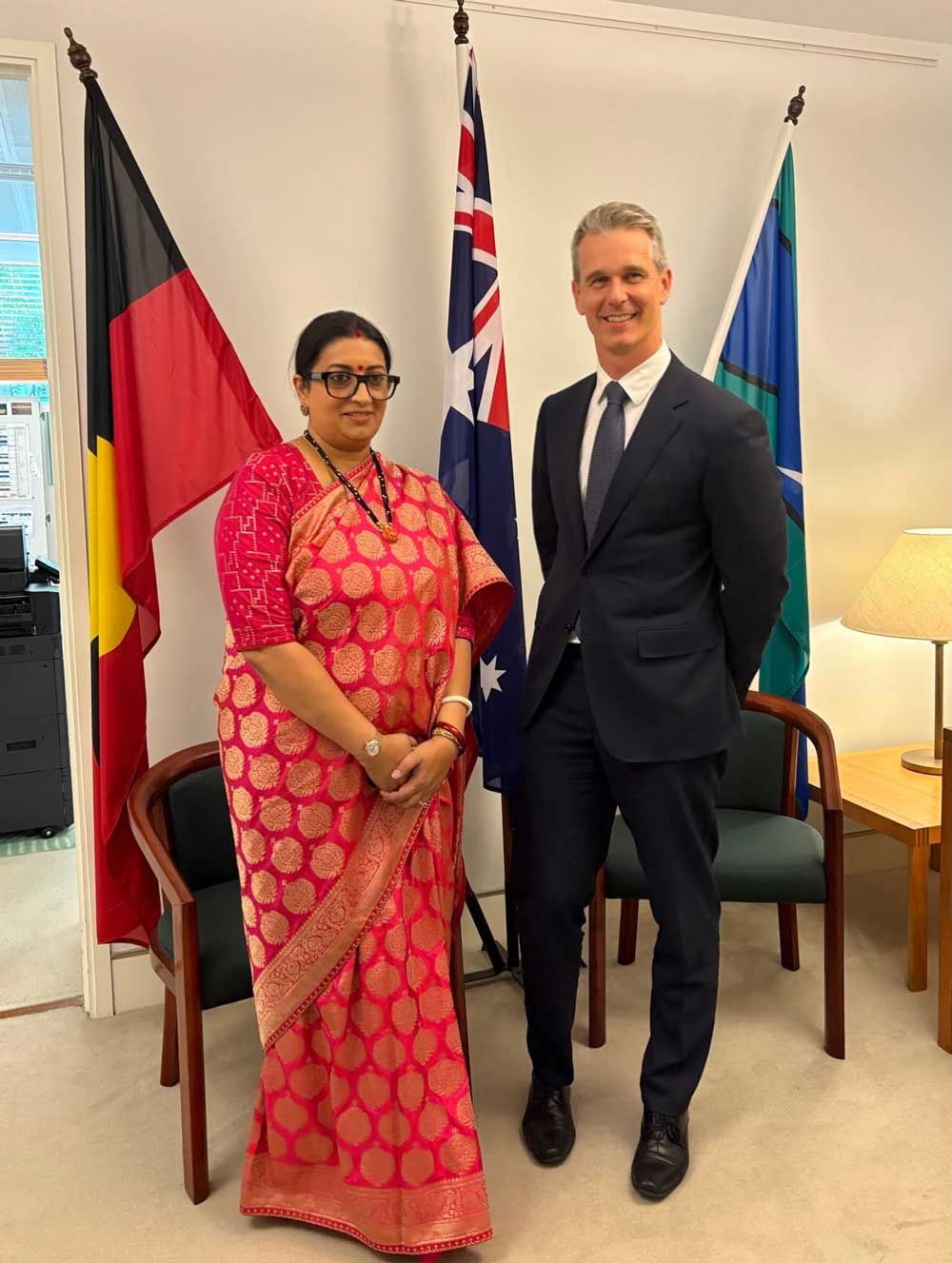
Her engagements have taken place across Sydney, Parramatta and Canberra, bringing together representatives from government, business, universities, research institutions and the Indian diaspora.
Smriti Irani meets Australian Foreign Minister Penny Wong
During her Australia visit, Smriti Irani also met Senator Penny Wong, Australia’s Minister for Foreign Affairs.
Irani shared a photograph of the meeting on her official X account, highlighting another important engagement during her visit to Australia.
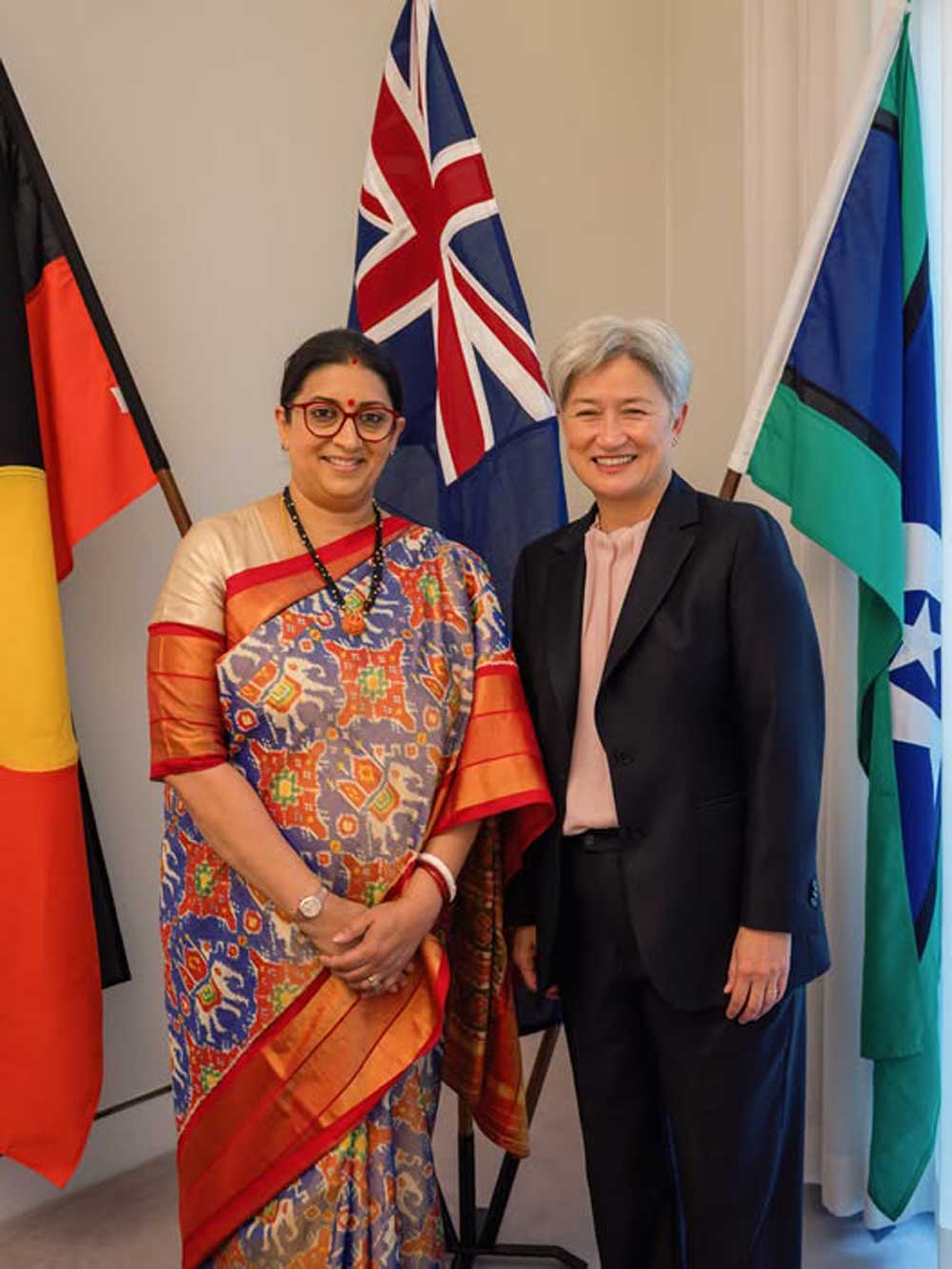
The meeting brought together two prominent political figures from India and Australia at a time when both countries are seeking to deepen their strategic, economic and diplomatic partnership.
Wong has played a central role in Australia’s foreign policy engagement with India, including strengthening cooperation across the Indo-Pacific, trade, regional security and bilateral relations.
The meeting added a diplomatic dimension to Irani’s programme, which also included discussions with Australian parliamentary representatives, business leaders, academic institutions and policy experts.

Her engagement with Australia’s Foreign Minister further highlighted the importance of political dialogue and people-to-people connections in the growing India-Australia relationship.
Meeting with Australian Assistant Minister Julian Hill
One of the key engagements was a breakfast meeting with Julian Hill MP at Parliament House in Sydney. Hill serves as Australia’s Assistant Minister for Citizenship, Customs and Multicultural Affairs and Assistant Minister for International Education.
Their discussions covered the growing presence of Australian universities in India, opportunities for education partnerships and skills development, and the contribution of more than 140,000 Indian students to Australia’s academic and social communities.
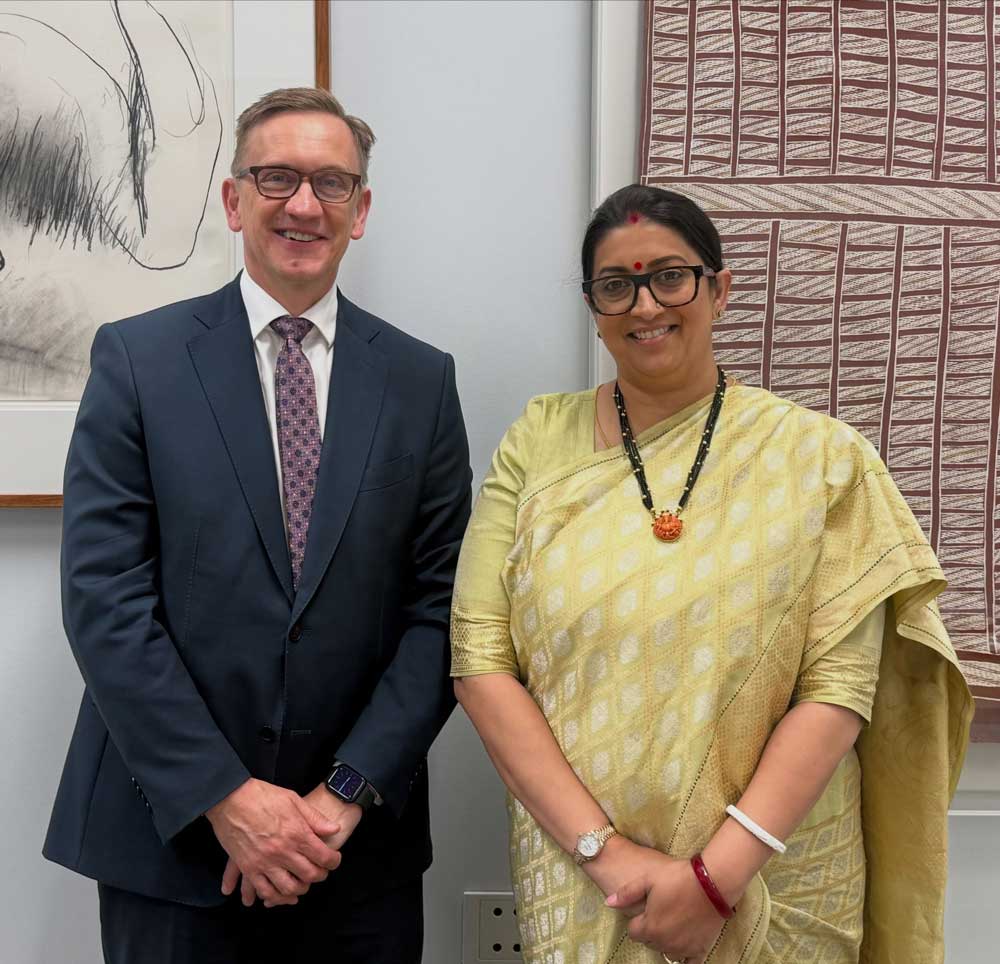
They also discussed the Indian diaspora’s contribution to Australia’s multicultural society and Hill’s recent engagements in India, including the inauguration of the University of New South Wales’ new campus in Bengaluru.
The conversation also addressed opportunities to strengthen business engagement and investment, including the role of the Business Council of Australia in developing commercial connections between the two countries.
Business Council of Australia discussions focus on trade and investment
Irani also met Bran Black, Chief Executive Officer of the Business Council of Australia, and Wendy Black, the organisation’s Executive Director of Public Policy.
Their discussions focused on bilateral trade, investment and industry collaboration, particularly the forthcoming Australian business delegation to India as part of the G’Day Namaste programme in December.
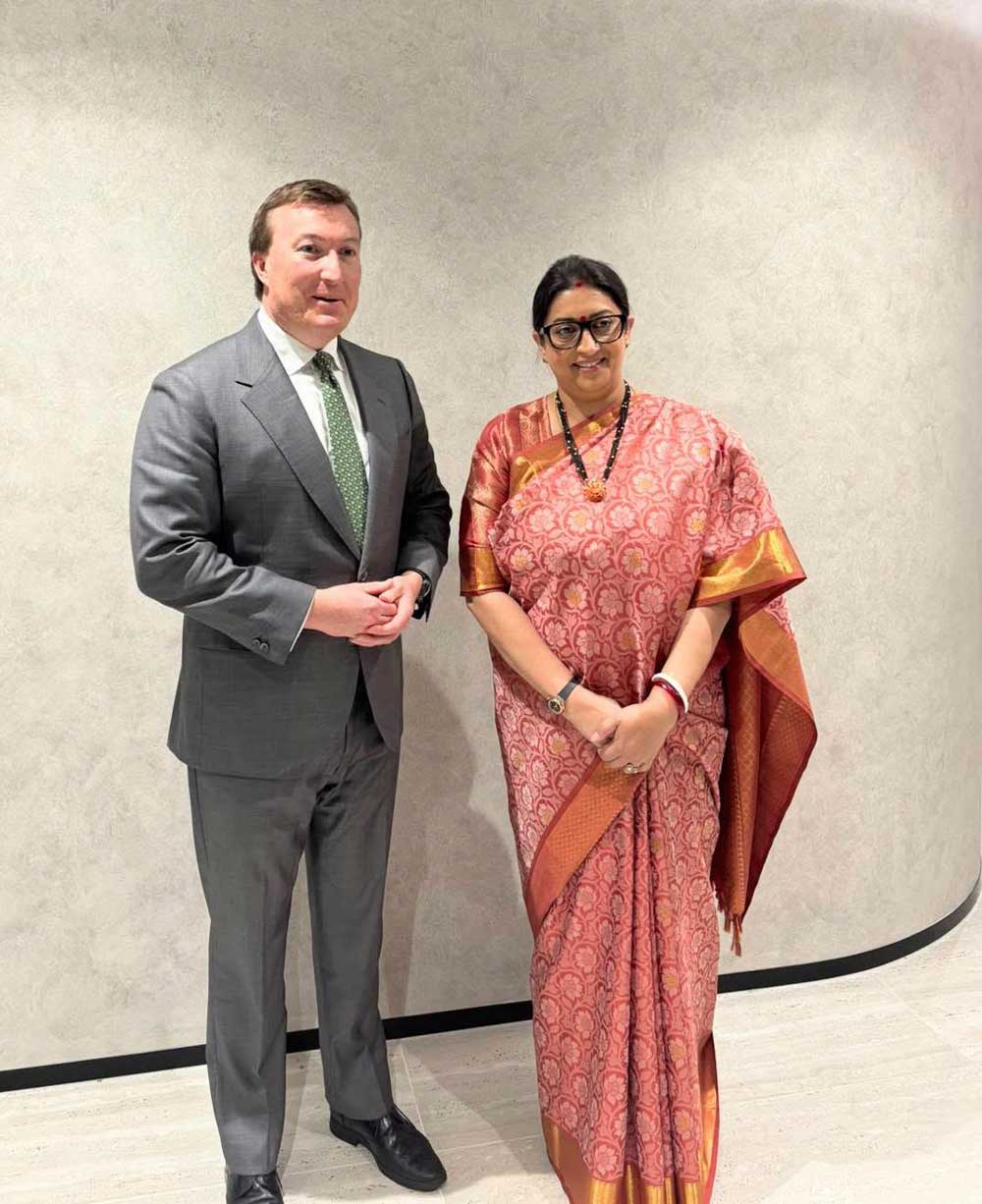
The delegation is expected to visit New Delhi, Mumbai and Chennai, creating opportunities for Australian business leaders to engage with Indian counterparts and explore investment partnerships.
Irani highlighted the importance of building on the 34-CEO Forum held during Indian Prime Minister Narendra Modi’s visit to Australia in July 2026.
The forum provided a platform for business leaders to discuss opportunities for closer commercial engagement. The latest discussions seek to maintain that momentum by connecting companies, investors and industry representatives across both countries.
Lowy Institute roundtable examines Indo-Pacific security
The strategic dimension of the India-Australia relationship was another focus of Irani’s visit.
At a roundtable hosted by the Lowy Institute in Sydney, she met scholars, strategists and senior fellows to discuss regional security, economic cooperation and the changing Indo-Pacific environment.
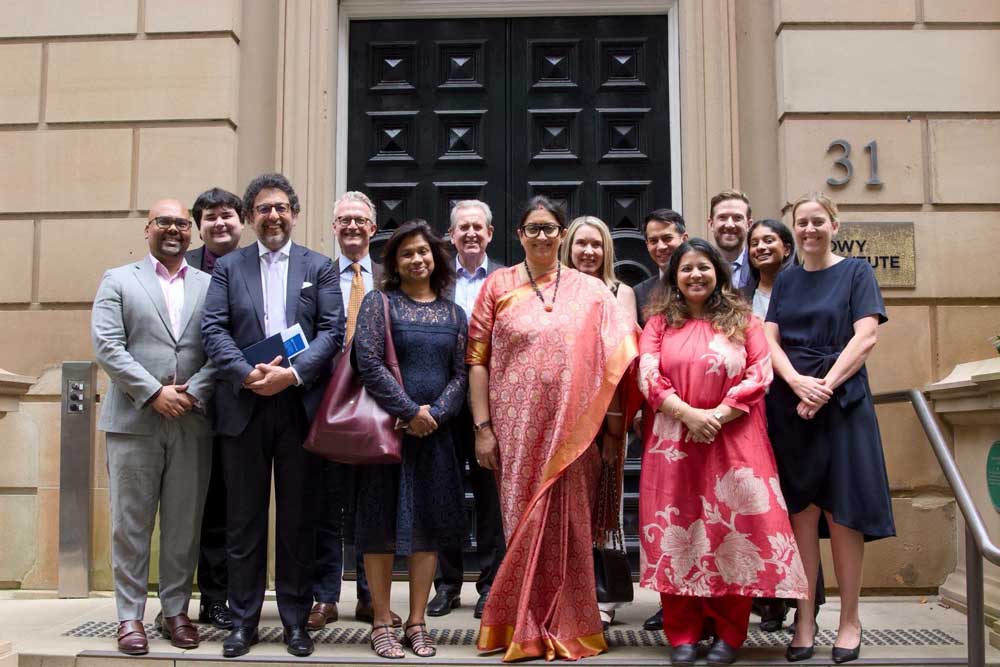
The discussion was hosted by Shruti Pandalai, the Lowy Institute’s inaugural India Chair, appointed in May 2026 to lead its India Program.
The conversation examined India’s and Australia’s roles in shaping the Indo-Pacific, including regional security priorities and opportunities for greater economic engagement.
Irani also drew on her role as Founder and Chairperson of the Alliance for Global Good: Gender Equity and Equality to highlight the importance of expanding opportunities for women-led businesses.
She discussed how women entrepreneurs in India and Australia could benefit from better access to institutional finance, international markets and potential buyers.
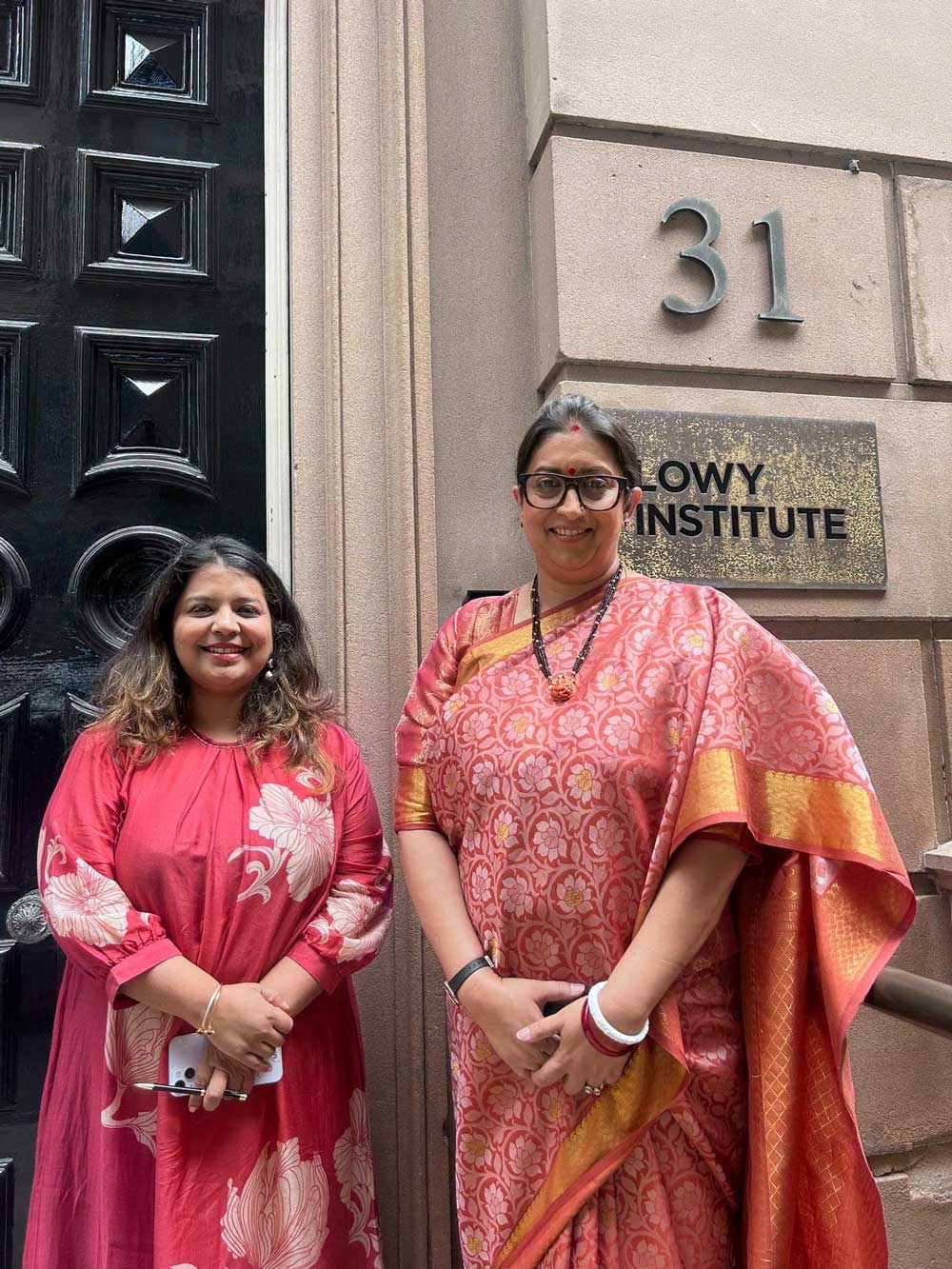
Connecting women-led enterprises with financial institutions and commercial networks could help businesses expand beyond domestic markets and develop partnerships across both countries.
The discussions also addressed the importance of preparing India’s skilled workforce for emerging opportunities in the Australian and Indian economies.
Parramatta roundtable brings together business, research and academic leaders
In Western Sydney, Irani joined Ryan Neelam, Chief Executive Officer of the Centre for Australia-India Relations (CAIR), for a roundtable involving representatives from science, finance, industry and academia.
The discussions examined opportunities to expand bilateral trade, investment, research and cultural exchange.
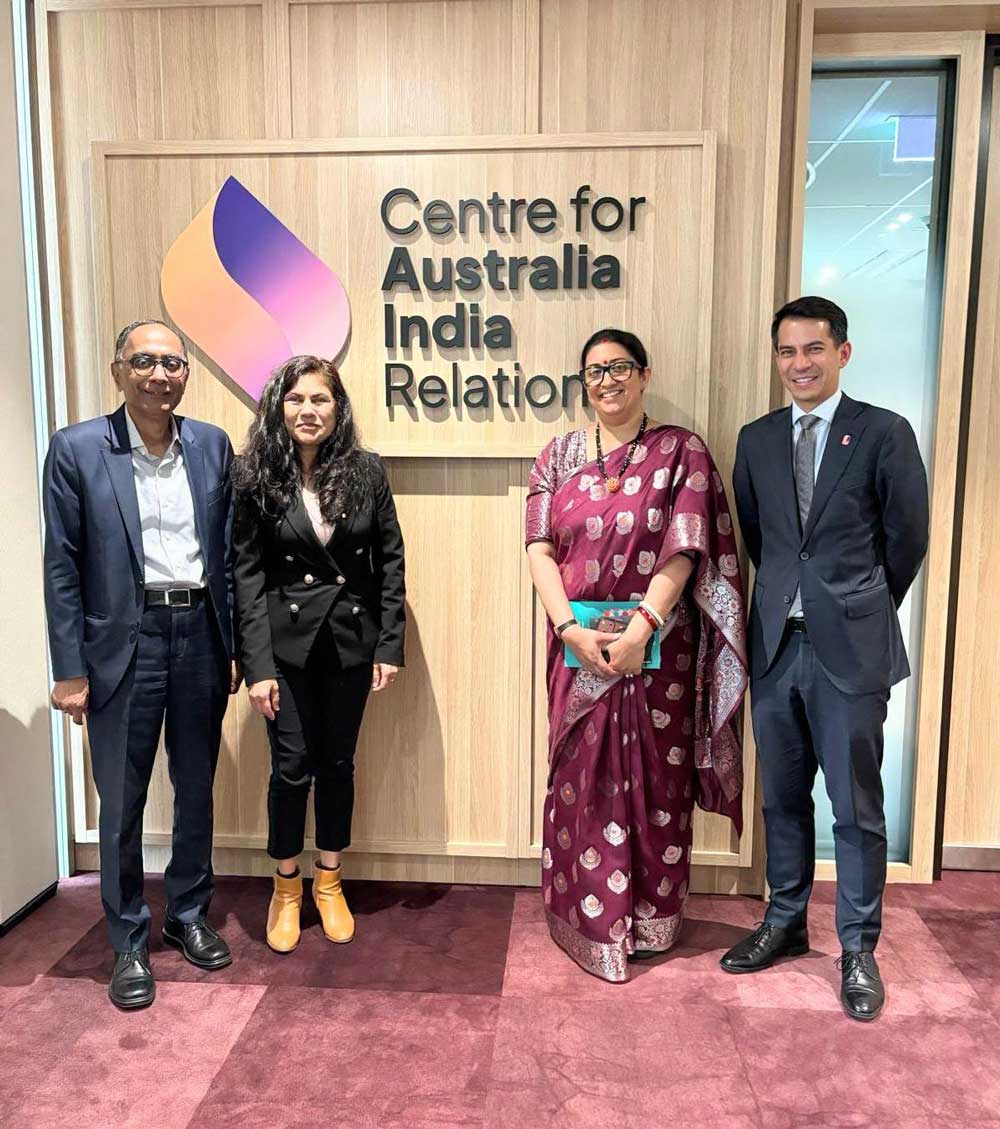
Participants explored how India’s capabilities in digital innovation, skills development and women’s economic participation could complement Australia’s strengths in sustainable materials science, circular manufacturing, institutional finance and higher education.
The planned University of New South Wales campus in Bengaluru was also highlighted as an example of growing academic cooperation between the countries.
Established by the Australian Government in 2023, the Centre for Australia-India Relations works across government, business, academia and civil society to strengthen institutional, economic and cultural connections.
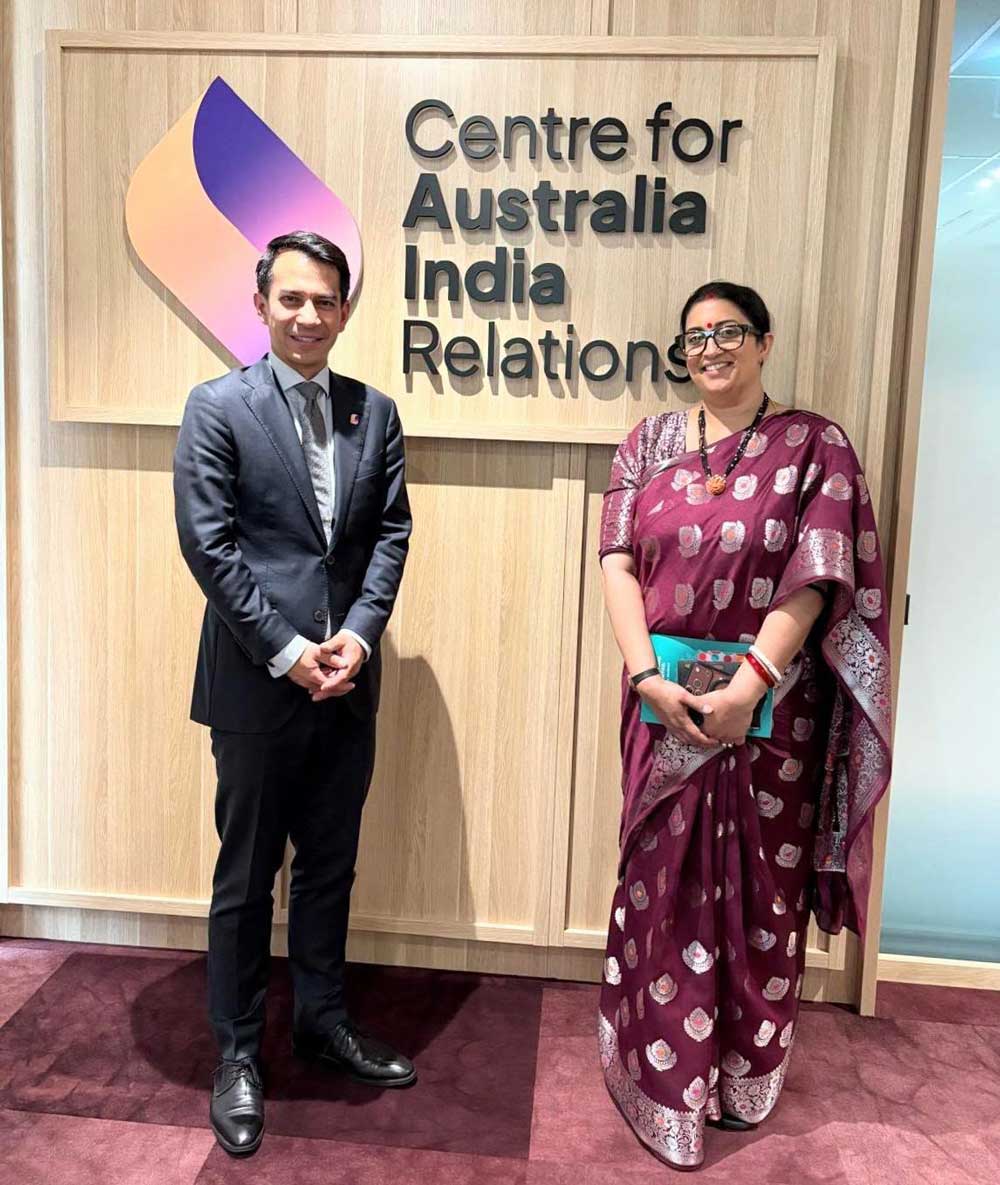
During the roundtable, Irani highlighted the Centre’s work through its Maitri initiatives, citing $25 million committed through 112 grants, scholarships and fellowships covering research, business, sport and the arts.
Following the roundtable, Irani visited the newly opened Powerhouse Parramatta, a major cultural institution in Western Sydney that brings together creativity, innovation and cultural experiences.
Diwali celebrated at Parliament House in Canberra
A significant cultural engagement during Irani’s Australia visit was the Diwali celebration held at Parliament House in Canberra on 25 November 2026.
The celebration was organised by the Hindu Council of Australia in collaboration with BAPS (Bochasanwasi Akshar Purushottam Swaminarayan Sanstha), bringing the Hindu community’s Festival of Lights into the Australian Federal Parliament.
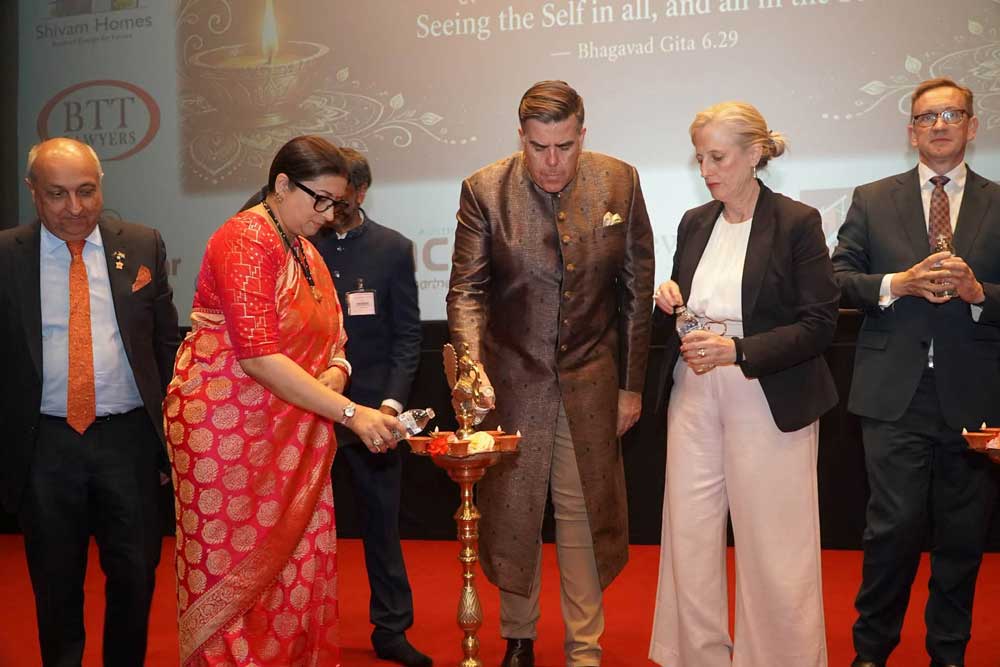
Irani attended the celebration alongside India’s High Commissioner to Australia, Nagesh Singh, and members of the Australian Parliament.
The event provided an opportunity to showcase Indian culture and traditions within Australia’s national parliamentary setting, while bringing together political representatives and members of the Indian community.
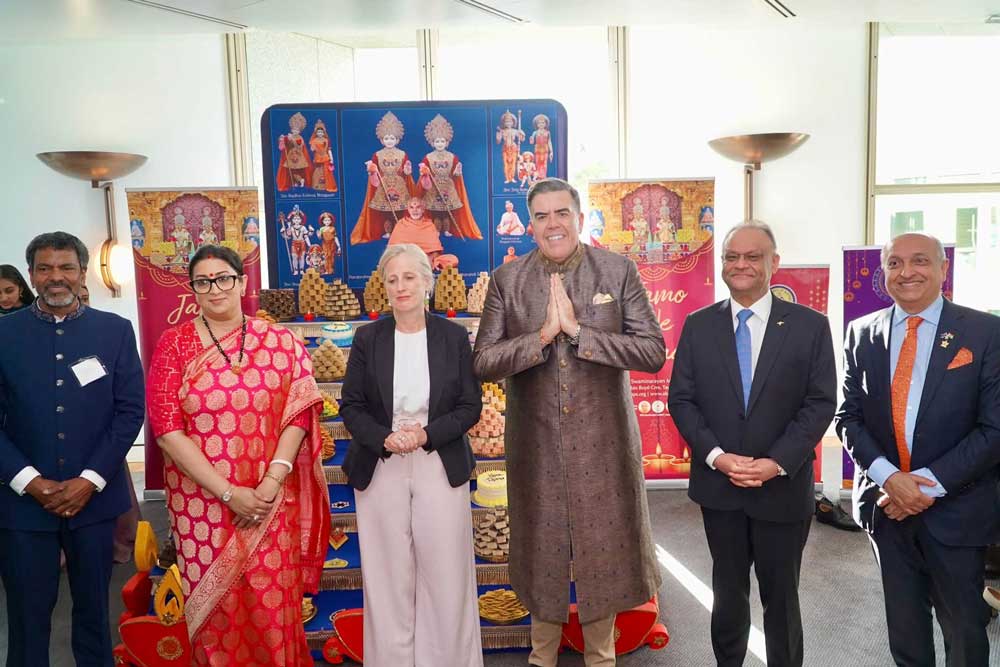
The Hindu Council of Australia and BAPS have a history of working together to organise Diwali and Annakut celebrations at Parliament House. Their joint efforts have helped introduce Australian parliamentarians and other guests to Hindu festivals, cultural traditions and community contributions.
Diwali, widely known as the Festival of Lights, symbolises the victory of light over darkness and good over evil. Its celebration at Parliament House reflects the contribution of Australia’s Indian and Hindu communities to the country’s multicultural identity.
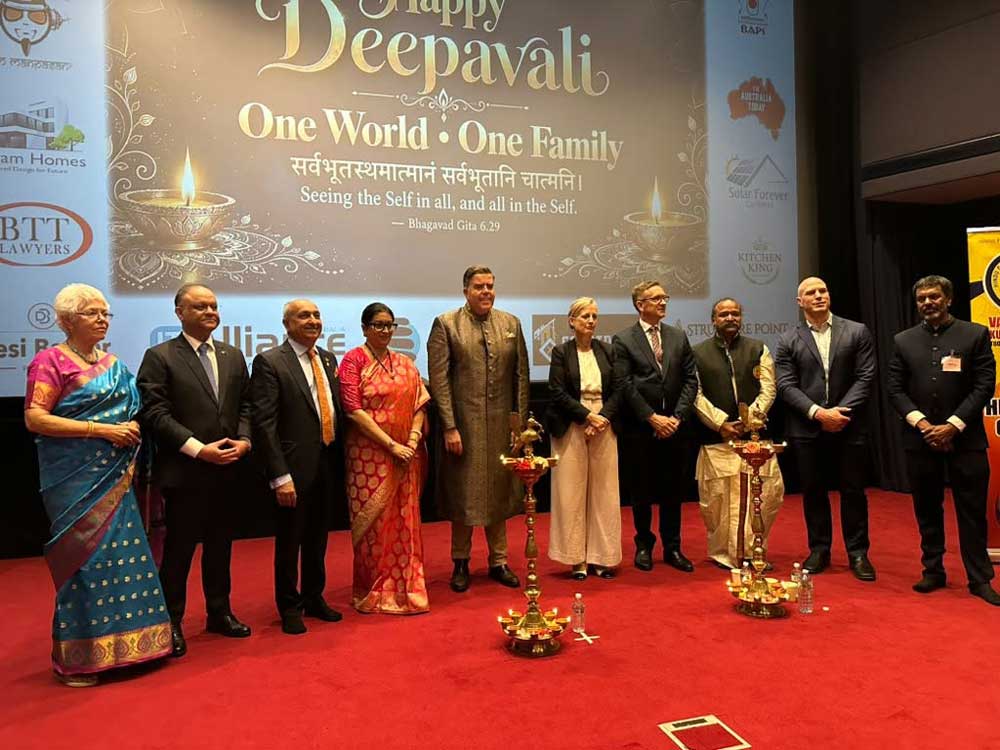
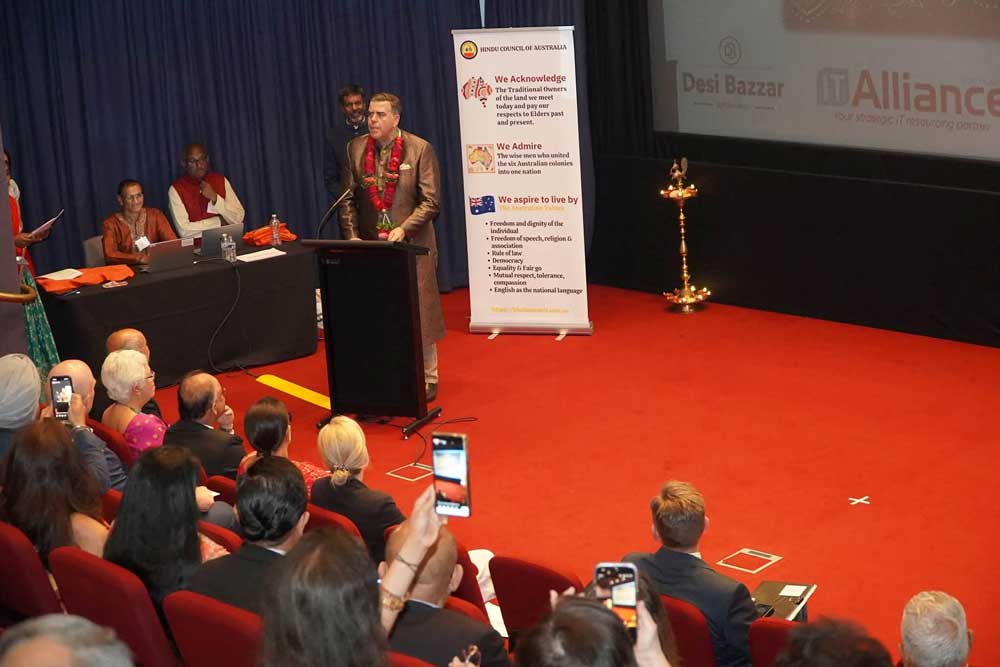
The Canberra engagement also highlighted the role of cultural and community organisations in strengthening people-to-people connections between Australia and India.
Engagement with India’s High Commissioner
India’s High Commissioner to Australia, Nagesh Singh, also hosted Irani for dinner at his residence during the visit.
The engagement formed part of the diplomatic programme accompanying her meetings with Australian government, business and policy representatives.
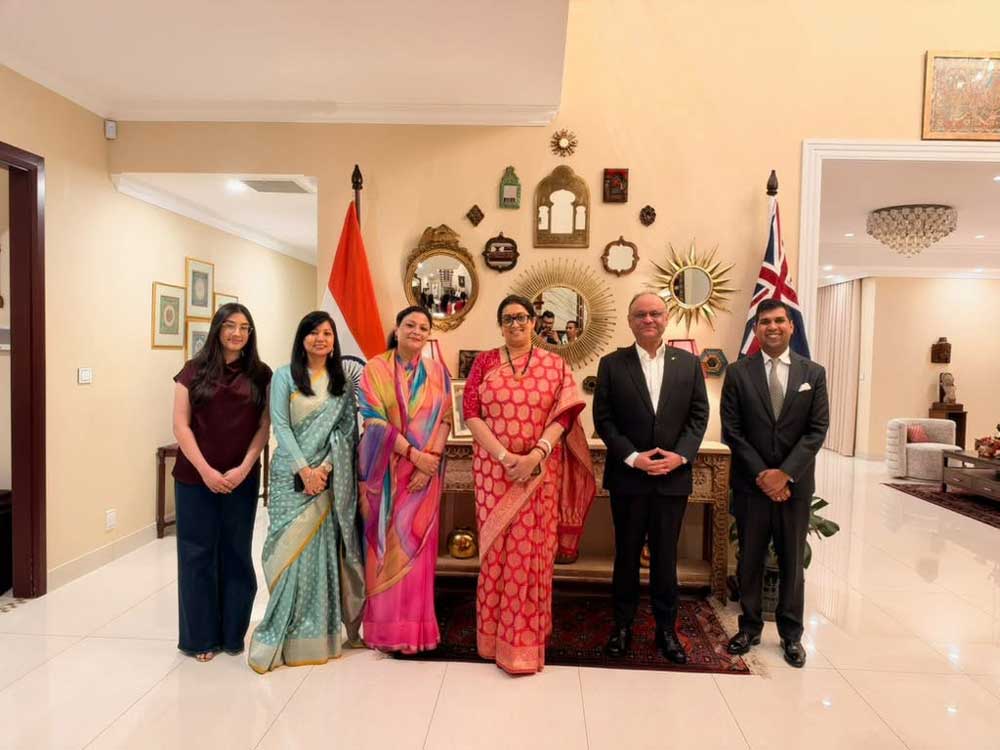
Singh’s participation in the Parliament House Diwali celebration alongside Irani further reflected the diplomatic and community dimensions of the visit.
G’Day Namaste to bring Australian business leaders to India
Irani’s visit comes ahead of G’Day Namaste, scheduled to take place across India from 7 to 12 December 2026.
The programme is expected to provide a platform for Australian and Indian representatives to explore commercial, investment and people-to-people opportunities.
Among the key activities highlighted during the visit are an Australia Investment Roundtable and the Australia-India Sports Industry Summit in Mumbai.
The broader December engagement will build on growing cooperation across several sectors, including business, education, sport, creative industries and investment.
The planned Australian business delegation will also provide opportunities for companies and industry representatives to develop partnerships in New Delhi, Mumbai and Chennai.
A broader partnership spanning education, business and culture
Australia and India have expanded their relationship across trade, education, defence, research and cultural exchange in recent years.
The Centre for Australia-India Relations, established in 2023, is one of the institutional platforms supporting this engagement. Its work includes strengthening business connections, encouraging academic collaboration, engaging diaspora communities and promoting cultural understanding.
The Maitri grants and fellowship programmes are among its initiatives to support practical partnerships between Australian and Indian organisations.
Irani’s visit has brought several of these priorities into discussions with Australian political, business and academic representatives.
From university partnerships and investment opportunities to women’s entrepreneurship, regional security and the contribution of the Indian diaspora, the meetings have covered a broad range of issues shaping the relationship.
The Diwali celebration at Parliament House added an important cultural dimension to the visit, recognising the role of Indian community organisations, including the Hindu Council of Australia and BAPS, in strengthening Australia’s multicultural connections.
With G’Day Namaste approaching in December, the next phase will provide further opportunities for Australian and Indian organisations to turn discussions into commercial partnerships, research cooperation and stronger institutional connections.