Indian Prime Minister Narendra Modi is set to arrive in Australia for a three-day official visit, where he will hold high-level talks with Australian Prime Minister Anthony Albanese, meet political and business leaders, and engage with the Indian-Australian community. The visit comes at a pivotal time in Australia–India relations, with both countries looking to deepen cooperation across trade, defence, education, technology, critical minerals and the Indo-Pacific.
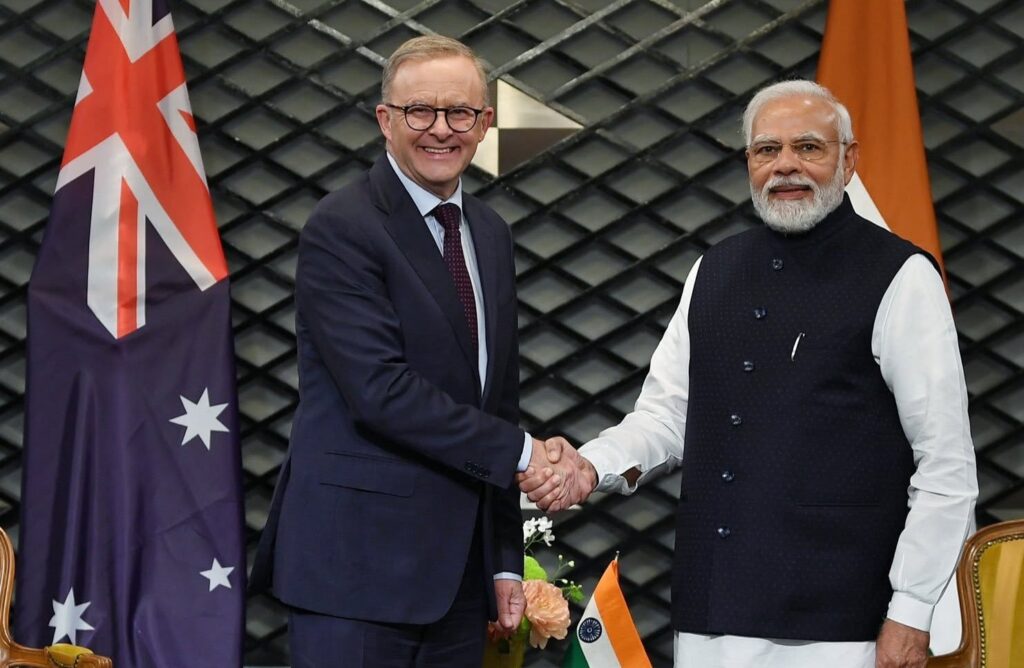
Prime Minister Modi’s visit will centre on the Australia–India Annual Leaders’ Summit, which this year is being hosted in Melbourne. The summit is expected to deliver a new roadmap for bilateral cooperation, building on the momentum generated by the Australia–India Economic Cooperation and Trade Agreement (ECTA) and ongoing negotiations for a broader Comprehensive Economic Cooperation Agreement (CECA). Leaders from both nations are expected to discuss measures aimed at boosting two-way trade, encouraging investment and creating new business opportunities.
Prime Minister Anthony Albanese said Australia highly values its Comprehensive Strategic Partnership with India, describing the relationship as one of Australia’s most important international partnerships. He noted that India is playing an increasingly significant role in the Indo-Pacific and that both democracies share common interests in maintaining regional security, economic resilience and a rules-based international order.
Trade and investment will feature prominently during the discussions, with both governments seeking to expand collaboration in sectors including clean energy, renewable technologies, agriculture, education, advanced manufacturing, digital innovation and critical minerals. Australia is expected to promote greater investment opportunities for Indian businesses, while India continues to emerge as one of Australia’s fastest-growing export markets.
Defence and maritime cooperation are also expected to receive significant attention during the summit. Australia and India have steadily expanded joint military exercises, defence dialogue, maritime domain awareness and naval cooperation over recent years. Leaders are expected to explore new initiatives to strengthen regional security, defence industry collaboration and Indo-Pacific stability amid an increasingly complex geopolitical environment.
Education, research and innovation will form another important pillar of the visit. Universities and research institutions from both countries have significantly expanded partnerships in emerging technologies such as artificial intelligence, quantum computing, cybersecurity and clean energy. The leaders are expected to discuss ways to further enhance student mobility, academic collaboration and joint research initiatives that benefit both nations.
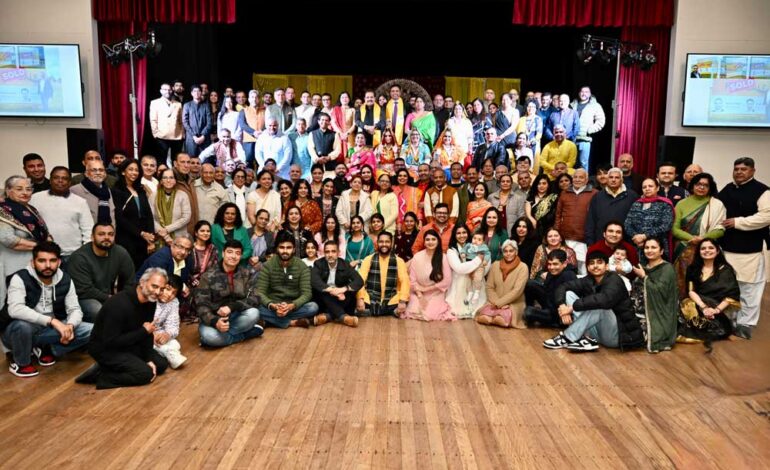
Australia’s vibrant Indian diaspora is also expected to play a central role during Prime Minister Modi’s visit. Home to more than one million people of Indian heritage, the Indian-Australian community has become one of the country’s fastest-growing and most influential multicultural groups. Community engagement events are expected to celebrate the contribution of Indian Australians across business, healthcare, education, technology, sport and public service while further strengthening people-to-people connections.

The visit also reflects the growing economic importance of Australia–India relations. Since the implementation of ECTA, bilateral trade has continued to expand across multiple sectors, while businesses from both countries are exploring new opportunities in manufacturing, logistics, infrastructure, renewable energy and advanced technologies. Officials believe the next phase of cooperation could unlock billions of dollars in additional economic activity and create new jobs in both countries.
Political observers see the three-day visit as another milestone in the rapid evolution of Australia–India relations over the past decade. What was once primarily a diplomatic relationship has developed into a comprehensive strategic partnership encompassing economic cooperation, defence collaboration, education, innovation, clean energy and regional security. Both governments have consistently reaffirmed their commitment to working together in addressing shared global and regional challenges.
Prime Minister Modi’s visit is expected to conclude with a series of announcements, bilateral agreements and joint initiatives designed to strengthen one of the Indo-Pacific’s most important partnerships. As Australia and India continue to deepen collaboration across government, industry, academia and the wider community, the Melbourne summit is poised to mark another significant chapter in a relationship that continues to shape the future of the region while reinforcing the enduring ties between the two democratic nations.