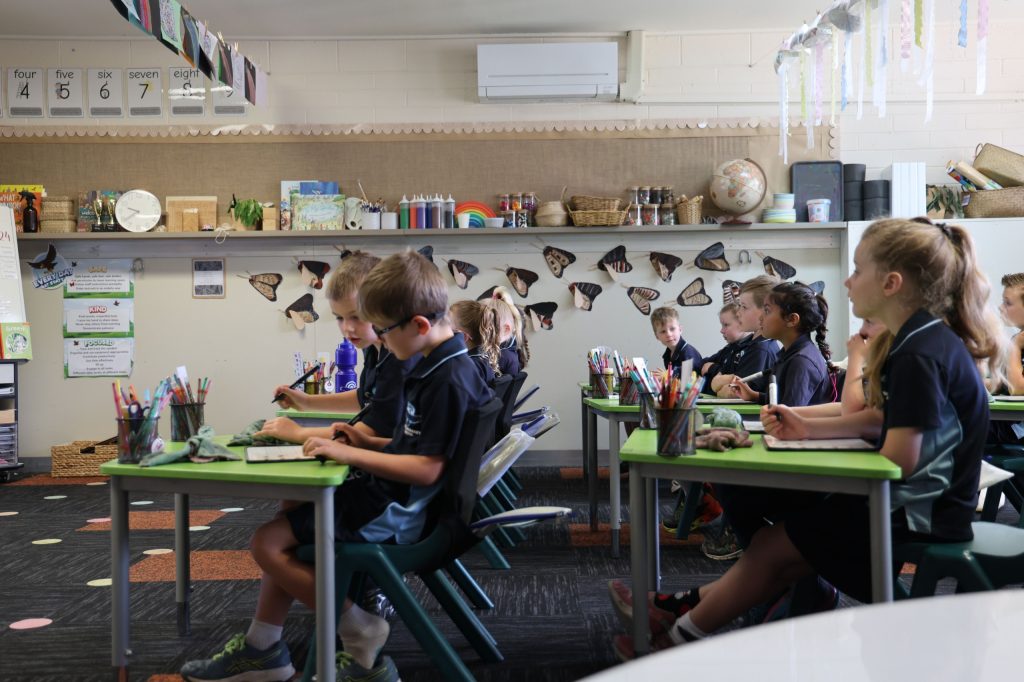
A significant shift is underway in the ACT’s public education landscape. The ACT Government has announced a new initiative exploring the introduction of Punjabi and Hindi into the public school curriculum — a milestone that reflects the growing voice and needs of Canberra’s Indian diaspora.
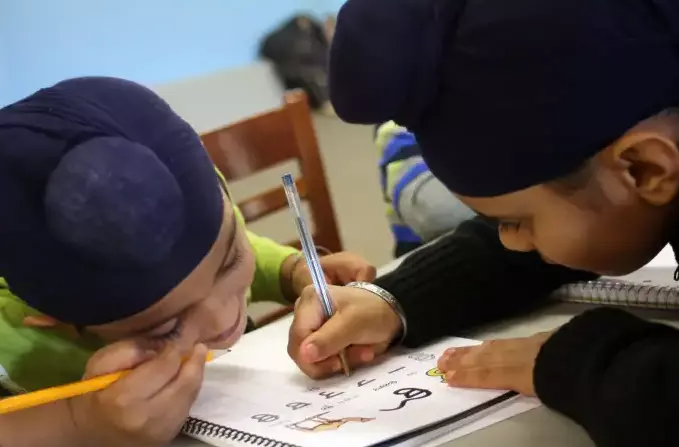
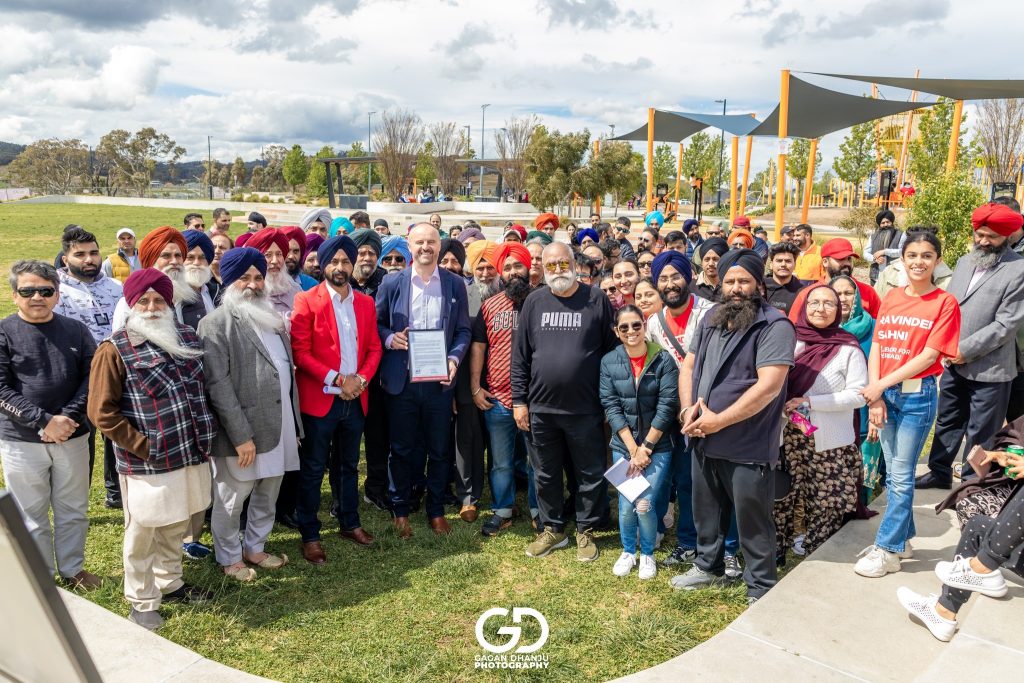
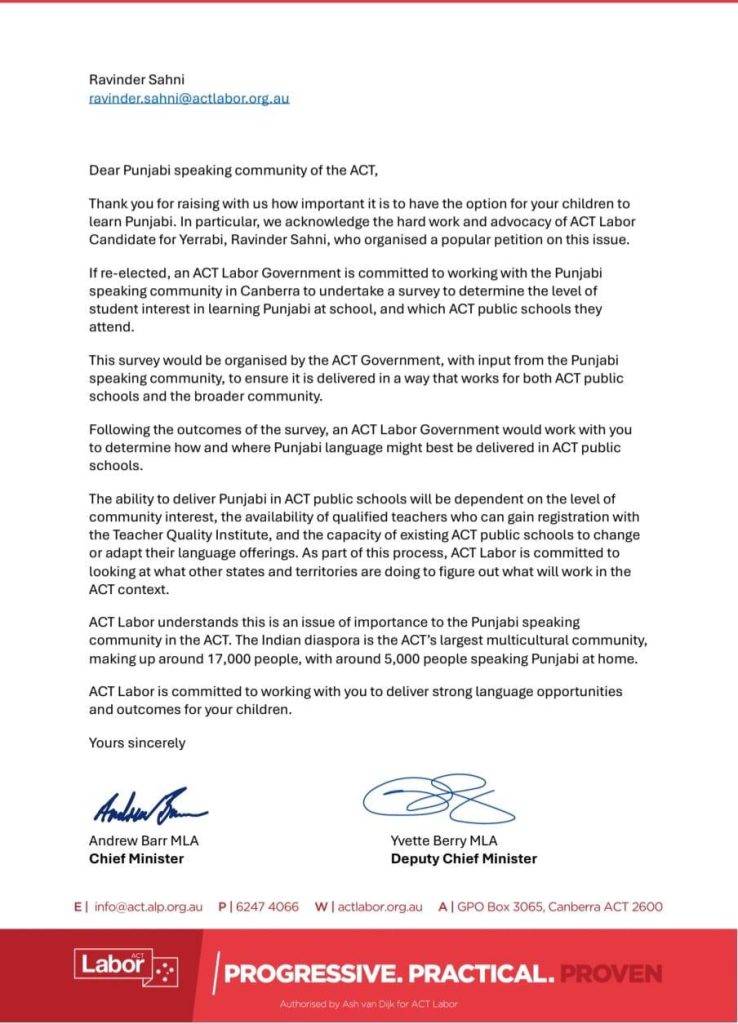
This progress comes after sustained community advocacy, with Ravinder Singh Sahni, ACT Labor Candidate for Yerrabi, leading the charge through a formal petition. His efforts helped elevate the issue to the policy level, culminating in a commitment by the ACT Labor Government to explore language education in partnership with the Punjabi-speaking community.
“This was never just a policy idea,” said Mr Sahni. “It was a heartfelt mission to preserve our culture, language, and identity for the next generation. And now, with your continued support, we’re seeing real momentum.”

Why It Matters
Canberra’s Indian community has become the largest multicultural group in the Territory, with around 17,000 residents, nearly 10,000 of whom speak Punjabi or Hindi at home. Yet, despite these numbers, students who speak these languages have had little access to formal learning opportunities in the public school system.
Data from the August 2024 ACT public school census shows:
- Over 600 students identify Punjabi as their primary language
- More than 800 students identify Hindi as their primary language
This new initiative aims to close that gap by providing students with a way to formally engage with their heritage language — not only enhancing educational outcomes, but also strengthening their cultural identity.
Educational Benefits Beyond Language
Languages are one of the eight core learning areas in the Australian Curriculum. Beyond the obvious linguistic advantages, learning another language promotes stronger communication skills, intercultural understanding, and cognitive development — including critical thinking and problem solving.
For many children who speak Punjabi or Hindi at home, being able to study these languages at school offers both academic enrichment and personal empowerment.

“Many children already understand or speak these languages, but formal education can help keep them alive for generations to come,” said one educator.
Community Survey Now Open
The ACT Government has launched a community survey to assess interest and feasibility in delivering Punjabi and Hindi in public schools. Families, educators, and community members are encouraged to share their views on whether and how these languages should be introduced.
📢 Have Your Say:
👉 https://yoursayconversations.act.gov.au/punjabi-and-hindi-languages
Responses will help shape the program and determine which schools may be best suited to offer these language options in the future. The ACT already supports eight priority languages in schools, backed by strong connections to embassies, universities, and community networks. This addition would mark a crucial step in making the curriculum more inclusive and reflective of the Territory’s diversity.
A Community-Driven Victory
This milestone is not just a policy win — it’s a community win. It’s the result of countless voices advocating for cultural recognition and equal opportunities for their children.
As the ACT evolves into an increasingly multicultural society, it’s essential that education policy evolves with it. Introducing Punjabi and Hindi into public schools is not just about language — it’s about belonging, inclusion, and ensuring every child sees themselves represented in the system that helps shape their future.