A new generation of Indian winemakers bring bold flavours and global ambition to Australian shores.
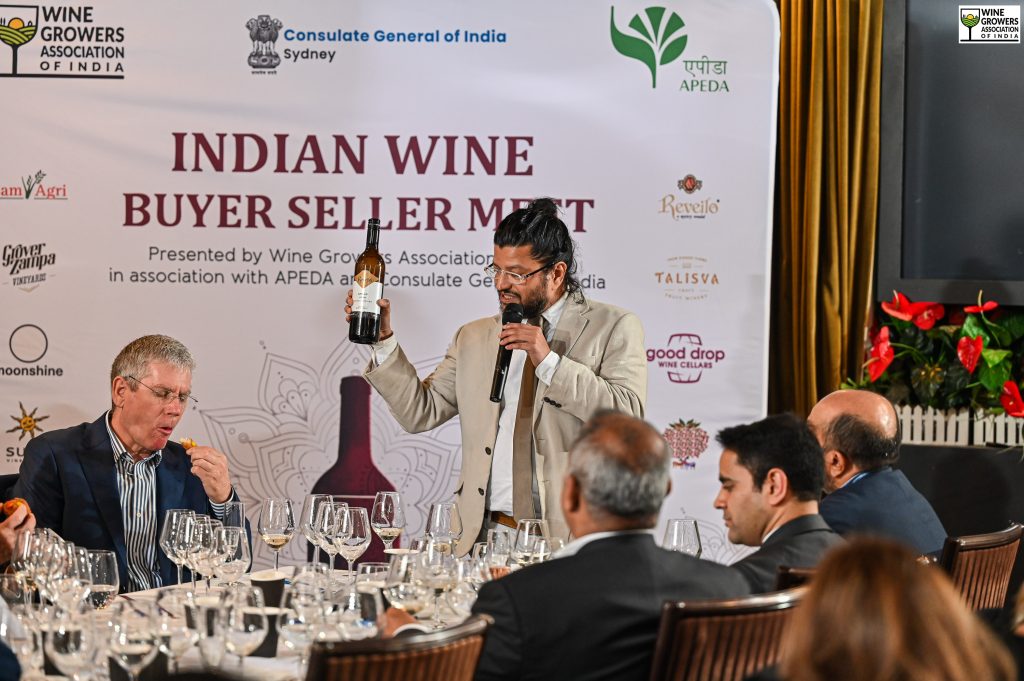
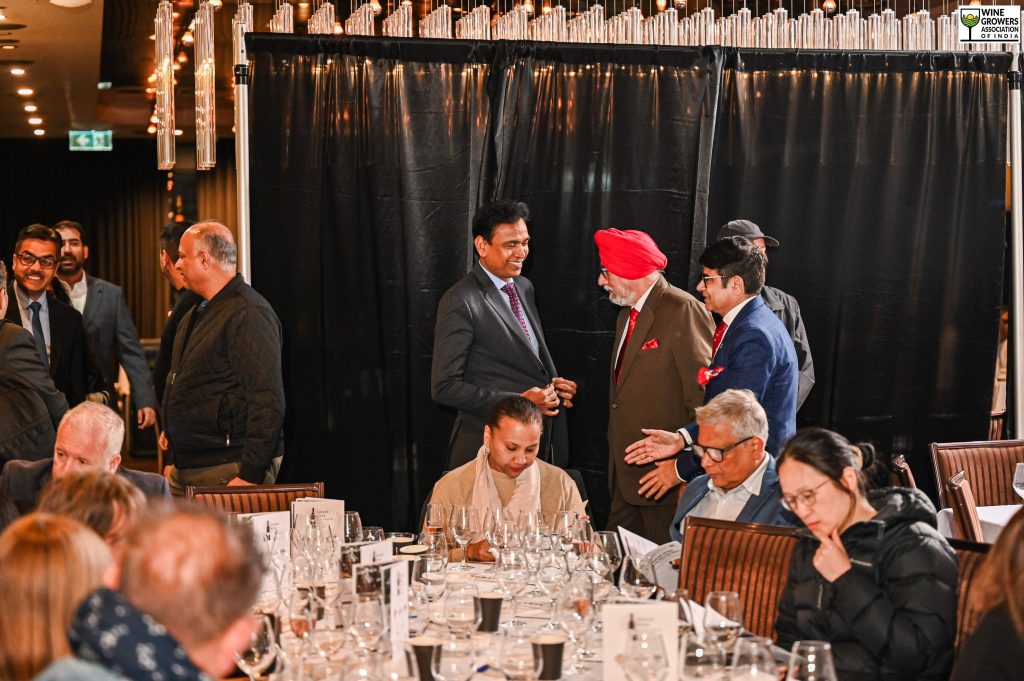
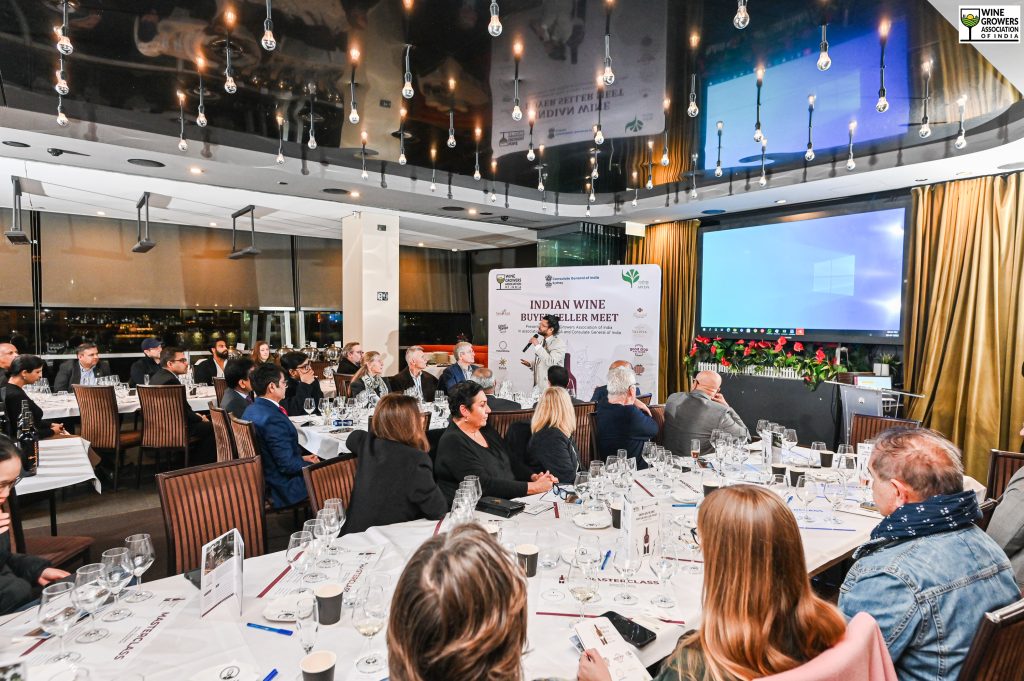
In a sun-drenched venue overlooking Sydney Harbour, something quietly revolutionary was uncorked. On July 28, Indian wines took centre stage at the Indian Wine Buyer–Seller Meet (IWBSM), offering Australian importers, sommeliers, and hospitality leaders a rare glimpse into a rapidly maturing industry.
From crisp sparklings and robust reds to honeyed meads and tropical fruit wines, the tasting wasn’t just about palate—it was about potential. And if the packed room was anything to go by, Indian wine is ready to step beyond novelty and into the spotlight.
Conceptualised and organised by the Wine Growers Association of India (WineGAI) with the support of APEDA (India’s agri-export body) and the Consulate General of India in Sydney, the event marked a significant chapter in India’s trade diplomacy, riding on the back of the India–Australia Economic Cooperation and Trade Agreement (ECTA).
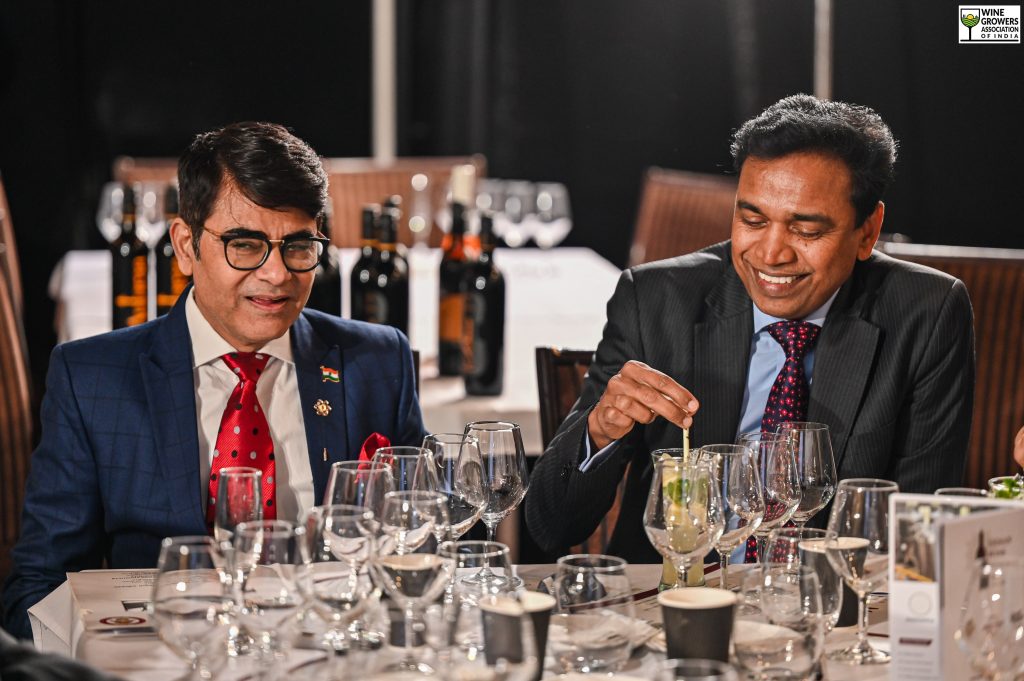
“Indian wines are ready for Australia,” said Dr. S. Janakiraman, Consul General of India in Sydney.
“We’ve welcomed Australian wines into Indian homes for over a decade. Now, it’s time for Indian wines to make that same journey in reverse.”
India is currently classified as a “new emerging” wine market—meaning modern wine consumption is still in its early stages, but projections show rapid growth. With wine consumption in India expected to double from 29.2 million litres in 2020 to over 55 million litres by 2025, it’s clear that what was once seen as a luxury beverage is now reaching middle-class dinner tables.
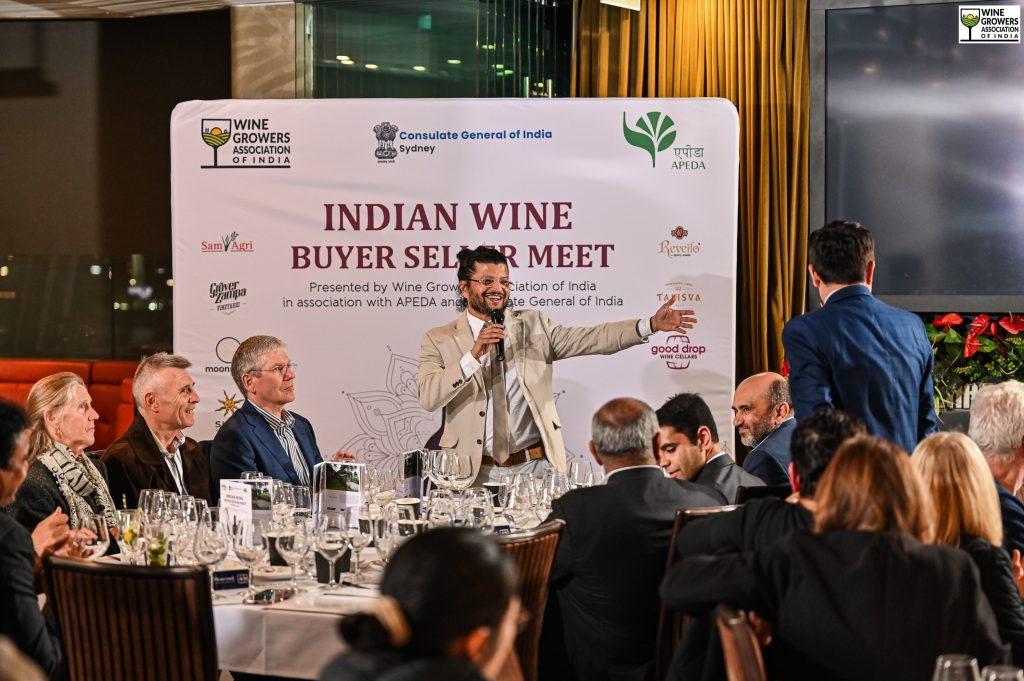
At the heart of this initiative is Ashwin Rodrigues, a former finance professional turned winemaker and founder of Good Drop Wine Cellars in Nashik, Maharashtra—India’s leading wine region.
Rodrigues spent 18 months in Australia’s famed Barossa Valley, scrubbing tanks and learning the trade from the ground up.
“I knew nothing about wine when I started,” he reflects.
“But the collaborative spirit of Aussie winemakers stuck with me. I wanted to bring that same energy back to India.”
Now, as Secretary of WineGAI, Rodrigues is championing the Indian wine industry’s global ambitions. He personally led the Sydney showcase—handling everything from invitations to shipping logistics—with the help of a small but determined team.

“It wasn’t glamorous,” Rodrigues admits.
“Some shipments didn’t arrive on time. We were setting up tables ourselves, dealing with missing cases. But none of that stopped the conversation. People were curious. They wanted to know more.”
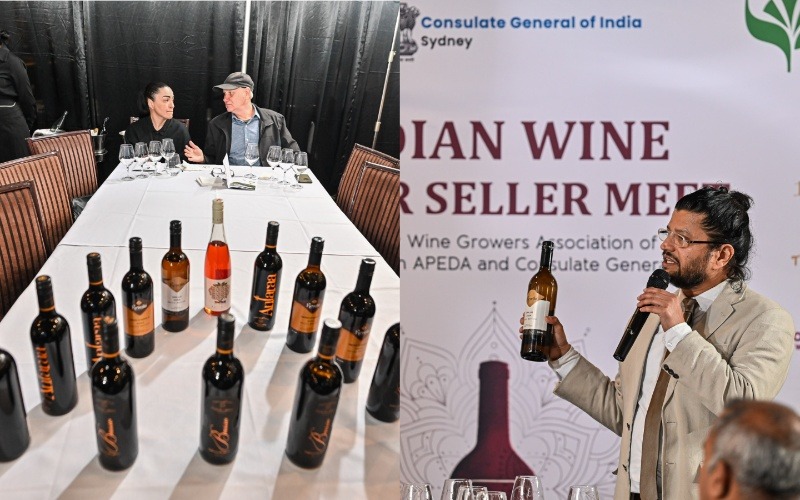
The event showcased wines and meads from eight Indian producers, including Alurra Straberry Wine, Frizzano Sparkling & Good Earth Wines (both by Good Drop Wine Cellars), Sula Vineyards, Grover Zampa Vineyards, Moonshine Meadery, Talisva Fruit Winery, Reveilo Wines, and SamAgri Wines.
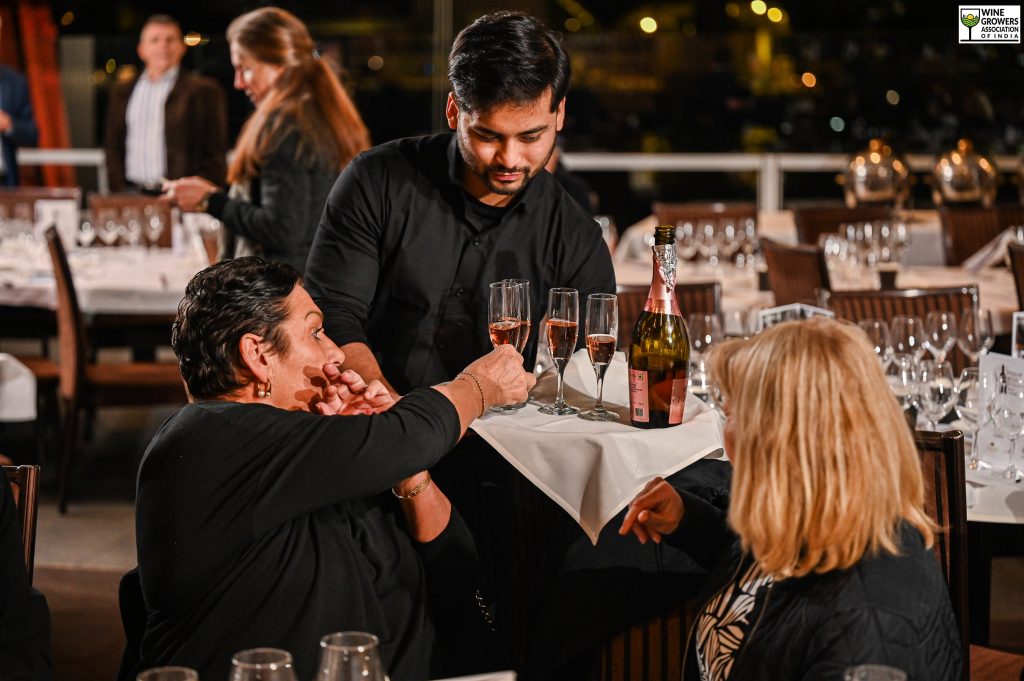
Wines like the Reveilo Grillo (white) and Reveilo Nero D’Avola (red) impressed guests with their balanced acidity, spice, and vibrant finish—perfect for pairing with Indian favourites like paneer tikka or samosas. Mead from Moonshine, India’s first licensed meadery, turned heads with its sweet, youth-friendly flavour and quirky label design—reminiscent of a Vodka Cruiser but crafted with honey and heritage.
India’s wine-producing regions—Nashik, Pune, Bangalore, and Mysore—are home to a growing number of innovative winemakers. These vineyards, once seen as side projects, are now building full-fledged estates with temperature-controlled fermentation rooms and solar-powered wineries.
“The wines coming out of India are getting better each year,” said Rodrigues.
“We’re working with the terroir, not trying to copy France or Australia. Our wines reflect India’s climate, soil, and culture.”
The Sydney showcase wasn’t just about sipping wine. It was a strategic step in positioning Indian wines as a serious player on the global stage.
Supported by APEDA and structured under ECTA’s Joint Dialogue on Wine, the event laid the groundwork for mutual recognition of wine standards, joint marketing initiatives, and technical collaborations between Indian and Australian producers.
India’s wine industry, despite its promise, is still grappling with regulatory hurdles—particularly interstate trade barriers and limited export channels. Rodrigues, who founded WineGAI in part to address these issues, is advocating for reforms that would allow the industry to reach its projected value of ₹3,000 crore (AUD 540 million) by 2030.
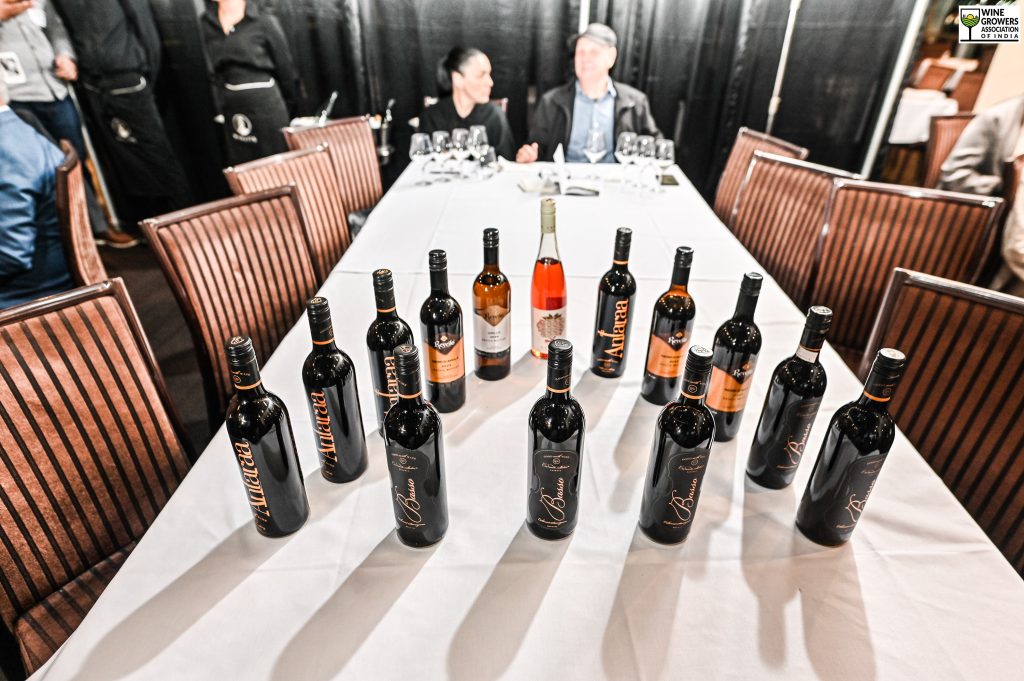
Even setbacks—like the wine shipment that got stuck just hours before the Sydney event—couldn’t derail the mission.
“We will send the missing bottles to wine journalists later,” Rodrigues said.
“The conversations had already started. That was the most important part.”
The Indian wine story is one of resilience, reinvention, and quiet revolution. It’s a story of farmers experimenting with strawberry wines in Panchgani, entrepreneurs making carbon-neutral meaderies in Pune, and young consumers, especially Gen Z, embracing wine not as a luxury but as a lifestyle.
“There’s now a generation of Indian Australians who want to introduce their friends to Indian wine, not just Indian food,” said a Parramatta-based importer.
“It’s time to break the curry-and-beer stereotype.”
And perhaps most importantly, it’s a story of belief—belief that every bottle poured today opens a door for the winemakers of tomorrow.
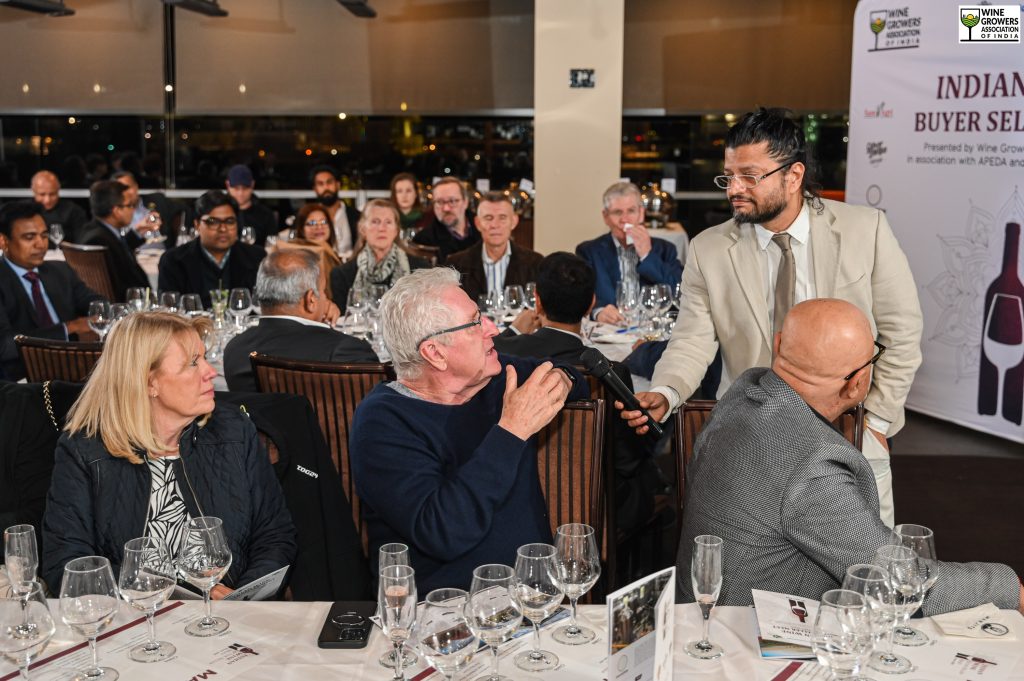
As Rodrigues left Sydney with a lighter shipment than expected but a heart full of purpose, his vision was clear:
“Though it was an industry event, the legwork was done by the Good Drop team.
If one winery can pull off an event like this, imagine what ten could do. Or twenty. This is just the start. There’s room at the table for Indian wine.”
For those lucky enough to taste it in Sydney this July, it was more than just a pour. It was a promise.