There are trips one undertakes to see a place, and there are trips one undertakes to be elsewhere. My two nights and three days at Isla’s Ridge, high in the Palani Hills, belonged unmistakably to the second kind.
The road from the world I had left behind seemed to grow progressively less interested in civilisation. Somewhere along the way, the traffic thinned, the roads narrowed, and the familiar vocabulary of the city…horns, deadlines, notifications, the incessant choreography of people going somewhere; began to dissolve. By the time the road slipped into the village of Manjalparappu and then into the estate, I had the curious sensation that I had not merely travelled a distance but crossed a border between two notions of time.
The entrance itself gives away something of what lies ahead. Angel’s Trumpets arch overhead in pink, yellow and white; ducks and chickens wander about with the unhurried authority of permanent residents. The driveway winds through old-growth forest before arriving at the ridge, where two whitewashed plantation bungalows sit quietly above the valley.
At roughly 1,200 metres above sea level, Isla’s Ridge occupies an extraordinary corner of the Palani Hills, part of the Western Ghats and the biodiverse Shola landscape. The estate stretches across forty acres of heritage coffee and pepper plantations. Yet it is not the scale that impresses. It is the feeling of being suspended above everything else.
The first thing I noticed was the silence.
Not the sterile silence of an empty room, but the complicated silence of the countryside: leaves shifting somewhere beyond the veranda, birds announcing themselves from trees one cannot see, the occasional sound of an animal, the wind moving through the hillside. Silence here was not an absence of sound. It was a different composition of sound.
My room had the particular warmth one associates with a house that has been inhabited and loved rather than a hotel room assembled for temporary occupation. Wooden floors, vintage furniture, lamps and objects collected by Isla, and a private veranda looking towards the valley gave the space the character of a private retreat rather than an anonymous accommodation. The interiors are, in fact, an extension of Isla’s own aesthetic world, a meeting of European furnishings, Indian textiles, antiques and objects collected over a lifetime.

I had come alone.
But I soon discovered that solitude and loneliness are entirely different things.
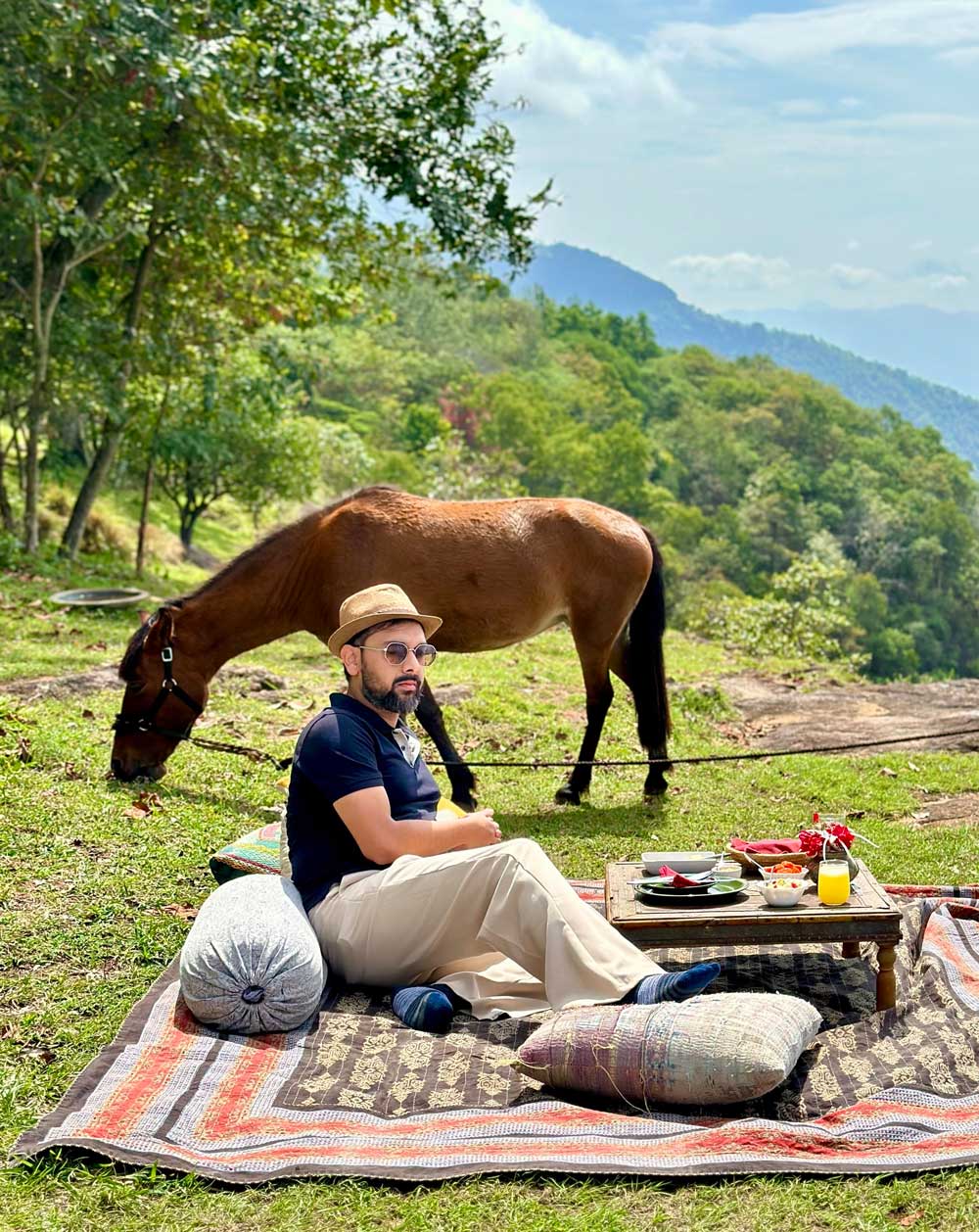
My companions, unexpectedly, were horses.
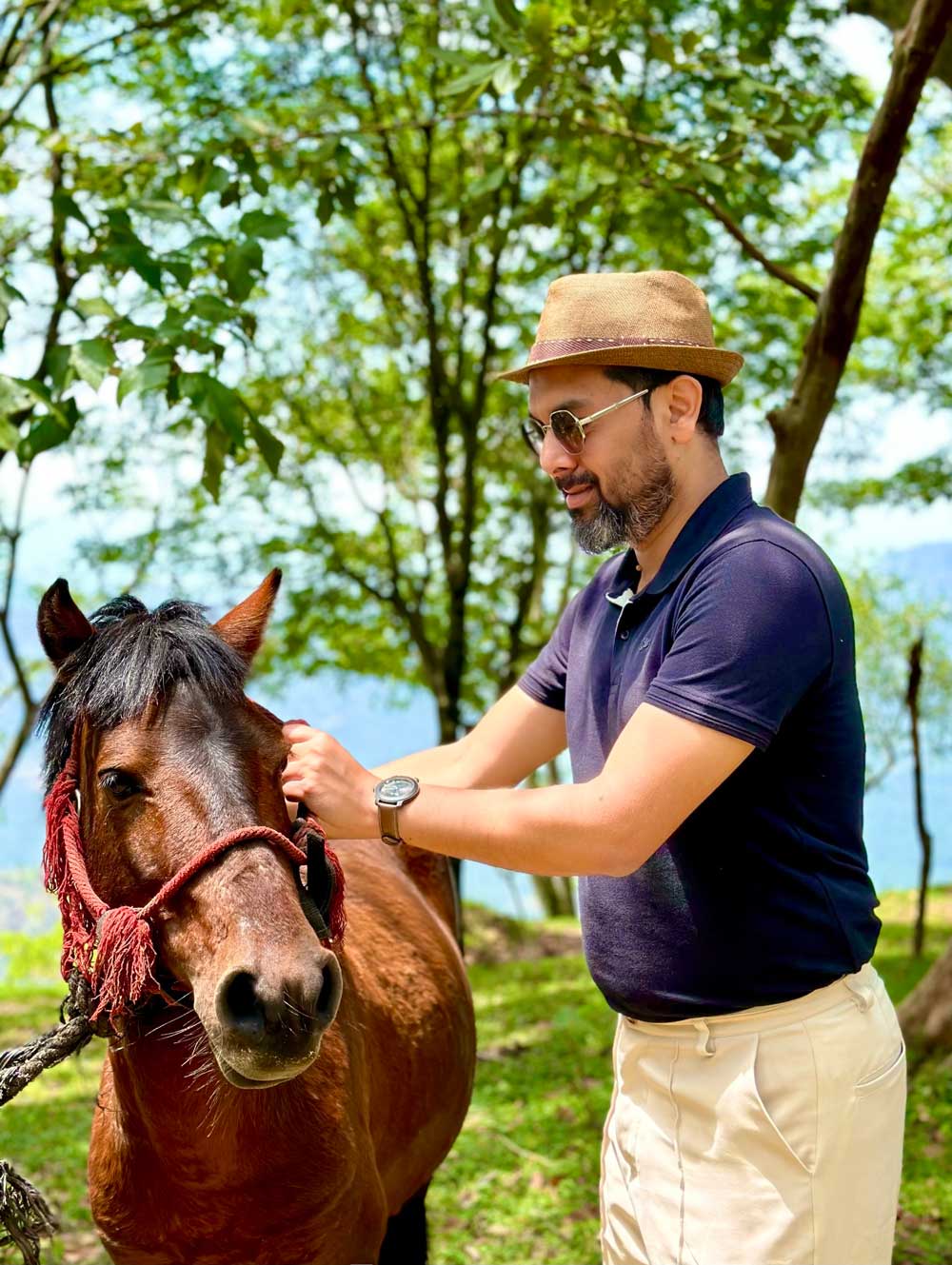
Isla’s Ridge has two ponies, Potluck and Blue Diamond, and it did not take long for them to become the centre of my days. What had begun as an innocent visit to the estate animals gradually became a small ritual. I found myself returning to them in the morning, feeding them, running a hand along their backs, lingering beside them longer than I had intended.
Eventually, I began taking them for walks.
There was something wonderfully primitive about it. No itinerary, no sightseeing list, no particular destination. Just a man walking with horses through a hillside estate while the day slowly assembled itself around him. A little further along the path. One more turn. A pause beneath a tree. Another handful of feed. The valley opening suddenly between the foliage.
I began to understand why the most memorable journeys are sometimes those in which almost nothing happens.
Mornings at Isla’s Ridge were especially deceptive. One woke to the mist and cool air of the hills, stepped onto the veranda with coffee, and watched the valley change almost imperceptibly. Clouds would gather and retreat; sunlight would find one hillside and leave another in shadow. The landscape was never still, but it never seemed hurried either.
CGH Earth describes the surrounding region as part of the Shola forests, and the estate itself has undertaken efforts towards rewilding portions of the land. The property encourages guests to put aside their devices, walk through the wilderness, watch the birds and spend time with its farm animals. These are not grand activities in the conventional resort sense. They are invitations to notice things.
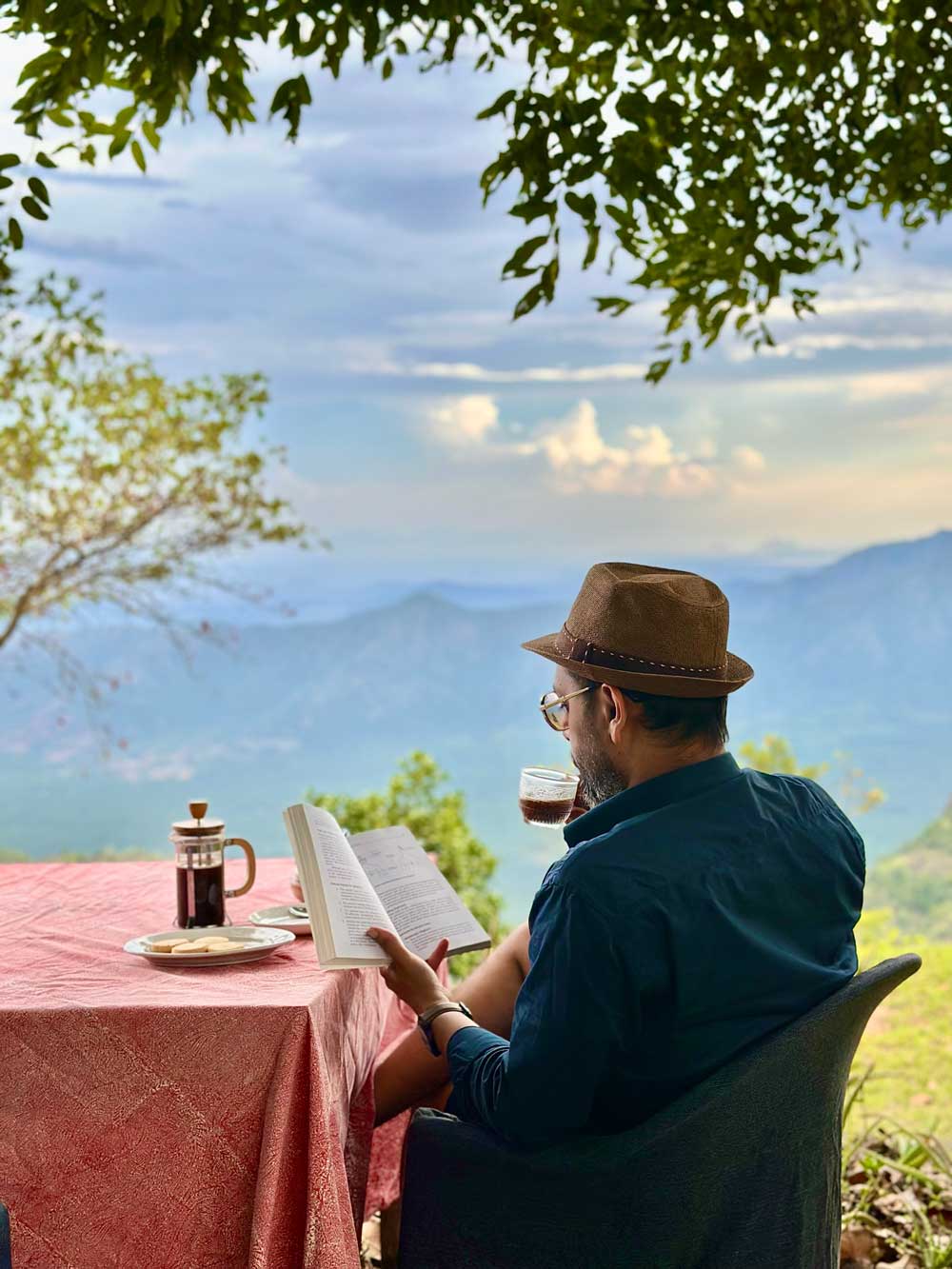
And noticing, I discovered, becomes an activity in itself when one has been away from the noise for long enough.
There were birdsong and butterflies, the occasional movement in the trees, the scent of damp earth after mist. The swimming pool sat quietly against the landscape, but somehow it was the library that exerted the greater pull. Isla’s collection of books is as much a part of the house as its furniture. One could spend an afternoon there with a book and coffee and feel absolutely no obligation to go anywhere else.
The open air dining room was another such place.
It is wonderfully unlike the dining rooms of conventional hotels. Prints, masks, statues, Jaipur rugs and objects gathered from across India surround the table, while the library and its accumulated wisdom seem to spill naturally into the space. The result is eclectic without being theatrical. One has the feeling of sitting inside someone’s life rather than inside a design concept.
The food follows the same philosophy.
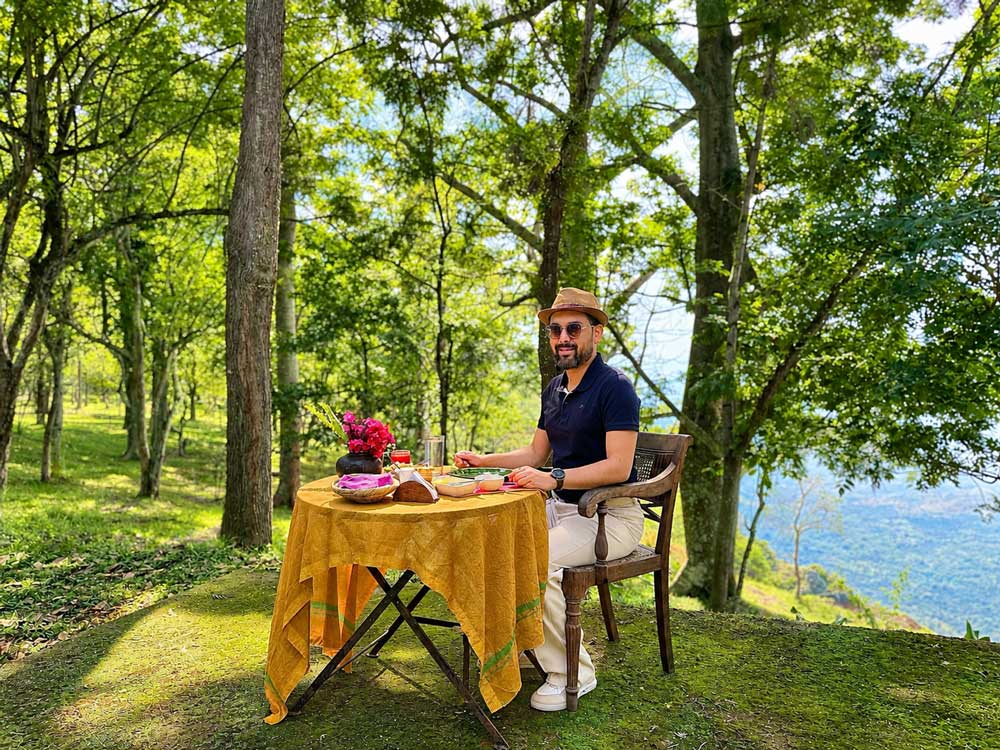
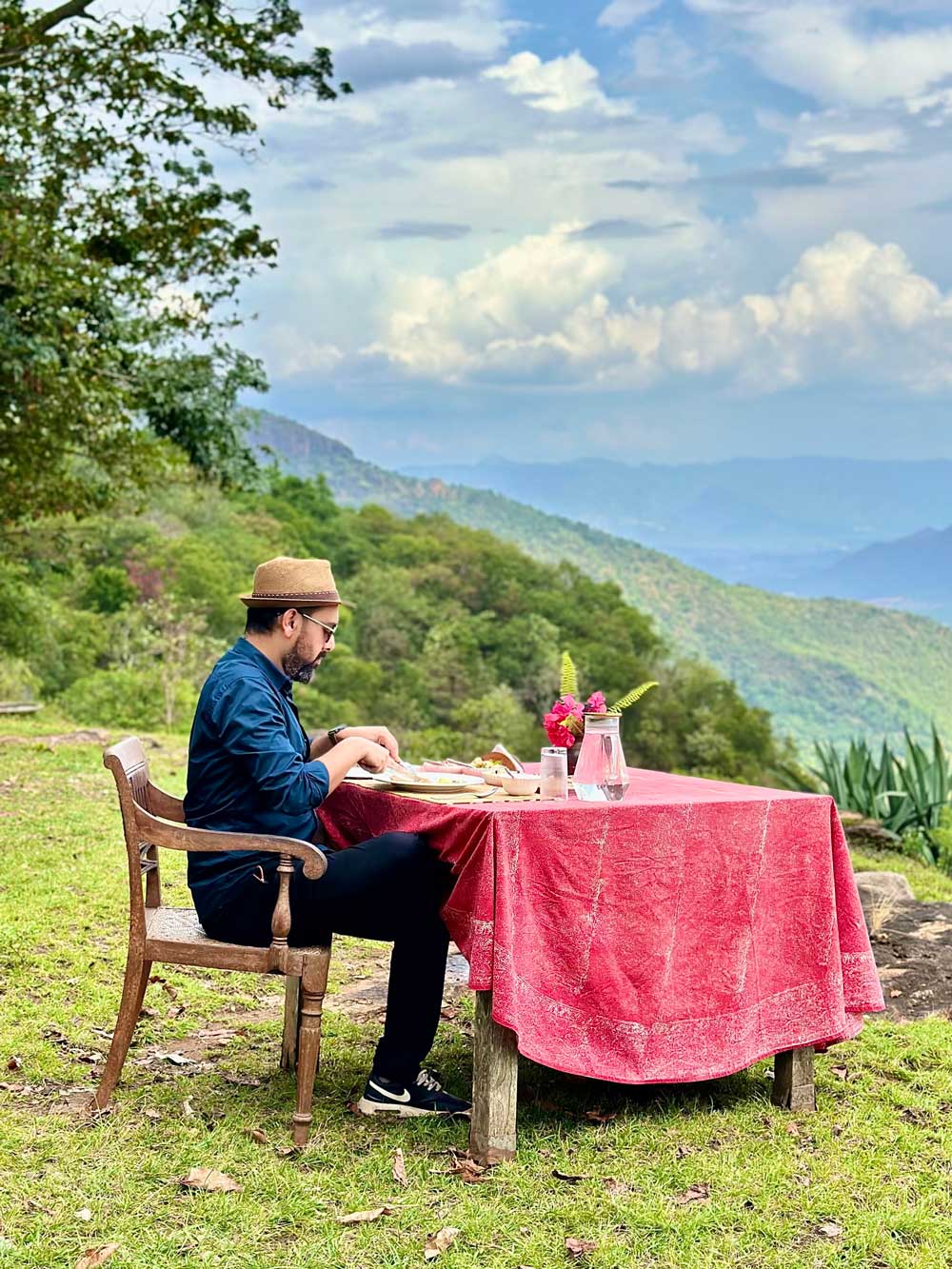
Breakfast was unhurried. Eggs, fresh bread, fruit, and the possibility of dosa or vadai with chutneys; coffee sourced from a nearby estate. Lunches were lighter, dinners more elaborate. The kitchen draws upon Tamil traditions, recipes from the Nilgiris and the culinary influences of the Raj period, while using produce from the garden and surrounding farms.
Yet for all the beauty of the property, I found myself thinking less about its architecture and more about its temperament.

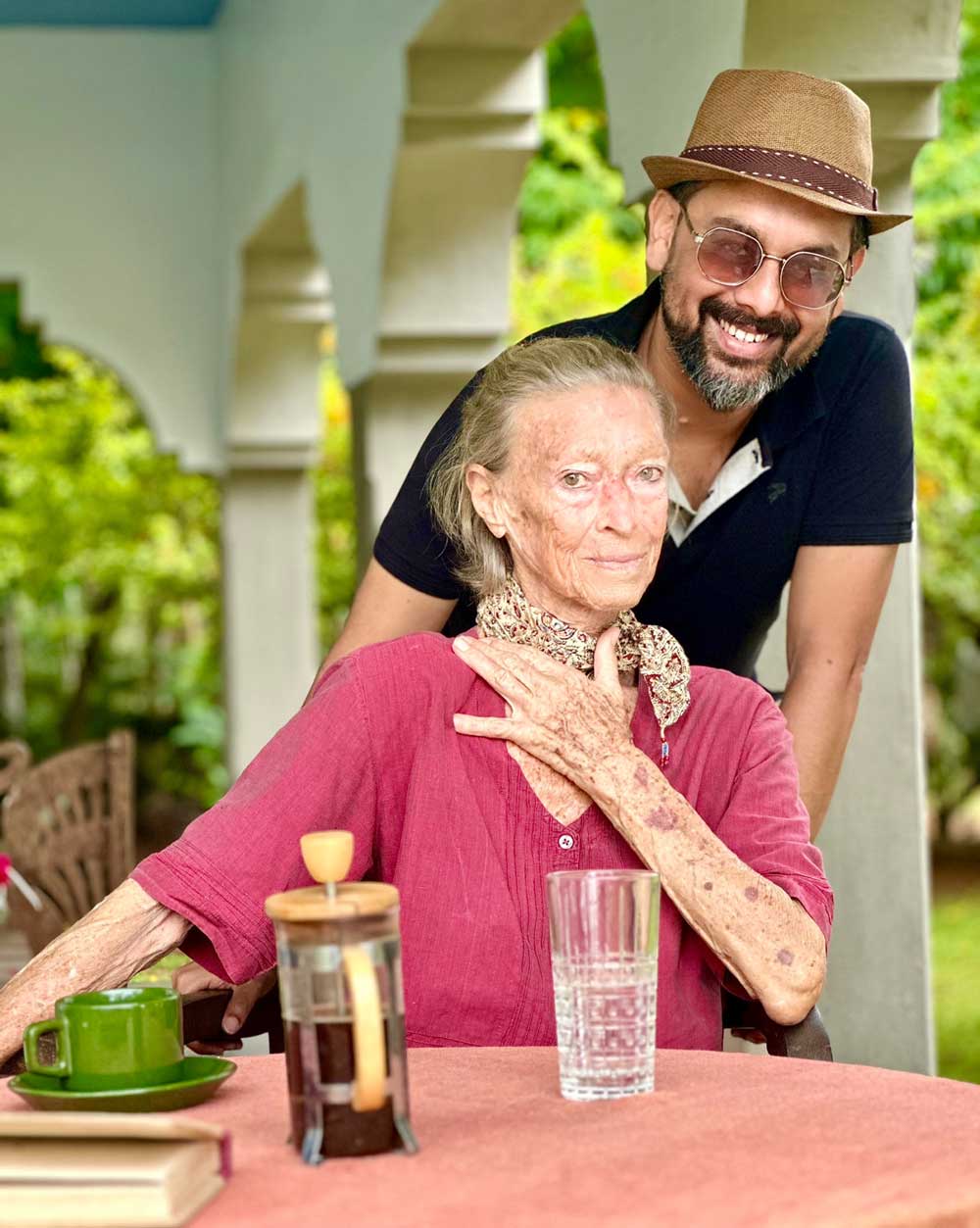
Isla’s Ridge does not feel like a hotel in the conventional sense. It feels like being allowed temporarily into someone’s extraordinarily well-lived life. Perhaps that is inevitable because the place began as Isla Van Damme’s own world. Born in Kodaikanal in 1945, Isla spent much of her life between India and Europe, working as a designer and developing a distinctive eye for textiles, jewellery, antiques and interiors. She acquired the estate in 2016 and gradually shaped it into what it is today; CGH Earth later came on board as a partner. Before Isla’s Ridge, her hospitality life had included the Olive Ridley café in Goa.
The history gives the place its particular soul.
There is a difference between a hotel designed to look personal and a home that has subsequently become a hotel. Isla’s Ridge belongs to the latter category.
On my final morning, I had breakfast at my table expecting nothing more than another quiet meal before departure.
And then I met Isla.
She joined me at the breakfast table and, for a while, the distinction between guest and host seemed to disappear. She spoke with the ease of someone for whom stories are not performances but simply the natural residue of a life lived across continents, professions and decades.
I listened.
There were stories from her long experience, fragments of places and people, recollections that seemed to stretch far beyond the boundaries of the estate. I remember thinking that the most interesting thing about meeting someone who has lived an unusually rich life is not the number of places they have been, but the way those places continue to live inside them.
Isla seemed to carry her worlds lightly.
And suddenly the horses, the library, the collected objects, the European furniture, the Indian textiles, the kitchen, the gardens and even the peculiar quietness of the ridge made greater sense. They were not separate features of a boutique hotel. They were chapters of the same story.
My own stay had begun as an escape from the city.
By the time I left, it felt more like an encounter. There is a particular kind of luxury in being somewhere that asks nothing of you. No sightseeing checklist. No pressure to be entertained. No compulsion to fill every hour.
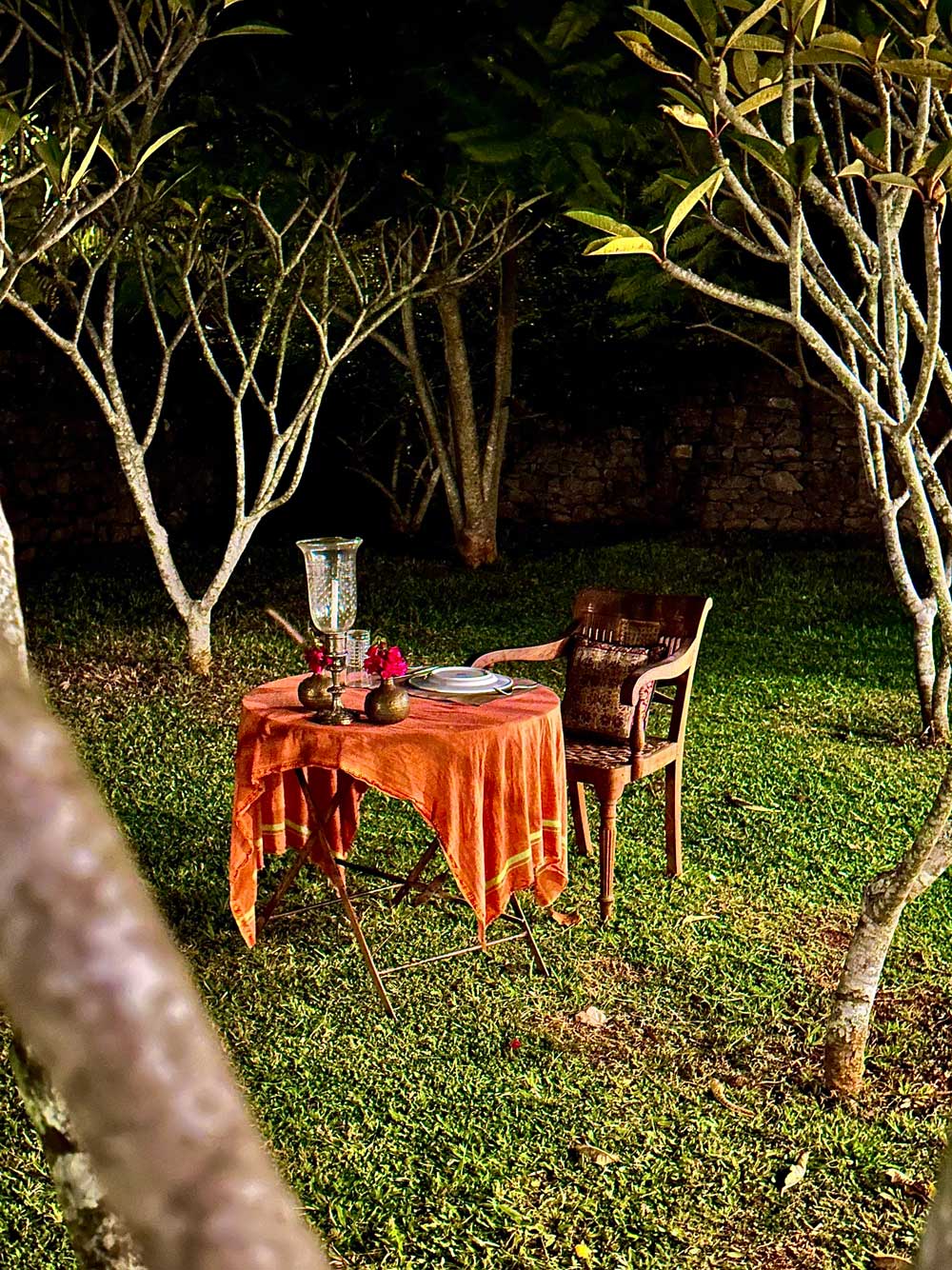
At Isla’s Ridge, the day can simply be allowed to happen.
As I drove away, the hills receded slowly behind me. The city would eventually return…he traffic, the screens, the appointments, the familiar urgency of modern life.
But for two nights and three days, I had inhabited another rhythm. Perhaps that is the real gift of Isla’s Ridge. It does not make you forget the world. It merely reminds you that the world can be experienced at a different speed.