Migrant and refugee women across Australia will receive expanded access to health information in languages they understand, with the Federal Government committing $10.8 million over two years to continue the national Health in My Language Program.
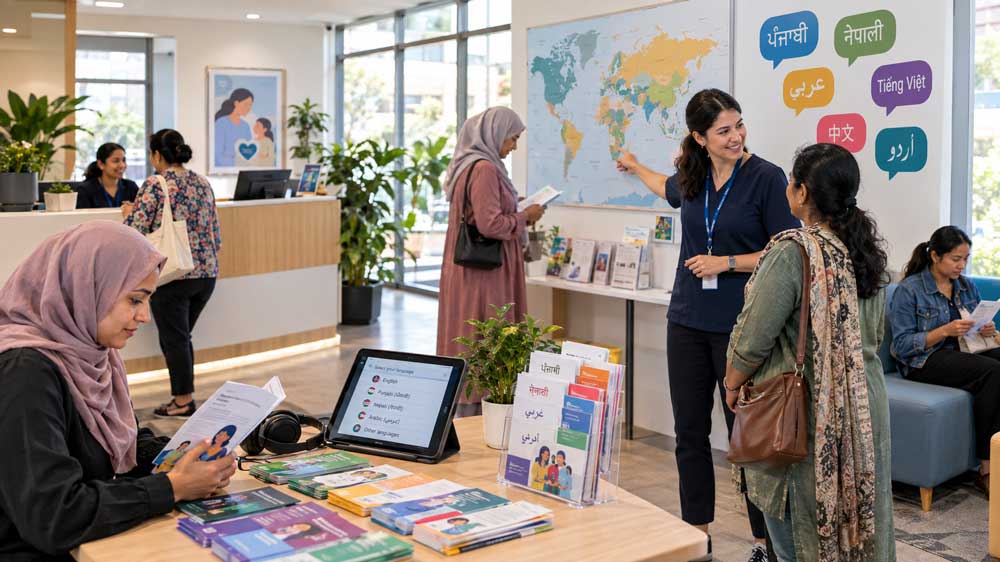
The program will continue to be led by the Multicultural Centre for Women’s Health in partnership with seven organisations around Australia. It provides free, culturally safe health education through trained bilingual educators who work directly with migrant and refugee communities.
The initiative is designed to address some of the barriers women can encounter when accessing Australia’s healthcare system, including language differences, limited health literacy and difficulties understanding how to navigate unfamiliar health services.
Rather than relying only on translated written information, the program uses bilingual health educators who can explain health topics in participants’ preferred languages while drawing on their understanding of the communities they work with. This allows participants to ask questions and discuss concerns in a more familiar setting.
Since Health in My Language began in 2022, the Australian Government says around $35 million has been invested in the program. More than 8,000 people from migrant and refugee communities across every state and territory have participated in sessions delivered in more than 30 languages.
The program’s current health education topics include mental health, navigating the Australian mental health system, breast, cervical, bowel and lung cancer screening, contraception, safer sex, menopause, pregnancy choices and menstruation. The 2025–26 evaluation also recorded education on managing mental health and understanding menopause among the topics delivered.
For many participants, the program is intended to provide more than basic health information. Sessions aim to help women understand available services, recognise when they may need professional care and feel more confident communicating with healthcare providers.

The importance of this approach has been reflected in participant experiences recorded through the program. One participant described previously feeling anxious about using the healthcare system because language difficulties made it difficult to understand how to seek help. After taking part in the sessions, she said she felt more confident accessing health services.
Another participant described attending a session focused on women’s health and cancer awareness. Information discussed during the session prompted her to raise symptoms she had previously been concerned about with a bilingual health educator. The educator helped her arrange a GP appointment, which led to further medical investigations and early treatment.
The program is particularly relevant to communities where health information may not always be easily accessible in a person’s first language. By providing education through trusted bilingual workers, the initiative aims to make conversations about topics such as cancer screening, reproductive health and mental wellbeing easier to approach.
The Multicultural Centre for Women’s Health says Health in My Language is designed to improve health equity by providing tailored health education for migrant and refugee women. The program works with organisations across every state and territory and has developed a national workforce of bilingual health educators.
The renewed funding will allow the program to continue through June 2028. The organisation says the next phase will continue focusing on mental health, cancer screening and sexual and reproductive health education, while working with community partners to reach women who may face barriers to accessing mainstream health information.
Minister for Multicultural Affairs Dr Anne Aly said language should not prevent people from accessing important health information and services. Assistant Minister for Health and Aged Care Rebecca White also highlighted the role of trusted bilingual educators in creating spaces where women can ask questions, share experiences and build confidence in navigating the healthcare system.
The continued investment places culturally responsive healthcare information at the centre of the program’s next stage. For migrant and refugee women across Australia, access to health education in familiar languages can provide an additional pathway to understanding available services and making informed decisions about their own health and wellbeing.