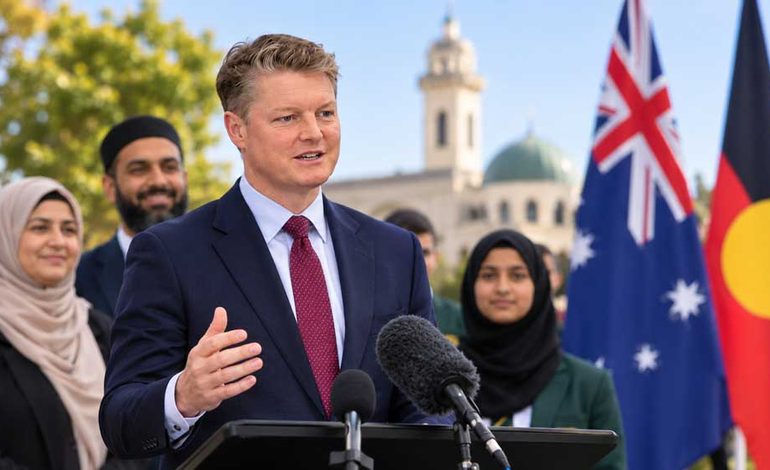
Australian Prime Minister Anthony Albanese has met Indian Prime Minister Narendra Modi in Manila, Philippines, as Australia looks to strengthen economic partnerships and regional security cooperation across the Indo-Pacific.
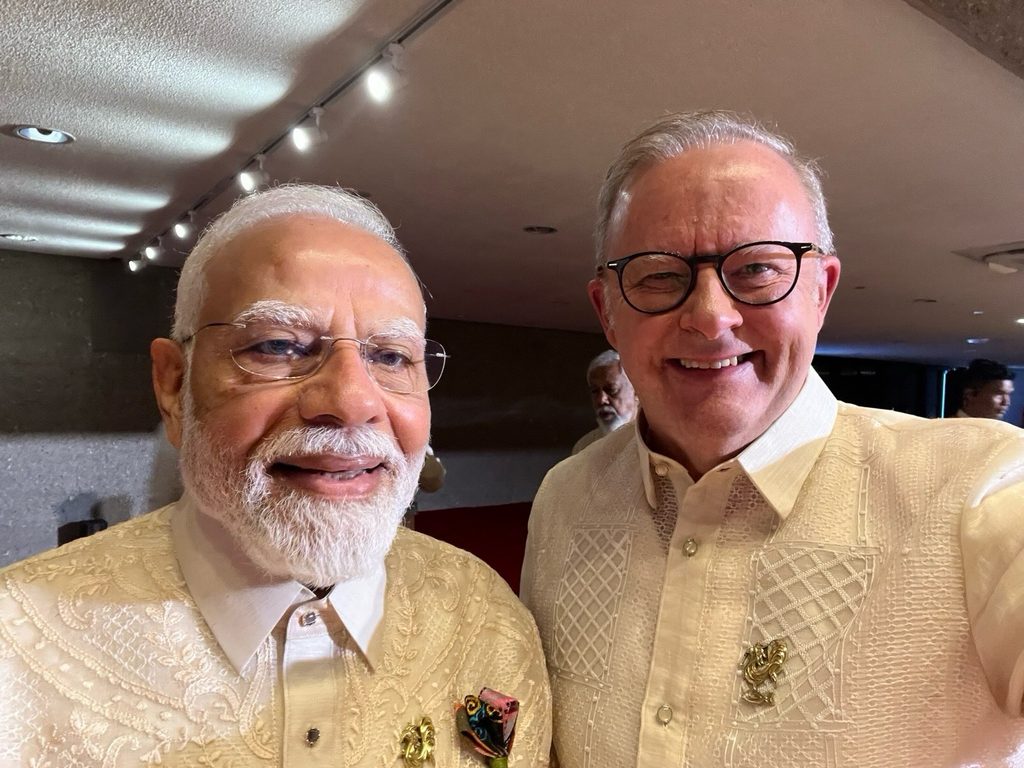
The meeting took place on the evening of 16 November 2026 on the sidelines of the ASEAN Summit. It formed part of Albanese’s international diplomatic tour, which also includes visits to Türkiye and China, with trade diversification, climate cooperation and regional stability among the key priorities.
Although details of the Albanese-Modi discussions have not been publicly released, the meeting provided an opportunity for direct engagement between two countries with expanding partnerships in trade, education, defence and critical minerals.
Australia and India Build on Strategic Partnership
Australia and India have strengthened their relationship through closer economic and security cooperation in recent years.
Both countries are members of the Quad, alongside Japan and the United States, and have pursued greater collaboration across defence, maritime security and regional stability.
Their economic relationship is also supported by the Australia-India Economic Cooperation and Trade Agreement, which entered into force in December 2022.
In July 2026, Albanese and Modi met in Melbourne and announced further measures to strengthen defence and security cooperation, including a joint declaration aimed at improving strategic coordination, defence exercises and interoperability between their armed forces.

Southeast Asia a Major Focus for Australian Trade
Albanese’s participation in the sixth ASEAN-Australia Summit and the 21st East Asia Summit reflects Australia’s efforts to expand commercial engagement across Southeast Asia.
With a combined population of approximately 700 million, ASEAN represents an important market for Australian exporters, investors and service providers.
Australia is pursuing opportunities through its Invested: Australia’s Southeast Asia Economic Strategy to 2040, which aims to increase investment and business engagement across the region.
At the ASEAN-Australia leaders’ summit on 16 November, Australia and ASEAN reaffirmed their commitment to expanding trade and investment, clean energy, climate resilience, infrastructure and education, alongside closer maritime security cooperation.
Strengthening Relations with the Philippines
The Philippines is another important part of Australia’s regional diplomatic engagement.
During the Manila visit, Albanese is also holding talks with Philippine President Ferdinand Marcos Jr, as the two countries mark 80 years of diplomatic relations.
Australia and the Philippines have strengthened their defence and security relationship in recent years, including through their Strategic Partnership. Cooperation includes maritime security, information sharing and closer defence engagement.
China Visit to Focus on Trade and Economic Cooperation
Following the Philippines engagements, Albanese is scheduled to travel to China for the 33rd APEC Economic Leaders’ Meeting in Shenzhen and the Australia-China Annual Leaders’ Meeting in Beijing with Chinese Premier Li Qiang.
China remains Australia’s largest trading partner, with two-way goods and services trade reaching $326 billion in the previous year, according to the report.
The visit comes as Canberra continues to manage a relationship involving substantial economic ties as well as differences over regional security and other strategic issues.
The Australian Government has maintained that regular diplomatic engagement is important for advancing economic interests while addressing differences directly.
Climate Cooperation and Australia’s Regional Role
Albanese’s international programme also includes the COP31 World Leaders’ Summit in Antalya, Türkiye.
Australia is working with Türkiye on international climate negotiations, including the COP31 Pacific Partnership, which recognises the particular challenges facing Pacific island nations from rising sea levels and extreme weather.
The government has linked its international climate priorities with domestic investment in renewable energy, employment and secure energy supply chains.
Australia is also seeking support for its campaign for a non-permanent seat on the United Nations Security Council for the 2029–30 term.
Australia’s Engagement Across the Indo-Pacific
The meetings in Manila and the wider diplomatic tour reflect Australia’s approach to maintaining relationships with major economic partners while strengthening regional cooperation and security.
For Australia, closer engagement with India, Southeast Asia, the Philippines and China forms part of a broader effort to diversify trade, support economic opportunities and contribute to stability across the Indo-Pacific.
As Albanese noted, Australia’s participation in international forums is important for ensuring the country’s interests are represented during a period of global economic and geopolitical uncertainty.