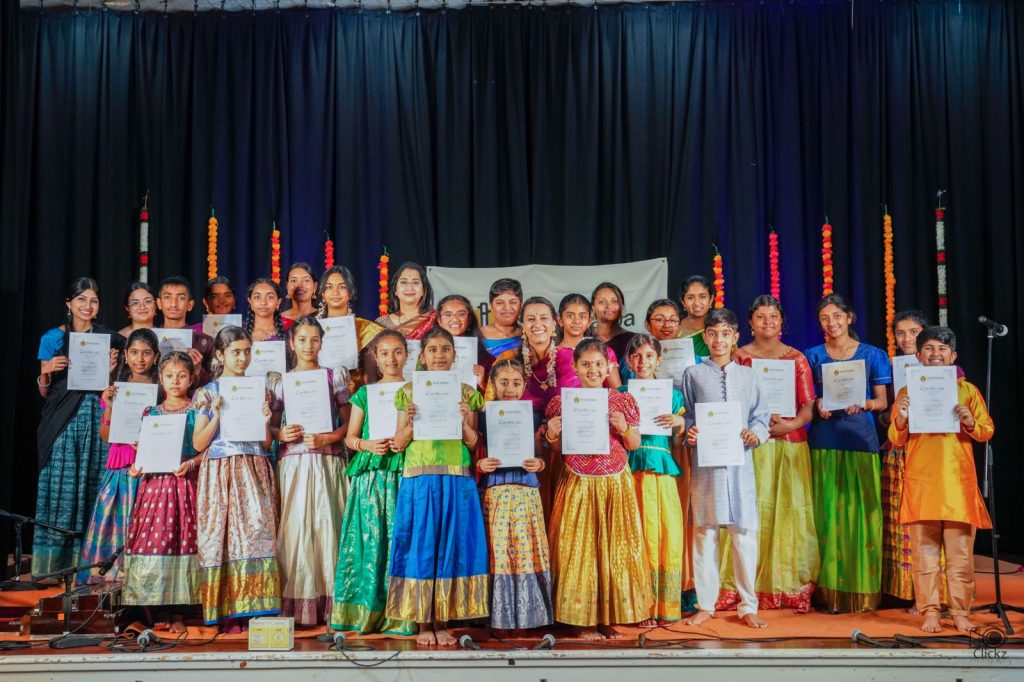
SYDNEY – The Sruti Kalpa School of Music marked its third anniversary with a deeply reflective and culturally rich programme, paying homage to one of India’s greatest classical composers, Sri Muthuswamy Dikshitar, on the occasion of his 250th birth anniversary.
For readers unfamiliar with Carnatic music, Sri Muthuswamy Dikshitar is regarded as one of its towering pillars. Born in the 18th century, he was part of the revered Carnatic Trinity and is celebrated for composing hundreds of devotional works that seamlessly blend music, philosophy, and spirituality. His compositions, primarily in Sanskrit, are admired for their structural clarity, spiritual depth, and emotional resonance, and continue to be performed and taught across the world.
The anniversary event went beyond a conventional concert. The two-hour programme focused on key moments from Dikshitar’s life, weaving together anecdotes, history, and music to explain how personal experiences, spiritual practices, and temple traditions inspired some of his most enduring masterpieces. This narrative approach made the evening accessible not only to seasoned rasikas (music connoisseurs) but also to audiences encountering Carnatic music for the first time.
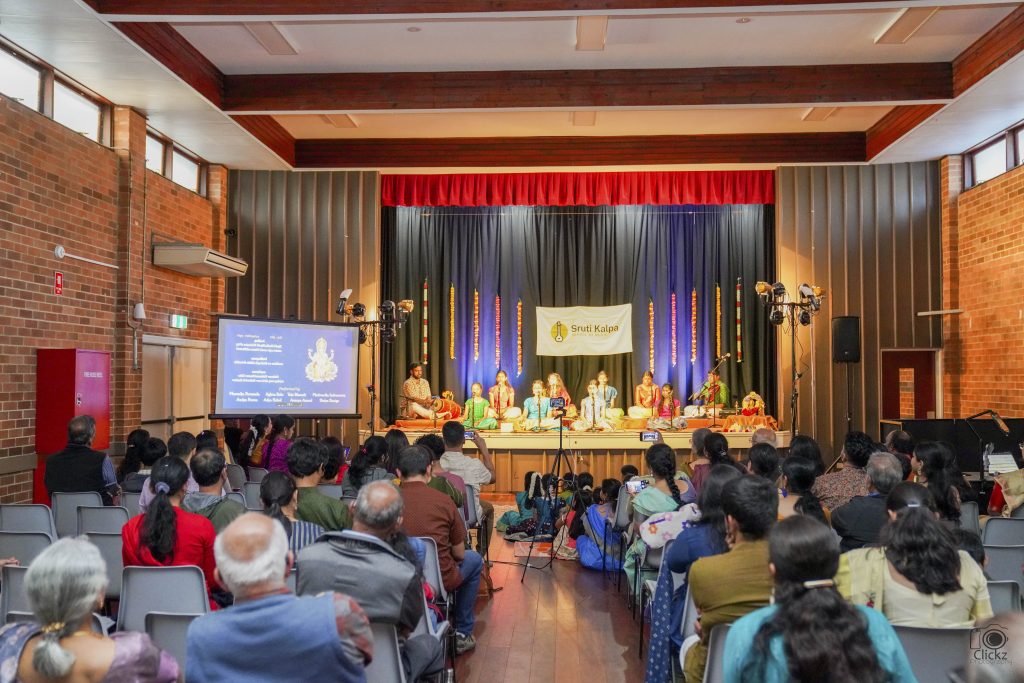
The school was founded by Lakshmi Kumaraguruparan, a seventh-generation descendant of Sri Muthuswamy Dikshitar. Now calling Sydney home, Smt. Lakshmi has been teaching Carnatic music for over 15 years and has played a significant role in nurturing young talent within the Indian diaspora in Australia.
Speaking through her work rather than words, her approach underscores a timeless truth of Indian classical arts – that music is far more than a sequence of notes. It is emotion, discipline, devotion, and lived experience.
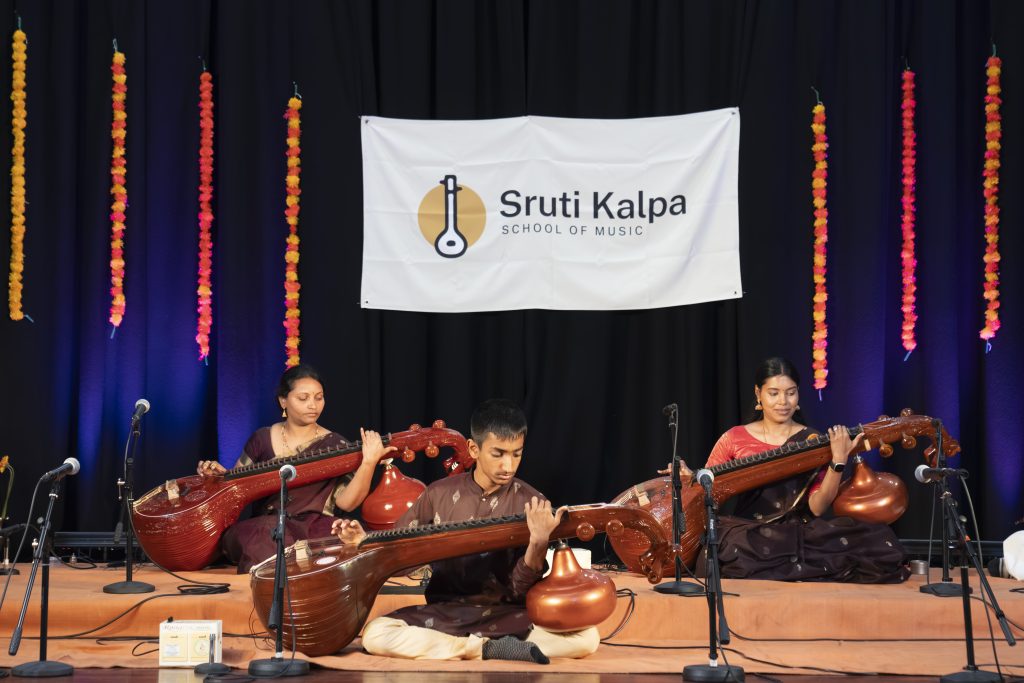
The Musical Journey: 16 Compositions, 16 Stories
The celebration featured 16 carefully chosen compositions, each reflecting a different facet of Dikshitar’s musical and spiritual legacy:

- Gananāyakam – A traditional opening prayer invoking Lord Ganesha, symbolising the removal of obstacles before beginning any auspicious endeavour.
- Gurumurte – A composition dedicated to Lord Subramanya, expressing devotion to the divine teacher who guides spiritual awakening.
- Śrī Nāthādi – A reverential piece praising the Supreme Being, highlighting Dikshitar’s mastery over Sanskrit and philosophical expression.
- Jambupate – A famous temple composition dedicated to Lord Shiva of Jambukeswaram, celebrating nature and the element of water.
- Ganesha Kumāra – A lively composition portraying the youthful, compassionate form of Lord Ganesha.
- Śrī Saraswati – An ode to the goddess of knowledge and arts, symbolising learning, wisdom, and creativity.
- Sūryamūrte – A powerful kriti dedicated to the Sun God, reflecting cosmic energy and discipline.
- Tyāgarāja Yoga Vaibhavam – A song on the deity Tyagaraja swami of Thiruvarur. The song highlights the absolute mastery of samskritam.
- Śrī Guruguha – A contemplative piece emphasising inner knowledge and spiritual enlightenment.
- Santatam Pāhimām – A prayer seeking constant divine protection and grace.
- Śyāmale – A graceful composition dedicated to Goddess Kamakshi, expressing maternal compassion and strength.
- Śakti Sahita – A depiction of divine balance, portraying the inseparable union of energy (Shakti) and consciousness.
- Vande Mīnākshi – A celebrated kriti praising Goddess Meenakshi of Madurai, rich in devotion and melodic beauty.
- Bālagopāla – A popular composition portraying Lord Krishna as the playful divine child, filled with warmth and joy.
- Ānandāmritakarshini – A serene piece expressing the blissful nectar of divine experience.
- Śrī Kamalāmbikē – A revered composition from the Kamalamba Navavarana series, symbolising spiritual completeness and philosophical depth.
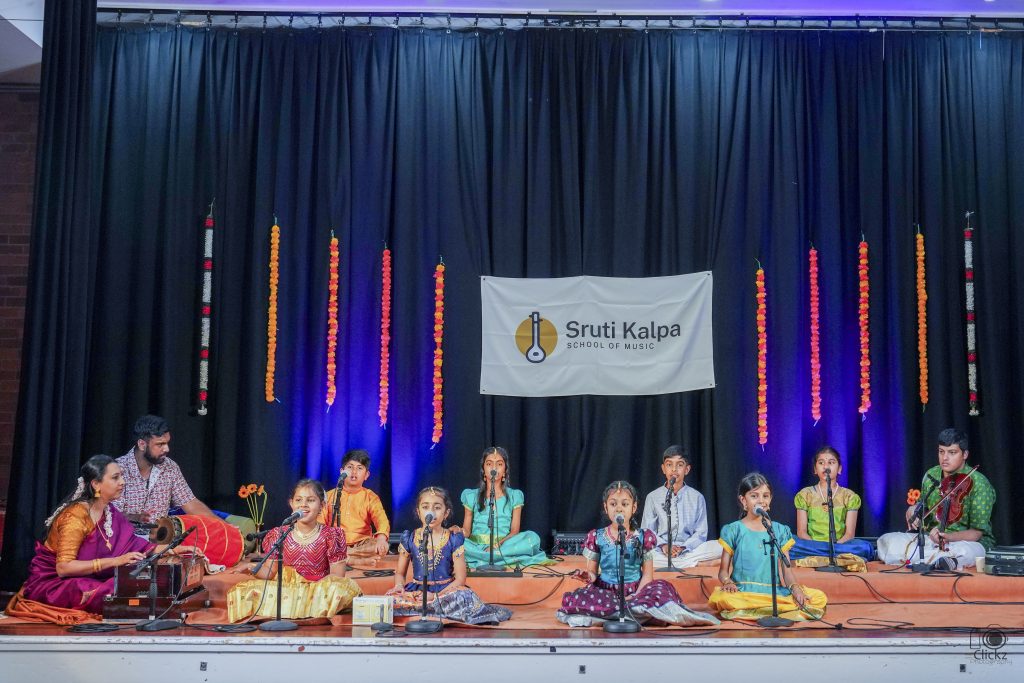
As Indian classical traditions continue to find new homes across the globe, events like this celebration highlight how diaspora communities in Australia are not only preserving cultural heritage but also presenting it in an inclusive and educational manner – ensuring that legends like Sri Muthuswamy Dikshitar remain relevant, understood, and revered across generations.
– Sukruti Narayanan