Sydney Sanskrit School | Marsden Road Public School, Liverpool
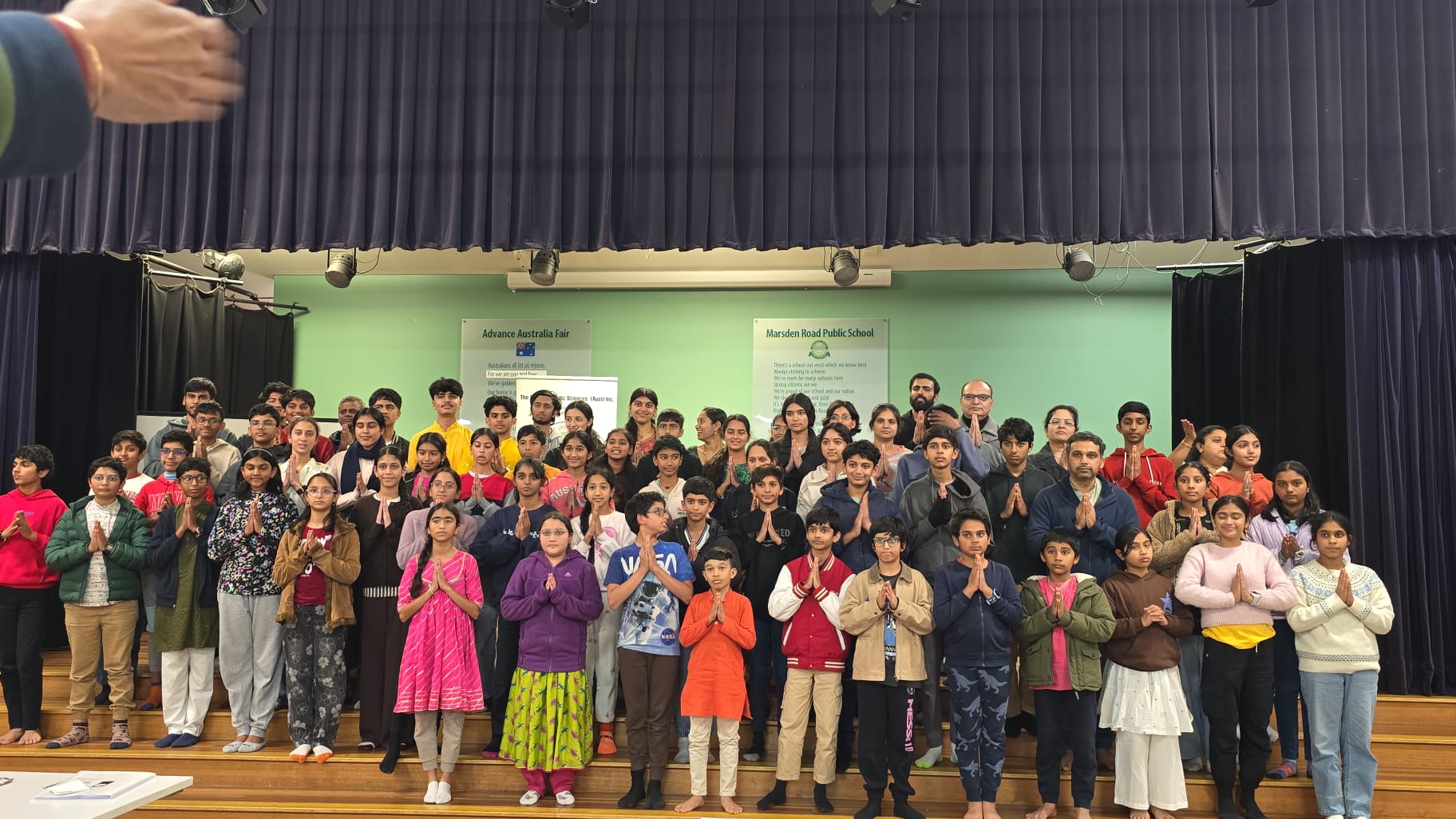
There’s something special about watching a student, child or adult, get that sudden spark when Sanskrit grammar finally makes sense. It was everywhere during our day-long Pāṇinīyam Grammar Workshop, from the first session right through to the last.
A Bright Beginning
We started the morning with प्रार्थना (prārthanā), a collective prayer, followed by the lighting of the दीप (dīpa). We were lucky to have Pandit Venkata Raman, Jayneil Shandil, and Amitha Bhat ji guide us through it.
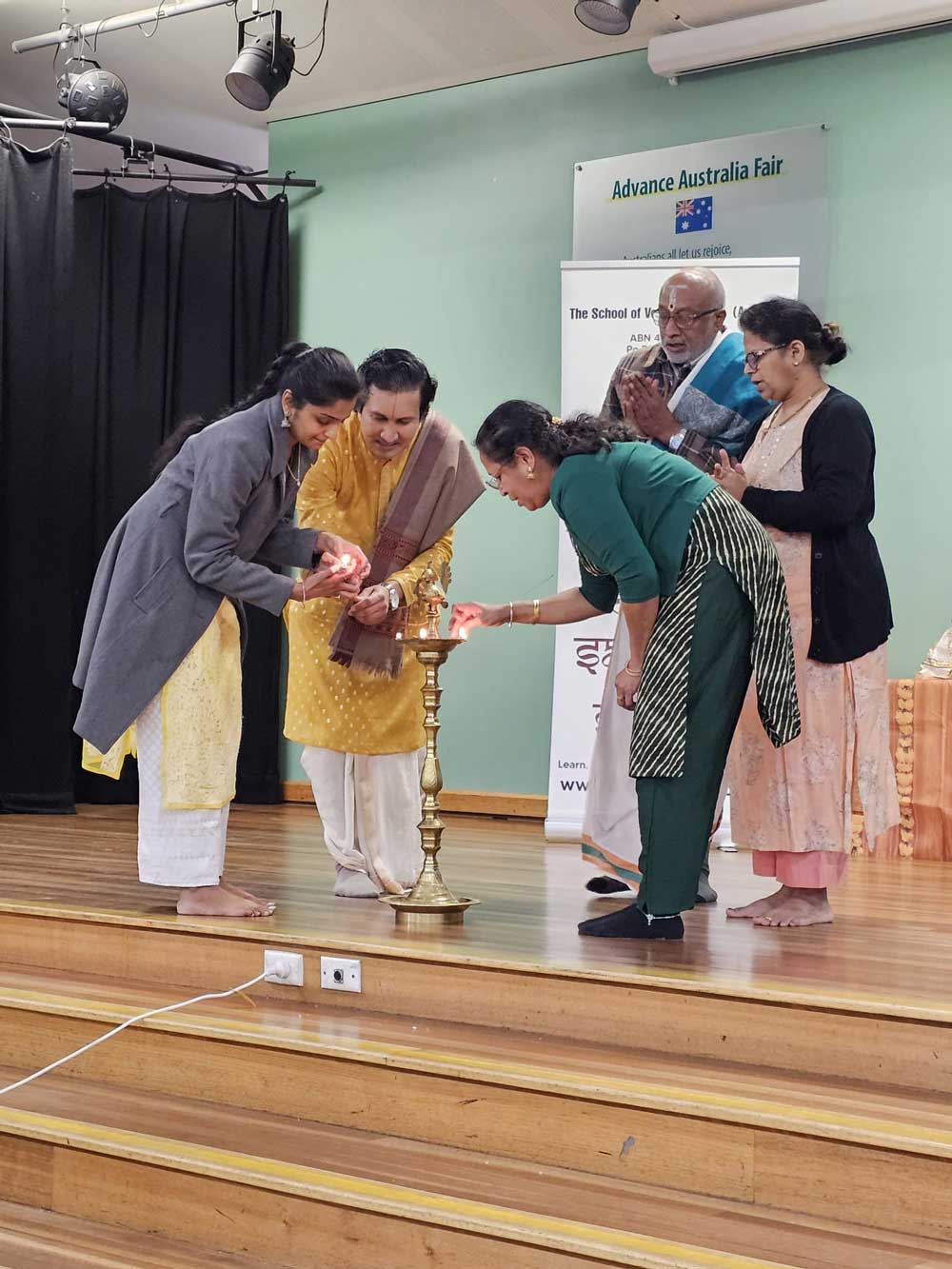
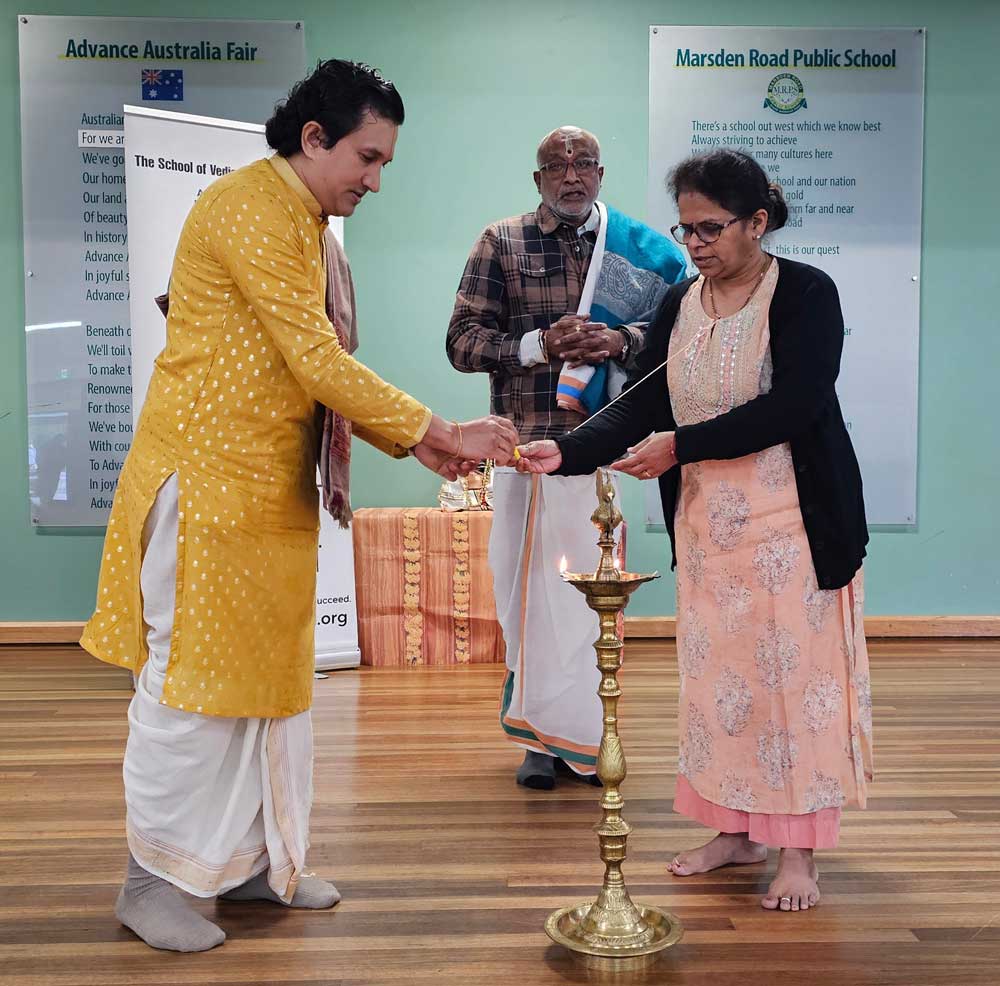
Pandit Venkata Raman has long supported our school and holds a key role in the Australian Council of Hindu Clergy. Jayneil Shandil is a Sydney barrister and community advocate who also serves as a Hindu priest. He’s a member of both the Australian Council of Hindu Clergy and the Shri Sanatan Dharma Brahmin Purohit Maha Sabha of Australia. And Amitha Bhat ji, a familiar face around our school, who works as a secondary school science teacher when she’s not with us.
Meena Aarye then led everyone through गणपति ताळम् (Gaṇapati tāḷam), and the energy in the hall just lifted. It set us up nicely for the sessions ahead.
Laying the Groundwork
Lakshmi Aarye opened the academic sessions with वर्णमाला (varṇamālā), the Sanskrit alphabet, but this was no ordinary recitation. She walked students through the वर्णोत्पत्तिस्थानानि (varṇotpatti sthānāni), which explains exactly where in the mouth each sound is produced, and then into the माहेश्वर सूत्राणि (Māheśvara sūtrāṇi), the fourteen short aphorisms that Pāṇini used to organise all Sanskrit sounds. Many students were hearing this for the first time, and you could see the difference it made. Suddenly the alphabet was not just something to memorise. It had a logic behind it.
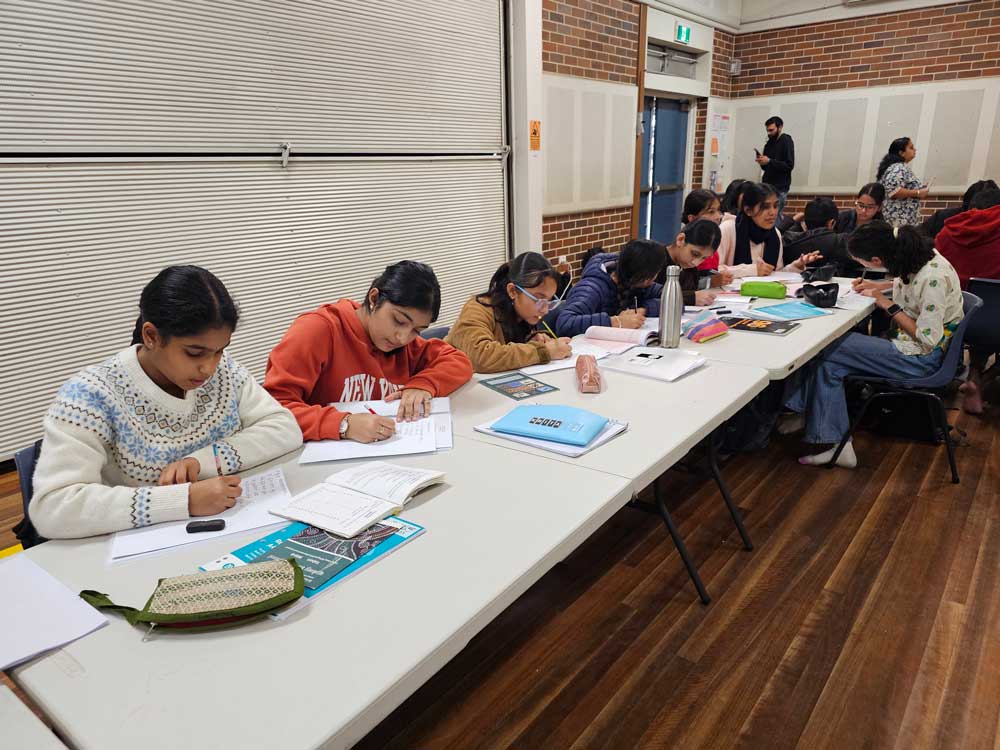
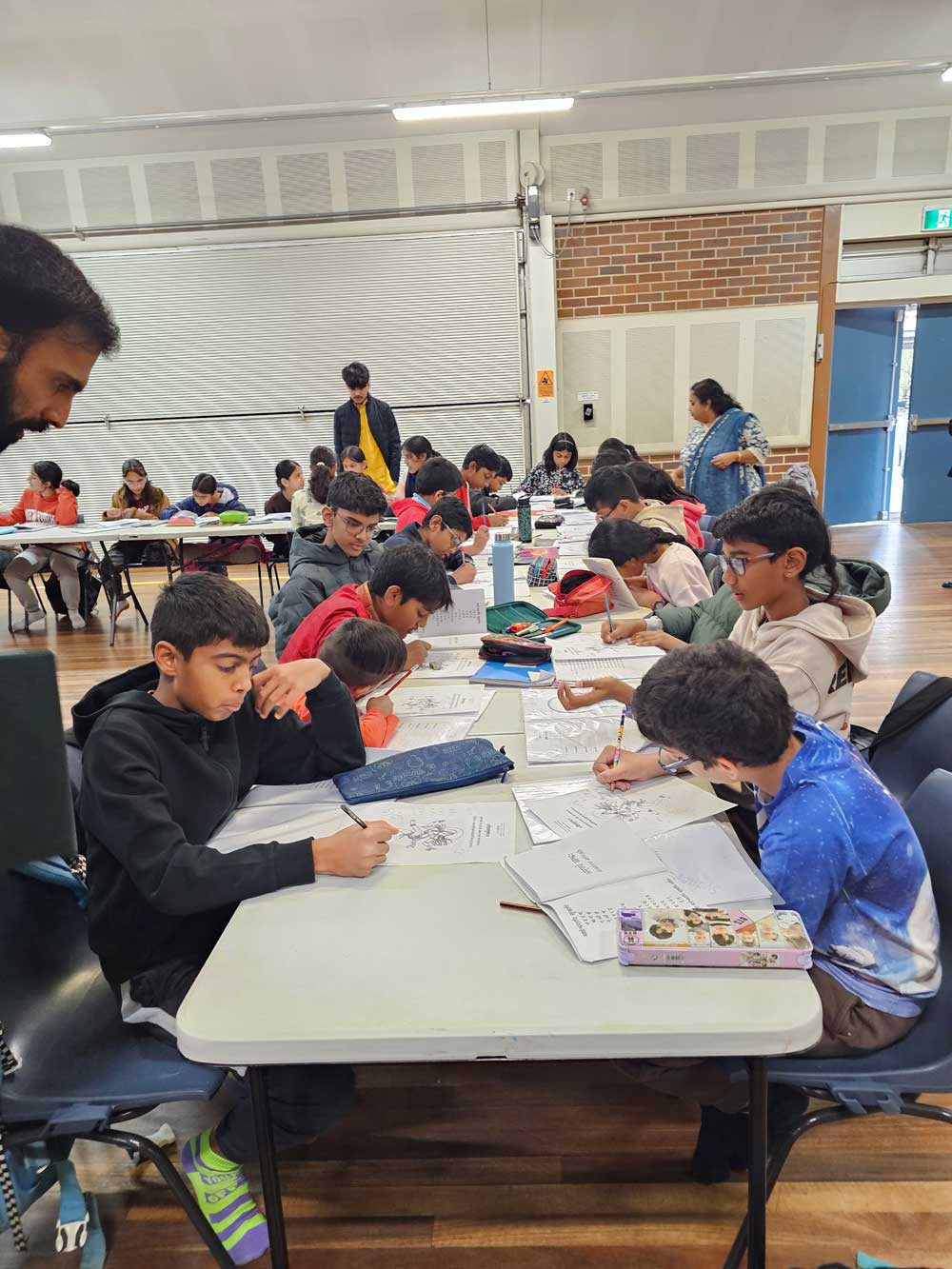
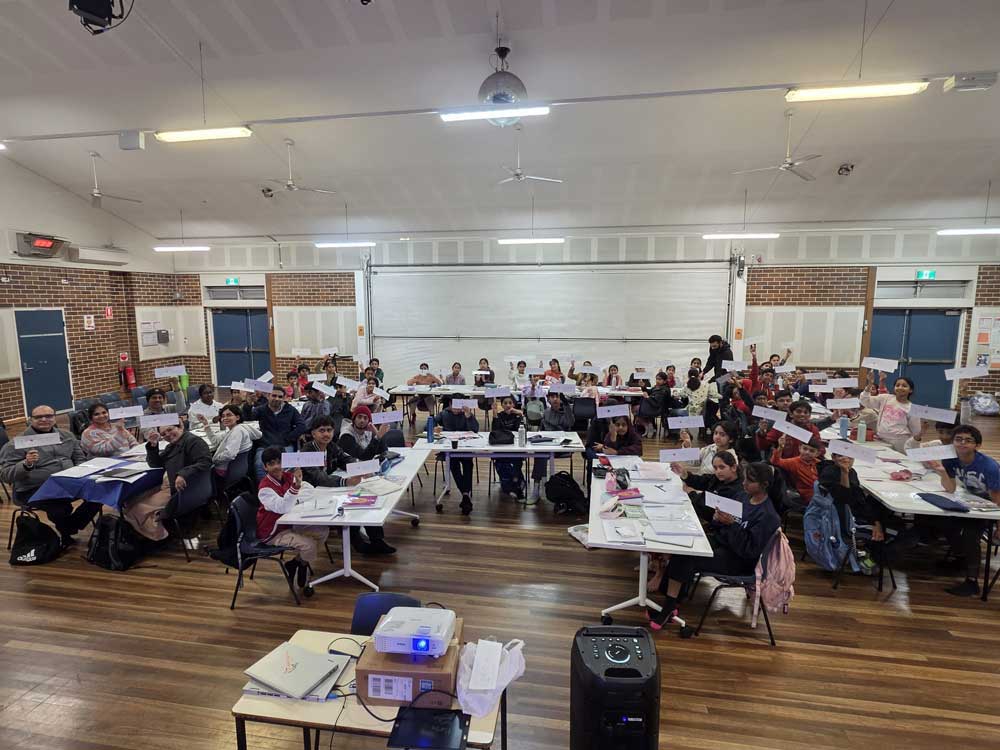
Roopa Aarye picked up that thread in her session on नामपदम् (nāmapadam), सर्वनाम (sarvanāma), and लिङ्ग विचार (liṅga vicāra), nouns, pronouns, grammatical gender. These are areas where students quietly carry confusion for a long time without asking. Roopa Aarye managed to get those questions out into the open. Lots of back and forth, lots of working through examples on the spot, and by the end, students who had been unsure were finally nodding along with real understanding.

Going Deeper
Things picked up again when Spoorthi Aarye got to विशेषणानि (viśeṣaṇāni), adjectives. Halfway through she turned it into a charades game, and the room just erupted, guessing, arguing, laughing, some students dead certain and others just throwing out wild guesses. Chaotic, but good chaotic. By the time the game wrapped up, the point had stuck adjectives in Sanskrit must agree with their nouns in gender, number, and case. Nobody in that room is forgetting that rule anytime soon.
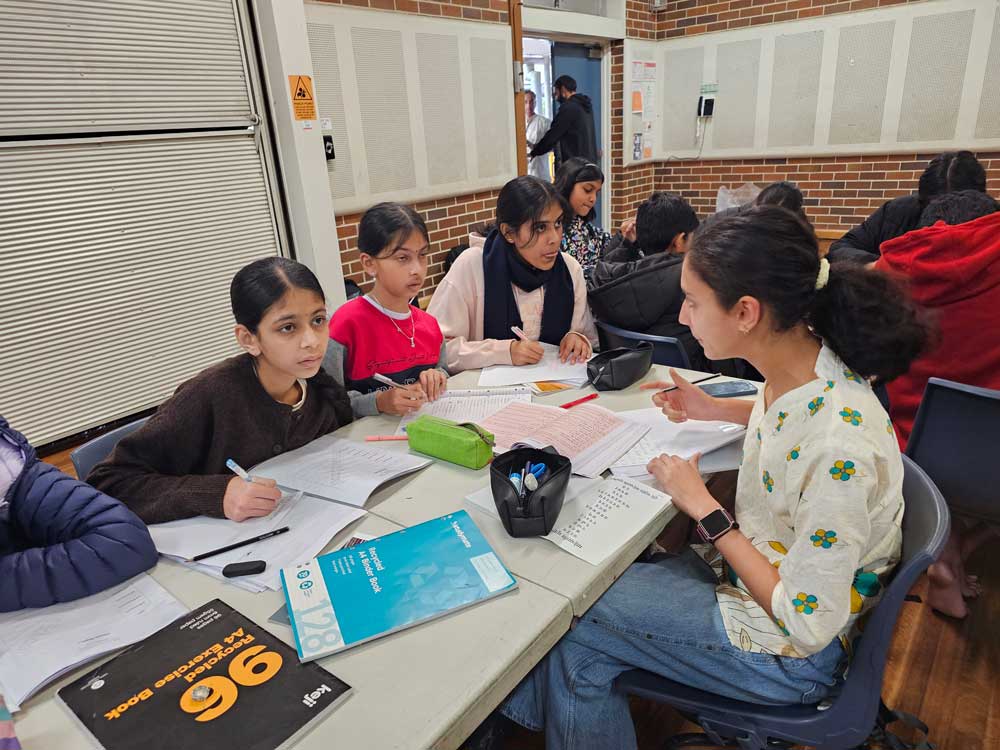
Sowmya Aarye closed out the morning with क्रियापदम् (kriyāpadam), verbs, and somehow the room still had energy left. Sanskrit verbs pack in a huge amount of information, and once you understand how they work, it changes how you read everything else. Her session moved fast and stayed practical, and by the time we broke for lunch, the students had covered more than most of them expected. You could tell they knew it too.
The Afternoon Sessions
After lunch, Arvind Aarya woke everyone back up with पर्याय पदानि (paryāya padāni), Sanskrit synonyms. Simple challenge on paper, guess the Sanskrit word for everyday things, but the results were anything but simple. Students realised quickly that Sanskrit can have a dozen words where English only has one, and each carries its own shade of meaning. Guesses flew, some spot on, some way off, and the laughter that came with it taught its own lesson: learning does not have to be serious to stick.
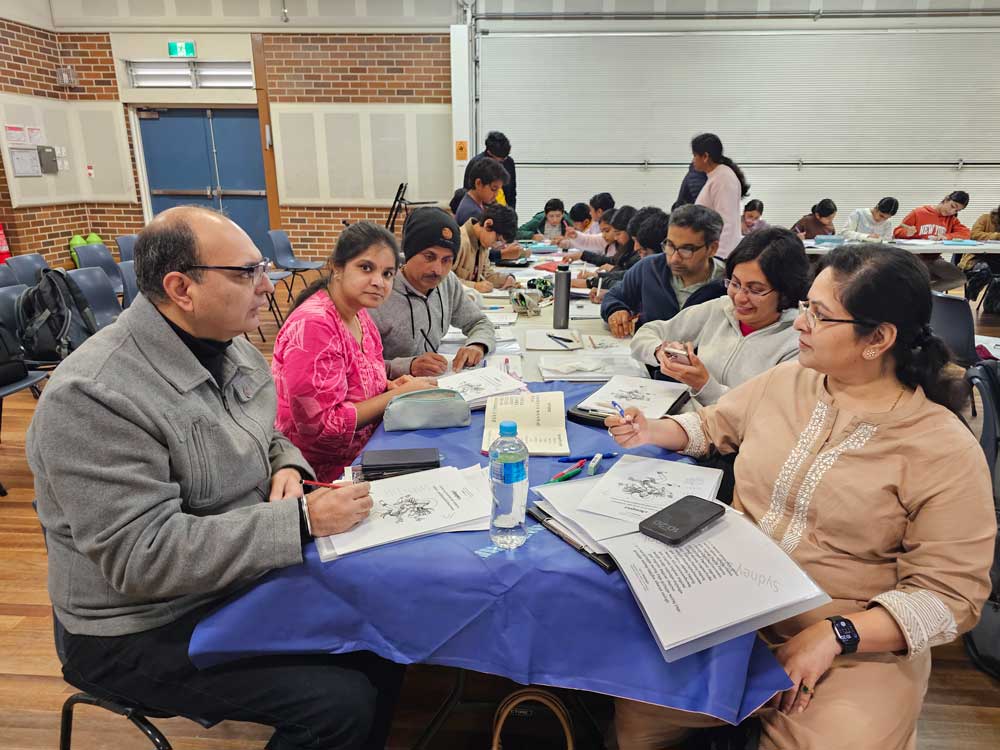
Then Smrithi Aarye took on सन्धि (sandhi). Sandhi, the rules for how sounds shift when words combine, has a bit of a reputation. Students walk in bracing for chaos and usually walk out wondering what they were so worried about, and that is what happened. Smrithi Aarye went through each pattern carefully, showing that every sandhi change follows a rule, and every rule follows a logic. Watching that shift happen in real time, from “this is confusing” to “oh, it’s a system,” was genuinely one of my favourite moments of the day.
Manasvinee Aarye wrapped up the academic programme with the session every student really needed: how the exam is structured, what each section covers, what is expected at each level. She reminded them not to fear it. The exam reflects what they have learned, and if they’ve put the work in, it will show. Honest, reassuring, and a good note to send them off on. They left knowing exactly what came next.
A Day Worth Remembering
Our school is turning twenty this year, and spending the day with such resolute students and fellow teachers really brought home how much this means to our community. Knowledge like this doesn’t just preserve itself. It lives in classrooms, in workshops like this one, and in the students who carry it forward.
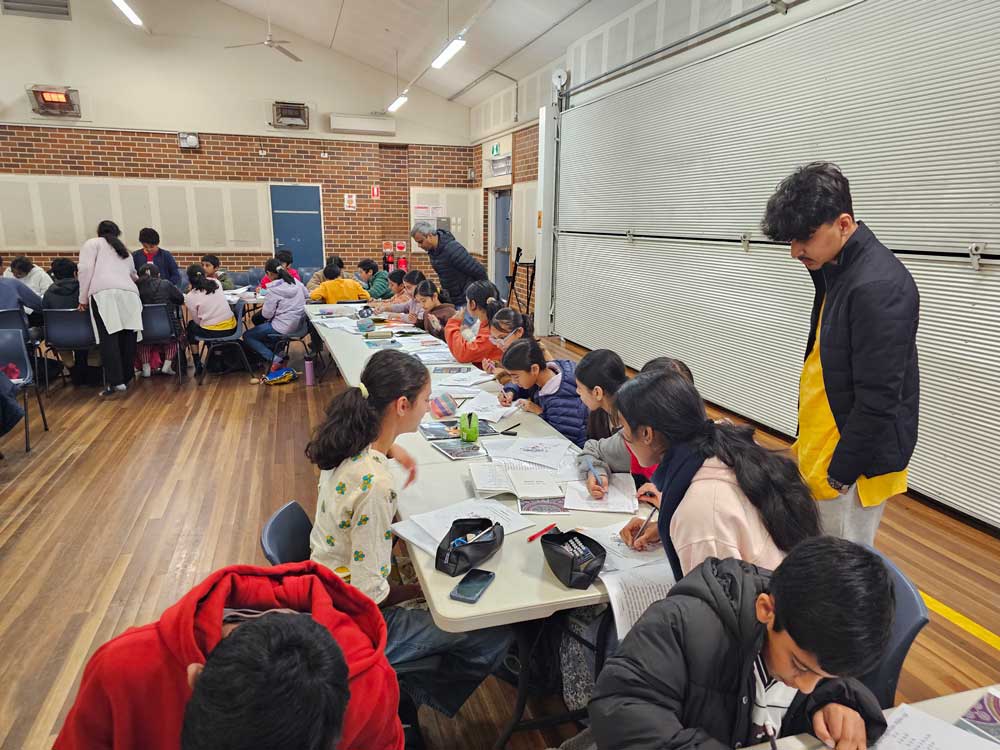
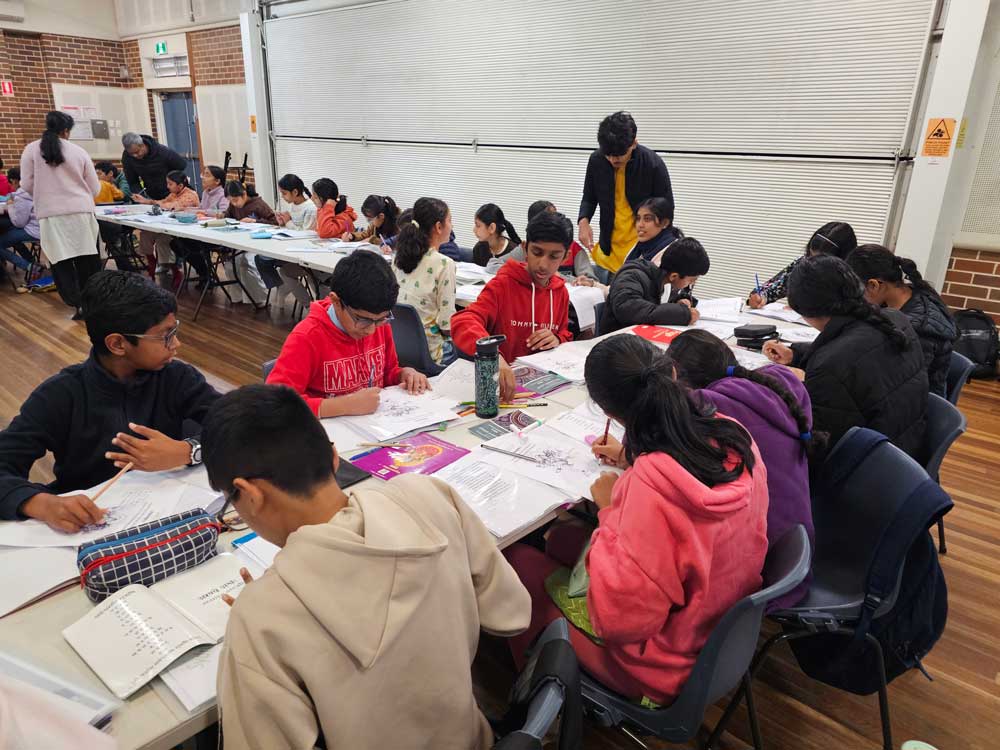
For the students, grammar stopped feeling like a hurdle and started feeling like a key, one that opens the real depth of the Sanskrit language. For the teachers, it meant walking away with immense respect from their students, having turned difficult topics into something both easier to grasp and genuinely fun.
– Ved Lomber

Ved Lomber
Ved Lomber is a former student of the Sydney Sanskrit School who has now transitioned into a teaching role, working with students across all age groups. His interests lie in exploring the intersection of technology and cybersecurity alongside his passion for Sanskrit and Hindu culture. He is currently undertaking his Master's at Macquarie University and works as an academic at the University of Wollongong.