The Art Gallery of New South Wales has opened Avatar: Forms of Vishnu, a major exhibition bringing together nearly 200 artworks that explore the enduring stories of Vishnu and his avatars. Spanning more than 1,500 years, the exhibition showcases artistic traditions from South and Southeast Asia through sculpture, painting, textiles, photography and installation.
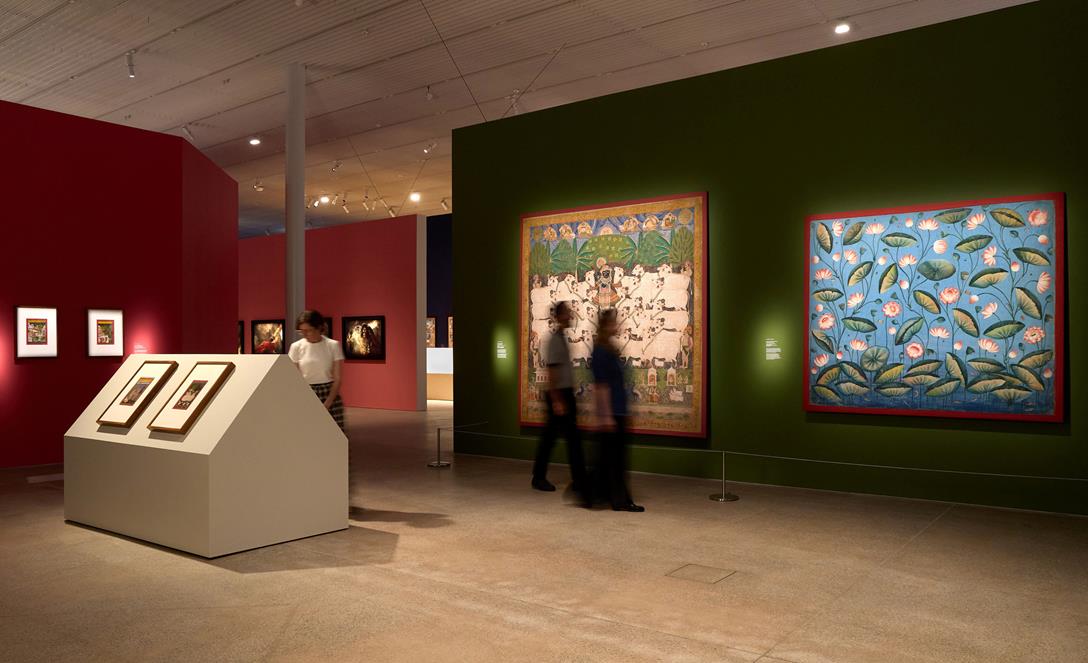
Featuring works from India, Nepal, Bangladesh, Cambodia, Indonesia and Australia, the exhibition highlights how generations of artists have interpreted stories of devotion, transformation and renewal. Many of the objects are being displayed in Australia for the first time, offering visitors a rare opportunity to engage with internationally significant cultural treasures.
Co-curated by Melanie Eastburn, Senior Curator of Asian Art at the Art Gallery of NSW, and Dr Chaitanya Sambrani of the Australian National University, the exhibition aims to connect historical narratives with contemporary experiences. The curators have created an immersive journey that explores universal themes extending beyond religious traditions.
Among the exhibition’s highlights are some of the earliest known sculptural representations of Vishnu from Cambodia. Visitors can view a sixth-century sculpture depicting Krishna lifting Mount Govardhana, alongside a rare pre-Angkor temple lintel featuring one of the earliest known depictions of the reclining Vishnu and the birth of Brahma.
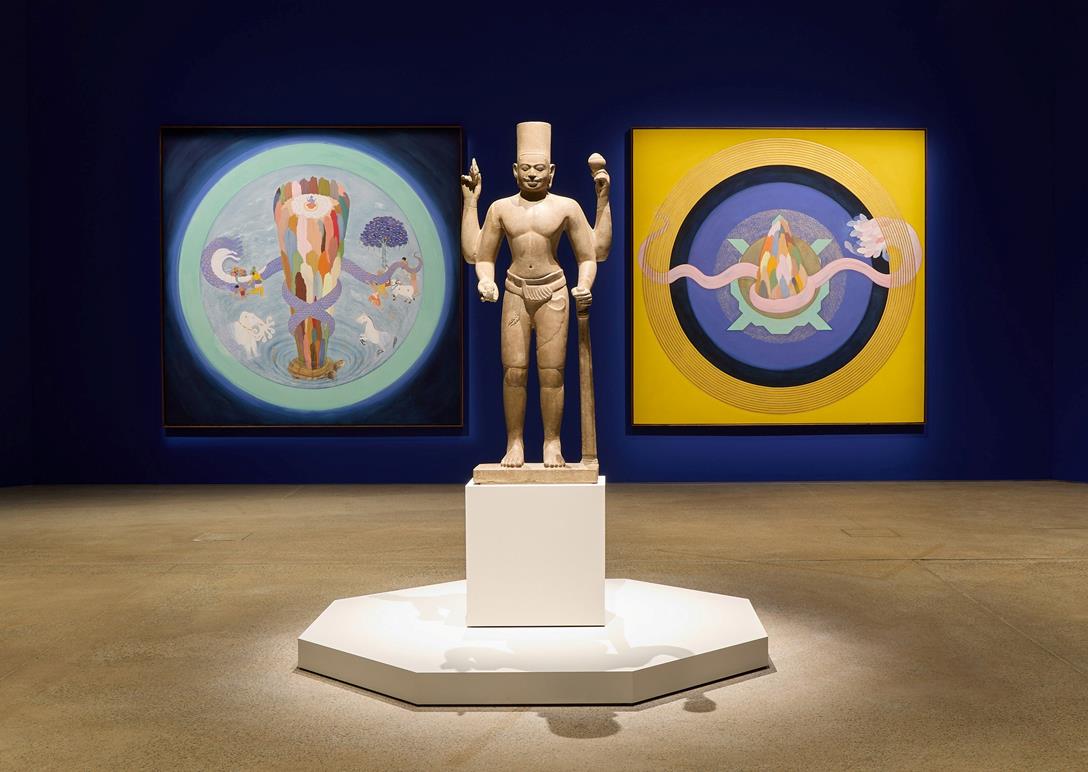
Another significant attraction is a newly conserved seventh-century sculpture of the horse-headed avatar Kalkin, also known as Hayagriva. The artwork, exhibited outside Cambodia for the first time, represents an important archaeological and conservation achievement and adds considerable historical significance to the exhibition.
The exhibition also features remarkable loans from leading international institutions, including an illustrated manuscript page from the ancient Harivamsa tradition and a bronze sculpture of Narasimha from Mumbai’s Chhatrapati Shivaji Maharaj Vastu Sangrahalaya. These works provide insight into the evolution of Vishnu’s visual and cultural representation across centuries.
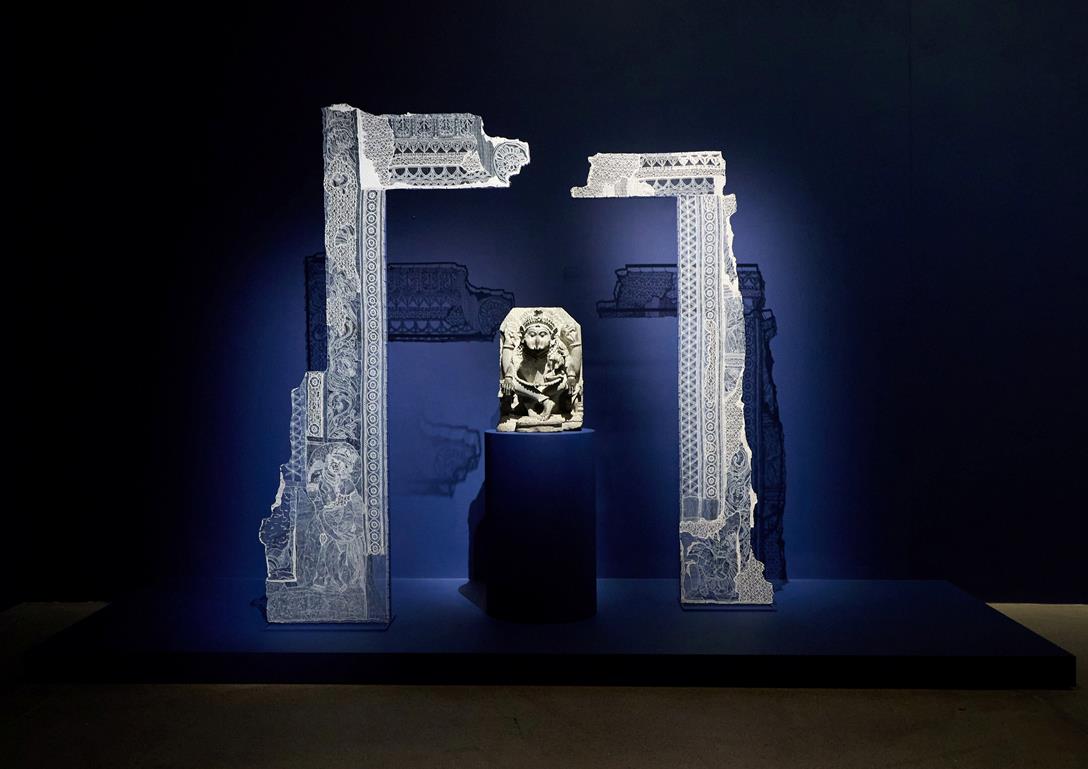
Contemporary voices play an equally important role. New Delhi-based artist Sumakshi Singh presents Threshold, a large-scale woven installation inspired by Odisha’s Konark Sun Temple and the legend of Narasimha. The work explores themes of presence, absence and transformation while creating a dialogue between historical and modern artistic practices.

Renowned Indian photographer Pushpamala N contributes a thought-provoking photographic series that reimagines the story of Princess Sita from a female perspective. Through performance and staged photography, the artist examines how women have been represented in traditional narratives while inviting audiences to consider alternative interpretations.
Visitors can also experience digital animations inspired by Kalam Patua’s paintings of Vishnu’s avatars, along with a diverse program of talks, workshops, yoga sessions, music, storytelling and dance performances. Together, these events celebrate the continuing relevance of Vishnu’s stories and their influence on contemporary culture and creativity.