Some of the world’s most capable air forces have converged on northern Australia for Exercise Pitch Black 2026, turning the skies over the Top End into a major international training environment and reinforcing Australia’s growing role in Indo-Pacific defence cooperation.
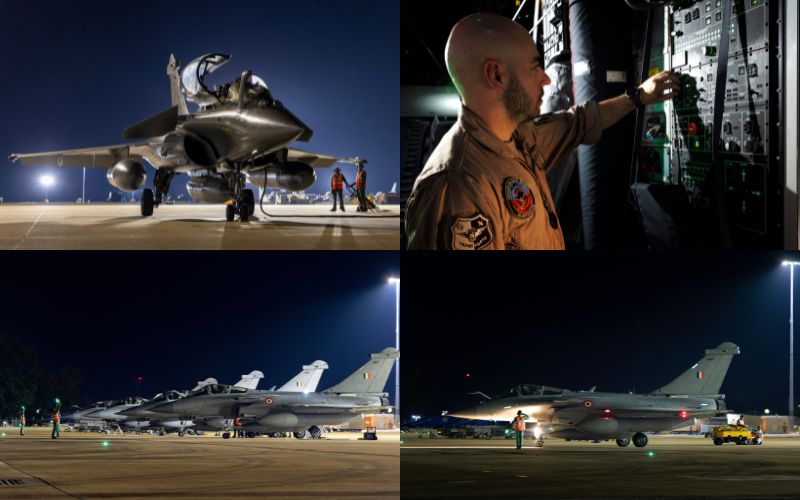
The Royal Australian Air Force’s biennial Exercise Pitch Black ran from 20 July to 7 August, bringing together personnel and aircraft from 21 nations. More than 100 aircraft and up to 2,500 personnel operated from RAAF Bases Darwin and Tindal in the Northern Territory, as well as RAAF Base Amberley in Queensland.
The scale of this year’s exercise underlines its importance to Australia’s defence engagement with allies and partners. Participating countries included Australia, India, the United States, Japan, Indonesia, the Republic of Korea, France, Germany, Spain, Singapore, Thailand, Malaysia, the Philippines, Canada, New Zealand, Finland, Sweden, Brunei, Fiji, Papua New Guinea and the United Kingdom.
For Australia, Pitch Black provides an opportunity to practise complex air combat operations alongside a wide range of international partners. The exercise is designed to develop interoperability, tactical skills and the ability of different air forces to operate together in demanding conditions.
The Northern Territory once again served as the centre of the activity, with Darwin and Tindal providing the main operating locations. The exercise also demonstrated the broader importance of the Top End as a strategic defence hub, with local businesses and communities supporting the movement, accommodation, maintenance and logistics requirements associated with such a large multinational deployment.
India’s participation is particularly significant for the growing Australia-India defence relationship. The Indian Air Force was among the international participants, providing another opportunity for personnel from the two countries to train alongside one another and strengthen operational relationships in the Indo-Pacific.
The exercise also showcased Australia’s close defence relationships with countries across the region. A notable example came through a joint formation flight involving four Australian F-35A Lightning II aircraft and four Republic of Korea Air Force KF-16 fighters. The flight marked the long-standing friendship between the two air forces and highlighted their ability to operate together.

The Philippines also returned to Pitch Black, with four Philippine Air Force FA-50PH Golden Eagle fighter aircraft among the first international fighter jets to arrive in Darwin. Australian Defence officials described the participation as another demonstration of the strengthening Australia-Philippines defence relationship.
Beyond fighter aircraft and combat training, Pitch Black involved a much wider network of personnel and support operations. Australia’s biosecurity authorities inspected more than 100 aircraft, along with cargo, vehicles and equipment arriving for the exercise, helping protect Australia’s agriculture, environment and economy while facilitating the movement of international forces.
The exercise also provided opportunities for cultural exchange between participating countries. During International Night in Darwin, personnel from the participating nations shared traditional food and cultural experiences. Australian Defence officials said these informal interactions were an important part of building relationships that extend beyond the flight line and can strengthen cooperation long after the exercise concludes.
Pitch Black also opened its doors to the Australian public during a major community event at RAAF Base Darwin. The open day attracted around 25,500 people, giving visitors an opportunity to see international aircraft, meet air and ground crews and learn more about the exercise. Displays included aircraft from participating nations as well as military working dogs, interactive exhibits, emergency services and Defence activities.
The exercise has also had an economic and community impact across the Northern Territory. The arrival of thousands of international personnel created additional demand for accommodation, transport, hospitality, logistics and other local services, while the presence of international forces provided opportunities for Australian businesses to support a major multinational defence activity.
Pitch Black 2026 comes at a time when Australia is placing increasing emphasis on air power, long-range capability and deeper defence cooperation across the Indo-Pacific. During the exercise’s final days, Defence Minister Richard Marles announced Australia’s planned acquisition of 450 AIM-260 Joint Advanced Tactical Missiles in a deal valued at $736 million. The weapons are intended to provide Australian fighter aircraft with greater air-to-air reach and will initially be integrated with Super Hornets before expanding to the F-35A and Growler fleets.
The scale of Exercise Pitch Black demonstrates that modern air power increasingly depends on cooperation between nations rather than individual aircraft or air forces operating independently. Training together allows participating countries to understand each other’s procedures, communications, capabilities and tactics while building the relationships needed for future regional operations.
For Australia, the exercise reinforces the strategic importance of the Northern Territory and the country’s position as a key defence partner in the Indo-Pacific. For participating nations such as India, Japan, South Korea, the Philippines, the United States and European partners, Pitch Black provides a valuable environment to strengthen interoperability and develop practical relationships with the RAAF.
As Exercise Pitch Black 2026 concludes, its legacy extends beyond the aircraft that filled the skies above northern Australia. The three-week exercise brought together thousands of people from across 21 nations, strengthened military and diplomatic relationships, supported local communities and provided a powerful demonstration of Australia’s role in regional security cooperation.