“Would do so well if he could apply himself.”
“Loses focus in class.”
“Chatty and easily distracted.”
“Seems to be lost in her own world sometimes.”
I’ve read comments like these in school reports written thirty or forty years ago. The children described in those reports are now adults sitting in my consulting room, trying to understand experiences that have followed them throughout their lives.

In many South Asian families, comments like these can become judgements about effort, discipline or parenting. A child might be told to work harder, while their parents wonder what they’ve done wrong.
But what if the child was already trying incredibly hard?
ADHD is not a reflection of someone’s intelligence, upbringing, character or willingness to work hard.
Understanding that can change how we support our children, our partners, our parents and ourselves.
What exactly is ADHD?
Attention deficit hyperactivity disorder (ADHD) is a neurodevelopmental condition. In simple terms, it means the brain works differently when it comes to things like managing attention, organising tasks, getting started, remembering instructions and controlling impulses.

Despite its name, ADHD doesn’t always mean someone is hyperactive.
Some people are restless and constantly on the move. Others are quiet, easily distracted or lost in their thoughts. Someone might concentrate for hours on something they enjoy, yet find it surprisingly difficult to begin an ordinary task.
People with ADHD have different personalities, talents and strengths, just like everyone else.
In children, ADHD might become noticeable when a child frequently forgets instructions, struggles to complete schoolwork or finds it difficult to manage their emotions.
A child who sits quietly in class can still have ADHD. Good grades don’t rule it out either.
In adults, ADHD might look like missed appointments, difficulty organising everyday responsibilities, unfinished tasks or feeling exhausted by the effort of keeping everything together.
Someone can be a successful doctor, accountant, business owner or university student and still have ADHD. Their achievements may have required extraordinary effort that nobody else could see.
This is particularly important in families where educational achievement carries enormous significance.
And for parents who have spent years wondering whether they did something wrong, I want to be very clear: ADHD is not caused by poor parenting.
How do we know whether someone has ADHD?
There is no blood test or brain scan that can diagnose ADHD, and an online questionnaire isn’t enough.
A good assessment takes time.
It involves understanding someone’s experiences throughout their life, including childhood, school, relationships, home and work. Information from parents, teachers, partners or old school reports can also help.
Importantly, a thorough assessment explores other possibilities.
Poor sleep, anxiety, depression, learning differences and other health conditions can affect attention and everyday functioning. Some can also occur alongside ADHD.
The purpose of an assessment is to understand the person properly, rather than rush towards a particular diagnosis.
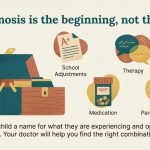
Treatment and support might include practical strategies, psychological care, adjustments at school or work, and medication where appropriate.
Something important has changed in NSW
For many years, people seeking ADHD treatment often faced long waits to see a psychiatrist or paediatrician.
The NSW Government has introduced reforms allowing GPs with additional training to play a greater role in ADHD care for people aged six and above.
There are two types of specially authorised GPs worth knowing about.
A GP continuation prescriber can provide ongoing stimulant medication prescriptions for eligible people who have already been diagnosed with ADHD and are stable on treatment. They can also make certain minor medication adjustments.
This means some patients no longer need to return to their psychiatrist or paediatrician simply to continue established treatment.
A GP endorsed prescriber has completed additional training and can go further. They can assess and diagnose ADHD, initiate medication when appropriate, and provide ongoing care.
Specialist support remains important, particularly when someone’s needs are complex.
If you’re looking for your first ADHD assessment, ask whether the GP is an endorsed prescriber. These two roles are different.
What about the cost?
This is a question every family deserves a clear answer to.
A thorough ADHD assessment generally requires substantial time, often across several appointments. Unfortunately, current Medicare rebates often don’t cover the full cost of providing that care.
That can mean significant out-of-pocket expenses.
Before booking, ask about the total assessment fee, Medicare rebates, follow-up appointments and what you’ll receive at the end.
A good assessment should give you a thoughtful explanation and a plan, even when ADHD isn’t the diagnosis.
You deserve to be understood in your own language
One barrier we don’t discuss enough is language.
Explaining childhood memories, family relationships or difficult emotions can be challenging even when we’re speaking a language we know well.
Nobody should have to describe these experiences in English simply because it’s the language most commonly used in healthcare.
Ask your GP whether consultations are available in your preferred language or whether a professional interpreter can be arranged.
Eligible GP services can access the Australian Government’s free interpreting service, TIS National, for Medicare-eligible patients.
What we’re doing at Rosedale
At Rosedale Medical Practice in West Pennant Hills, we’ve built an ADHD service that brings assessment, treatment and ongoing care closer together.
For adults, we offer comprehensive assessments over two appointments, including a written outcome and care plan. We also provide ADHD medication initiation and ongoing prescribing for eligible patients.
For children and adolescents, we provide treatment and follow-up following appropriate assessment by a psychologist, paediatrician or psychiatrist.
Our service includes GPs with continuation prescribing authority, and I’m an NSW Health-endorsed GP prescriber.
We can provide consultations in English, Hindi and Punjabi, recognising how important language can be when discussing personal experiences.
Where should you start?
My recommendation is simple: speak to your regular GP first.
Tell them what you or your child are finding difficult, when it started and what support you’re hoping to receive.
You don’t need to arrive with a diagnosis, and you don’t need to have all the answers.
Sometimes, the most meaningful thing we can offer someone is a different way of understanding experiences they’ve carried for years.
And that understanding can open up possibilities they may never have considered.
More information: www.myadhdgp.com.au
By Dr Jaspreet Saini, Principal GP, Rosedale Medical Practice

Dr Jaspreet Saini
Dr Jaspreet Saini is the Principal GP and Practice Owner at Rosedale Medical Practice in West Pennant Hills. He has a special clinical interest in ADHD care for children and adults and offers ADHD continuation prescribing under the NSW GP reforms, providing ongoing treatment for patients already diagnosed with ADHD.