“The fruit of patience is sweet.” The familiar Hindi–Urdu proverb captures what it took for Usman Khawaja to wear the baggy green again and why seeing him in it mattered to young South Asian Australians.
When Usman Khawaja walked out to bat at the Sydney Cricket Ground in January 2022, he was 35 and hadn’t played a Test for more than two years. He made 137 against England in the first innings and 101 not out in the second. Eleven years after making his Test debut on the same ground, he had scored two Ashes centuries in one match.
The two centuries came in three days. Getting back to that crease took more than two years. After being left out of Australia’s Test side during the 2019 Ashes, Khawaja kept playing for Queensland. There were innings to build and runs to make, with no certainty that Australia would call him back. That stretch of his career gives sabr ka phal meetha hota hai its meaning here.
Finding his place in Australian cricket
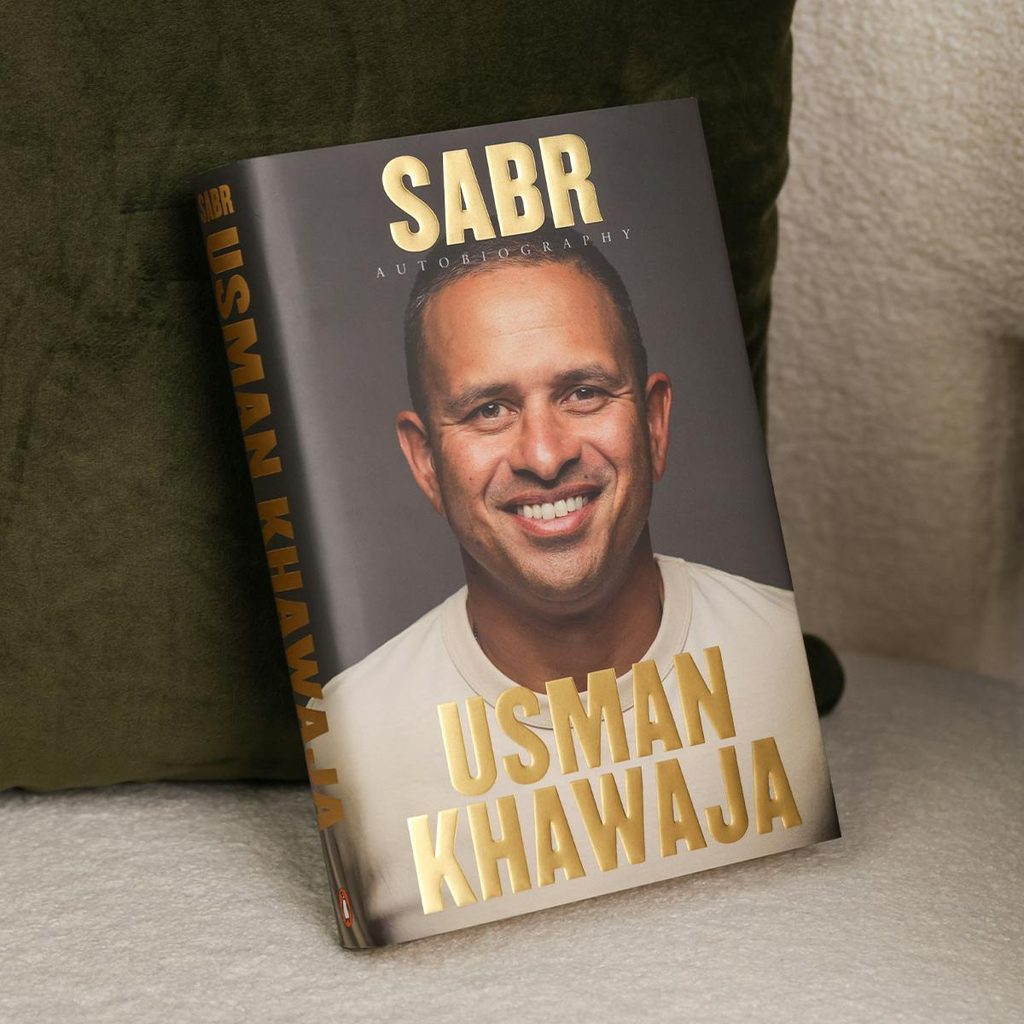
In Sabr: Finding My Way in Cricket and Life, published by Penguin in November 2026, Khawaja tells his story in his own words. He traces his childhood across Pakistan, Saudi Arabia and Australia, and describes finding his feet in a cricket culture where he sometimes felt out of place. The title comes from the Arabic word for patience, a quality he had to draw on through years in and out of the Australian side.
Khawaja was born in Pakistan and grew up in Sydney from the age of five. In January 2011, he came into the Australian side for the injured Ricky Ponting and made 37 in his first Test innings at the SCG. He became the first Pakistan-born player and the first Muslim to represent Australia in Test cricket. For young South Asian Australians following the Ashes that summer, seeing him walk out in the baggy green made it easier to picture themselves doing the same.
A farewell where it began
Khawaja played his 88th and final Test at the SCG in January 2026. Sydney had seen him earn his first cap, win back his place and, finally, say goodbye. When he announced his retirement, he said he hoped his career would show young people who felt different that they could play cricket for Australia too.

For a young cricketer watching from the stands, there was a connection in knowing that the player in the baggy green had once been a kid growing up in Sydney, just like them.