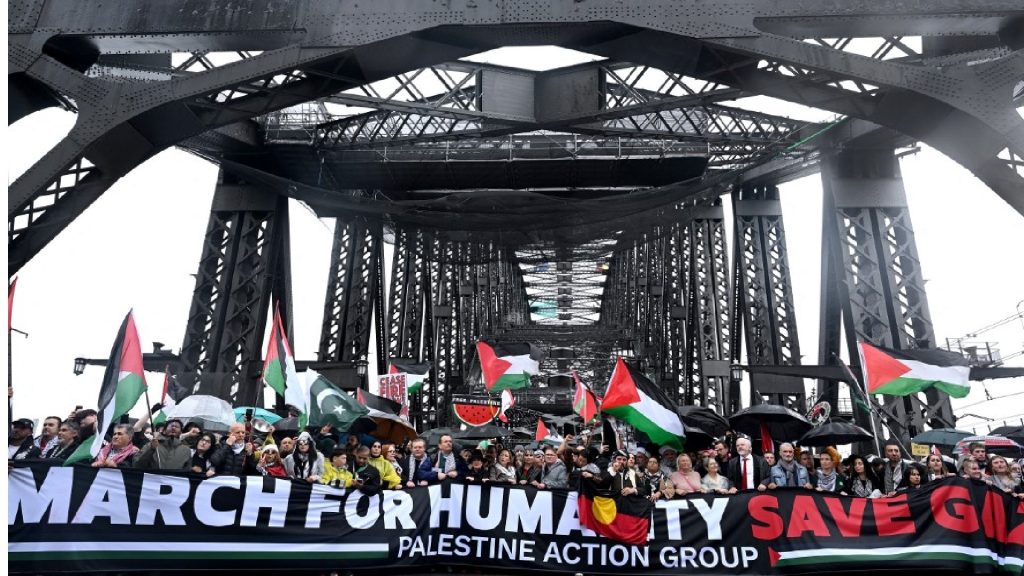
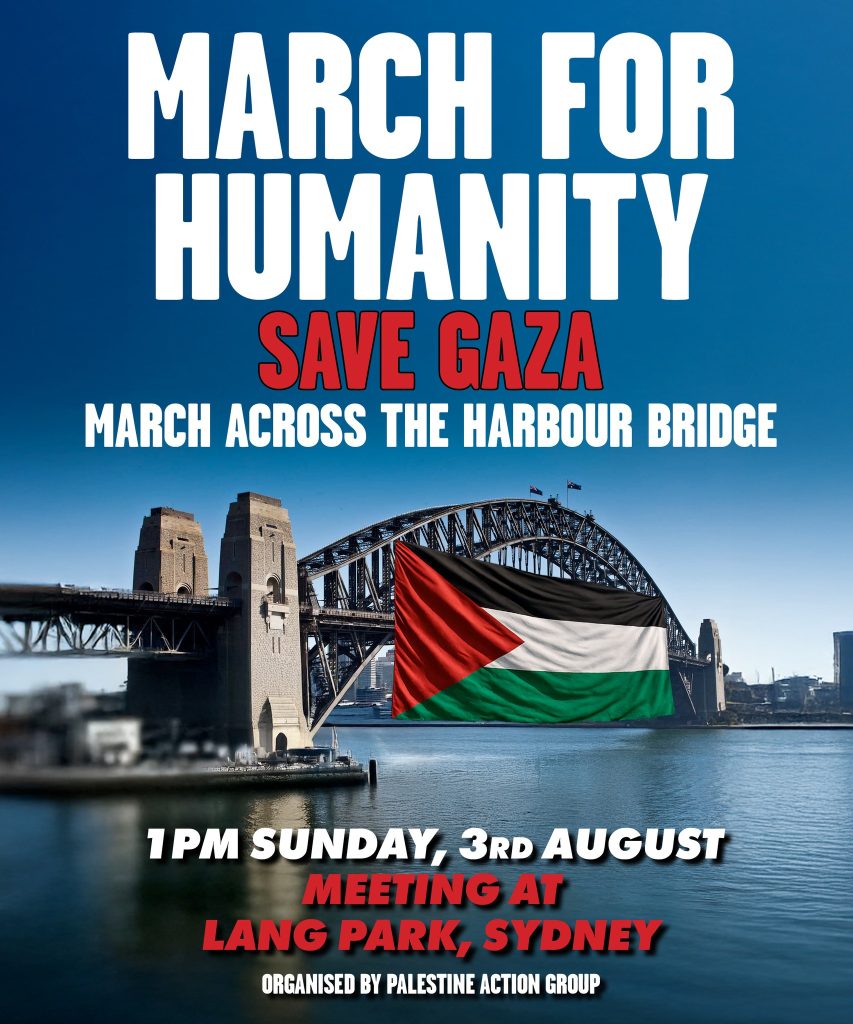
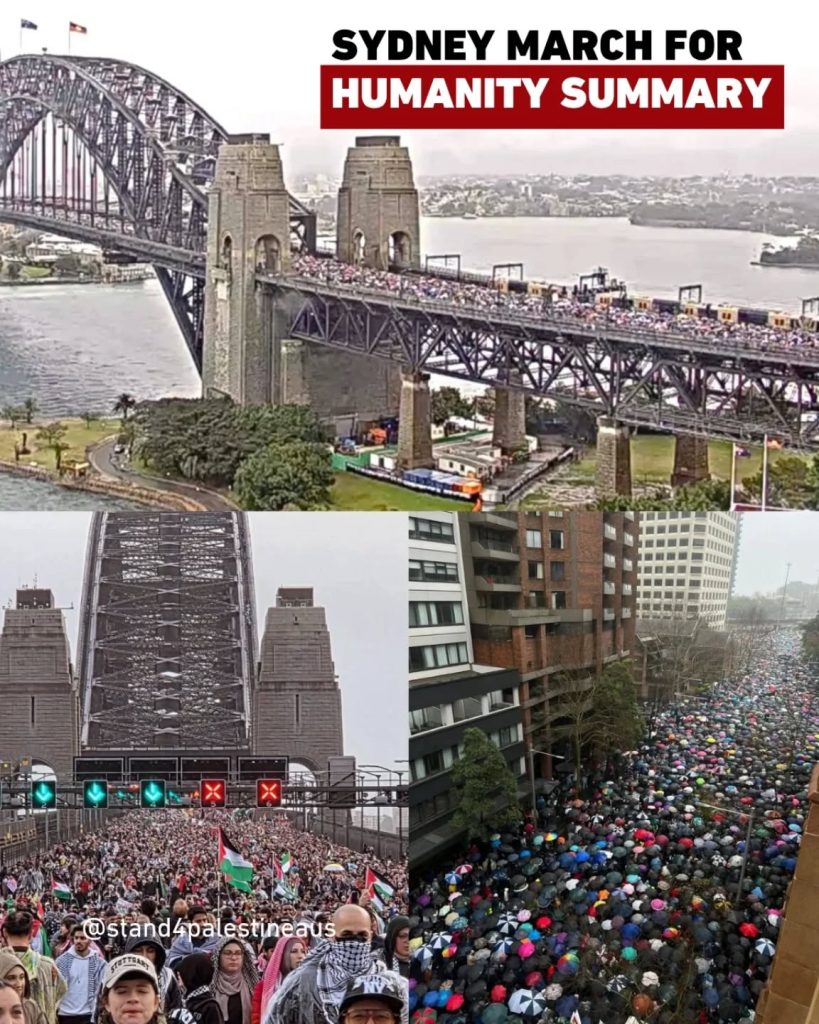
On 3 August 2025, the Sydney Harbour Bridge transformed from an iconic roadway into a river of humanity. Tens of thousands gathered, walking shoulder-to-shoulder in a powerful display of solidarity for those suffering in Gaza. The event — known as the March for Humanity — was organised by the Palestine Action Group and drew participants from all walks of life: families pushing prams, faith leaders in their ceremonial robes, students with handmade banners, community advocates, and humanitarians whose activism spanned decades.
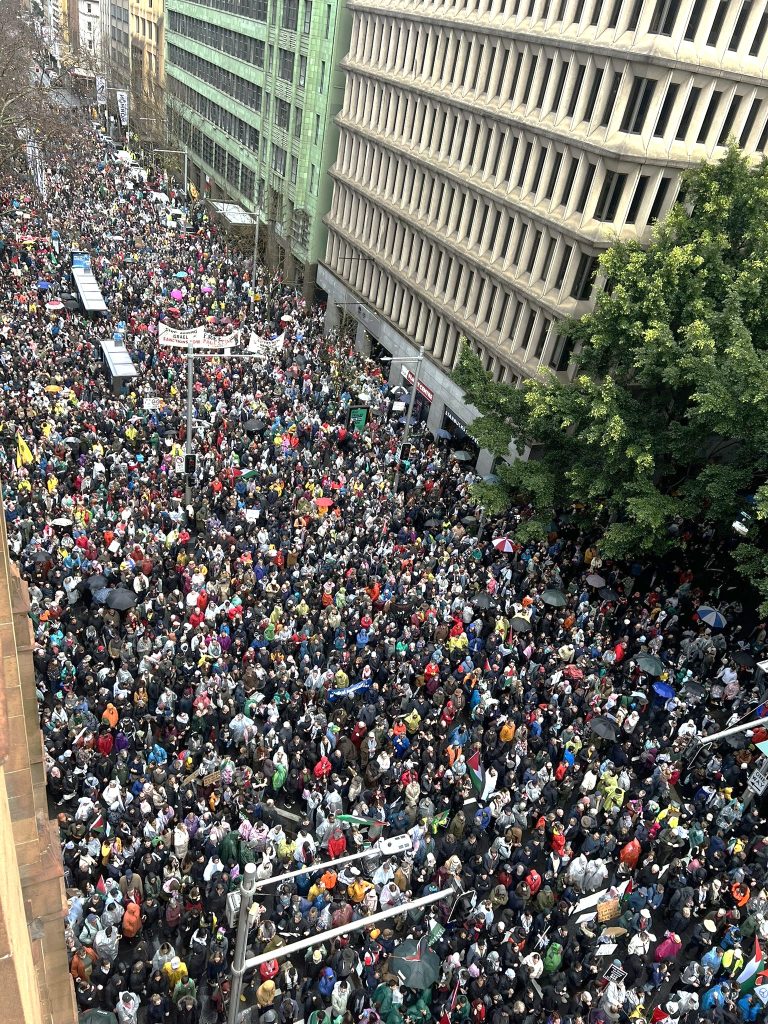
While NSW Police placed the crowd at around 90,000, organisers claimed numbers could have surpassed 200,000 — a turnout that would make it one of the largest public demonstrations Australia has witnessed in recent years. For hours, the Harbour Bridge was not just a passage over water, but a symbolic link between communities divided by distance yet united in compassion.
Voices and Symbols of Solidarity
The march was as much an emotional statement as it was a political one. Participants carried Palestinian flags that fluttered in the wind, placards demanding justice, and pots and pans — a stark, almost haunting symbol of empty kitchens and dwindling food supplies in Gaza. The metallic clang of cookware cut through the steady drumbeat of rain, underscoring the urgency of the humanitarian crisis.
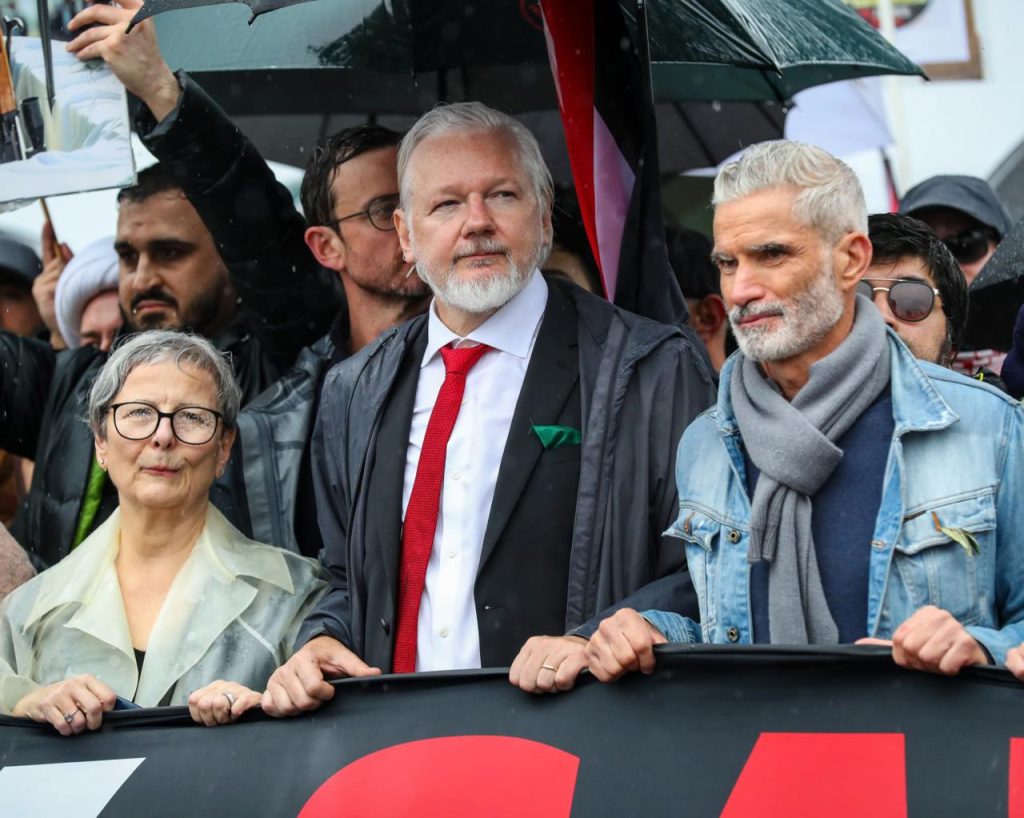
Despite the weather, the atmosphere was electric. Chants for peace and aid echoed off the steel arches, amplified by the sheer number of voices. Among the marchers were notable public figures — including former NSW Premier Bob Carr and activist Julian Assange — whose presence reflected the diverse coalition of people calling for humanitarian intervention. But just as important were the countless unnamed participants, each bringing their own reasons, griefs, and hopes to the walk.
Acknowledging Pain on All Sides
For many, the march was not about choosing sides, but about recognising the deep wounds that have shaped the Israel–Palestine conflict. Jewish Australians in the crowd spoke of their grief over the October 7, 2023 Hamas attacks, which killed 1,200 Israelis and resulted in 250 hostages — including children — being taken. Nearly two years later, some families still wait in agonising uncertainty.
Alongside these voices were the stories of Palestinians enduring relentless bombardment and deprivation. UN figures paint a devastating picture: more than 60,000 Palestinians killed since the escalation began, including almost 17,000 children. Restrictions on aid have left malnutrition rampant. UNICEF reports that in just the past three months, thousands of children have been treated for severe hunger, with dozens already lost to preventable causes.
Speakers and marchers alike emphasised a shared principle — that grief and compassion are not finite resources. Acknowledging one tragedy does not erase another; empathy can, and must, hold both.

Legal and Safety Measures
The march itself was nearly stopped before it began. NSW Premier Chris Minns initially opposed the event, citing public safety and infrastructure risks. NSW Police sought to block it through legal channels, but the Supreme Court ultimately ruled in favour of the organisers, upholding the constitutional right to peaceful assembly.
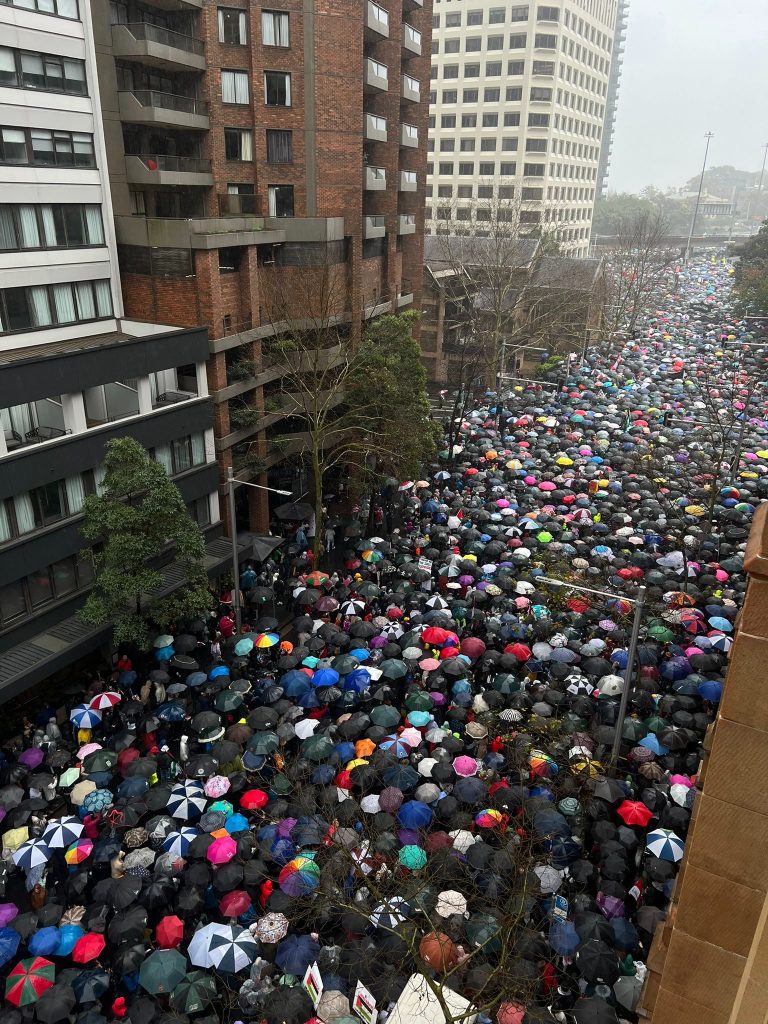
On the day, the Harbour Bridge was closed to traffic for several hours. Transport for NSW issued strong travel advisories, and midway through the walk, a geo-alert urged participants to change direction to prevent overcrowding. Yet the logistics, weather, and sheer scale of the gathering did nothing to dampen the crowd’s commitment. Police later praised the peaceful and cooperative conduct of marchers, with no injuries or arrests reported.
A Day That Resonated Beyond the Bridge
To many, the March for Humanity was less about politics than about conscience. It was a collective statement that silence in the face of suffering is not neutrality, but complicity. The Harbour Bridge — a national icon — became a platform for a universal message: that every human life carries equal worth, regardless of nationality, faith, or circumstance.
As the rain subsided and the bridge reopened to cars, the power of the day lingered. The banners might have been folded away, but the conversations — about justice, compassion, and the possibility of peace — are unlikely to fade soon. For some, it was a march for Gaza; for others, it was a march for humanity itself.
-Anchal Banga