Australia and India have taken another significant step in strengthening their strategic partnership, with both nations expanding defence cooperation across maritime security, defence industry collaboration, military exercises and regional stability initiatives. The growing partnership reflects a shared commitment to maintaining a secure and open Indo-Pacific at a time of increasing geopolitical uncertainty.
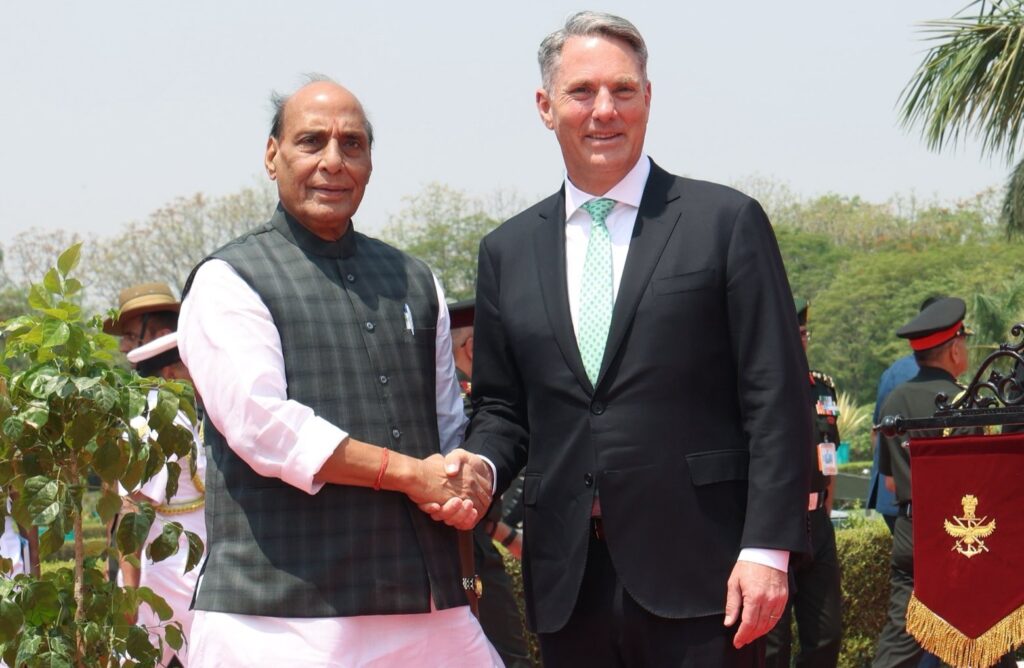
The renewed focus on defence ties comes as Australian Deputy Prime Minister and Defence Minister Richard Marles travelled to New Delhi for high-level meetings with Indian Defence Minister Rajnath Singh. The discussions formed part of the second Australia–India Defence Ministers’ Dialogue and highlighted the rapidly evolving relationship between the two countries.
Defence cooperation between Canberra and New Delhi has expanded considerably over the past few years. What was once largely centred around diplomatic engagement has now developed into a broader security partnership involving joint military exercises, intelligence sharing, defence technology cooperation and maritime surveillance initiatives.
One of the key priorities discussed during the meetings was maritime security across the Indo-Pacific region. Both Australia and India view the Indian Ocean as strategically critical due to its importance for global trade routes, energy supplies and regional economic stability. Officials from both countries stressed the importance of ensuring freedom of navigation and maintaining a rules-based international order.
Australia and India have increasingly worked together through joint naval exercises such as Exercise Malabar, which also includes the United States and Japan under the Quad partnership framework. These exercises have strengthened interoperability between defence forces while improving coordination across maritime operations, disaster response missions and regional security planning.
Defence industry collaboration has also emerged as a major focus area. Both countries are exploring opportunities to strengthen defence manufacturing partnerships, supply chain resilience and advanced technology development. Officials believe closer industry cooperation could support economic growth while reducing reliance on external defence suppliers in an increasingly competitive global environment.
The Australian Government has repeatedly described India as a top-tier security partner, reflecting the growing importance of the bilateral relationship. Australia’s National Defence Strategy identifies India as a critical regional partner capable of contributing to long-term stability and security across the Indo-Pacific.

India, meanwhile, continues expanding defence relationships with trusted international partners as it modernises its armed forces and strengthens domestic defence production capabilities. Australia’s expertise in areas such as maritime surveillance, cyber security, undersea technologies and critical minerals has created additional opportunities for strategic cooperation.
Another important area of discussion involved critical minerals and supply chain security. Both countries possess significant natural resources and are seeking ways to work together on securing reliable supply chains for industries linked to renewable energy, advanced manufacturing and emerging technologies.
The partnership is also being strengthened through increased military exchanges, defence training programs and high-level diplomatic engagement. Experts believe these initiatives help build long-term trust between defence institutions while creating stronger channels for regional cooperation during times of crisis or security challenges.
The Quad alliance continues playing an important role in the relationship. Alongside the United States and Japan, Australia and India have increasingly coordinated efforts on maritime awareness, humanitarian assistance, infrastructure development and regional resilience. While not a military alliance, the Quad has become an influential platform for addressing shared strategic concerns.
For Australia, closer defence ties with India are viewed as essential to maintaining stability in the Indo-Pacific region. For India, cooperation with Australia provides access to trusted partnerships, defence expertise and greater engagement within the broader regional security framework.
As both nations continue expanding cooperation across defence, technology, trade and strategic policy, the Australia–India partnership is increasingly being recognised as one of the most important relationships shaping the future security architecture of the Indo-Pacific. With growing alignment on regional priorities, defence ties between Canberra and New Delhi appear set to deepen even further in the years ahead.