Australian Prime Minister Anthony Albanese has reaffirmed the importance of migration and multiculturalism in shaping the nation’s identity, prosperity and social cohesion, telling a national conference that migrants are central to Australia’s economic strength and shared future.
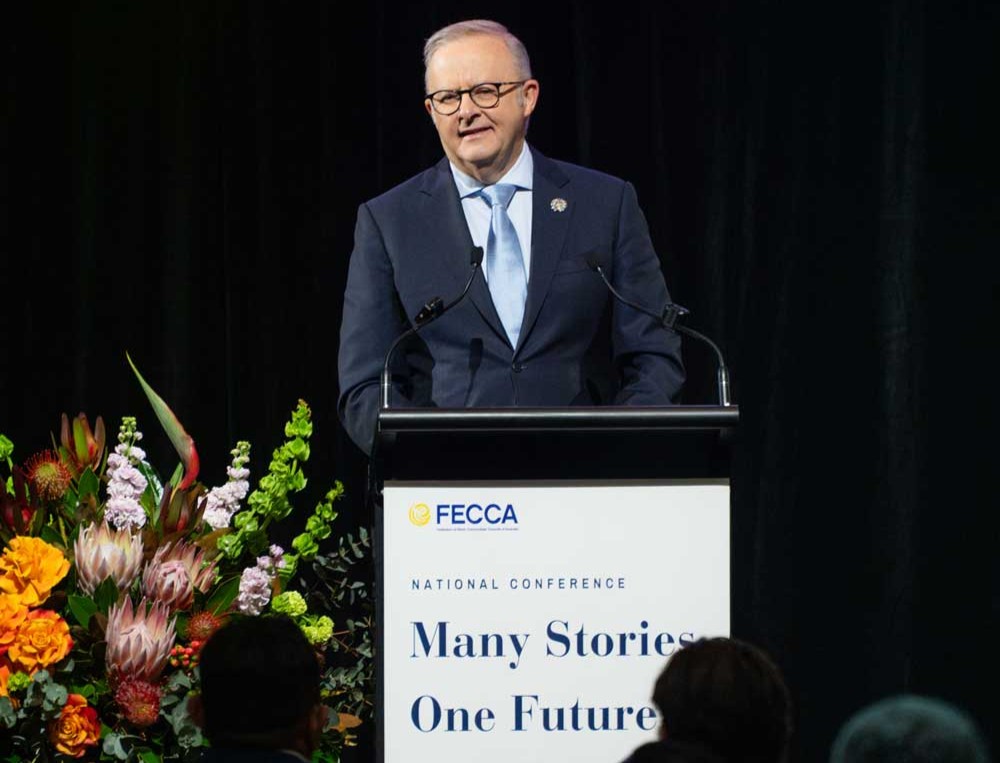
Addressing the Federation of Ethnic Communities’ Councils of Australia (FECCA) National Conference at Parliament House in Canberra on Thursday, 15 October 2026, Albanese called for a national conversation about immigration that recognises migrants’ contributions and avoids using differences to fuel division.
The conference theme, “Navigating Change, Shaping Australia: Many Stories, One Future”, reflected the Prime Minister’s message that Australians from diverse cultural backgrounds can maintain their heritage while sharing a strong commitment to the country.
Albanese said FECCA represented an important part of modern Australia by bringing together grassroots community organisations that celebrate cultural identity while strengthening a collective sense of belonging.
He argued that Australia’s multicultural character was not a departure from its history but an integral part of the nation’s development, shaped by successive generations of people who have arrived from around the world.
Albanese Highlights Migrants’ Economic Contribution
The Prime Minister emphasised that migration supports Australia across almost every sector, from healthcare and aged care to construction, education, hospitality and small business.
“Migration plays an essential role in our country. And throughout our lives, from maternity wards to the nursing home, every stage in between, because migration adds to our prosperity and builds our strength,” Albanese said.

In his remarks following the conference, Albanese highlighted the contribution migrants make to the workforce, tax revenue, entrepreneurship and the country’s broader economic ambitions.
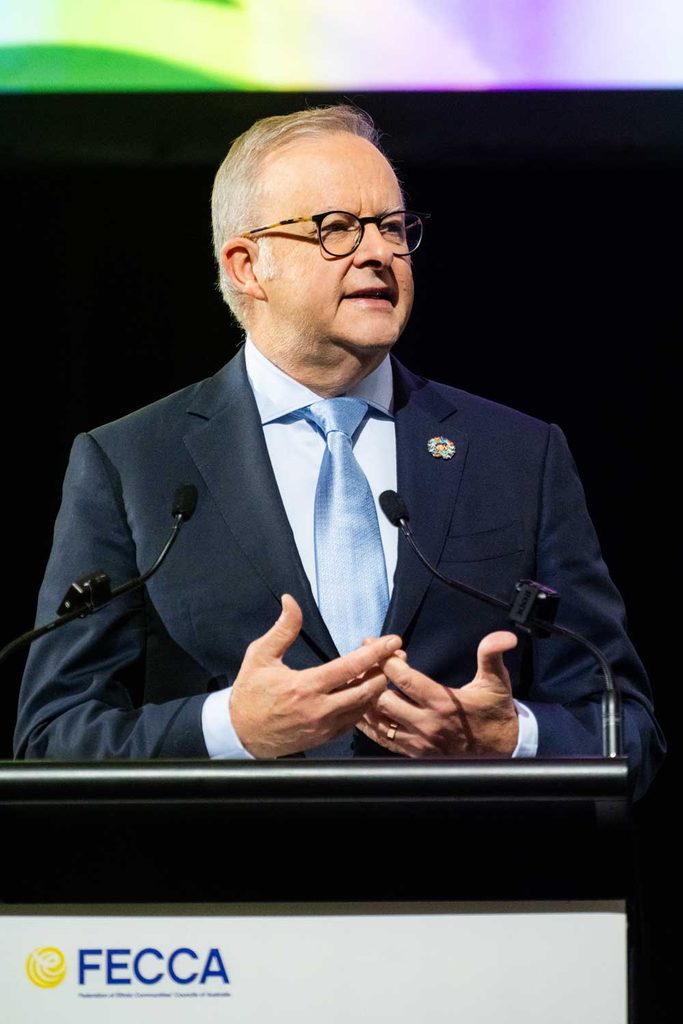
“The people that migration has brought us work hard and they pay taxes. They add to the bottom line and they lift our ambitions as a country by expanding our sense of possibility,” he said.
He highlighted the role of migrant workers in sustaining Australia’s healthcare system, from doctors and nurses to hospital orderlies and aged care workers.
“They underpin our world class health system in particular with their skill and their stamina,” Albanese said, adding that Australia would struggle to fill many healthcare and aged care positions without migration.
The Prime Minister also pointed to the entrepreneurial contribution of migrant communities, noting that more than a third of Australia’s small business owners were born overseas.
“They boost our economy, they have entrepreneurial spirit. More than a third of small business owners in Australia were born overseas,” he said.
Albanese said the common link among migrant communities was their desire to participate in Australia’s national story and contribute to its future.
“And the common link is a profound enthusiasm to be part of the great Australian story,” he said.
He added that migrants bring not only professional skills but also ambition, resilience and a determination to build better futures for themselves and their families.
“Migration has helped power Australia’s growth and development,” Albanese said, describing how migrants’ hard work, aspirations and commitment to the country ultimately make them part of the Australian community.
“Ultimately, through hard work, aspiration and love of country, migrants do something wonderful. They become Australians. They become us and who we are,” he said.
The Prime Minister also defended the appointment of Dr Anne Aly as Minister for Small Business and Multicultural Affairs, arguing that understanding migrant communities is essential to understanding the composition and contribution of Australia’s small business sector.
‘Many Stories, One Future’
Albanese drew on the changing character of his electorate of Grayndler, particularly Marrickville, to illustrate how successive migrant communities have helped shape Australian neighbourhoods.
He described how British and Irish communities were followed by Greek, Italian and Portuguese migrants, Lebanese and other Middle Eastern communities, Pacific Islander communities, Vietnamese Australians and people from African backgrounds.
Each community, he said, had left a lasting imprint on local life, contributing to the area’s businesses, food, culture and community networks.
The Prime Minister pointed to multicultural grocery stores, family-run restaurants and neighbourhood businesses as everyday examples of how migration has enriched Australian life.
He said the experience of communities such as Marrickville demonstrated how migrants initially settle in particular areas before spreading throughout the broader population, creating a more diverse national identity.
For Albanese, these experiences illustrated the conference theme: Australians may have different backgrounds and personal histories, but they are collectively shaping the country’s future.
“And that was the theme of the conference that’s taking place here in this building today. People who’ve come from all over the world, but are loyal to Australia and they want to be part of the Australian story,” he said.
“A story that we are writing the next chapter in as we speak. A story that we’ll continue to write for generations.”
He also acknowledged the significance of Australia’s First Nations heritage, describing the country’s oldest continuous culture as an important foundation for the nation’s identity.
Warning Against Division and Racism
The Prime Minister said Australia’s cultural and religious diversity offered an opportunity to demonstrate how people from different backgrounds could live together in harmony, particularly at a time of international conflict and uncertainty.
He said that while the world continued to experience conflict driven by religion and differences between communities, Australia could demonstrate how diversity could strengthen society.
“And at a time when the world is so troubled, with conflict based upon religion and people looking for difference, here we can be a microcosm for the world,” Albanese said.
“Because overwhelmingly, overwhelmingly people live in harmony here in Australia and we’re enriched by our diversity.”
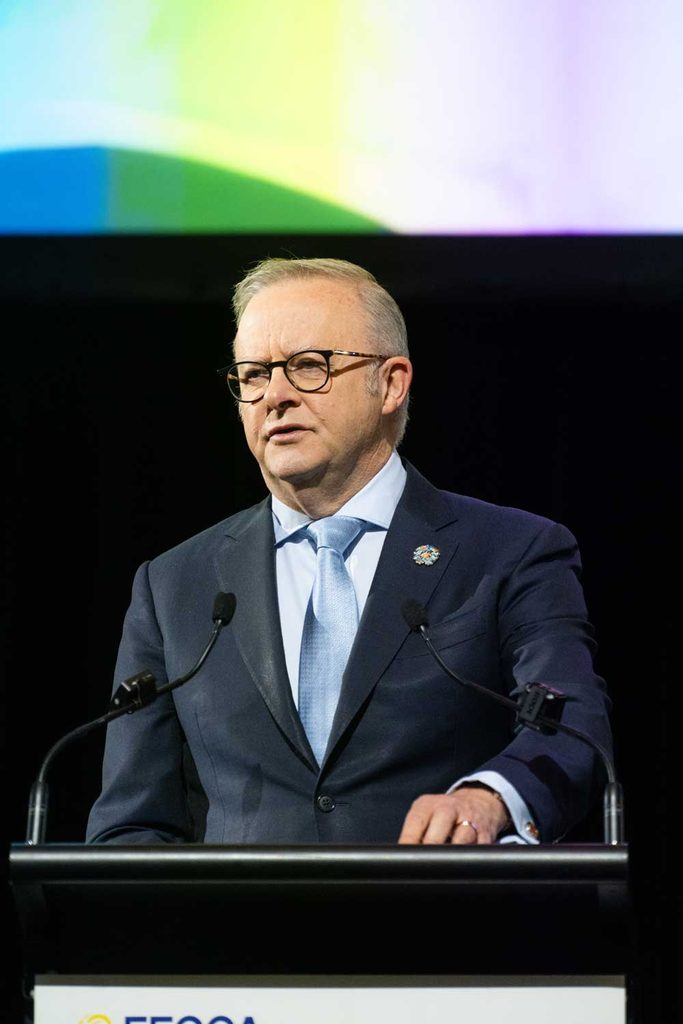
He encouraged Australians to celebrate their cultural identities, languages, food, music and traditions while maintaining their loyalty and commitment to Australia.
“People being able to celebrate who they are, practice their culture, practice their language, bring all their food and everything else that they bring, dancing and music here in Australia, but at the same time loyal to Australia,” he said.
Albanese warned that economic pressures could create opportunities for people to blame migrants and communities who look or worship differently for wider social and economic problems.
He called for a sensible discussion about immigration but rejected attempts to use the issue to create divisions between Australians.
“Our conversation about immigration should be in these terms. We need sensible discussion about immigration, that’s fine,” he said.
“What we should not do is use immigration to stir up division and to say that to people that the reason why their lot in life isn’t as good as they think it should be, is because of someone who isn’t just like them.”
The Prime Minister described such an approach as inconsistent with Australian values and urged the public to recognise the contribution made by people from different cultural backgrounds.
“It is un-Australian and it’s not who we are,” he said.
Albanese also stressed the need to confront antisemitism, racism and discrimination in all their forms. Referring to the Royal Commission into Antisemitism and Social Cohesion, established following the Bondi antisemitic terrorist attack, he acknowledged the work of community organisations in promoting understanding and bringing people together.
He said Australia could not take social harmony for granted and needed to actively protect and strengthen it.
The Prime Minister also highlighted the re-establishment of the Federal Office for Multicultural Affairs under Dr Aly as part of the Government’s commitment to multiculturalism.
Addressing Barriers Facing Migrant Women
Albanese acknowledged that significant barriers remain for migrants seeking to use their qualifications and professional experience in Australia, particularly women from migrant and refugee backgrounds.
He cited figures indicating that nearly 350,000 migrant and refugee women work below their skill levels. According to the figures outlined in his speech, only 41 per cent work in roles matching their qualifications, while they earn 31 per cent less than Australian-born women with equivalent qualifications.
He described the underutilisation of their skills as a lost opportunity for Australia’s economy and workforce.
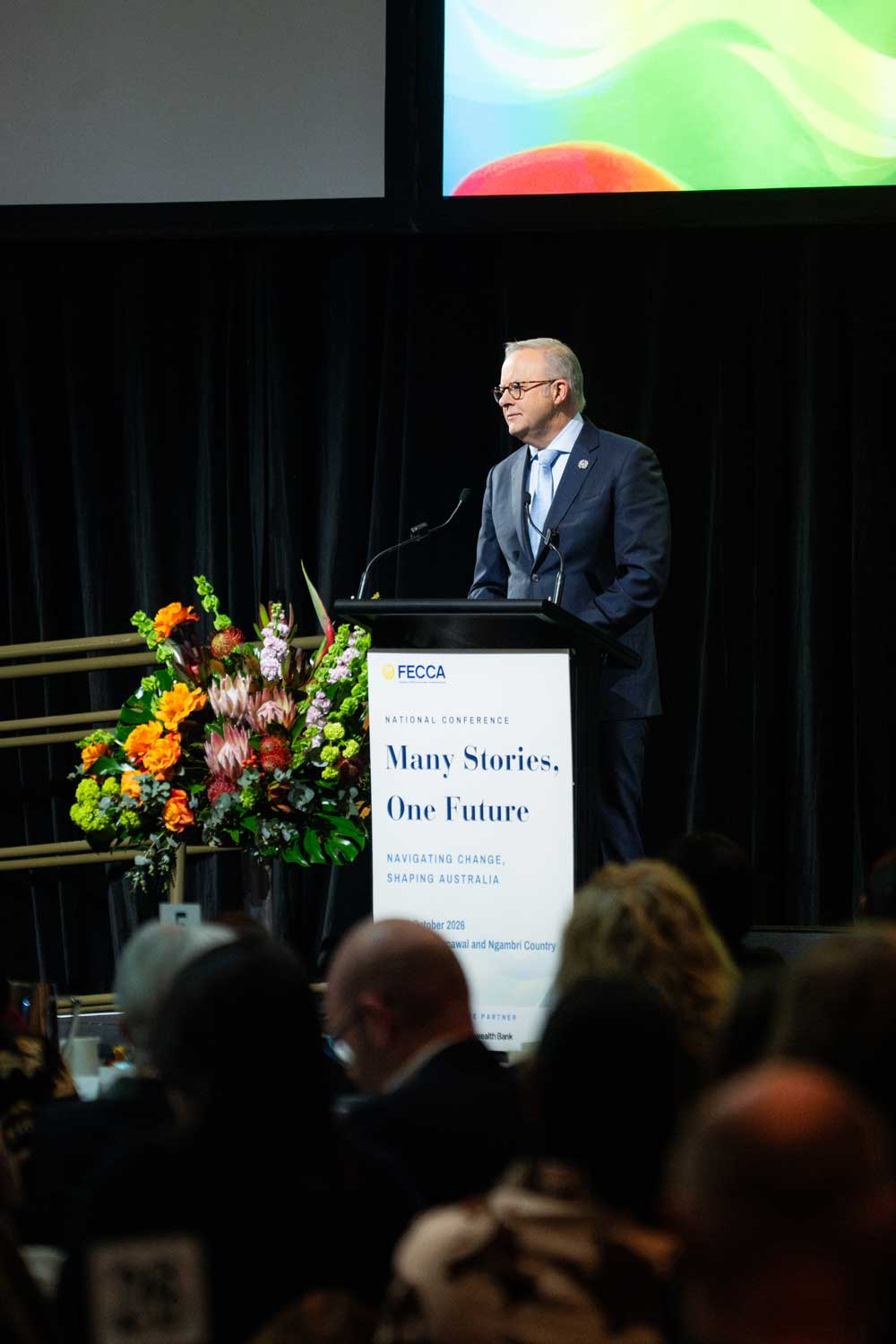
The Prime Minister pointed to the Government’s announced $85 million investment in migration skills recognition reform as a practical step towards helping qualified migrants use their skills more effectively.
He said recognising overseas qualifications and professional experience more readily would allow more Australians to contribute to the country’s development and achieve their potential.
Albanese also commended the work of the Australian Multicultural Women’s Alliance on gender-based violence, healthcare access, the value of care work, economic equality and leadership.
Celebrating Culture While Building National Belonging
The Prime Minister encouraged Australians to move beyond merely tolerating cultural differences and instead celebrate the diversity that shapes their communities.
He highlighted multicultural festivals, Lunar New Year celebrations, Ramadan iftar gatherings and events celebrating Italian and Greek heritage as opportunities for Australians to connect across cultural and religious boundaries.
Albanese said people from outside a particular community were often warmly welcomed at cultural events, demonstrating that celebrating one tradition did not require excluding others.
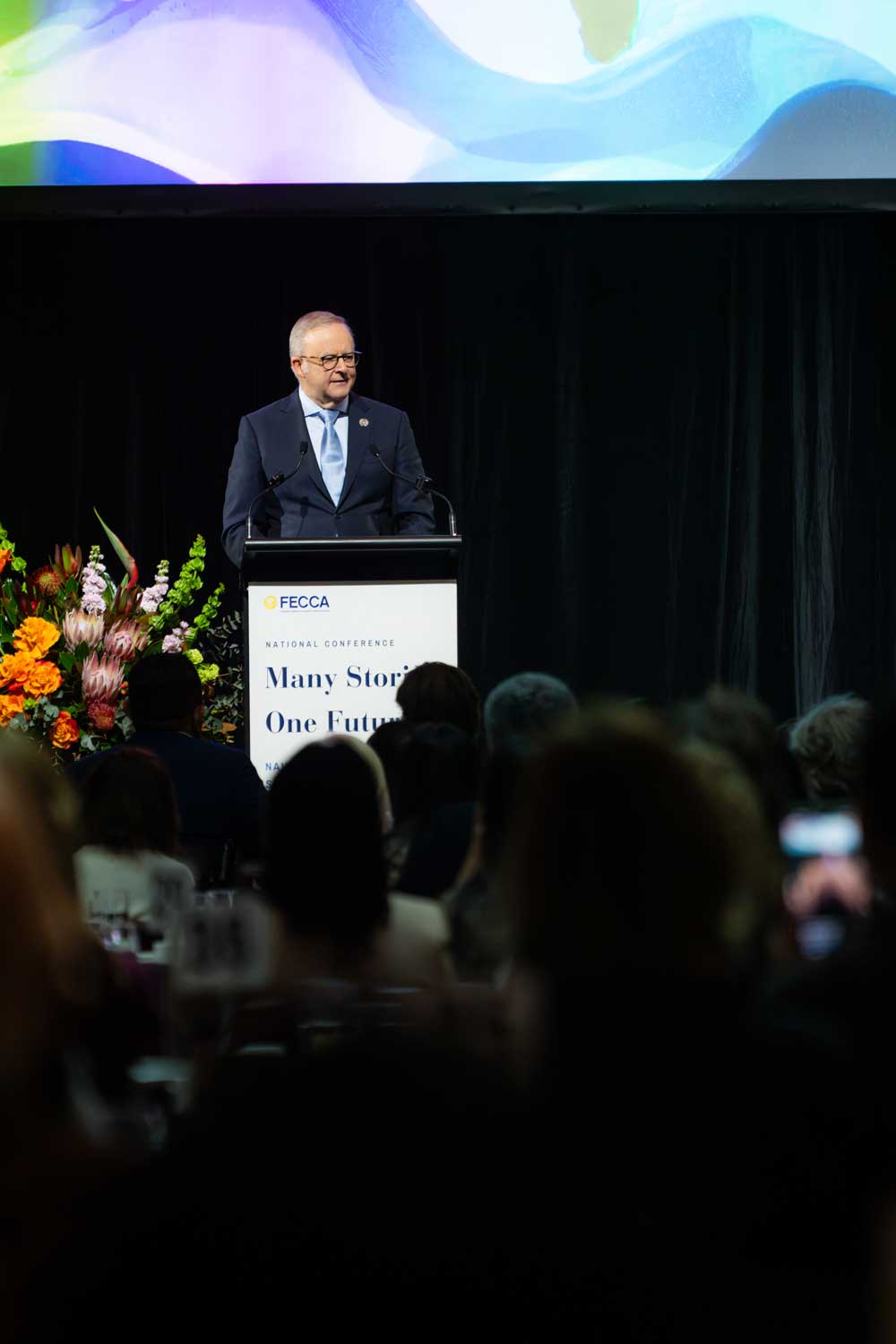
He argued that people could maintain their heritage, language, food, music and cultural practices while remaining committed to Australia.
The Prime Minister also quoted Australian Multicultural Council chair Peter Gutwein, who recently spoke about arriving in Australia as a child with his parents in search of opportunity.
Albanese said the determination of migrants to build a better future for their children was a powerful force that had helped shape generations of Australians.
He described migrant communities as living bridges connecting Australia with the rest of the world through culture, trade, sport and economic relationships.
His speech reinforced the idea that multiculturalism and national belonging are complementary, with people able to preserve their cultural identities while contributing to a shared Australian future.
Representation and a Shared Australian Future
Albanese also spoke about the importance of representation in public life, noting the increasing diversity of the Government’s parliamentary ranks and the role of women in political leadership.
He argued that representation could influence policy outcomes and pointed to progress on gender equality as an example of the importance of inclusive leadership.
The Prime Minister concluded by thanking FECCA and community organisations for their work supporting people from diverse backgrounds.
He urged Australians to recognise the nation’s multicultural character as a source of strength rather than division, reinforcing the conference’s message that different histories and identities can contribute to a common national future.
His central message was that migration has helped build Australia’s prosperity and identity, and that the country’s future depends on continuing to bring communities together through shared opportunity, mutual respect and a strong sense of belonging.
For Albanese, the contribution of migrants extends beyond the economy and workforce to the character of Australian society itself. His address called for an immigration debate grounded in facts, a recognition of migrants’ contributions and a commitment to ensuring that cultural differences are never used to divide the nation.