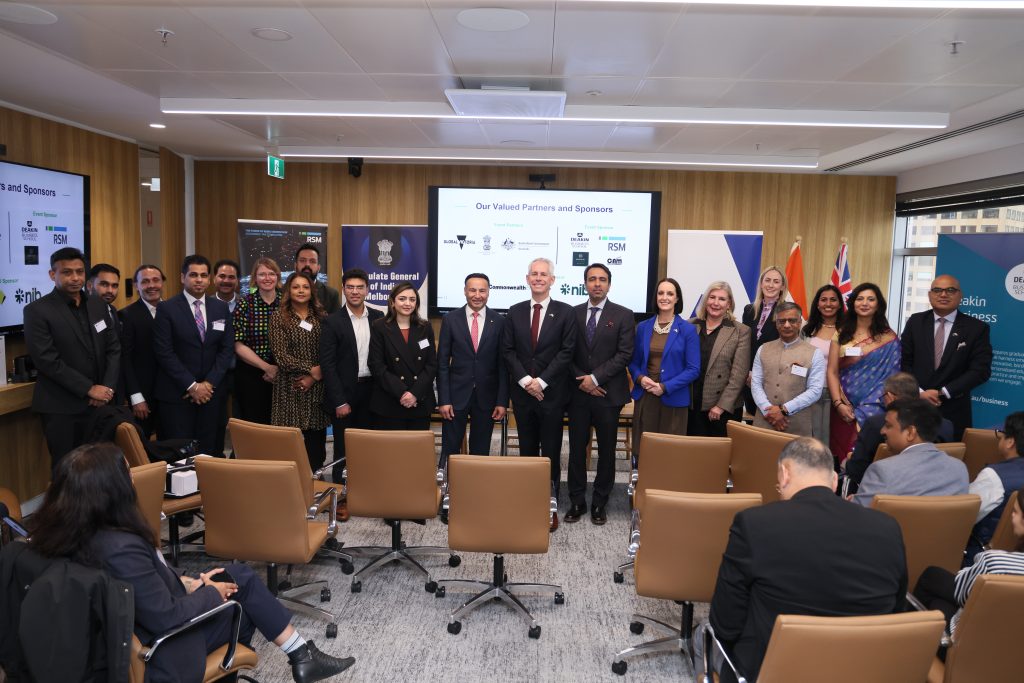
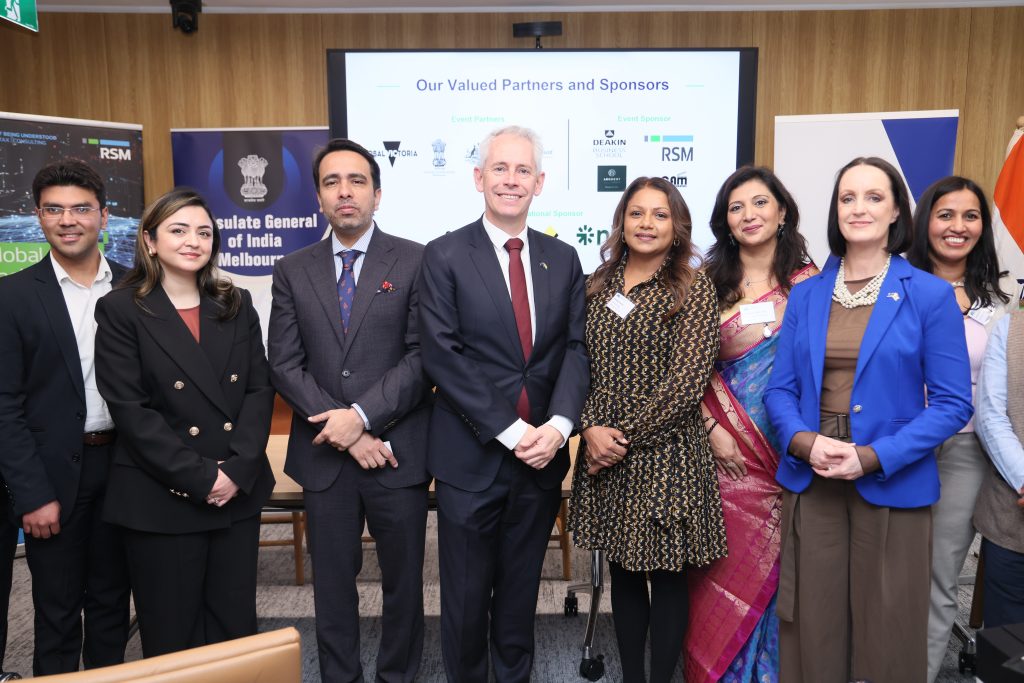
Melbourne – The Australia India Business Council hosted a timely discussion this week on the future of skilling between Australia and India, with the Albanese Government reaffirming its commitment to deepening education and training partnerships with the subcontinent.
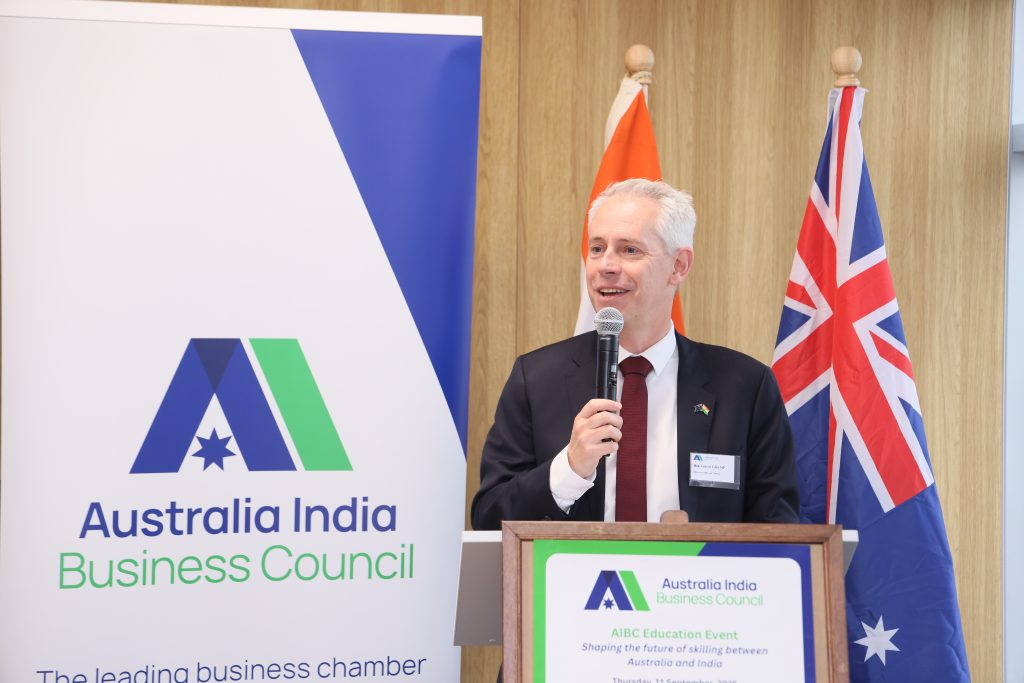
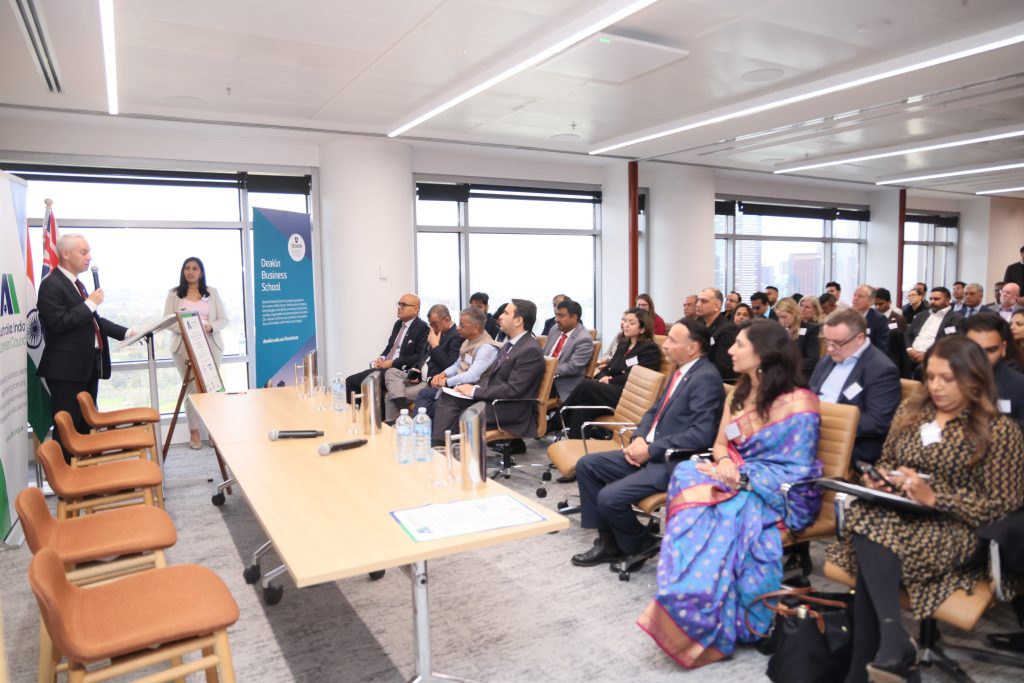
Addressing the event, Minister for Skills and Training Andrew Giles outlined Australia’s growing focus on skills development, international collaboration, and the role of skilled migration in shaping the nation’s future workforce. Speaking to a diverse audience of education leaders, business representatives, and government officials, Minister Giles framed the Australia-India relationship as a partnership built not only on economic opportunity but also shared values.
“We are a diverse country, and our diversity makes us stronger,” Minister Giles said. “As someone who proudly represents a large and vibrant Indian-Australian community, I want to say to every Australian with links to India: you belong.”
Building Skills for the Future
Highlighting the Albanese Government’s core initiatives—Free TAFE, Jobs and Skills Australia, and the landmark $30 billion National Skills Agreement—Minister Giles emphasised the importance of modernising Australia’s skills ecosystem to meet future challenges.
He noted that when the Government came into office, skills shortages were at their highest in over 50 years, with 33% of occupations experiencing national shortages, as per the 2024 Jobs and Skills Report.
“We’ve made significant progress, but more needs to be done. Skilled migration continues to play a key role in addressing critical workforce gaps in sectors like construction, healthcare, education, and engineering,” he said.
Minister Giles also highlighted the introduction of new Guiding Principles and Standards for Skilled Migration Assessing Authorities, aimed at improving the consistency and integrity of Australia’s skilled migration system. These changes, he said, would unlock greater potential for skilled migrants while supporting Australia’s labour market needs.

A Shared Education Vision with India
Australia and India share a longstanding education and training partnership that continues to deepen. Minister Giles described this bilateral relationship as “a cornerstone of our mutual economic prosperity,” underpinned by shared democratic values and a people-to-people connection.
India remains Australia’s top source country for international VET students, with Indian students comprising around 20% of international vocational education enrolments in Australia.
“Indian students and graduates are valued members of Australia’s classrooms, communities and workplaces. The mutual understanding fostered through education strengthens the broader friendship between our countries,” Minister Giles said.
Looking ahead, the Minister reaffirmed Australia’s support for India’s economic vision—Viksit Bharat 2047, which seeks to transform India into a $30–$40 trillion economy by its 100th year of independence. He said Australia was well-positioned to contribute by expanding access to world-class skills training.
One standout example is the landmark collaboration between Australia’s Kangan Institute, the Government of Gujarat, and Maruti Suzuki, which led to the creation of India’s first International Automobile Centre of Excellence.
Driving Policy Alignment and Mutual Recognition
The Minister spoke about the upcoming Australia India Education and Skills Council meeting to be held in India this December, which he will attend alongside Minister for Education Jason Clare and Assistant Minister Julian Hill. This follows last year’s successful Council meeting in Sydney.
Progress since the inaugural meeting includes:
- Completion of an agricultural skills mapping project in India
- Implementation of the Mechanism for the Mutual Recognition of Qualifications
- Launch of a STEM research fellowships program for women
“These initiatives show the growing momentum and investment in our partnership, on both sides,” Minister Giles noted. “We are not only working together in education but also looking to expand our trade agreement and economic ties.”
A Call for Unity and Resilience
Reflecting on recent attempts to divide Australian society along racial and cultural lines, Minister Giles delivered a strong message of unity.
“A small minority may seek to divide and diminish us—but they will not succeed. This is not who we are,” he said. “Recognising and investing in our diversity is not just morally right, it’s economically smart.”
The Minister closed his address by thanking the Australia India Business Council for convening a critical conversation on the future of skilling, and reiterated the Government’s commitment to strengthening the Australia-India partnership.
“Together, we can bridge critical skills gaps and build a more prosperous future for both our nations.”