Australia and India have announced a significant step in strengthening cultural cooperation, with both nations agreeing to return important heritage items to their places of origin. The reciprocal initiative reflects a shared commitment to preserving cultural history and respecting the heritage of Indigenous and traditional communities.
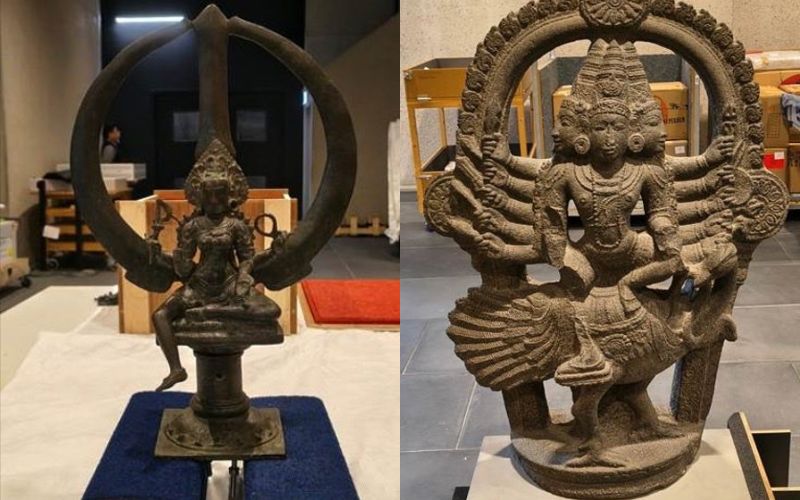
As part of the announcement, Australia will voluntarily return three Indian artefacts dating from the 11th and 12th centuries. The objects include a ceremonial Bhadrakali trident, a stone sculpture of Nandi and a stone idol of the six-headed deity Kartikeya. The artefacts were previously held in the collections of the National Gallery of Australia and the Art Gallery of New South Wales.
Australian authorities said the decision forms part of ongoing efforts to ensure culturally significant objects are cared for by their rightful custodians. The repatriation aligns with Australia’s broader commitment to protecting global cultural heritage and strengthening international cooperation on the return of significant artefacts.
In a reciprocal gesture, India has agreed to voluntarily and unconditionally repatriate the remains of an Australian First Nations ancestor currently held at the Government Museum in Chennai. Australian leaders described the return as an important milestone for Traditional Custodians and a meaningful act of cultural respect and reconciliation.
The announcement coincided with Indian Prime Minister Narendra Modi’s visit to Australia for the Third Australia–India Annual Summit in Melbourne. Alongside discussions on trade, defence and technology, both governments highlighted cultural cooperation as an important pillar of the growing Comprehensive Strategic Partnership between the two countries.
The return of the Indian artefacts also reflects wider international efforts to restore cultural objects to their countries of origin. In recent years, Australia has worked with several nations under its cultural heritage framework to facilitate the return of items that were unlawfully removed or exported.
For India, the announcement represents another addition to ongoing efforts to recover culturally significant objects from overseas institutions. Successive repatriations from international museums and collections have contributed to preserving India’s rich artistic and historical legacy for future generations.

Cultural experts note that such exchanges extend beyond the return of historical objects. They foster mutual trust, encourage collaboration between museums and cultural institutions, and deepen people-to-people connections that complement broader diplomatic and educational partnerships between Australia and India.
As Australia and India continue to strengthen their relationship across multiple sectors, the reciprocal repatriation of these culturally significant items stands as a powerful symbol of mutual respect, shared heritage and a commitment to preserving history for future generations.