Australia’s Liberal and National parties have announced a migration policy proposing substantial reductions in net overseas migration, tighter temporary visa rules and a stronger focus on skilled workers. Unveiled on 6 October 2026, the Australia-First Migration Plan aims to ease pressure on housing and public services while changing the composition of Australia’s migration intake.

Under the proposal, a government led by Liberal leader Angus Taylor and Nationals leader Matt Canavan would reduce annual net overseas migration to 100,000 for the first two years. The target would then rise to 130,000 in the third year and 160,000 in the fourth year. The Coalition says the approach would help align population growth with housing availability and the country’s capacity to support new arrivals.
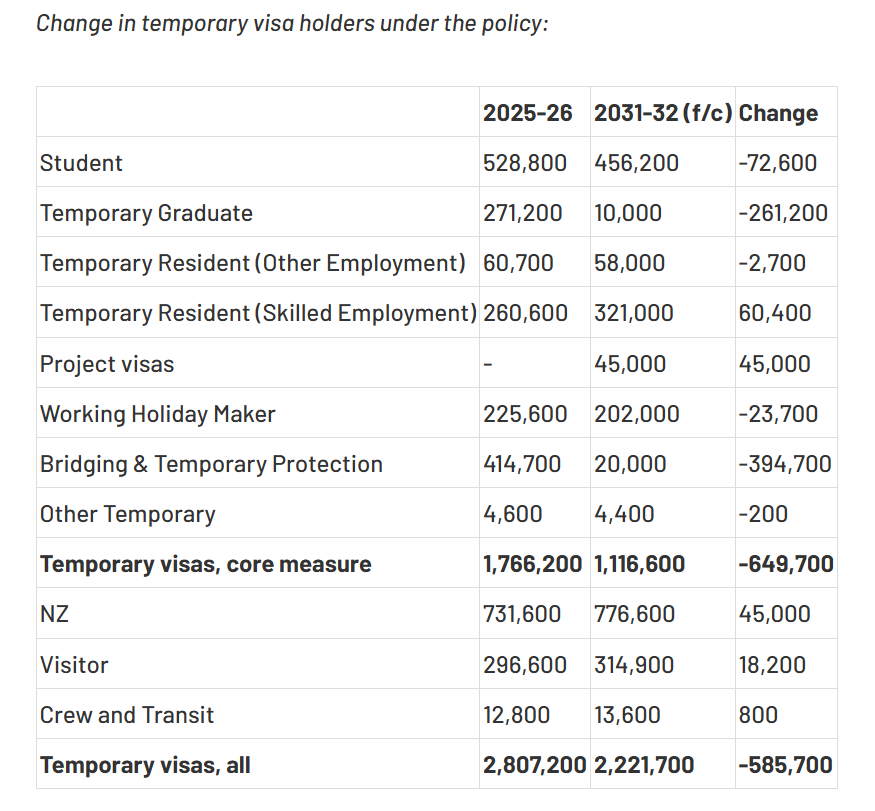
The parties also propose reducing the number of temporary visa holders by approximately 650,000 over four years, while keeping the permanent skilled migration programme capped at 185,000 places annually. The Coalition says it would maintain the option of lowering the permanent migration cap if required to keep migration below the number of homes completed each year.
Major Changes Proposed for International Students
International education is a significant focus of the plan. The Coalition proposes abolishing Temporary Graduate visas and limiting most international students from bringing secondary applicants, including family members. It also intends to reduce international student commencements to 240,000 a year.
The parties say these changes are expected to reduce the proportion of international students in higher education to below 25 per cent. However, exceptions would remain for students completing PhDs, studying health or education, or attending regional universities, who would continue to have access to post-study transitional visa pathways.
The policy also proposes linking each student visa to the institution in which the student is enrolled. The Coalition says the changes are intended to strengthen compliance and ensure international study remains primarily an educational pathway rather than a route to permanent residence.
Greater Emphasis on Skilled Migration
The Coalition says its proposed system would prioritise migrants with skills that match Australia’s workforce needs. Applicants would be assessed against criteria including income, age, English-language proficiency and full-time employment, with skilled partners and employer-sponsored applicants receiving greater priority.

The plan includes opening the Specialist Skills stream of the Skills in Demand visa to bring in up to 5,000 additional highly skilled workers each year. It would also introduce 15,000 Skilled Project visas annually for major projects experiencing workforce shortages. These visas would be linked to a defined project and period.
Regional migration programmes supporting agriculture, healthcare, tourism and hospitality would be protected under the proposal. The Coalition also plans to revise the temporary skilled priority list, establish a task force to clear a backlog of skilled construction applications and introduce a new Agriculture Visa from 2030.
Other proposed measures include doubling the Talent and Innovation allocation to 7,000 places through a new AUKUS and Five Eyes visa. The parties say these changes would help direct migration towards sectors where employers have genuine demand for specialist skills.
Humanitarian Intake and Working Holiday Visas
The plan proposes halving Australia’s annual humanitarian intake to 10,000 places, while retaining flexibility to respond to emerging international needs. It would also reverse the existing ballot system and caps for second- and third-year Working Holiday Maker visa extensions.
Under the proposed alternative, visa fees would be increased for Working Holiday Makers in non-regional areas, with an exemption for regional areas. The Coalition says this would encourage participation in regional locations while changing how extensions are accessed.
The parties have stated that family reunion visas would not be changed under this plan.
Tighter Rules for Temporary Visa Holders
The Coalition wants to make temporary visas more clearly time-limited. Under its proposal, people applying for a second or subsequent temporary visa would generally need to apply from outside Australia. Second- and third-year Working Holiday Makers would remain able to reapply while in the country.
The parties say the change would reduce repeated visa switching and could virtually eliminate bridging visas. The plan also proposes requiring onshore protection visa applicants to lodge applications within 30 days and removing merits review for certain adverse character decisions, temporary visa refusals and offshore applicants.
The Department of Home Affairs would also be tasked with identifying and addressing cases in which international students allegedly breach permitted work-hour restrictions, including through gig-economy work or arrangements involving Australian Business Numbers.
These proposals would affect different visa categories in different ways, and their eventual impact would depend on the final policy details and implementation.
Coalition Says Plan Would Be Budget Neutral
The Liberal and National parties argue that reducing overall migration while increasing the share of highly skilled workers would limit the economic impact of lower intake numbers. They point to differences in average tax contributions between Temporary Graduate visa holders and skilled visa holders as part of their case.
The Coalition estimates that its package would have a small positive budget impact of approximately $260 million over four years. It says the final costings will be included in its pre-election policy documents, taking account of any further changes to government forecasts and policies.
Opposition Leader Angus Taylor said the plan would put Australia’s national interest first and prioritise skilled migration over higher overall numbers. Nationals leader Matt Canavan argued that the country should focus on workforce needs without undermining Australian workers. Shadow Home Affairs and Immigration Minister Jonathon Duniam said the proposed measures would strengthen oversight of temporary visas, while Deputy Liberal leader Jane Hume said the policy would focus on skills and economic contribution.
The plan forms part of the Coalition’s broader economic and housing agenda. It remains a political policy proposal, and the announced measures would require the relevant legislative, regulatory or administrative steps before taking effect.