Five Years In: Returning to Camp
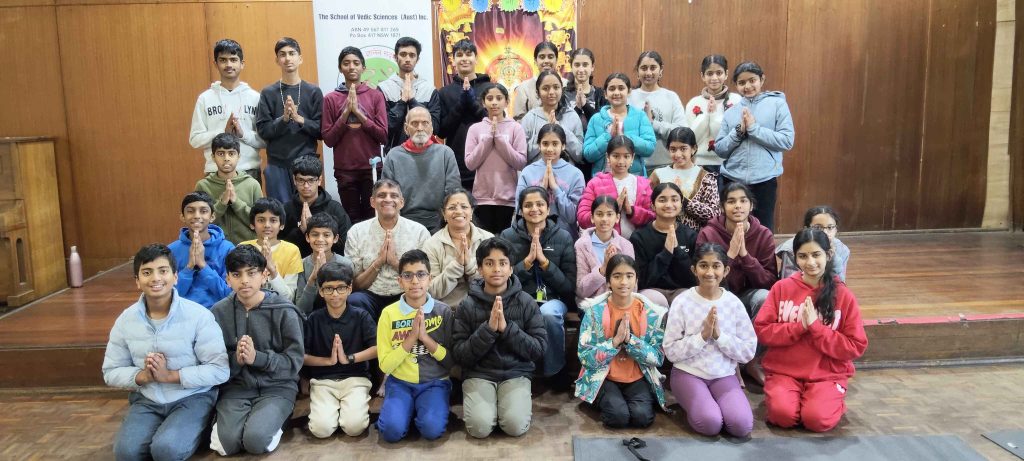
For those of us who’ve been attending Sanskrit classes every week, the Pāṇinīyam Grammar Camp is something we look forward to all year. This year marked the 10th Pāṇinīyam camp, and for many of us in Dwiteeya and Trutheeya it marked our third or fourth time participating. While we are used to learning in our regular weekly classes, the camp offers a very different environment, one that is immersive, intensive, and energising in a way that classroom learning can’t always replicate.
Personally, coming back for the fifth time brought a sense of familiarity. We knew the venue, the routine, the teachers, and shared many inside jokes. But each year, the content deepens, the discussions become more nuanced, and our understanding of Sanskrit grammar continues to grow. Rather than feeling repetitive, the return to camp feels like a natural continuation of everything we’ve built during our regular weekly sessions — just intensified over a few packed days.
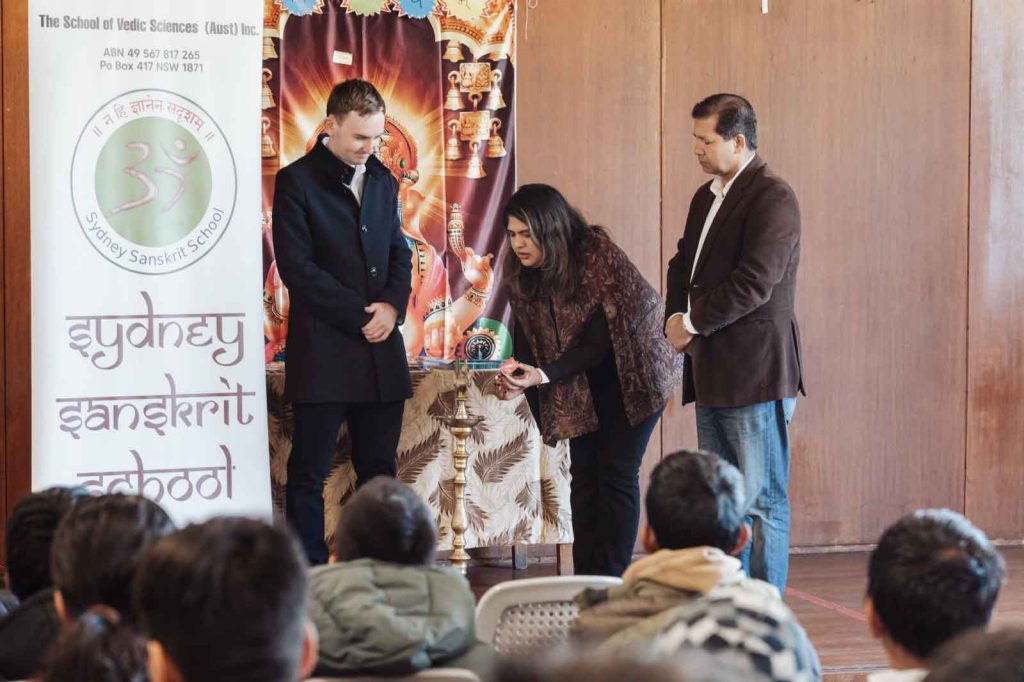
A Typical Day at Sanskrit Camp
Each day at the Pāṇinīyam camp begins early. Very early. Many of us are up by 5:30 AM to shower, get dressed, and prepare for the day ahead. For some, this quiet time is also when we perform Sandhyāvandanam, bringing a reflective, disciplined start to the morning. It sets the tone for what is always a structured and focused day.
We start off the mornings with engaging Yoga sessions led by Narasimha Ji, never knowing whether the day will bring intense repetitions of the Surya Namaskaram, a much awaited session of Yoga Nidra, or an exploration into various asanas and other aspects of Yoga such as Pranayama and Ayurveda. It is followed by a nutritious breakfast each day. After breakfast, the first session kicks off around 9 AM, from there, we’re immersed in topics like Samāsa, Kṛdanta, or Bhūta Saṅkhyā, depending on the day’s schedule. Morning tea offered a short, much-needed break, before we headed into a second block of learning that carries us to lunchtime.
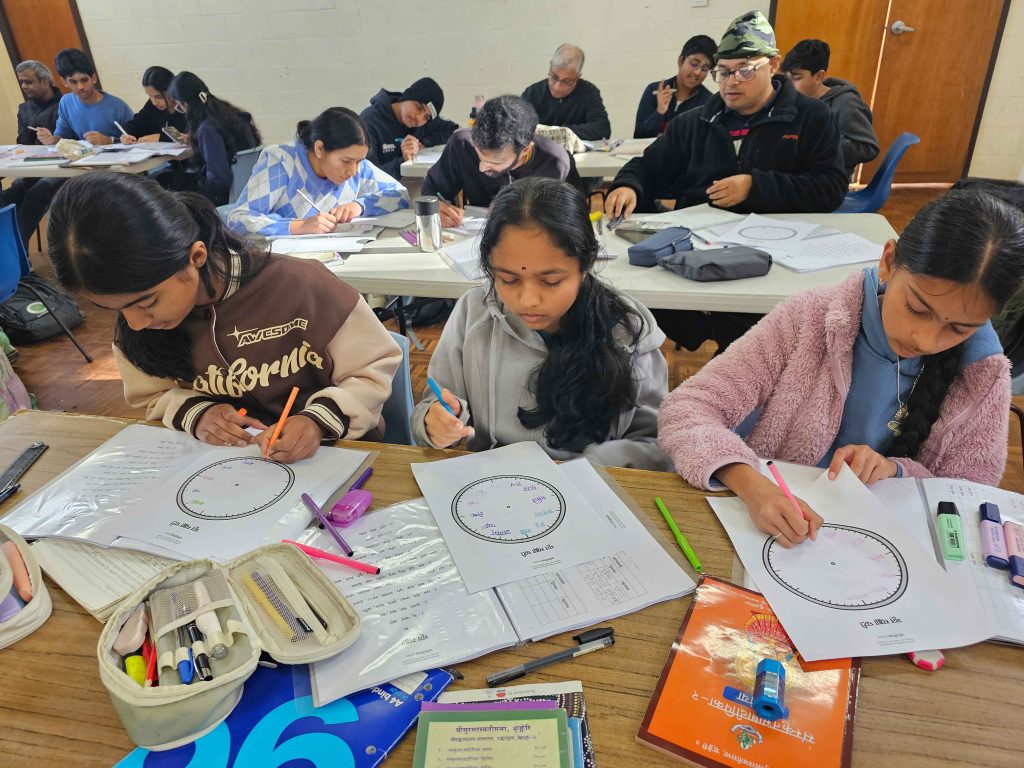
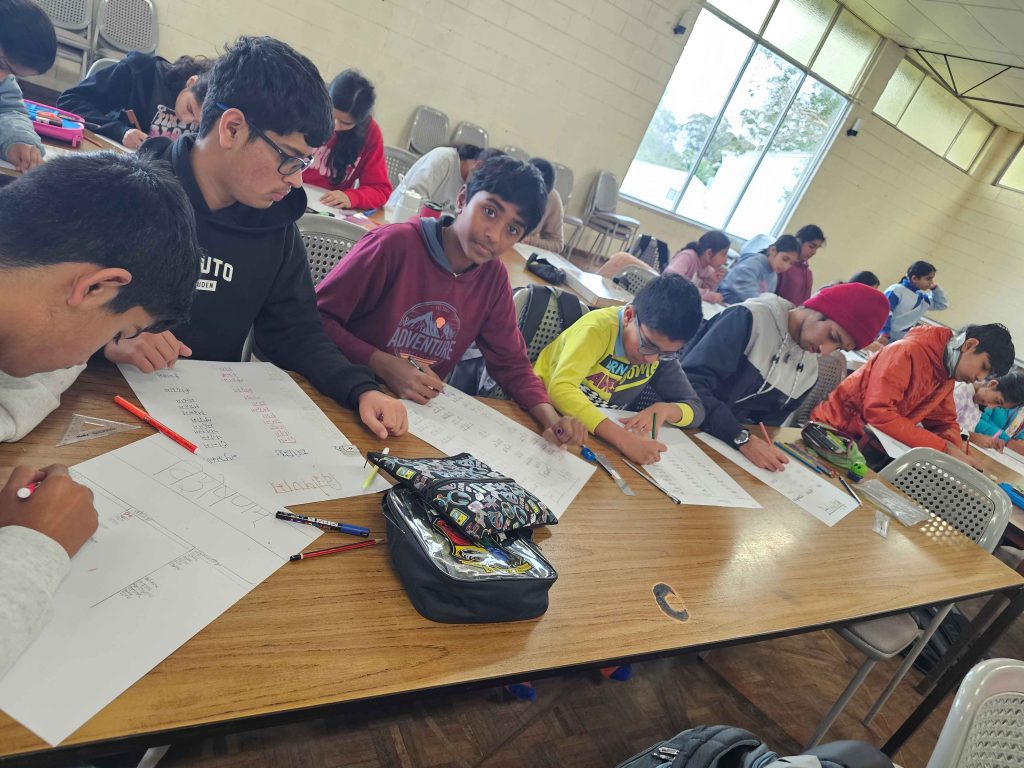
Following lunch, the afternoon sessions often involve worksheet work, group problem-solving, or deeper exploration of the concepts introduced earlier. Afternoon tea gives us a final boost before wrapping up formal classes for the day.

In the evening, after dinner, we gather again but this time not for more grammar, but for bhajans. This is a connected space where anyone can lead a song, join in or simply listen. It’s a valuable way to unwind, reconnect with our shared culture, and close the day with something light-hearted and devotional. Despite the packed schedule, everything flows smoothly thanks to the scheduling and excellent organisation. Somehow, despite all the tiring work throughout the day and the early morning start, we still manage to stay up past midnight finishing up worksheets, activities and homework.
Deepening Our Grammatical Understanding
This year’s camp covered a wide range of topics, each chosen to extend our grasp of classical Sanskrit grammar in both breadth and depth. We explored Nirukta and Nighaṇṭu, gaining insight into the ancient tradition of etymology and how early scholars organised and interpreted Sanskrit vocabulary. Kāraka Vibhakti was another core focus; a topic many of us had seen before, but revisited now with greater clarity and attention to nuance.
One of the more memorable sessions was on Bhāsa Kāvya Nāṭaka Viśeṣaguṇāḥ. We examined how Bhāsa, one of Sanskrit’s great playwrights, boldly defied the structural rules followed by other kāvyas and nāṭakas. Rather than sticking to convention, he pioneered concepts that were emotionally driven and dramatically innovative, challenging what was thought to be “correct” — all while staying rooted in rich poetic language.
We also explored a variety of highly technical and thought-provoking grammatical areas, each building on what we’d already studied throughout the year.
In Bhūta Saṅkhyā, we decoded the system of number symbolism used in classical Sanskrit, where common words represent numbers in poetic or encoded ways. Understanding these allowed us to interpret shlokas and texts with far more precision, particularly those in traditional jyotiṣa or philosophical commentaries.
In Chandas, the study of Sanskrit metre, we moved beyond simply recognising the names of metres and began understanding their inner structure. We learned how metres are built using patterns of short (laghu) and long (guru) syllables, and how these are grouped into gaṇas which are specific combinations of syllables.
At first, memorising gaṇas and applying them to verses felt mechanical, but with practice, the patterns became intuitive. We started to identify not just what metre a verse followed, but how its rhythm contributed to its tone, pacing, and poetic impact. It also gave us a new appreciation for the technical brilliance of Sanskrit poets, how much precision, creativity and work went into even a single line of verse.
In Samāsa, we broke down the rules of compound formation, this time, not just identifying the types (Tatpuruṣa, Bahuvrīhi, etc.), but understanding why and how Sanskrit compresses complex ideas into compact words. It was one of the most technical sessions but also one of the most rewarding.
Kṛdanta grammar was equally challenging, dealing with verbal derivatives and participles formed from roots using specific suffixes. While we’ve encountered kṛdantas
in shlokas before, this time we were building and deconstructing them ourselves — analysing the rules behind formations like kartā, bhavitavyam, or paṭitavyaḥ.
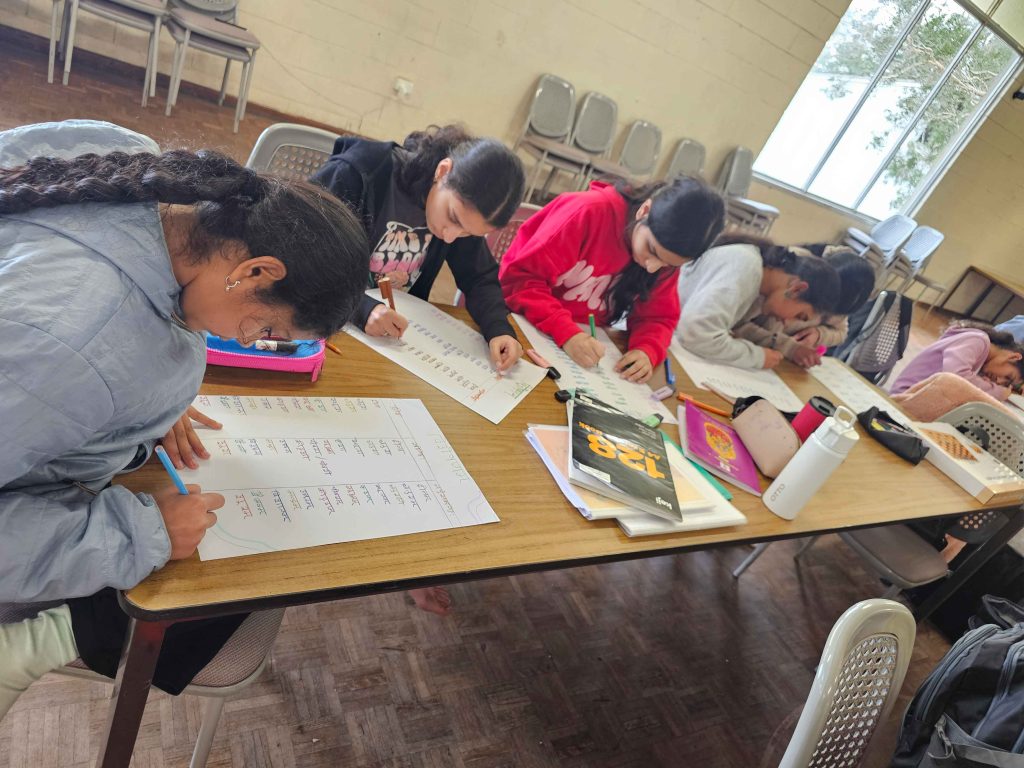
For every topic, worksheets were designed with both repetition and progression in mind, starting with guided examples and gradually moving into independent problem-solving. These weren’t just review exercises; they were carefully constructed to stretch our understanding and link older knowledge with new insights. Working through them was often slow and intense, especially late at night, but they gave us something the regular school environment rarely offers: time to wrestle with something difficult until it becomes clear.
Conversations Beyond the Classroom
While the formal sessions form the backbone of the Pāṇinīyam experience, much of the learning — and bonding — happens outside the classroom. Whether during meal breaks, evening walks, or midnight worksheet marathons, conversations flowed constantly. Often, they circled back to the day’s topics: someone trying to recall a sūtra, another debating a samāsa classification, or someone else questioning how bhūta saṅkhyā might hide itself in a riddle. These academic discussions were rarely limited to a whiteboard, rather they lived in our casual exchanges, even when the setting was far from formal.
That said, not everything was so scholarly. We somehow found a way to connect nearly every grammatical concept to either real-life situations or completely absurd scenarios like imagining chandas patterns in our snacking habits, or using vibhakti to describe the relationship between a student and a samosa. It kept things alive, and it made the material memorable in ways that only a group of over-caffeinated teenagers could manage.
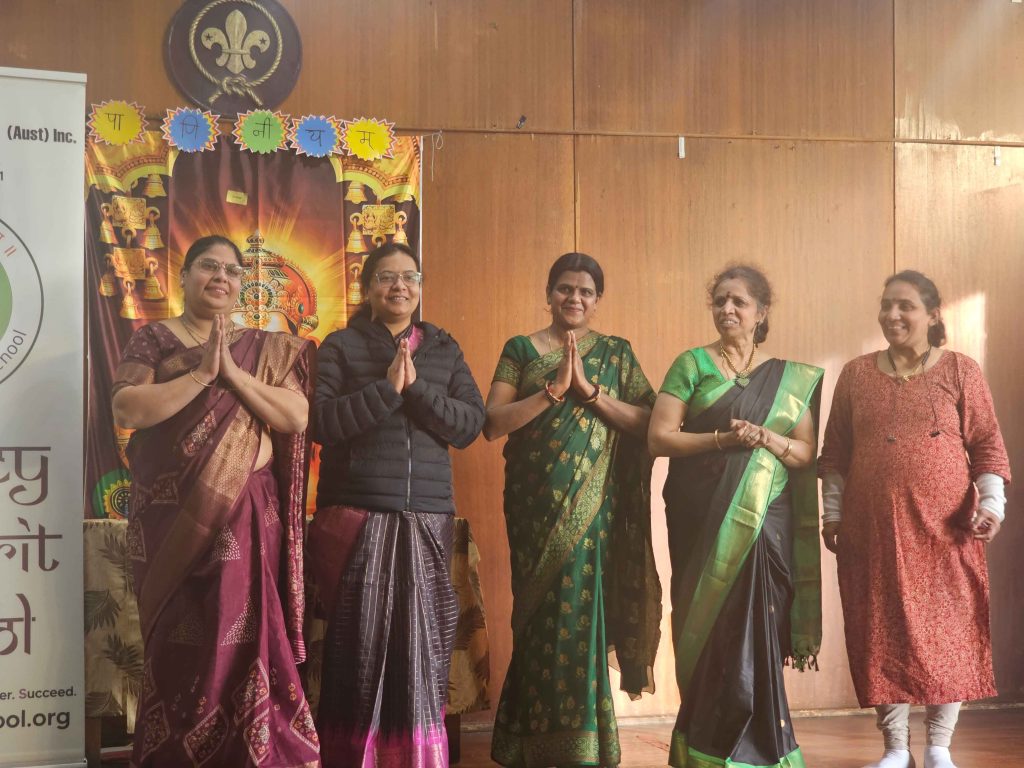
Inside jokes developed quickly — some of them years in the making — involving students, staff, and even past camps. Teachers became characters in our commentary (affectionately), and no one was truly spared, including ourselves. What made this dynamic unique was the way both boys and girls engaged equally in these exchanges. There was a strong sense of mutual respect, but also a lot of light teasing and laughter, which made the environment feel balanced, open, and natural.
Despite all the joking, these interactions had depth. They built confidence, encouraged peer learning, and showed how comfort and humour can co-exist with academic seriousness. In many ways, these informal conversations acted as a bridge, taking classical concepts out of the textbook and into everyday thinking, even if that thinking occasionally involved improbable metaphors and far-fetched analogies.
Traditions That Shape the Experience
Over the years, the Pāṇinīyam Grammar Camp has developed its own quiet traditions, not officially written down or formally introduced, but felt strongly by everyone who takes part. For returning students, these familiar patterns bring a sense of comfort and continuity. For first-time participants, they offer an immediate sense of belonging, a
gentle invitation into a space where learning, discipline, and shared experience come together.
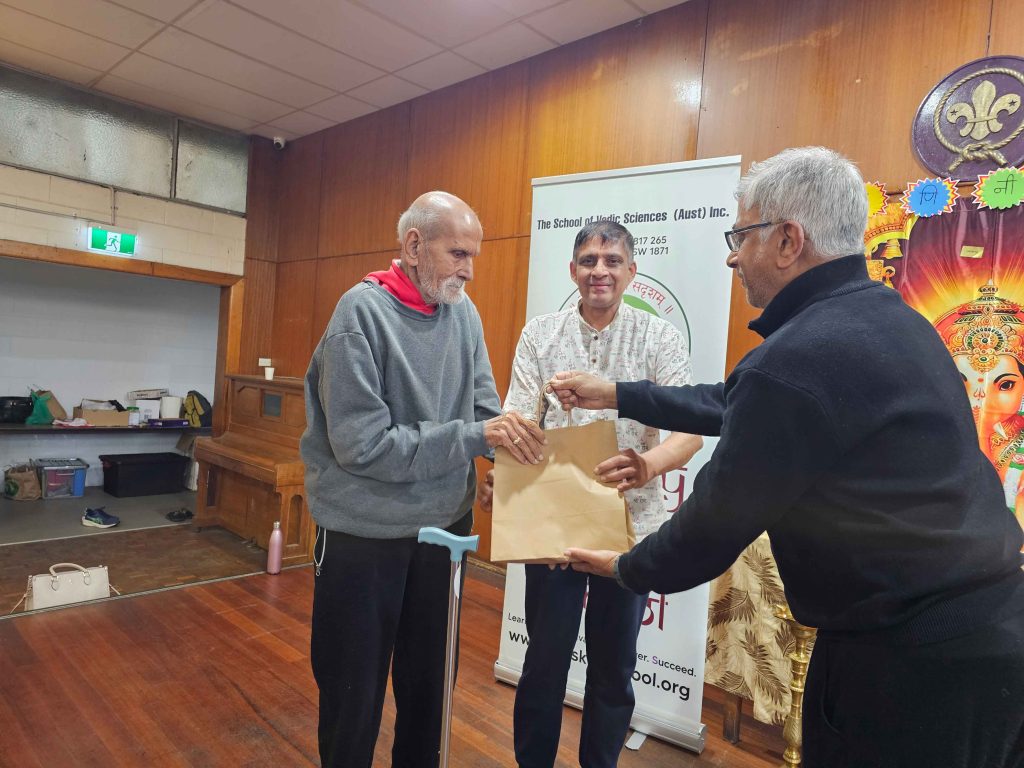
Some traditions are simple but meaningful, like the unofficial sweet brought in by a member of the community. This year, it was kalākand, homemade, shared freely, and eagerly welcomed by all. Gathered in the dining hall after a full day of classes, sharing something small and special, we are reminded that this camp is more than a timetable — it’s a community built on generosity and care.
Other traditions are woven into the daily rhythm: waking early and moving quietly through the dorms, the informal group work late at night, the calm structure of meals and study blocks, and the natural balance between concentration and quiet humour. These patterns form over time, but they never exclude. New students quickly find their place, picking up on the flow, joining in bhajans, or asking for help with a worksheet and finding that someone is always willing to give it.
Whether you’re here for the first time or the fifth, the culture of Pāṇinīyam is something you grow into. It’s not loud or flashy, but steady, built from small, consistent acts of learning, respect, and support.
Why We Keep Coming Back
After attending five camps in a row, the question we often get asked is: why keep going back? For many of us, the answer is simple — because each year, we learn more than we thought possible.
Our weekly classes are valuable. Over two hours every week, we build a strong foundation, progress through grammar systematically, and have time to reflect and ask questions. But the camp offers something different. It compresses weeks of content into just a few days of total immersion where everything else fades into the background, and Sanskrit becomes the main focus from morning to night.
In this environment, ideas settle more deeply. We’re surrounded by people who are thinking about the same material, asking questions at lunch, testing each other in the halls, and helping one another work through doubts. With hours of uninterrupted time, we can explore complex concepts in a way that weekly classes simply don’t allow and not because they’re lacking, but because they serve a different purpose.
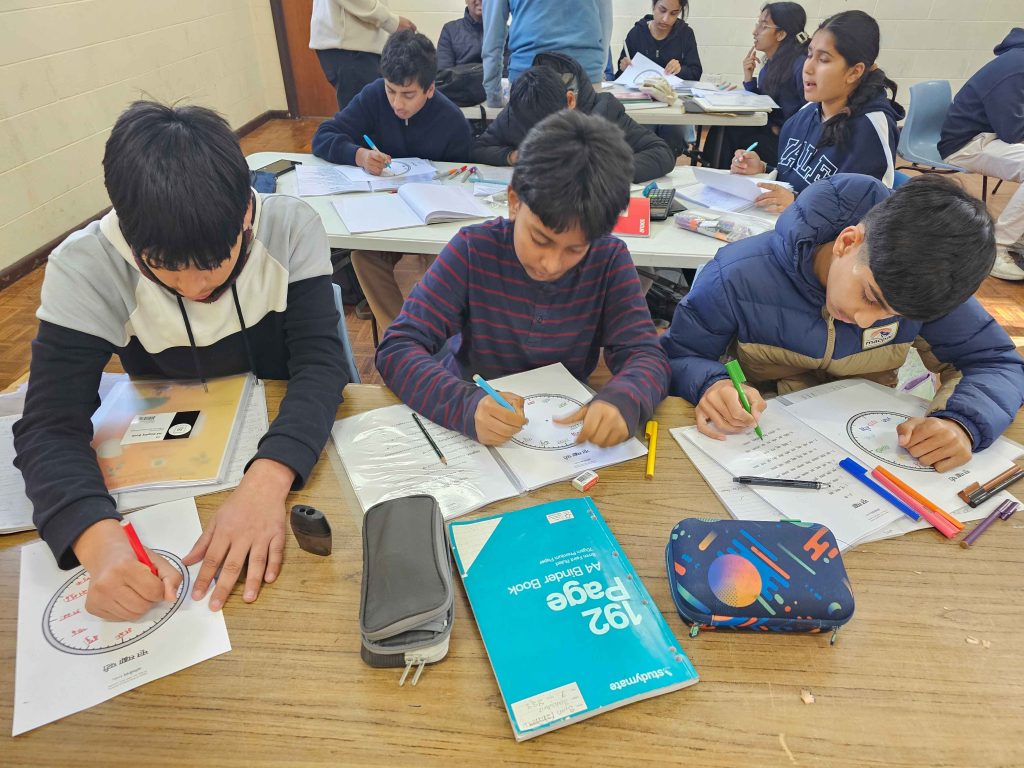
And then, of course, there’s the fun, the games, the late-night jokes, the unspoken challenge of who can finish their worksheet first (without making a single mistake).
These things make the learning feel less like pressure and more like purpose. They keep the mood light, even when the material is heavy.
Ultimately, we return because we leave each year knowing more, understanding more, and feeling more confident in the language. It’s the kind of growth that keeps you wanting to push further and it’s something we’re genuinely grateful for.
Advice for Younger Students
If you’re attending Pāṇinīyam for the first time, it’s completely normal to feel a little nervous, especially when you hear that sessions run all day and that some people stay up until midnight doing homework. But here’s the truth: it’s one of the most supportive and encouraging environments you’ll ever study in.
Everyone at camp, from the teachers to the returning students, genuinely wants you to learn and succeed. If you don’t understand something in class, someone will always explain it to you (often more than once). If you’re struggling with a worksheet, someone else is probably working through the same problem right next to you. And if you need a break, the schedule gives you space to pause and recharge.
You’re not expected to know everything. What matters more is your willingness to participate, to ask questions, and to stay curious. Even the most experienced students at camp started out wondering what a samāsa was or how chandas worked, and they got here by asking for help and putting in the time.
Camp isn’t about competition. It’s about shared learning, growth, and building friendships with people who care about the same things you do.