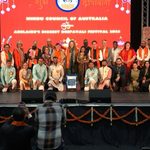
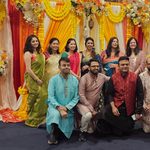
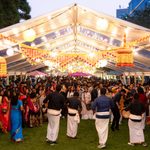
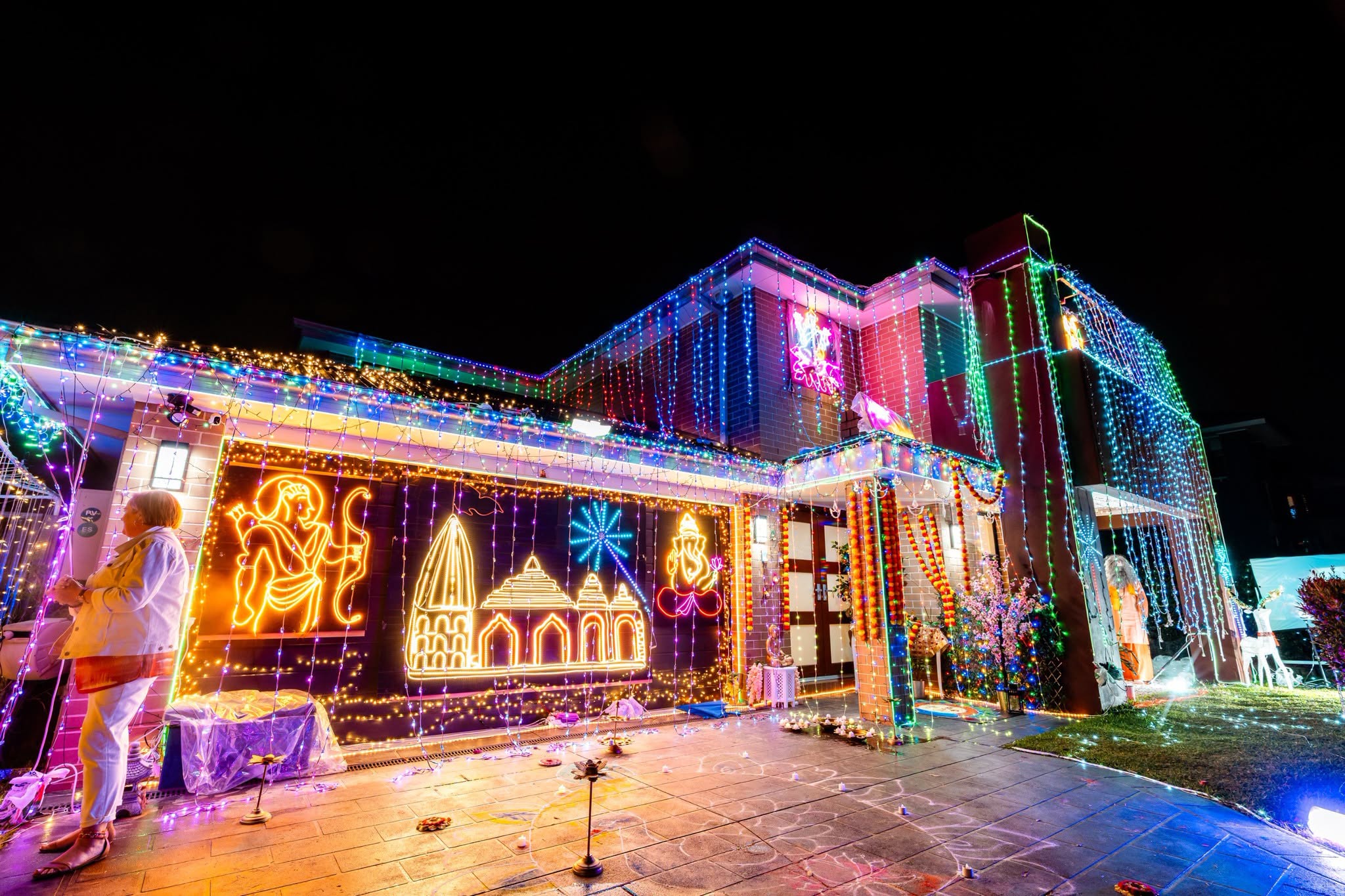
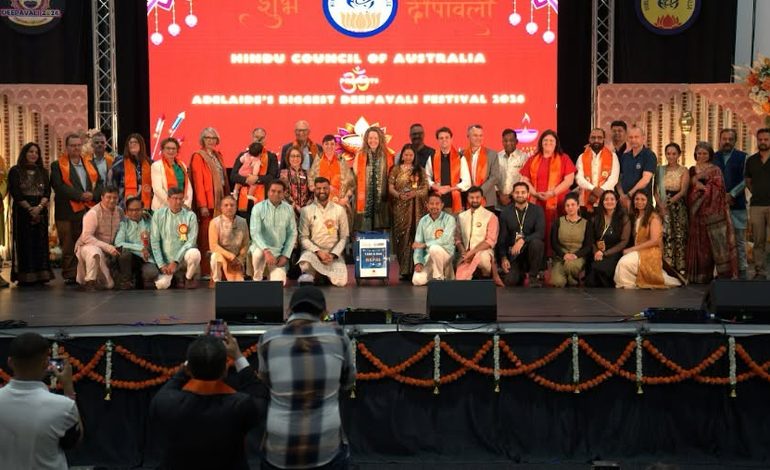
More than 100 people representing different religions, cultures and community backgrounds gathered in Melbourne for an interfaith Diwali celebration that highlighted the shared symbolism of light, hope, wisdom and unity.
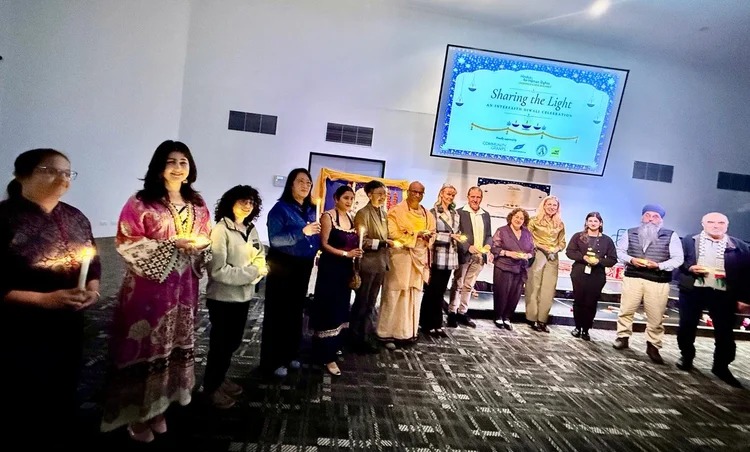
Titled Sharing the Light, Melbourne, the event was held on 25 October 2026 at Manningham Uniting Church and Community Centre in Templestowe. Organised by Hindus for Human Rights Australia & New Zealand (HfHR ANZ), the free community gathering created an opportunity for people to explore how different faith traditions understand and celebrate light.
The programme brought together representatives from Hindu, Sikh, Muslim, Jain, Jewish, Christian, Buddhist and Bahá’í communities, alongside Palestinian, Tibetan, Greek and Chinese cultural representatives.
The event received support from Manningham City Council’s Community Grants programme, NRI Affairs and The Humanism Project.
Bringing Communities Together Through Shared Traditions
The gathering opened with an Acknowledgement of Country recognising the Wurundjeri Woi-wurrung people of the Kulin Nation.
Manningham Councillor Carli Lange welcomed attendees on behalf of Mayor Grivas and the council, highlighting the importance of events that encourage people from different backgrounds to connect and learn from one another.
Elmina Joldic, Director of Operations and Strategy at the Ethnic Communities’ Council of Victoria, also addressed the gathering.

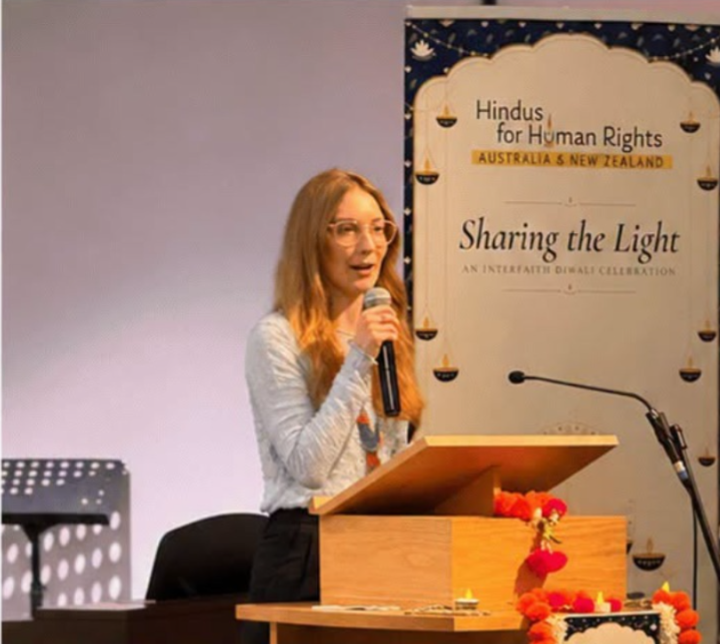
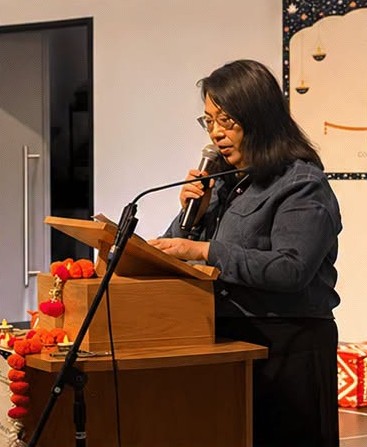
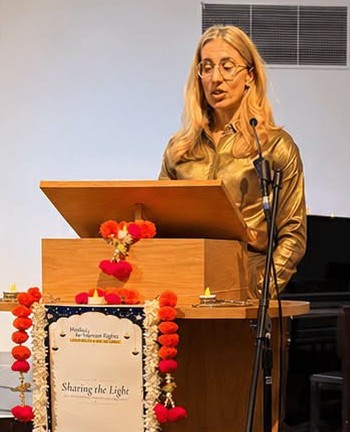
Nandini Sen Mehra, Director of Hindus for Human Rights, encouraged participants to approach the occasion with curiosity and respect, recognising the traditions of others while celebrating their own cultural identities.
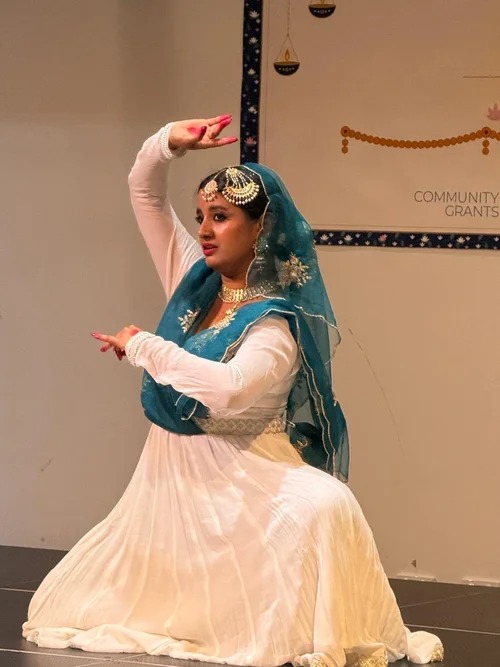
A semi-classical Kathak performance by Sanditi opened the cultural programme, followed by a ceremonial lamp-lighting involving councillors, community representatives and other guests.
Different Faiths Share Their Understanding of Light
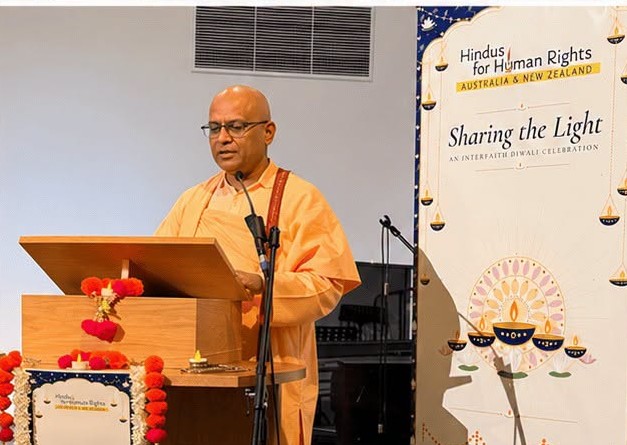
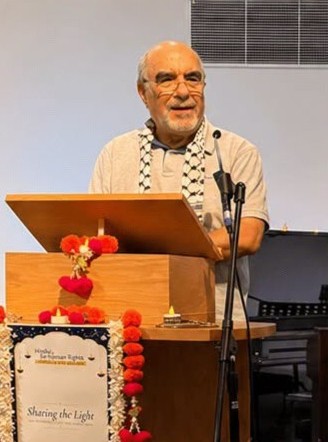
One of the evening’s central features was a series of reflections from representatives of different religious and cultural traditions, each explaining how light holds meaning within their beliefs and practices.
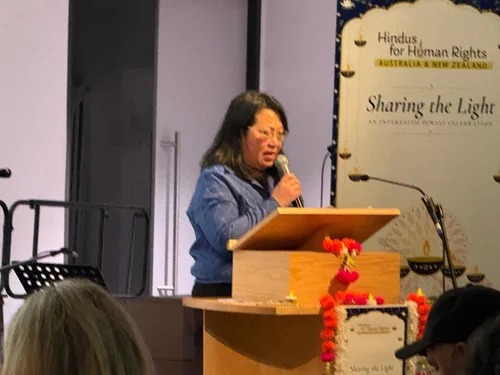
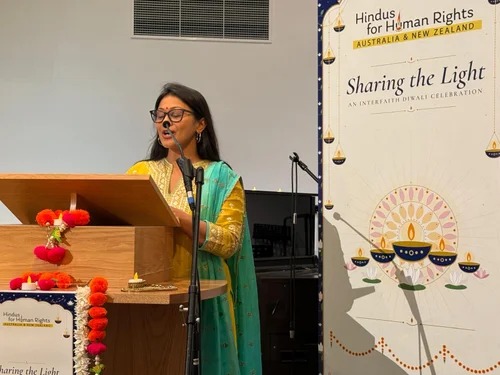
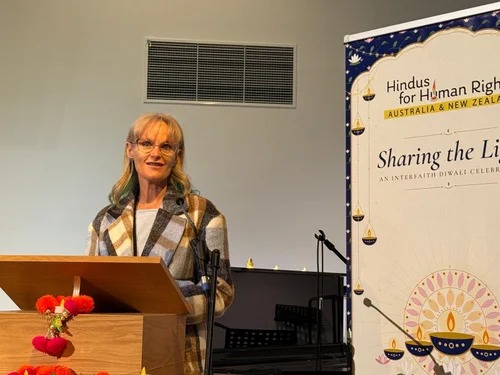
Konstandina Dounis spoke about the symbolism of fire in ancient Greek traditions, where it has represented the struggle between light and darkness and held significance in family and spiritual life.
Maneeza Rahmany discussed the importance of light in Islam, describing it as a source of divine guidance and hope. Fayez Othman reflected on Palestinian olive oil lamps and the reference to divine light in the Quran.
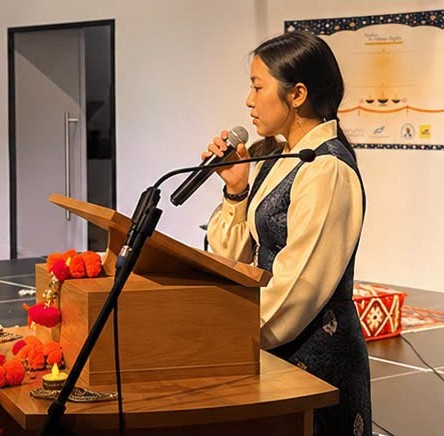
Tenzin Norzin introduced the Tibetan tradition of butter lamps, explaining their role in prayers and their association with wisdom. Priyanka Jain shared the significance of light in Jain religious observances, while Swami Sunishtananda discussed its representation of inner knowledge and human connection in Hindu philosophy.
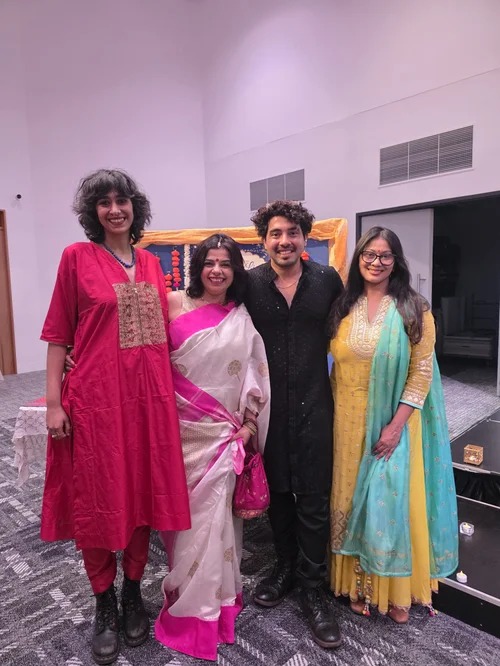
The Bahá’í perspective was presented by Siamak Naimi, who explored the spiritual meaning of light within the faith. Jia Hu introduced Chinese cultural celebrations, including the Lantern Festival.
Representing the Sikh community, Gurvinder Singh Atwal shared the story of Guru Hargobind, the sixth Sikh Guru, whose release from imprisonment alongside fellow prisoners is commemorated through Bandi Chhor Divas, which coincides with Diwali.
Lital Weizman brought a Hanukkah menorah and explained the importance of candle-lighting in Jewish traditions, including Shabbat observances.
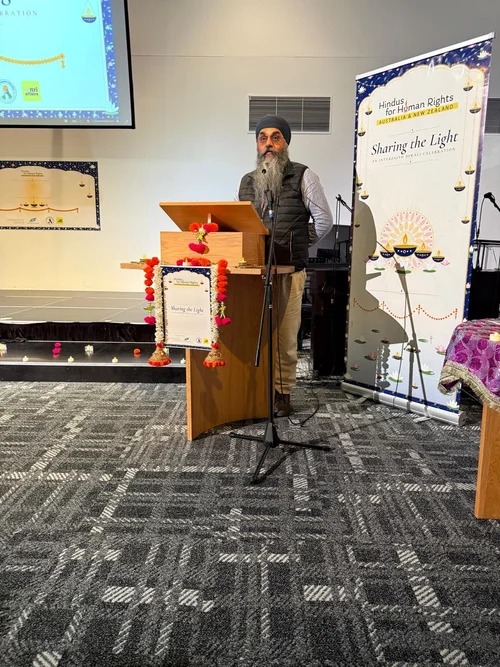
A Christian reflection from Reverend Alison Sampson of Manningham Uniting Church was read by Stephanie Jones. The programme also included an Ambedkarite perspective exploring Dr B.R. Ambedkar’s legacy and Navayana Buddhism.
Music and Dance Add to the Celebration
Cultural performances added another dimension to the gathering, allowing attendees to experience the artistic traditions associated with the participating communities.
Classical vocalist Bimal performed a composition by mystic poet Kabir, accompanied by Jigar on tabla.
The evening concluded with a Garba performance led by Krishna and her team, with guests joining in the traditional group dance.
The performances and shared activities reinforced the event’s central message that cultural differences can provide opportunities for appreciation, learning and stronger community relationships.
Promoting Understanding Beyond Religious Differences
Dr Shanti Raman, Chair of Hindus for Human Rights Australia & New Zealand, said initiatives such as Sharing the Light help develop stronger relationships between communities through positive intercultural experiences.
She emphasised the importance of celebrating diversity while recognising the values and aspirations people share.
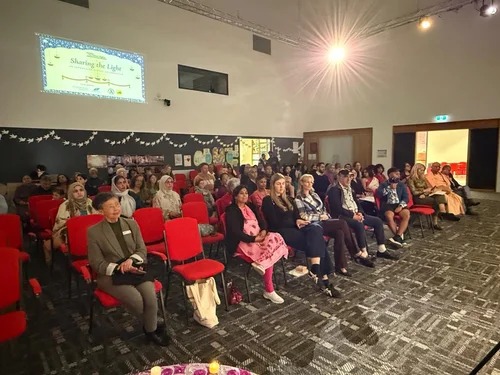
The Melbourne gathering demonstrated how a festival traditionally associated with the triumph of light over darkness can also become a platform for interfaith dialogue and mutual understanding.
By inviting people to share the meanings of light within their own traditions, the event encouraged participants to recognise common values while respecting individual beliefs and cultural identities.
Sharing the Light offered a meaningful example of how community-led celebrations can strengthen Melbourne’s multicultural connections and create spaces where people of different backgrounds come together in a spirit of respect, friendship and belonging.