Severe Tropical Cyclone Narelle has made a powerful impact on Western Australia, bringing destructive winds, heavy rainfall and widespread disruption as it crossed the coastline.
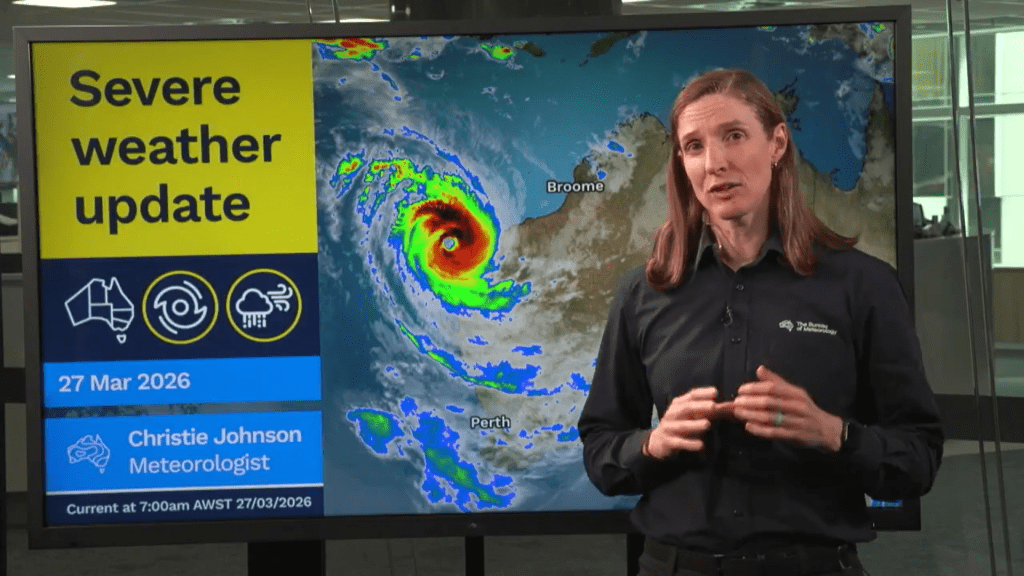
The cyclone, which had earlier intensified into a Category 4 system, made landfall near Coral Bay before gradually weakening as it moved inland. At its peak, wind gusts reached up to 250 km/h, causing damage to homes, infrastructure and essential services across affected regions.
Communities including Exmouth and Carnarvon were among the hardest hit, with reports of power outages, roof damage and flooding. Thousands of properties were left without electricity, while emergency services responded to numerous calls for assistance as the storm swept through the region.
The cyclone also brought torrential rainfall and storm surges, raising concerns about flash flooding across parts of Western Australia, with impacts stretching as far south as Perth. Authorities issued warnings and enforced road closures to ensure public safety.
Severe Weather Update: Tropical Cyclone Narelle moving onto the Western Australia coast
— Bureau of Meteorology, Australia (@BOM_au) March 27, 2026
Video current: 7am AWST 27 March 2026
For the latest forecasts and warnings, go to https://t.co/4W35o8i7wJ or the BOM Weather app. pic.twitter.com/NCtyVDoGMs
What makes Cyclone Narelle particularly significant is its rare and unusual path, having already impacted parts of Queensland and the Northern Territory before reaching Western Australia. Experts describe this east-to-west trajectory as highly uncommon, highlighting the scale and complexity of the system.
The cyclone’s strength and duration have also been linked to warmer ocean temperatures, with climate experts noting that such conditions can intensify storms and extend their reach. This has added to concerns about the increasing frequency and severity of extreme weather events.
Although Narelle has now been downgraded to a tropical low as it moves further inland, authorities have warned that the danger is not yet over. Heavy rain, strong winds and flooding risks remain, with emergency crews continuing recovery and response efforts across affected areas.

Government leaders, including Prime Minister Anthony Albanese, have pledged support for impacted communities, as cleanup operations begin and residents assess the damage left behind.
Cyclone Narelle now stands as one of the most significant weather events of the season – not only for its intensity, but also for the unprecedented path it has taken across multiple parts of Australia.