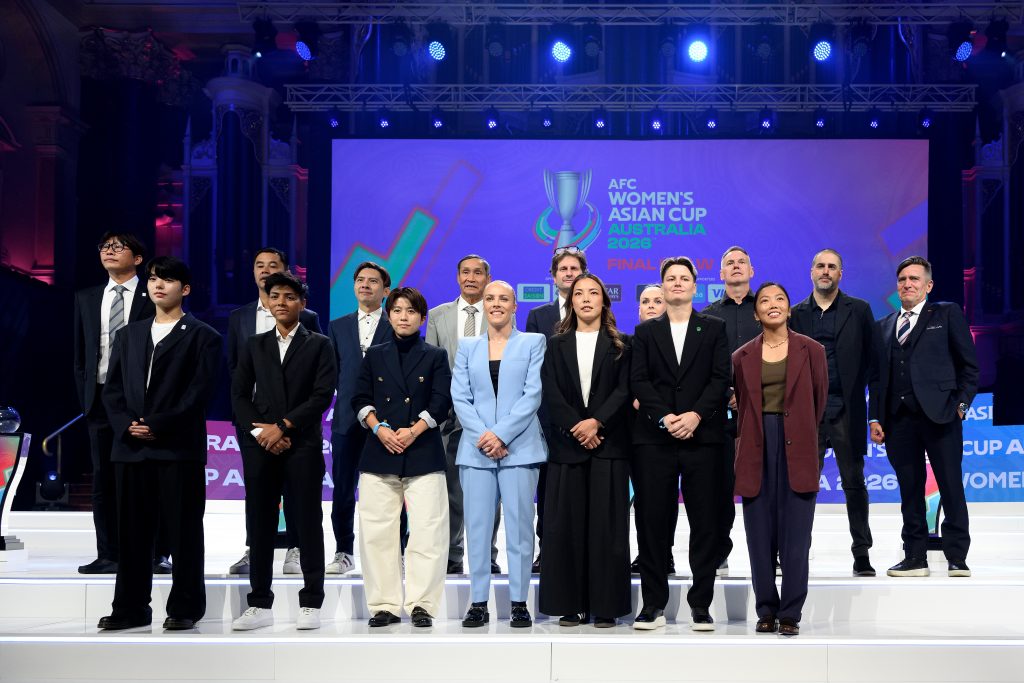
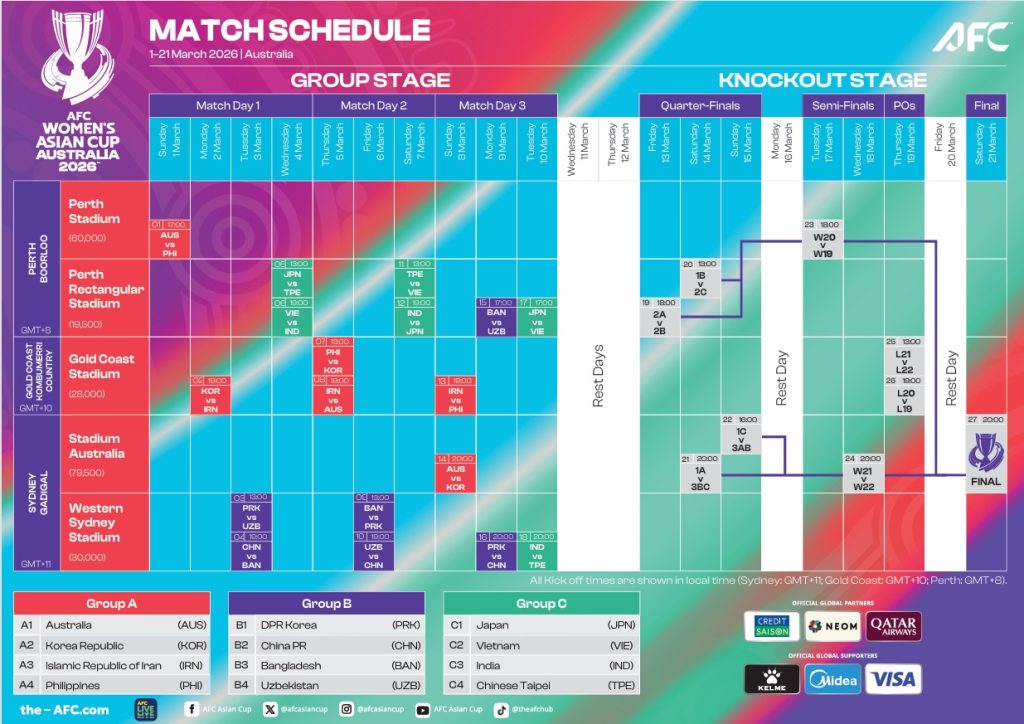
A wave of excitement has swept across Australia as the match schedule for the AFC Women’s Asian Cup Australia 2026™ is officially revealed, promising a month of thrilling football action, cultural celebration, and community connection. The tournament will kick off on March 1 with a highly anticipated clash between the host nation, Australia, and the Philippines at Perth Stadium, setting the stage for what’s expected to be a historic opener witnessed by a capacity crowd of 60,000.

The draw, unveiled in a spectacular ceremony at Sydney Town Hall on July 29, laid out the path to glory for all 12 participating teams. Matches will take place across three vibrant cities—Perth, Sydney, and the Gold Coast—each showcasing the best of Asian women’s football on five world-class pitches. Returning to Australia for the first time since 2006, the 21st edition of the tournament marks two decades since the nation last played host and signals its growing stature in the world of women’s sport.

Among the most anticipated group-stage matchups is the encounter between China PR and Bangladesh on March 3 at Western Sydney Stadium. Bangladesh, the only debutant team in this year’s tournament and the lowest-ranked among the twelve, has defied expectations to earn their place. Their opening test against the reigning champions and nine-time titleholders, China PR, promises a compelling narrative of underdog determination versus established dominance. Bangladesh’s qualification is seen as a landmark achievement for the country’s growing women’s football program and a proud moment for South Asia.

Later the same day, DPR Korea and Uzbekistan will reignite their tournament journeys with a showdown in Parramatta. For DPR Korea, this marks their return to the AFC Women’s Asian Cup after a 15-year absence, bringing a new generation of talent fresh off youth World Cup victories. Uzbekistan’s road to the tournament included a nail-biting penalty shootout victory over Nepal and recent strong performances in regional championships, signaling a determined resurgence.

Another exciting storyline unfolds in Group C, where India will clash with heavyweights Japan, Vietnam, and Chinese Taipei. Scheduled to play their opening match on March 3 in Sydney, India’s return to the continental stage offers a platform to showcase the talent and tenacity of its women footballers.
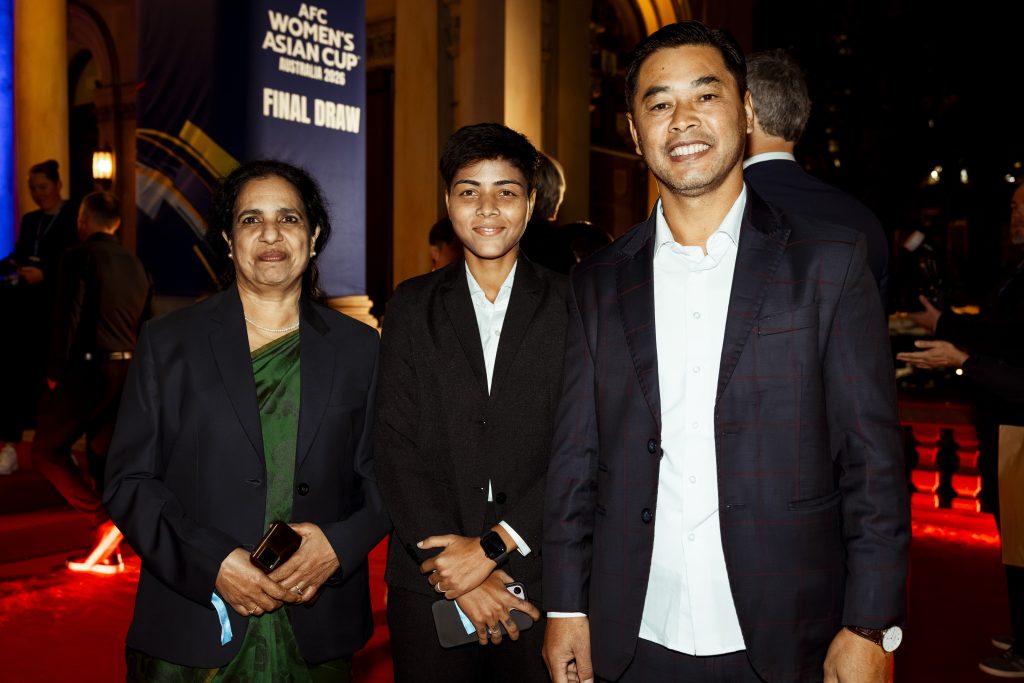
With growing investment in grassroots development and increased visibility for the women’s game at home, India enters the tournament eager to challenge more established sides and script a new chapter in its footballing journey.

Across the three cities, each stadium brings a unique flavour to the tournament. Perth Rectangular Stadium will open its campaign on March 4 with Japan taking on Chinese Taipei and will also host five group matches and two crucial quarter-finals. The Gold Coast Stadium will make its tournament debut with Korea Republic versus IR Iran on March 2 and will continue to host six pivotal fixtures, including FIFA Women’s World Cup 2027 playoff matches.


Sydney’s iconic Stadium Australia, the largest venue of the tournament, will host multiple knockout matches and take centre stage on International Women’s Day, March 8, as the Matildas face Korea Republic in their final group match—an encounter already buzzing with anticipation.
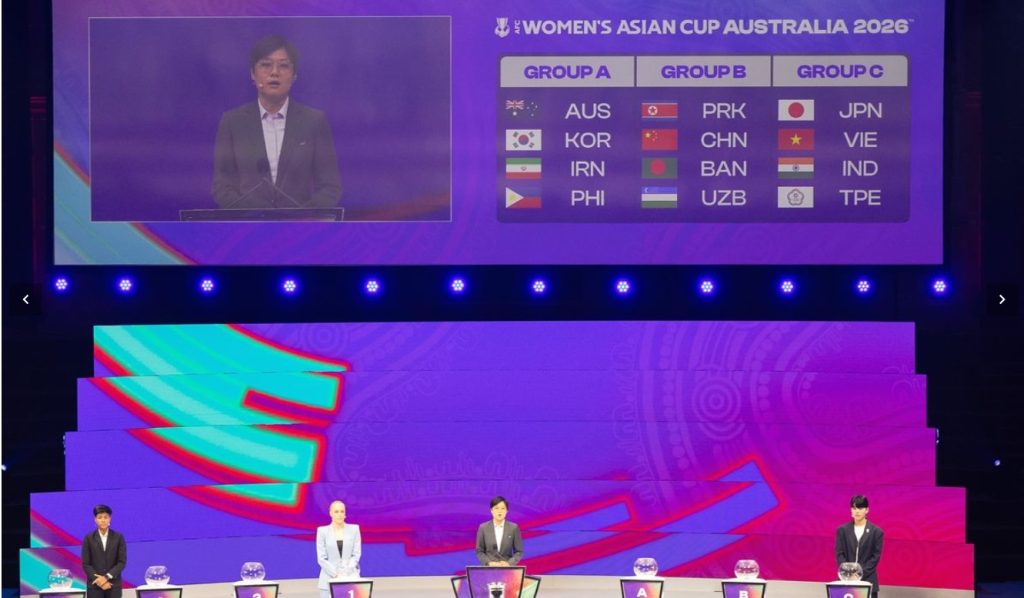
The tournament groups are now locked in:
- Group A: Australia, Korea Republic, IR Iran, Philippines
- Group B: DPR Korea, China PR, Bangladesh, Uzbekistan
- Group C: Japan, Vietnam, India, Chinese Taipei
Federal Minister for Sport, Anika Wells, reflected on the draw as a landmark moment, noting that the Australian Government’s $15 million investment underscores its commitment to women’s sport. “The 2023 FIFA Women’s World Cup was a game-changer for football in Australia,” she said, “and this tournament will build on that legacy.”
Sarah Walsh, COO of the Local Organising Committee, described the draw as the beginning of a new chapter. “These match-ups are more than just games—they’re an invitation for communities to come together, share pride in their heritage, and embrace the unifying spirit of the tournament. This is where ‘Dream Fearless’ comes to life—on the pitch, in the stands, and in the hearts of fans everywhere.”
Tourism ministers and city officials across Perth, Sydney, and the Gold Coast echoed the excitement, each highlighting how hosting will boost both local pride and international visibility. In particular, the participation of countries like India and Bangladesh is expected to engage Australia’s vibrant South Asian diaspora, turning the tournament into not just a sporting event, but a multicultural celebration.

As Australia prepares to host the AFC Women’s Asian Cup in 2026, the excitement is palpable. With legacy, pride, and sporting excellence at its core, this tournament is poised to capture imaginations, inspire generations, and once again place women’s football firmly in the global spotlight.