Bangladesh has produced one of the most significant results in its Test history, defeating Australia by nine wickets in Darwin to secure its first Test victory on Australian soil. The result, achieved inside four days at Marrara Oval, overturned expectations and gave Najmul Hossain Shanto’s side a landmark success against the world’s top-ranked Test team.
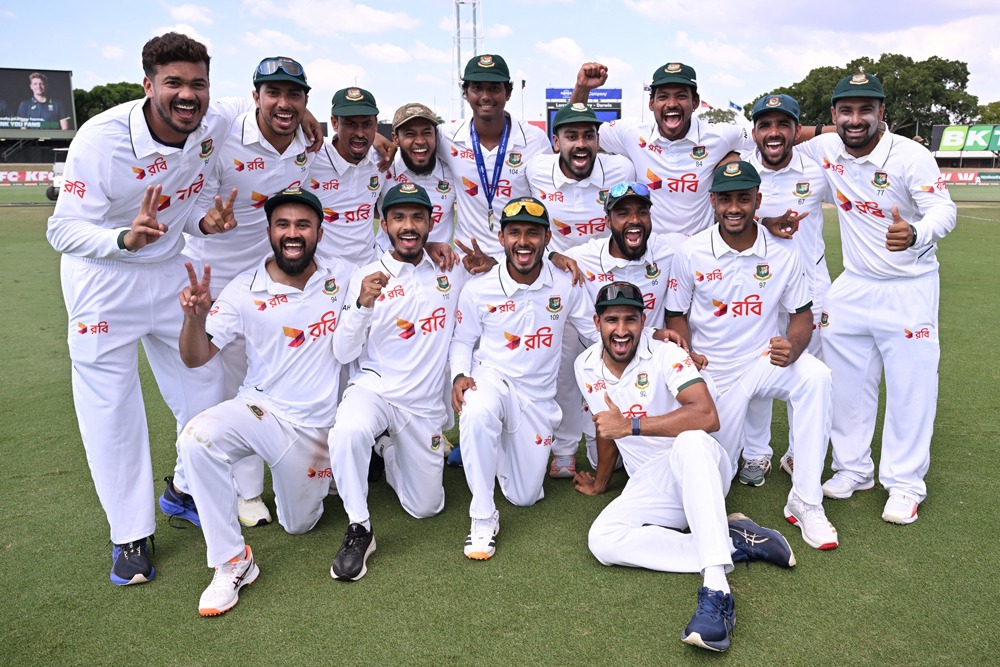
The victory was built on a commanding all-round performance from Bangladesh, which controlled the match for much of the four days. Australia was dismissed for only 198 in its opening innings, before Bangladesh responded with 426 to establish a substantial 228-run advantage. The visitors then completed the job after Australia managed 284 in its second innings, leaving a modest target of 57.
Hasan Mahmud was central to Bangladesh’s breakthrough. The fast bowler claimed six wickets in Australia’s first innings and finished with nine wickets across the match, earning the Player of the Match award. His ability to repeatedly trouble the Australian batting order gave Bangladesh the early advantage it needed and kept pressure on the hosts throughout the contest.
The batting effort that followed was equally important. Tanzid Hasan Tamim became the first Bangladeshi batter to score a Test century on Australian soil, making 101 during a crucial innings. His contribution helped Bangladesh move well beyond Australia’s first-innings total and created the platform for a lead that ultimately proved decisive.
Tanzid’s innings was particularly significant because Bangladesh needed to withstand the pressure created by Australia’s attack after the hosts had been dismissed for a relatively modest total. His century, combined with contributions from other members of the batting order, ensured that Bangladesh did not allow Australia to regain control of the contest. By the time the visitors were dismissed, they had built a 228-run cushion.
Australia attempted to recover during its second innings, with Cameron Green providing the standout resistance. Green produced a determined 104, his century offering the home side hope of setting Bangladesh a more challenging target. Despite his efforts, Australia was eventually bowled out for 284, meaning Bangladesh needed only 57 runs for victory.
Mehidy Hasan Miraz then helped finish the contest with a decisive spell of bowling. He claimed five wickets in Australia’s second innings, preventing the hosts from converting their opportunities into a competitive fourth-innings target. Bangladesh reached the required 57 runs after losing only one wicket, sealing the match by nine wickets.

The scale of the result was made even more striking by Australia’s position in Test cricket. The hosts entered the match as the No. 1-ranked Test side, while Bangladesh arrived with a reputation for being far less successful away from home. The outcome therefore represented not merely a win but a major statement about Bangladesh’s ability to compete in difficult overseas conditions.
The defeat has also raised uncomfortable questions about Australia’s batting. Captain Pat Cummins acknowledged that the team’s performance with the bat was not good enough and indicated that the lineup and approach would need to be examined before the second Test. Jake Weatherald and Marnus Labuschagne were among those whose form attracted scrutiny after modest contributions in Darwin.
Australia’s batting collapse was especially damaging because the bowling attack had opportunities to keep the hosts in the contest. Instead, Australia repeatedly struggled to build sustained partnerships. Steve Smith contributed 71 in the second innings and Green’s century provided resistance, but the overall batting performance failed to match the standards expected from a team occupying the top position in Test cricket.
For Bangladesh, the result represents the latest step in a gradual rise in Test cricket. The team has previously produced major victories against Pakistan, New Zealand, England and Australia, but winning in Australia carried a special significance. This was Bangladesh’s first Test triumph on Australian territory and came during its first Test tour of Australia in 18 years.
The setting added another layer to the occasion. Marrara Oval in Darwin had hosted the first Test between Australia and Bangladesh in 2003, when the visitors were comprehensively beaten. More than two decades later, Bangladesh returned to the same city and reversed the historical script with a performance that will be remembered as one of the most important away victories in its cricket history.
Bangladesh’s success also demonstrated the value of a younger generation of players stepping into major international moments. Tanzid’s century and Hasan Mahmud’s match-winning bowling were complemented by Mehidy’s decisive second-innings spell, giving the visitors contributions across departments rather than relying on one individual to carry the team.
The result has already generated widespread reaction across the cricket world, with former players and commentators questioning whether Australia needs a significant reshaping of its batting order. Former captain Ricky Ponting described the performance as embarrassing and called for selectors to consider changes, while other analysts also pointed towards younger Australian options ahead of the remainder of the season.
For Bangladesh captain Najmul Hossain Shanto and his players, however, the focus is likely to remain on what comes next. The nine-wicket success gives Bangladesh a 1-0 advantage in the two-Test series and provides the team with an opportunity to achieve something even greater: winning a Test series in Australia. The second match is scheduled to begin in Mackay on 22 August.
The Darwin result will therefore stand as more than an isolated upset. It represents a defining moment for Bangladesh cricket, a major setback for Australia and a reminder that Test cricket can still produce extraordinary reversals of expectation. Bangladesh arrived seeking its first Test victory in Australia and departed Darwin having delivered one of the most memorable results in its history.