One of India’s largest youth-led protest movements in recent history has officially come to an end after Union Education Minister Dharmendra Pradhan resigned from his position, marking a significant moment in the country’s ongoing debate surrounding education reforms, examination integrity and student rights.
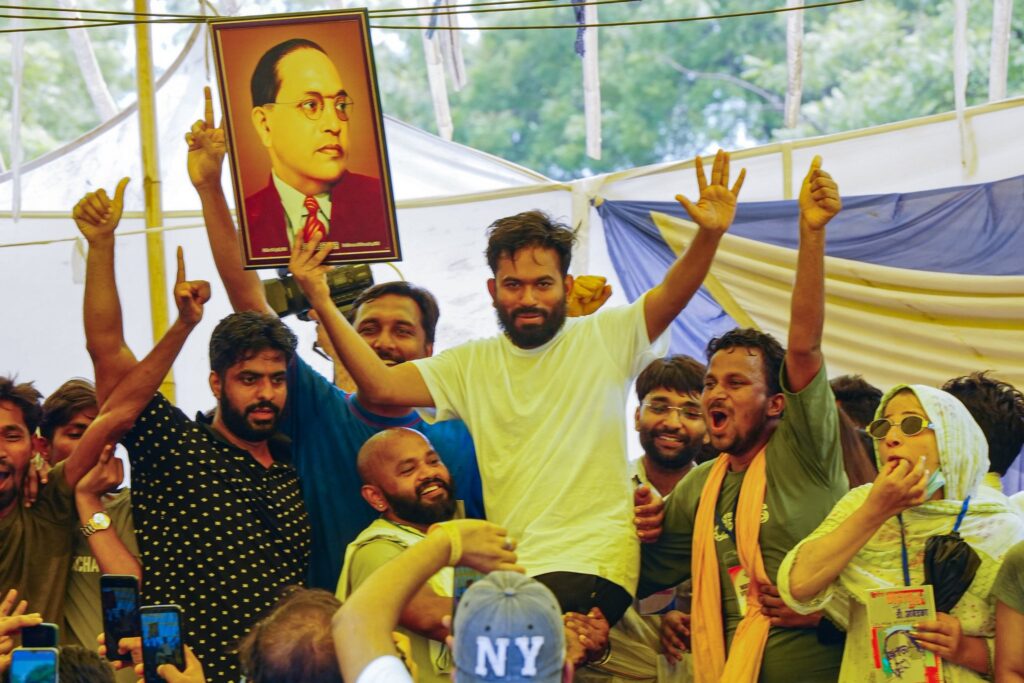
The Cockroach Janta Party (CJP), the organisation that spearheaded the nationwide protests, announced the immediate withdrawal of its agitation after the Central Government accepted several key demands put forward by student leaders and protesters. The announcement was met with celebrations at protest sites across India, particularly at Delhi’s Jantar Mantar, which had become the symbolic centre of the movement over the past several weeks.
What began as student outrage over alleged examination paper leaks quickly transformed into a broader youth movement advocating for transparency, accountability and meaningful reforms within India’s education system. The protests attracted widespread support from students, educators, young professionals and members of the Indian diaspora across the world, including Australia.
Millions of students across India had expressed concerns over the fairness of highly competitive examinations, arguing that paper leaks and irregularities undermine merit-based opportunities and negatively impact years of hard work and preparation. The movement resonated strongly with India’s young population, many of whom viewed the issue as one that directly affects their future educational and career prospects.
The resignation of Dharmendra Pradhan has emerged as one of the most significant political outcomes of the movement. Having served as Union Education Minister during a period of growing public scrutiny over examination-related controversies, his resignation is being viewed by many protesters as a democratic victory for student activism and public accountability.
Following multiple rounds of discussions between government representatives and protest leaders, the Centre reportedly agreed to several assurances aimed at addressing protesters’ concerns. These include commitments to strengthen examination processes, introduce stricter mechanisms to prevent future paper leaks and ensure that peaceful protesters are not subjected to unnecessary legal action.
The government has also indicated that reforms relating to examination conduct and educational accountability will be considered through appropriate legislative and institutional processes. Prime Minister Narendra Modi had earlier announced plans for tougher action against individuals involved in examination fraud and paper leak scandals, including the possibility of stricter laws and fast-track judicial processes.

The CJP leadership subsequently announced that the objectives of the protest had largely been achieved and called upon demonstrators across the country to peacefully return home. Protest organisers emphasised that the movement had always remained focused on protecting students’ interests and strengthening India’s education system rather than pursuing partisan political objectives.
The youth-led movement has been widely described by international media organisations as India’s first major Gen Z-driven nationwide mobilisation centred around education reforms. Its influence extended beyond India’s borders, inspiring solidarity protests and discussions among Indian diaspora communities in countries including Australia, the United Kingdom, Canada and the United States.
Throughout the protests, demonstrators consistently highlighted the importance of preserving meritocracy within India’s education system. For millions of Indian students, competitive examinations determine access to universities, professional opportunities and government employment, making institutional trust an essential component of educational success.
The movement also highlighted the growing political and social engagement of India’s younger generation. Through peaceful demonstrations, social media campaigns and community mobilisation, young Indians successfully brought national attention to issues affecting their future and encouraged meaningful public debate on educational reforms.
Education experts have noted that the protests could serve as a catalyst for long-term improvements in examination governance and student welfare. The events have sparked broader conversations around transparency, technological safeguards in examination systems, mental health support for students and institutional accountability across India’s education sector.
For the Indian diaspora in Australia and around the world, the developments have been closely followed due to the strong cultural emphasis placed on education within Indian communities. Many Indian-Australian families continue to maintain close ties with India’s education system, making these reforms particularly significant for students and families globally.
The conclusion of the CJP protests marks an important chapter in India’s democratic and educational journey. Regardless of differing political perspectives, the movement has reinforced one universal message-that every student deserves a fair, transparent and merit-based education system that rewards hard work and safeguards their future.
As India prepares to implement reforms and appoint new leadership within the Education Ministry, millions of students will now be watching closely to see whether the promises made during this historic movement translate into lasting institutional change.