Australian Prime Minister Anthony Albanese has met United States President Donald Trump during a welcome reception for world leaders attending the United Nations General Assembly in New York, bringing the two leaders together as Australia and the US continue discussions on security, technology, trade and wider international challenges.
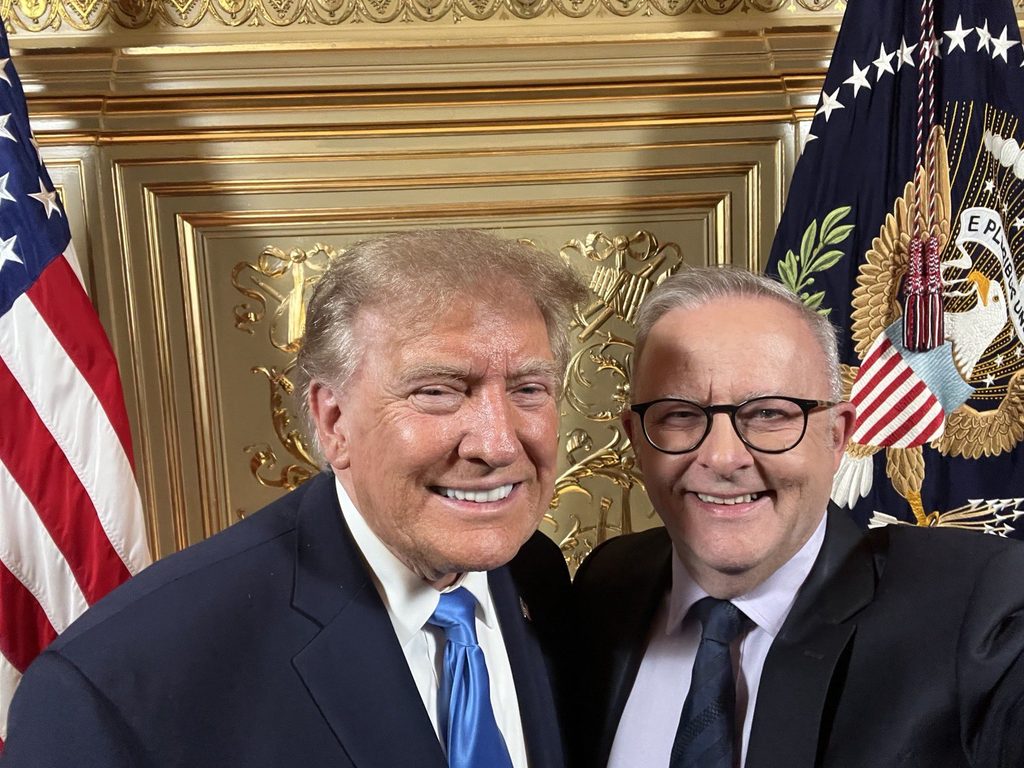
The encounter took place during the UN General Assembly High-Level Week, where Albanese is leading Australia’s delegation and promoting the country’s priorities on global security, artificial intelligence, climate and international cooperation. The reception provided an opportunity for the Australian Prime Minister and US President to speak in person alongside other world leaders.
The interaction comes after Albanese and Trump have maintained contact through direct discussions on major regional and international issues. In August, Albanese said he had held a lengthy phone conversation with Trump covering the conflict in the Middle East, developments across the Pacific, the Australia-US alliance, AUKUS, critical minerals, artificial intelligence and economic relations.
The Australia-US alliance remains one of the central elements of Canberra’s foreign and defence policy. Albanese has previously highlighted the alliance’s 75-year history and Australia’s expanding defence cooperation with the United States, including progress under AUKUS and collaboration on advanced military technologies.
AUKUS continues to be an important part of the relationship between the two countries. During his August conversation with Trump, Albanese discussed progress on the agreement’s second pillar, including a joint project involving advanced payloads and enabling systems for uncrewed undersea vehicles. He also briefed the US President on Australian defence technologies including Ghost Bat and Ghost Shark.
Critical minerals and economic cooperation have also featured prominently in recent discussions between Canberra and Washington. Albanese told reporters that the two countries had reviewed progress under their critical minerals agreement, including more than $3.5 billion worth of projects. Among the projects highlighted was the Alcoa gallium development, which Australia says could supply around 10 per cent of global gallium demand.
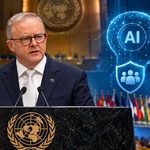
Artificial intelligence is another area where the two governments are engaging, although their approaches to international safeguards are not identical. Albanese has argued that AI should develop with appropriate safeguards and that humans must remain in control of the technology. Australia was also among the countries involved in a recent international statement calling for stronger cooperation and safeguards around AI.

Trump, meanwhile, used his address to the UN General Assembly to reject efforts to establish what he described as a global system for controlling artificial intelligence. His position puts the US approach at a different point from Australia’s call for international cooperation on AI safeguards.
The leaders’ interaction also comes against the backdrop of major international security concerns. Albanese has repeatedly discussed the impact of the conflict in the Middle East on Australia, including its effects on energy prices and the wider global economy. In his August conversation with Trump, he said he had pressed Australia’s position and discussed the conflict and the risks associated with Iran’s nuclear program.
Trade remains another issue of significance in the relationship. During his August discussion with Trump, Albanese raised Australia’s concerns about US tariffs and argued that Australia should receive favourable treatment because of the two countries’ longstanding economic and strategic relationship. He also pointed to the Australia-US Free Trade Agreement and substantial investment links between the two economies.
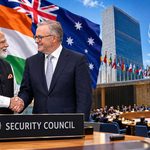
The meeting in New York forms part of a broader period of diplomatic engagement for Albanese, who is also meeting other international leaders during the UN General Assembly. Australia has used the gathering to promote its campaign for a non-permanent seat on the United Nations Security Council for 2029 and 2030, with Albanese outlining priorities including conflict prevention, civilian protection, ocean and climate security and a safer digital future.
Australia’s relationship with the United States therefore extends well beyond the personal engagement between Albanese and Trump. Defence cooperation, AUKUS, critical minerals, trade, artificial intelligence and regional security all form part of the broader agenda between the two countries.
The New York encounter also highlights the importance of direct engagement between the leaders of the two countries at a time when international politics is being shaped by conflicts, technological change and shifting economic relationships. Albanese has said Australia will continue to put its national interests first while maintaining a constructive relationship with Washington.
As the UN General Assembly continues, Australia is expected to keep engaging with the United States and other international partners on issues affecting its security, economy and regional interests. The Albanese-Trump encounter adds another chapter to the ongoing Australia-US relationship as both countries navigate an increasingly complex international environment.