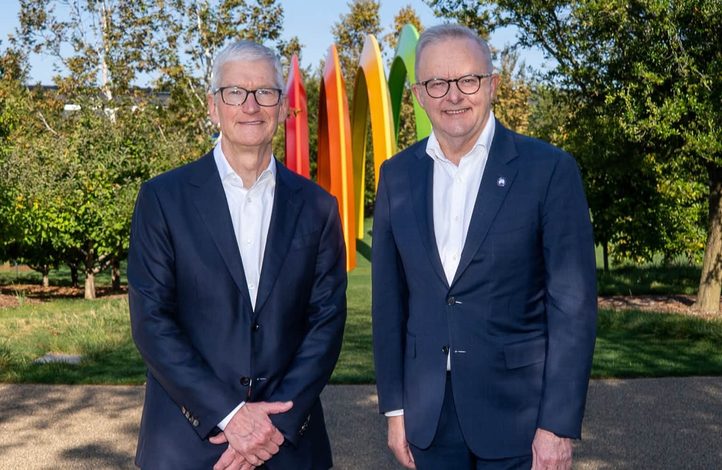
Prime Minister Anthony Albanese has called for artificial intelligence to remain firmly under human control as Australia steps up its international efforts to promote safeguards around the rapidly developing technology. Speaking in New York during the United Nations General Assembly High-Level Week, Albanese said AI could deliver major benefits but its development must remain centred on people.
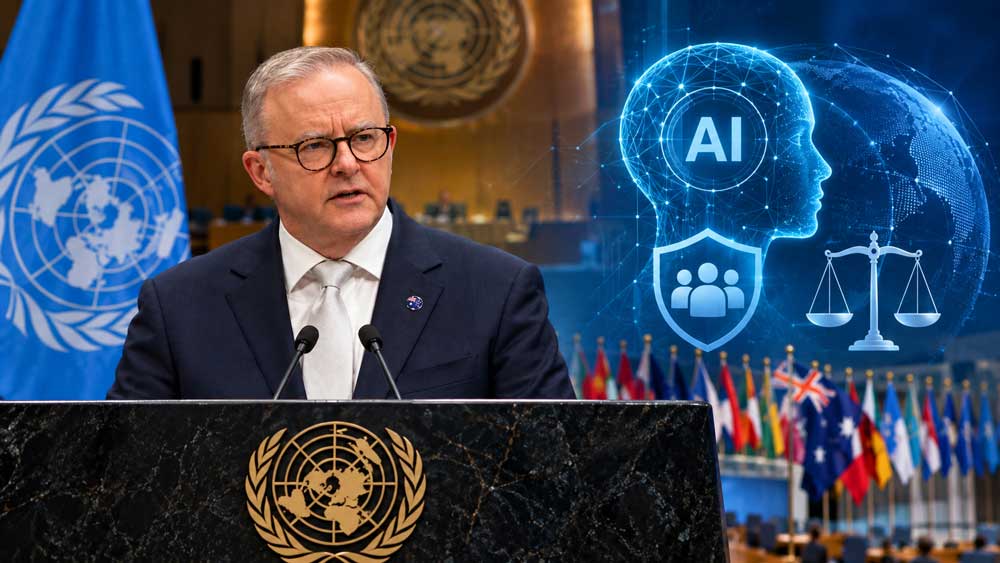
Albanese said artificial intelligence has the capacity to improve lives, increase economic productivity and accelerate scientific and medical breakthroughs. However, he stressed that technological progress should not come at the expense of human decision-making, arguing that people must remain at the centre of how AI is developed and deployed.
The Prime Minister’s comments came as Australia joined an international effort promoting a human-centred approach to artificial intelligence. According to Albanese, Australia played a central role in developing the joint statement and has been working directly with Finnish President Alexander Stubb as well as regional partners on the issue.
A central concern raised by Albanese is how AI could influence the way societies operate if its development is not accompanied by appropriate safeguards. He said Australians want confidence that artificial intelligence will not ultimately determine how society functions, arguing that governments and communities should help shape the technology’s rollout rather than allow the technology itself to dictate social change.
The issue has become an increasingly visible part of Australia’s international policy agenda. During an interview earlier in the week, Albanese pointed to concerns expressed by major technology companies about the risks associated with advanced AI. He said the potential risks could involve both the technology itself and the possibility of malicious actors or states using AI for harmful purposes.
The Australian Government’s approach is therefore focused not only on the opportunities presented by AI but also on governance, security and accountability. Albanese has linked the debate to broader Australian initiatives involving digital regulation and AI standards, arguing that governments should actively participate in shaping technological development rather than simply respond after systems have already become deeply embedded in society.
Australia’s position also comes as the international community continues to develop approaches to AI governance. The President of the 81st United Nations General Assembly has separately called for international cooperation to ensure AI serves humanity and is governed through shared principles and effective safeguards. The UN discussion has included questions around equitable access, risks to countries with less influence over AI systems and the need to avoid fragmented international governance arrangements.

The Australian Government is simultaneously highlighting practical applications of AI that can benefit communities. Recent government-backed initiatives have showcased projects using artificial intelligence in areas including healthcare, disaster response, climate resilience and access to essential services. This reflects Australia’s stated objective of focusing on what AI can deliver for people while addressing the risks associated with its development.
Human oversight is also reflected in the Australian Government’s own use of artificial intelligence. The Department of Foreign Affairs and Trade says responsible and safe AI use is a guiding principle within the department, with processes covering risk assessment, monitoring, privacy, security, transparency and ethical considerations. DFAT also states that human oversight is maintained through a “Human-in-the-Loop” approach.
Albanese has indicated that Australia wants to remain actively engaged in the international AI debate rather than operate as a passive observer. His comments in New York came alongside Australia’s broader diplomatic agenda at the United Nations, where the government is also campaigning for a non-permanent seat on the UN Security Council for the 2029–30 term. The government has identified digital futures, alongside conflict prevention and ocean and climate security, among its international priorities.
The Prime Minister has also acknowledged that major powers will pursue their own national interests as AI development accelerates. Asked about a planned meeting between US President Donald Trump and Chinese President Xi Jinping, Albanese said Australia hoped for a positive outcome while maintaining that Australia would continue advocating for safeguards that reflect its own national interests.
For Australia, the AI debate therefore extends beyond questions about new software and automated tools. It increasingly involves economic productivity, scientific research, national security, cybersecurity, digital regulation and Australia’s role in international technology governance. Albanese’s latest comments indicate that the government wants human oversight and international cooperation to remain central as these technologies become more influential.
The international debate is still developing, and governments, technology companies, researchers and civil society groups continue to consider how appropriate safeguards should work in practice. Australia’s position, as outlined by Albanese, is that technological advancement should continue while people retain meaningful control over how AI affects their lives, workplaces and wider society.