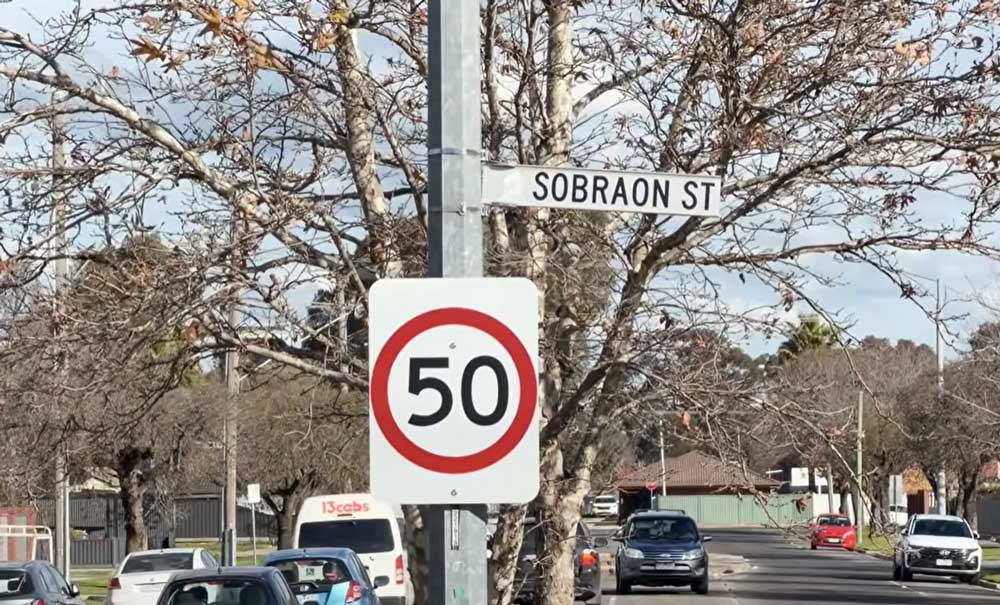
A street sign in regional Victoria is drawing attention to an extraordinary historical connection stretching more than 180 years and thousands of kilometres – from the battlefields of Punjab to Shepparton.
A Punjabi-language video filmed in Shepparton has recently brought renewed attention to Sobraon Street, raising an intriguing question: how did the name of a place associated with one of the most significant battles in Sikh history find its way onto a street in regional Victoria?
For many local residents, Sobraon Street may simply be part of the everyday Shepparton streetscape. But behind the name lies a much broader story involving the Sikh Empire, the First Anglo-Sikh War, a famous nineteenth-century sailing ship and Australia’s maritime history.
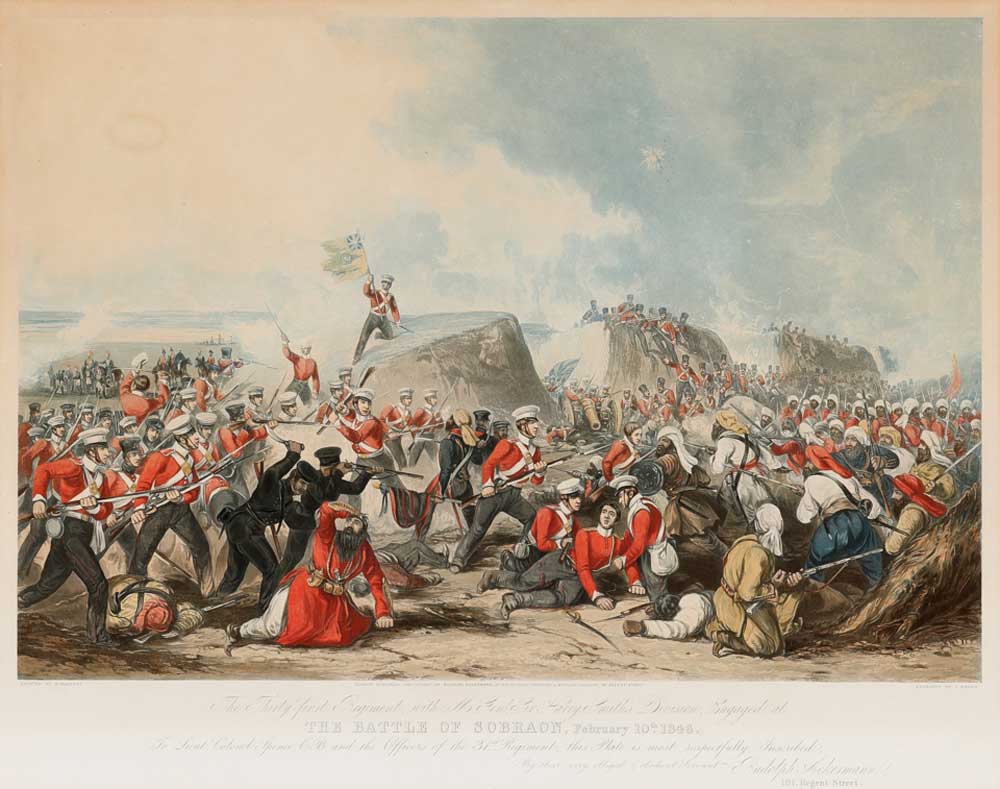
The Battle of Sobraon
The story begins in Punjab on 10 February 1846, when the Battle of Sobraon was fought between the Sikh Khalsa Army and forces of the British East India Company.
It became the decisive battle of the First Anglo-Sikh War of 1845–46, a conflict between the Sikh Empire and the East India Company. The fighting at Sobraon was intense, with Sikh forces defending fortified positions near the Sutlej River.
Among the Sikh commanders associated with the battle was the respected veteran Sham Singh Attariwala, who is remembered for fighting until his death during the confrontation.
The Sikh forces were ultimately defeated, and the battle was followed by political developments that significantly weakened the Sikh Empire. The Treaty of Lahore formally concluded the First Anglo-Sikh War, while Punjab was later annexed by the British East India Company in 1849 following the Second Anglo-Sikh War.
For Sikh history, Sobraon remains associated not only with defeat, but with the courage and sacrifice of the Khalsa soldiers who fought there.
How the name travelled to Australia
Around two decades later, the name Sobraon appeared in a very different part of the world.
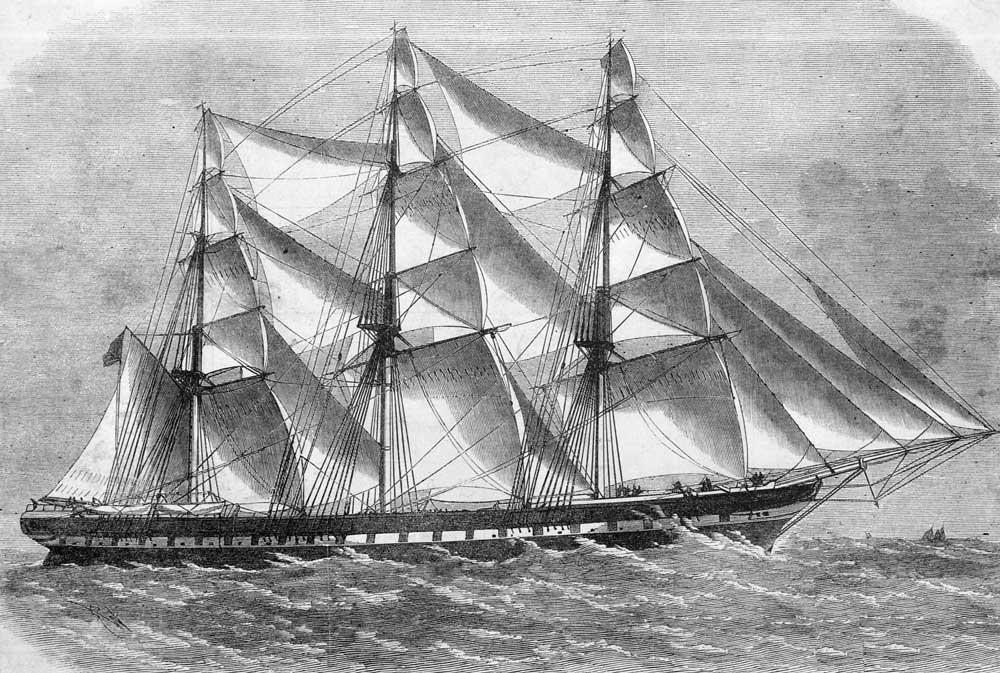
A large three-masted clipper ship named Sobraon was launched in Aberdeen, Scotland, in 1866. The vessel became closely associated with Australia, sailing the passenger route between Britain and Australia for approximately 25 years.
According to the Australian War Memorial, Sobraon made its maiden voyage in September 1866 and continued operating on the England–Australia route until its final voyage arrived in Port Melbourne in January 1890.
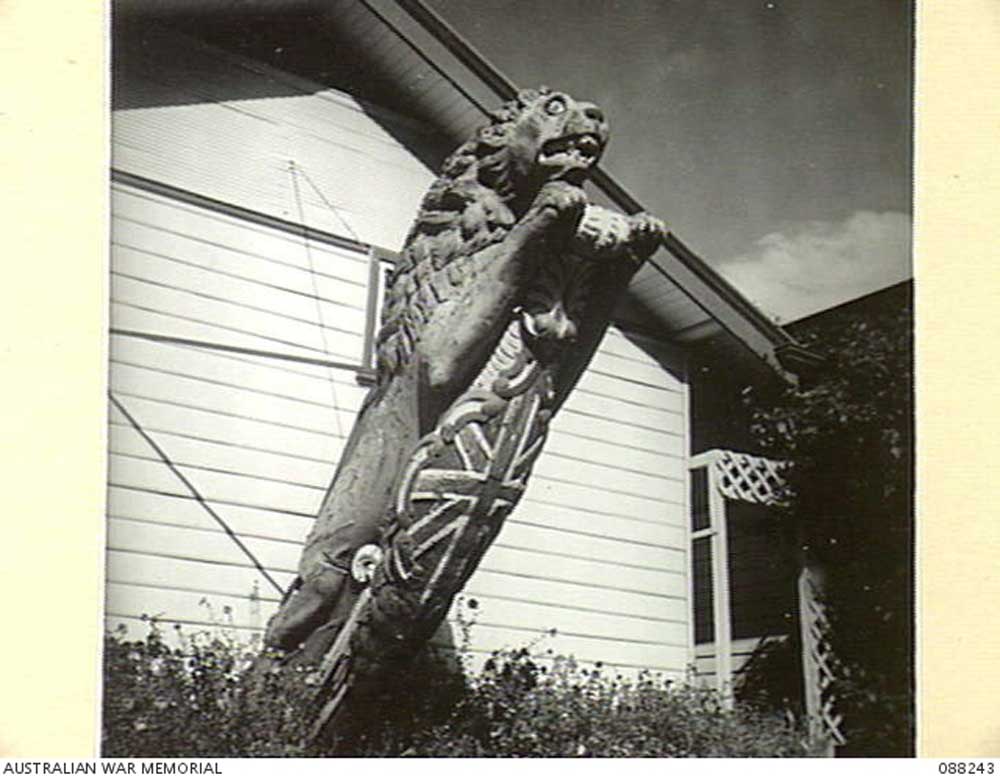
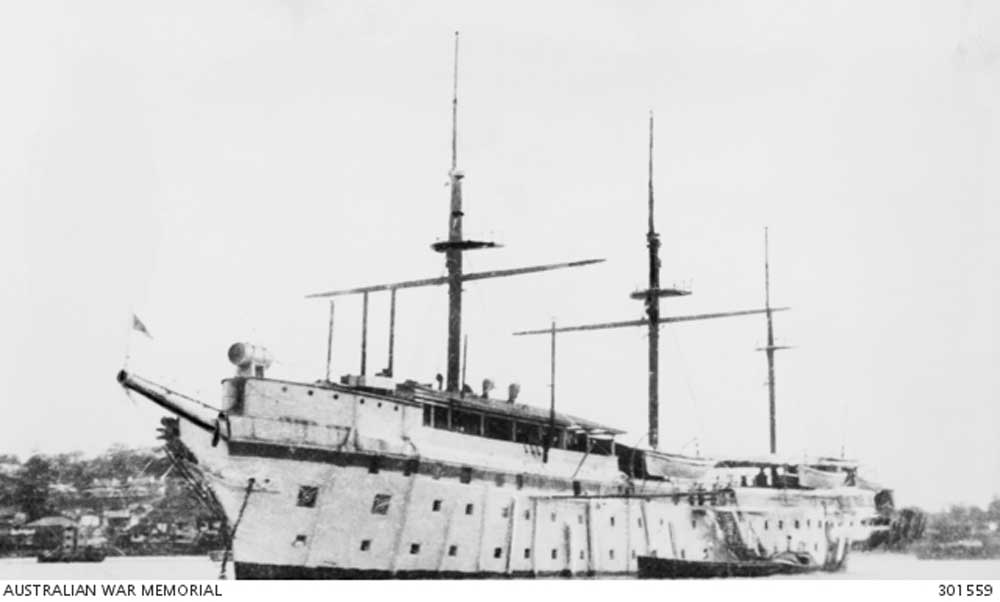
The vessel was then sold to the New South Wales Government in 1891 and converted into a nautical school and reformatory ship in Sydney.
More than 1,000 boys were placed aboard the Nautical School Ship Sobraon over the following two decades.
Its Australian story continued when the Commonwealth Government acquired the vessel in 1911.
Following a refit, it was renamed HMAS Tingira and commissioned into the Royal Australian Navy on 25 April 1912 as a training ship for young naval recruits. The vessel was based at Rose Bay in Sydney and remained in service until 1927.
The Australian War Memorial records that more than 3,000 boys received naval training aboard Tingira during its years of Royal Australian Navy service.
What began as the name of a battlefield in Punjab had therefore become firmly embedded in Australian maritime history.
The Shepparton connection
The story becomes even more intriguing in regional Victoria.
Today, Sobraon Street remains part of Shepparton, and evidence shows that the name has been used locally for well over a century.
Historical newspaper records from the first half of the twentieth century repeatedly list residents and businesses on Sobraon Street, demonstrating that it was already an established part of the city long before Shepparton developed into the multicultural regional centre it is today.
Local historian Raymond West also researched the origins of Shepparton’s place names.
His publication, The Streets of Shepparton, with reference map: also the origins and meanings of the names of the city, wards, streets, parks and rivers, is held by the National Library of Australia and was specifically compiled to document how Shepparton’s streets and other local landmarks received their names.
It is this local history that has attracted renewed interest through the Punjabi-language video filmed at Sobraon Street.
The video draws attention to the connection between the street name and the historic Battle of Sobraon, introducing many Punjabi and Sikh Australians to a piece of local history they may have passed countless times without recognising.
Battle, ship and street
There is a compelling historical chain connecting the name across continents:
Sobraon in Punjab → the Battle of Sobraon in 1846 → the clipper ship Sobraon → Australia → Sobraon Street in Shepparton.
The ship’s Australian connection is well documented, as is the long-standing existence of Sobraon Street.
However, one piece of the historical puzzle deserves further investigation: the original Shepparton record explaining precisely why the local street was given the name Sobraon.
Raymond West’s research on Shepparton’s street names may provide that definitive link, and further examination of early council maps, municipal records and local archives could help establish whether Sobraon Street was named directly after the battle, after the famous ship, or through another nineteenth-century association with the name.
That distinction does not make the story any less fascinating. Instead, it highlights how local history can open the door to much larger historical journeys.
A surprising connection for Shepparton’s Sikh community
For members of the Sikh and Punjabi community living in Shepparton today, the discovery gives an ordinary street sign an entirely different meaning.
The name connects regional Victoria with a pivotal moment in the history of Punjab – a connection that predates today’s multicultural Shepparton by generations.
It is particularly striking that a name rooted in nineteenth-century Punjabi history can now be found in a region that is home to a vibrant Sikh and South Asian community.
The people who originally named the street could hardly have imagined that, more than a century later, Punjabi families would be living, working and building their lives in the same Victorian city.
For those residents, seeing the name Sobraon may now carry a significance far beyond geography.
History hidden in everyday places
The story of Sobraon Street is also a reminder that Australian history is filled with unexpected international connections.
Street names can become so familiar that few people stop to ask where they came from.
Yet behind a single sign can sit stories of migration, conflict, maritime travel, colonial history and connections stretching across continents.
From the banks of the Sutlej River in Punjab, to a sailing ship travelling between Britain and Australia, and eventually to a road in the heart of Shepparton, the name Sobraon has travelled an extraordinary distance.
More than 180 years after the Battle of Sobraon, its name continues to appear thousands of kilometres away in regional Victoria.
And for Shepparton’s Sikh community, it represents a remarkable reminder that sometimes a piece of Punjab’s history can be found in the most unexpected place – right on an Australian street sign.