Australia has taken a major step toward becoming a global technology powerhouse, with the federal government formalising a landmark partnership with Microsoft backed by a $25 billion investment in artificial intelligence, cloud infrastructure and workforce development.
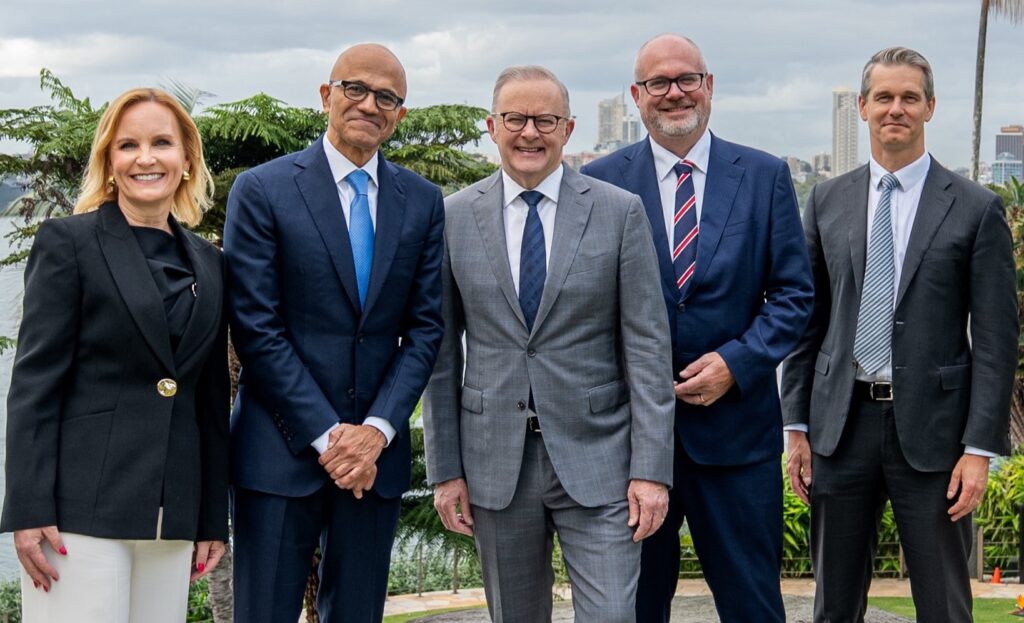
Announced during a high-profile visit by Microsoft CEO Satya Nadella, the agreement signals one of the largest technology investments in Australia’s history and reflects growing ambition to position the country at the forefront of the global AI economy.
A Defining Moment for Australia’s AI Future
The investment, to be rolled out through to 2029, will significantly expand Microsoft’s AI and cloud capabilities across Australia, including Azure-powered supercomputing infrastructure and advanced data centres.
It marks Microsoft’s largest-ever commitment in Australia, aimed at strengthening digital capacity, boosting innovation and enabling businesses and government agencies to adopt next-generation technologies at scale.
The announcement was made alongside Prime Minister Anthony Albanese, underlining the alignment between the partnership and Australia’s broader National AI strategy.
Workforce Training at the Core
A central pillar of the deal is a major investment in skills development, with Microsoft committing to train up to three million Australians in AI-related capabilities by 2028.
More training, better technology and new opportunities for Australians to get ahead.
— Anthony Albanese (@AlboMP) April 23, 2026
That’s what the massive AI investment Microsoft announced today will mean for Australia.
We’re determined to make the most of AI so it benefits workers and businesses across Australia. pic.twitter.com/7zKtuOyPF8
This initiative is designed to prepare the workforce for rapid technological change, ensuring that businesses, students and professionals can adapt to an increasingly AI-driven economy.

The focus on education and training reflects a growing recognition that future competitiveness will depend not only on infrastructure, but also on human capital and digital literacy.
Strengthening Cybersecurity and National Capability
Beyond infrastructure and skills, the agreement includes enhanced collaboration on cybersecurity, including expansion of Microsoft’s partnership with the Australian Signals Directorate through the Cyber Shield initiative.
This component aims to strengthen national resilience against cyber threats while ensuring secure adoption of AI technologies across government and industry sectors.
The investment also supports collaboration with institutions such as the Australian AI Safety Institute, reinforcing a commitment to responsible and ethical AI development.
Satya Nadella’s Strategic Visit
Satya Nadella’s visit to Australia formed part of Microsoft’s global AI tour, underscoring the country’s growing importance in the company’s international strategy.
Thanks to Prime Minister @AlboMP for the warm welcome today.
— Satya Nadella (@satyanadella) April 23, 2026
We are making our largest investment in Australia to date, committing A$25 billion to expand AI and cloud capacity, strengthen cybersecurity, and help people and organizations across the country build digital skills. pic.twitter.com/1GzNRxjLpr
During his visit, Nadella emphasised that Australia has a unique opportunity to translate AI innovation into real economic growth and societal benefit, highlighting the country’s strong foundation in research, talent and digital infrastructure.
Economic Growth and Global Positioning
The deal is expected to deliver far-reaching economic benefits, supporting innovation, job creation and productivity across industries. National parks and tourism may dominate traditional economic drivers, but investments like this are increasingly shaping Australia’s future as a technology and knowledge-based economy.
Government leaders have welcomed the agreement as a critical step toward boosting competitiveness, attracting global investment and ensuring Australia remains a key player in the rapidly evolving AI landscape.
A Long-Term Vision for Innovation
This partnership represents more than a financial commitment – it reflects a long-term vision for integrating AI into Australia’s economy, public services and everyday life.
With infrastructure expansion, workforce training and cybersecurity enhancements working in tandem, the initiative lays the groundwork for a more connected, resilient and innovation-driven future.
As global competition in AI intensifies, Australia’s collaboration with Microsoft positions it strongly – not just as a consumer of technology, but as a contributor to shaping its future.