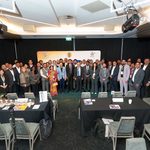
Four exceptional Australian schoolgirls have been selected to represent Australia in Mission ShakthiSAT, the world’s first global all-girls lunar CubeSat mission, which aims to inspire and empower the next generation of young women in science, technology, engineering and space exploration. The students will travel to India later this month to train alongside participants from 108 countries as part of one of the world’s most ambitious international STEM initiatives for girls.
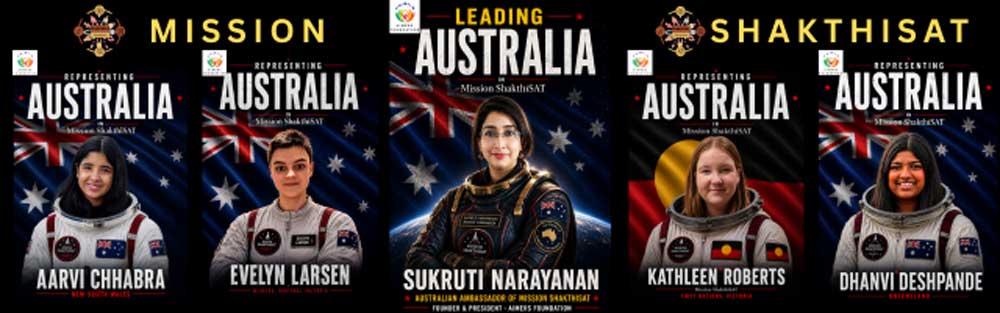
The four delegates were chosen from more than 250 Australian participants who took part in a rigorous selection process involving STEM learning, leadership development, interviews and technical assessments. Australia has been granted the rare opportunity to send four representatives, reflecting both the calibre of its participants and the diversity of young women pursuing STEM education across the country.
Representing Australia at Mission ShakthiSAT are:
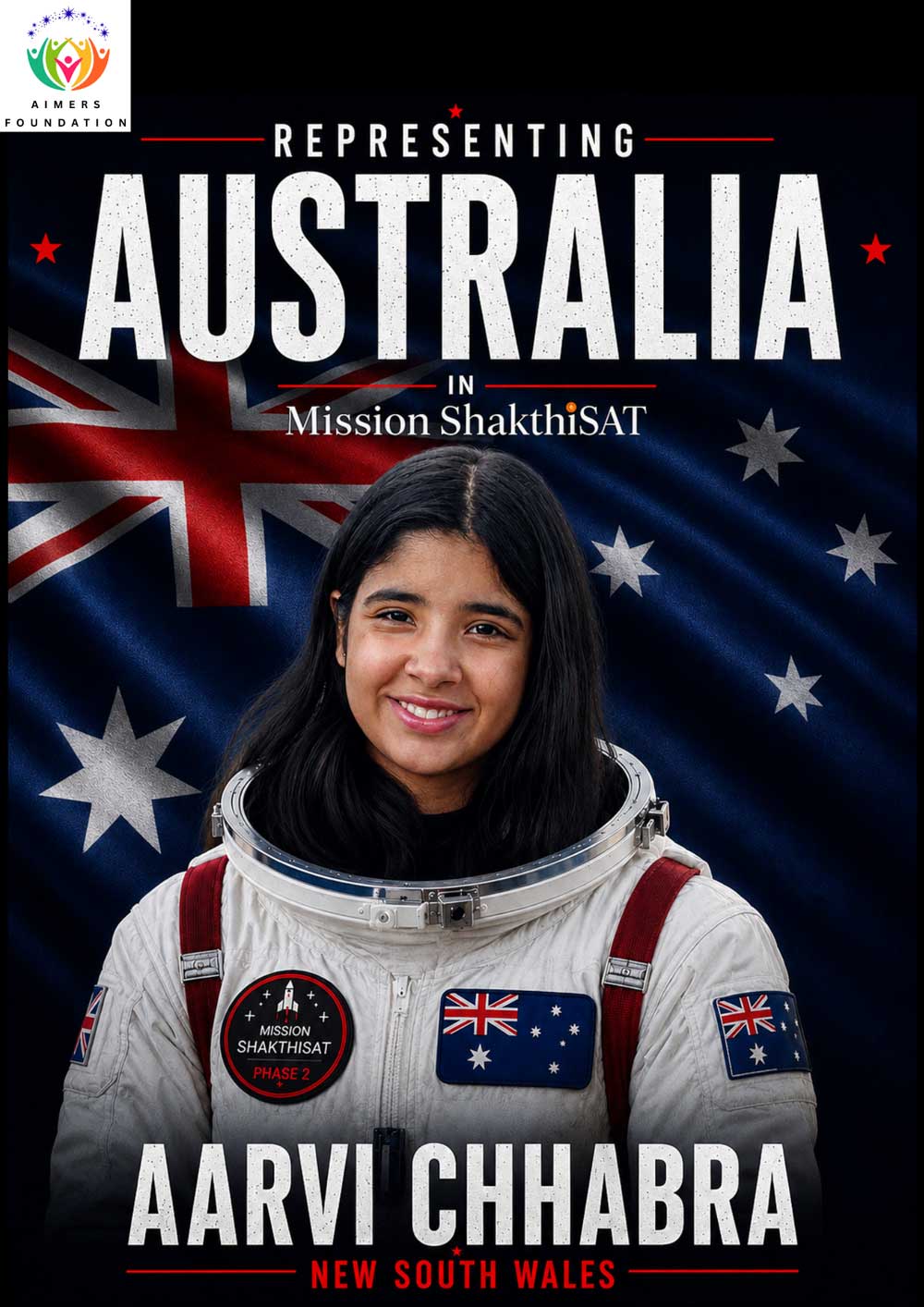
- Aarvi Chhabra, 14, Year 9 student at Castle Hill High School, Sydney, New South Wales.
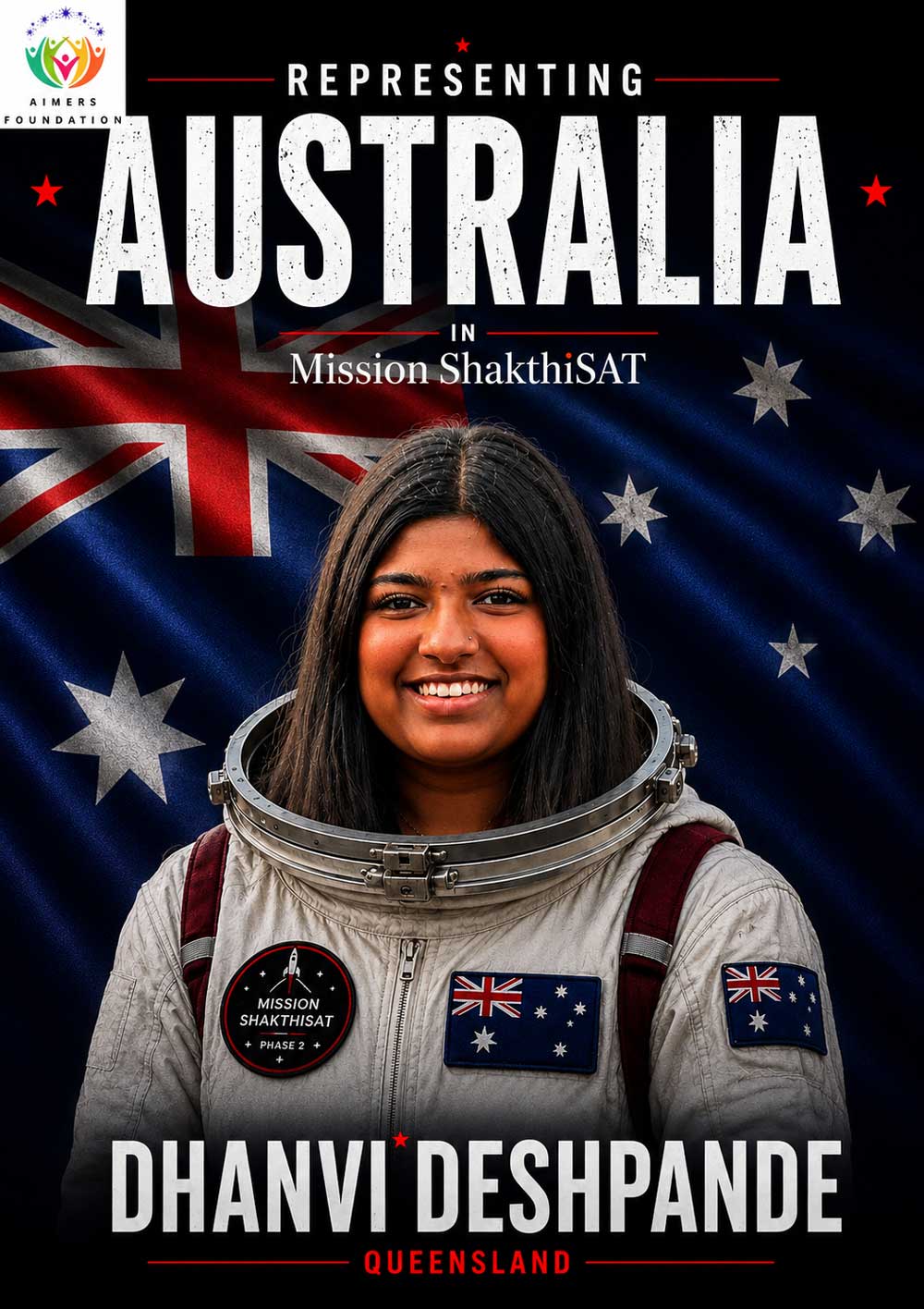
- Dhanvi Deshpande, 14, Year 9 student at Corinda State High School, Brisbane, Queensland.
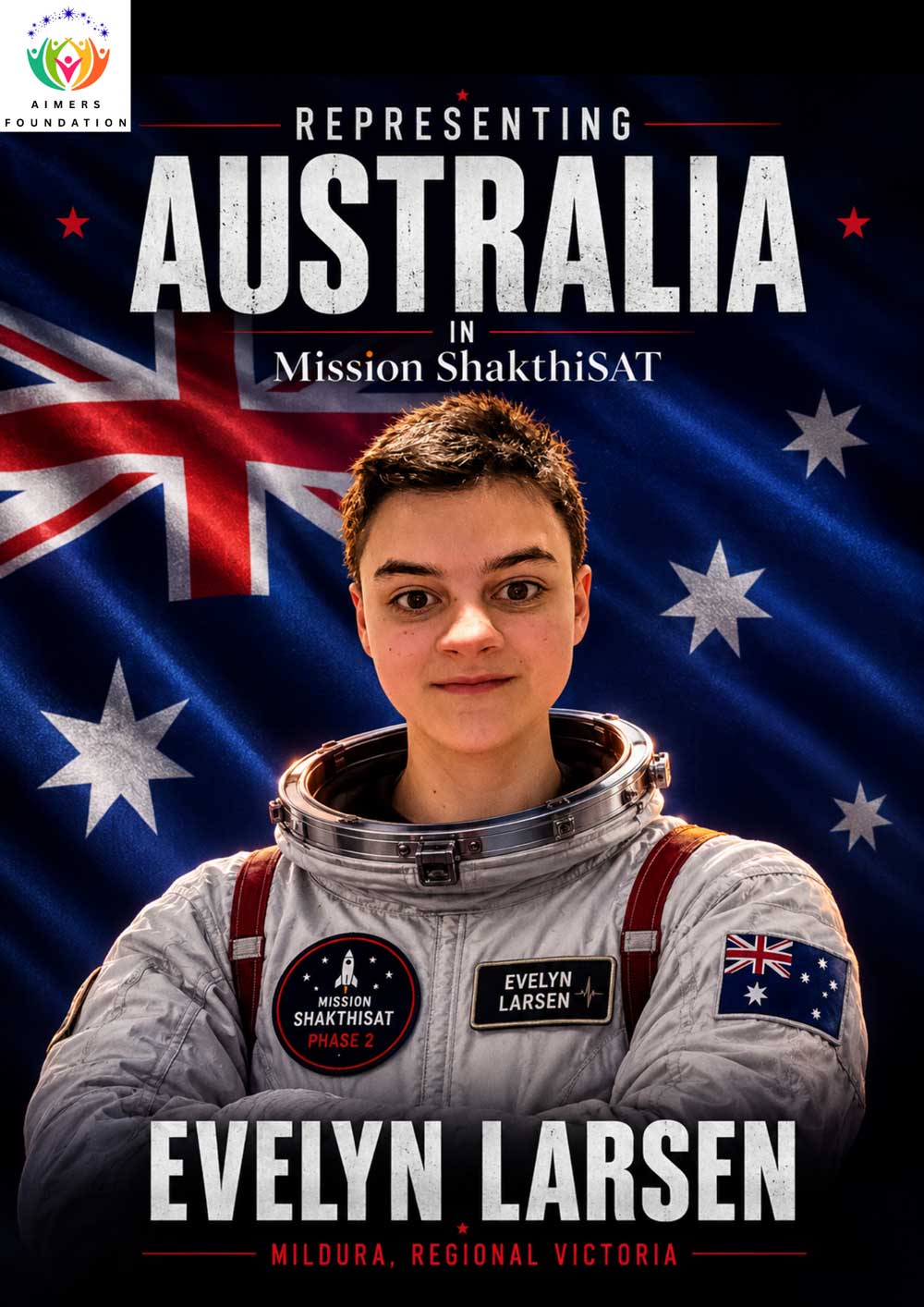
- Evelyn Larsen, 15, Year 10 student at St Joseph’s College Mildura, Regional Victoria.
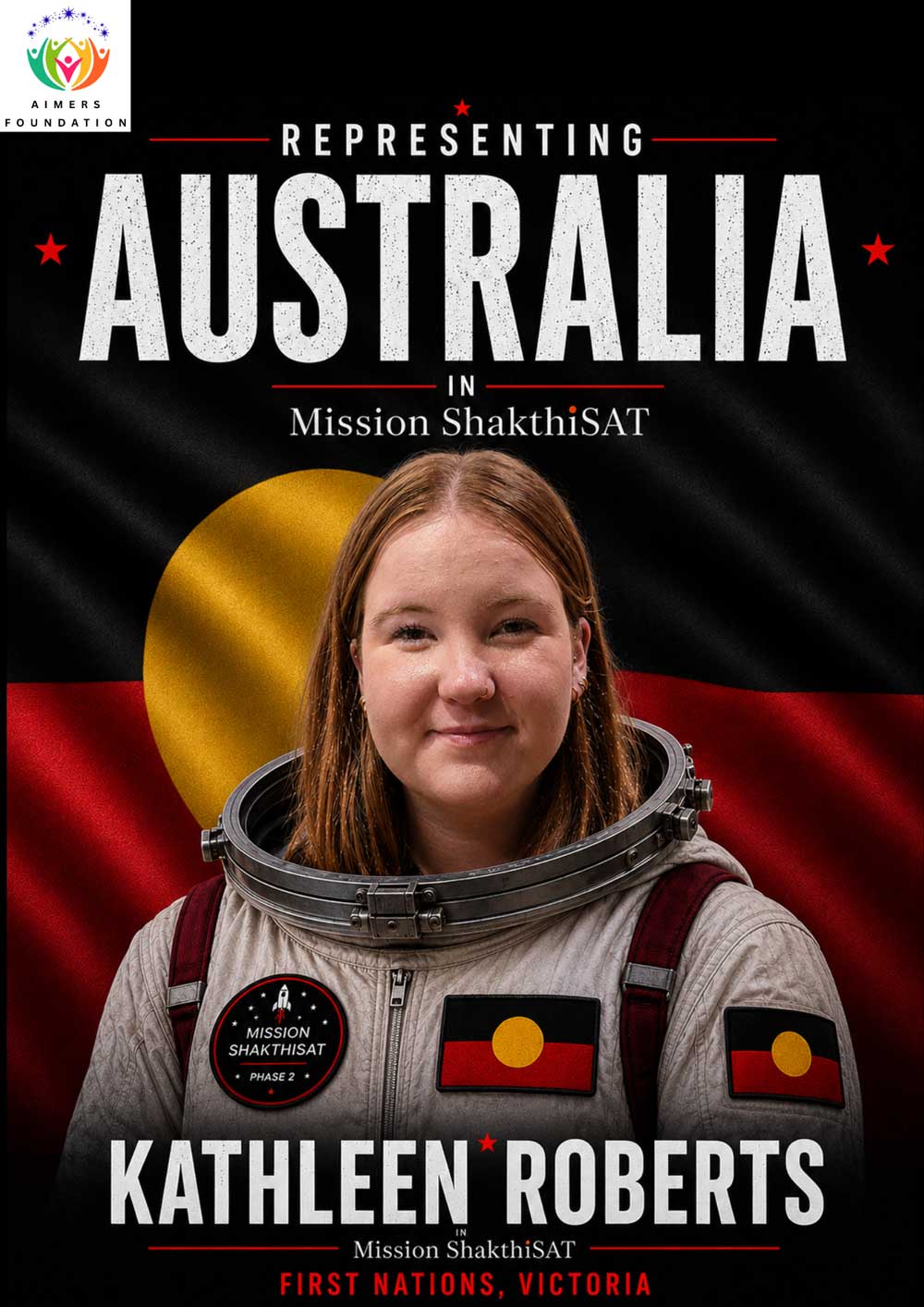
- Kathleen Roberts, 17, Year 12 student at Wyndham Central College, Victoria, who will also represent Australia’s First Nations communities.
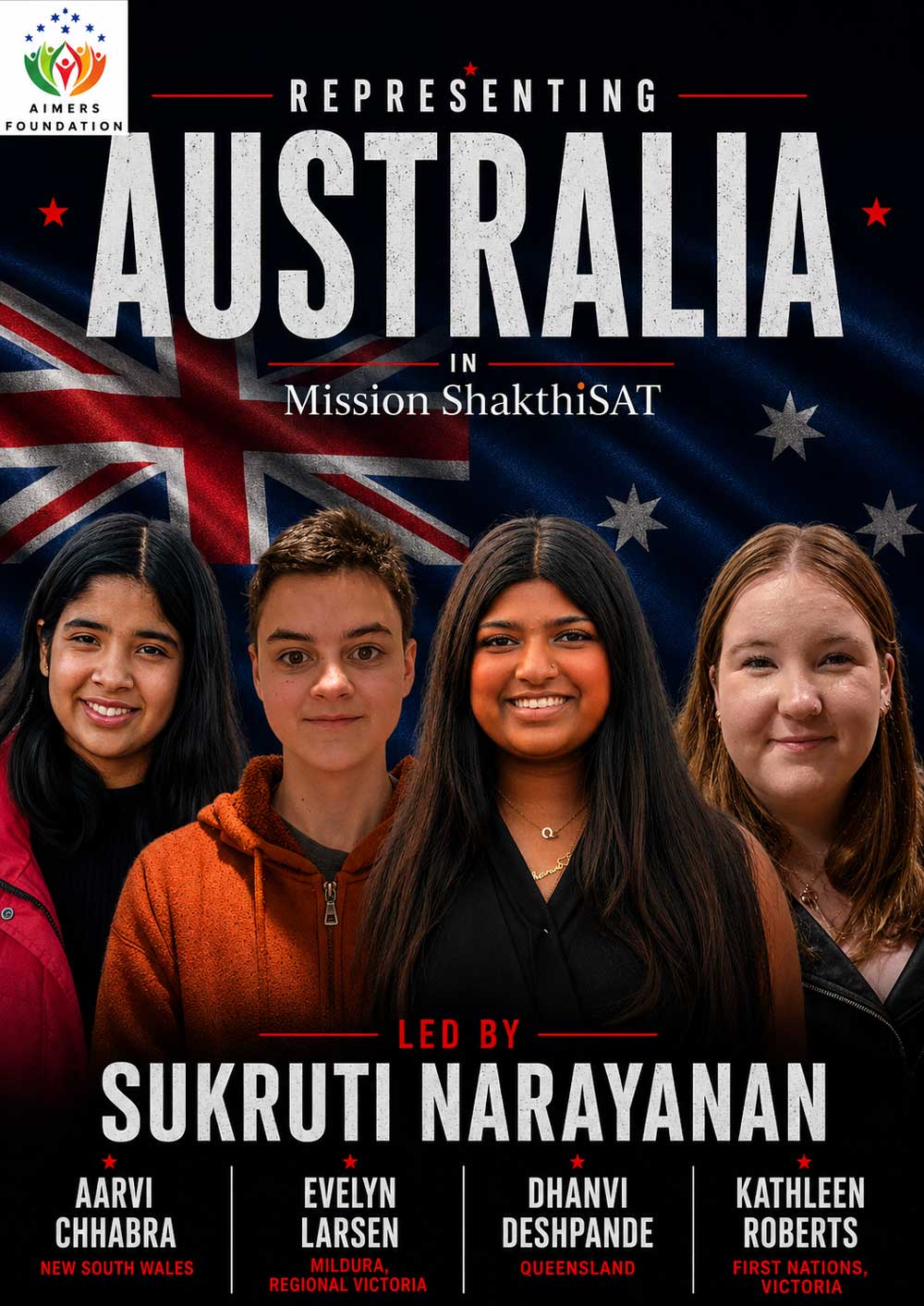
The Australian delegation will travel to Gautam Buddha University in Noida, India, from 22 August to 1 September 2026, where they will undertake intensive satellite engineering and leadership training alongside students and mentors from around the world. The delegation will be accompanied by Victoria State Director Sohni Singh and led by Sukruti Narayanan, Founder and President of AIMERS Foundation, who also serves as the Australian Ambassador and Global Head of Partnerships for Mission ShakthiSAT.
Mission ShakthiSAT was founded by Dr Srimathy Kesan, Founder and CEO of Space Kidz India, and is recognised as the world’s first international all-girls satellite initiative. The program brings together more than 12,000 girls from 108 countries with a shared goal of designing and developing a student-built CubeSat that will contribute to future lunar exploration missions.
Participants in the program receive more than 120 hours of specialised training across multiple disciplines including satellite engineering, space science, electronics, mission operations, systems engineering, leadership and international collaboration. The initiative has been designed not only to provide technical knowledge but also to develop future global leaders in STEM and aerospace industries.
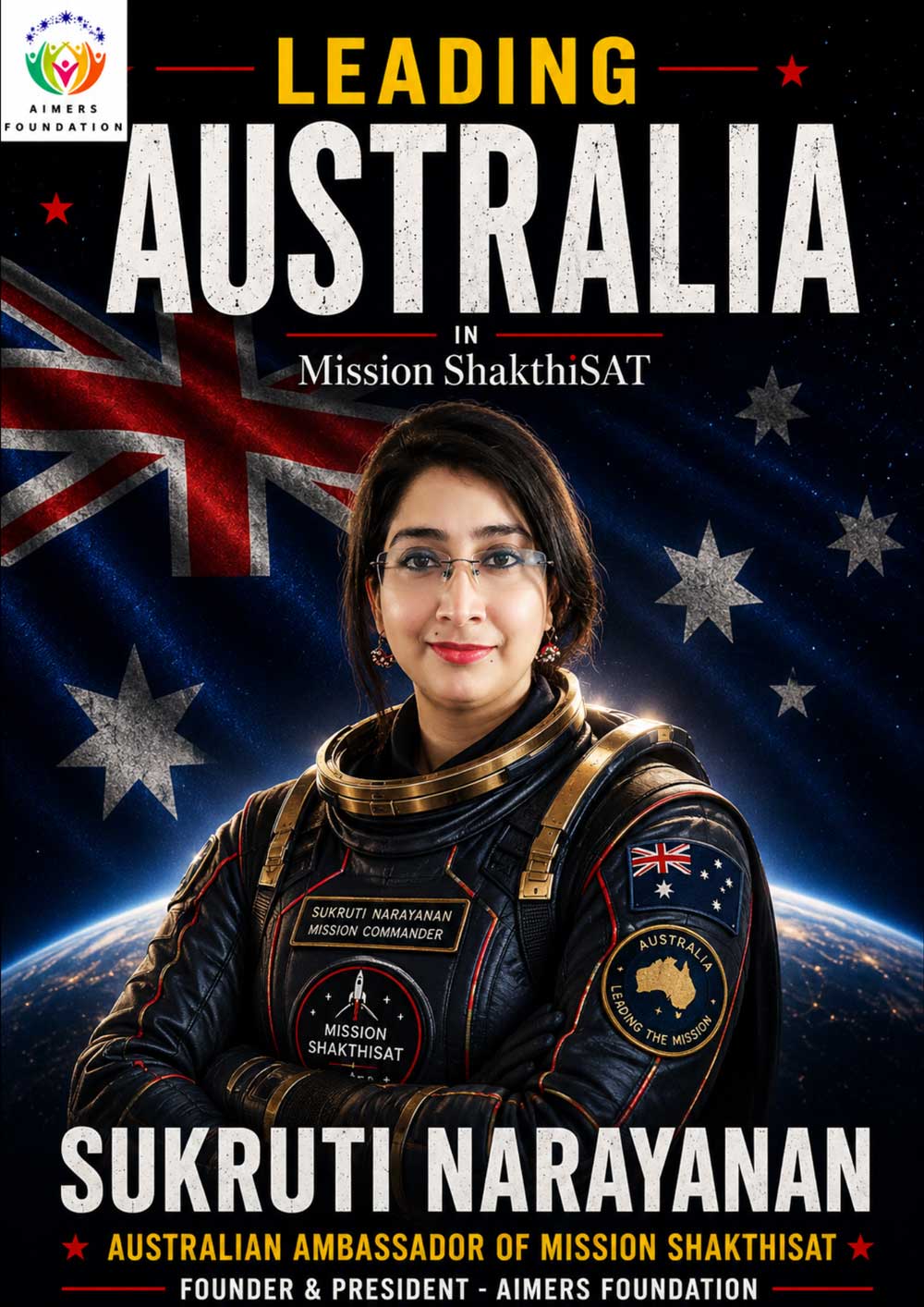
Selection to represent one’s country is highly competitive, with students assessed on their technical abilities, leadership qualities, commitment to STEM education and contributions to their communities. Australia’s selection process was overseen by AIMERS Foundation, which has led the country’s participation in the mission.

Over the past several months, Sukruti Narayanan has personally mentored Australian finalists through specialised STEM programs focusing on satellite engineering, teamwork, leadership development and global collaboration. Following months of mentoring and assessments, eight finalists were shortlisted before four students were ultimately selected for the international program.
The Australian finalists included Aarvi Chhabra, Dhanvi Deshpande, Evelyn Larsen, Kathleen Roberts, Gaavya Venkatesh from Tarneit Senior College, Ria Modi from Xavier College Llandilo and Tiata Corowa from the Young Indigenous Women STEM Academy.
Sukruti Narayanan said mentoring the students had been one of the most rewarding experiences of her career and highlighted the importance of creating opportunities for young girls in science and technology.
“More than 250 girls across Australia embraced this incredible opportunity, and every one of our finalists demonstrated remarkable determination, curiosity and resilience,” she said.
“This mission is about much more than building a satellite. It is about building confidence, creating future leaders and proving to every young girl that there is a place for her in science, engineering and space.”
The AIMERS Foundation also acknowledged the extraordinary vision of Dr Srimathy Kesan, whose pioneering work through Space Kidz India has created one of the world’s most significant global STEM initiatives for girls. Her efforts continue to inspire thousands of young women by opening genuine pathways into aerospace engineering and space exploration.
Members of the Mission ShakthiSAT Australia judging panel praised the outstanding calibre of this year’s finalists and the transformative impact the initiative is expected to have on future generations of women in STEM.
Mission ShakthiSAT Australia jury member Subhash Challa said the selected students represent a generation that will redefine what is possible for humanity through science and innovation.
Vinita Chanan, another jury member, described meeting the Australian finalists as a privilege and praised their passion for science, community service and their commitment to becoming STEM role models for young women across Australia.
During their training in India, the Australian delegates will gain hands-on experience in CubeSat design, payload development, satellite systems, space electronics, mission planning, systems integration and international teamwork. The program has been specifically designed to prepare participants for their contribution to the world’s first all-girl-led global lunar CubeSat mission.
The students’ families have also expressed immense pride in their achievements. Parents described the opportunity as life-changing and praised the program for helping their daughters develop confidence, leadership skills and a deeper passion for STEM education.
Dhanvi Deshpande’s mother, Dr Charita Deshpande, said the experience had given her daughter a newfound sense of purpose and confidence. Evelyn Larsen’s father, Jeffrey Larsen, described her selection as recognition of her dedication, curiosity and ambition. Kathleen Roberts’ father, Shane Roberts, said the opportunity would inspire many young girls to pursue careers in science and technology, while Aarvi Chhabra’s mother, Monika Charaya, praised the mentorship and support provided throughout the program.
Mission ShakthiSAT is more than a space education initiative-it represents a global movement to increase female participation in STEM industries and inspire young women to dream beyond traditional career pathways. By bringing together thousands of students from around the world, the mission seeks to foster international collaboration while empowering the next generation of scientists, engineers and innovators.
The AIMERS Foundation, an Australian not-for-profit organisation dedicated to advancing Artificial Intelligence, Media, Emerging Technologies, Robotics, STEM and Space Technology, remains committed to positioning Australia as a global leader in technology and innovation by 2050. As one of the official fundraising partners of Mission ShakthiSAT, the Foundation continues to create opportunities that connect Australian students with world-class STEM experiences and international collaborations.
For the four young Australians preparing to travel to India, Mission ShakthiSAT is not only an opportunity to represent their country on the world stage-it is also the beginning of a journey that could shape the future of global space exploration and inspire countless young girls to reach for the stars.