Sometimes, the first sign that someone is struggling is not what they say. It is what they stop doing.
They withdraw from friends. Stop attending community events. Lose interest in things they once enjoyed. Seem unusually tired, anxious, irritable or overwhelmed.
For the people around them, recognising that change can be the first step towards helping.
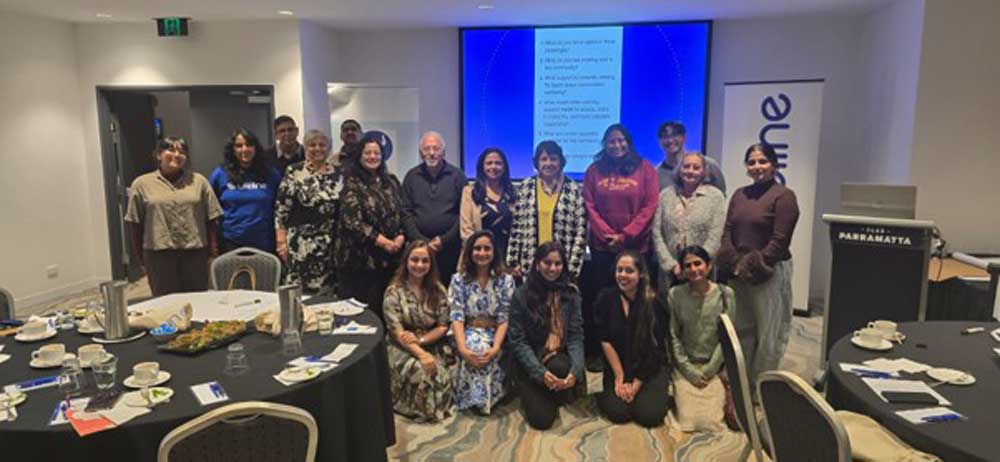
That was the focus of Creating Safe Conversations – Mental Health and Wellbeing in South Asian Communities, a Community Leaders Afternoon Tea hosted by Haathi in the Room and Lifeline Australia at Club Parramatta on Sunday 23 August.
The afternoon brought South Asian community leaders together around a deceptively simple question: How do we create communities where people feel safe enough to talk about their mental health?
The event opened with a Welcome to Country, followed by introductions to Haathi in the Room and Lifeline Australia by Vidhisha Khetwani, Co-Founder of Haathi in the Room, and Abbivathana Deva from Lifeline Australia.
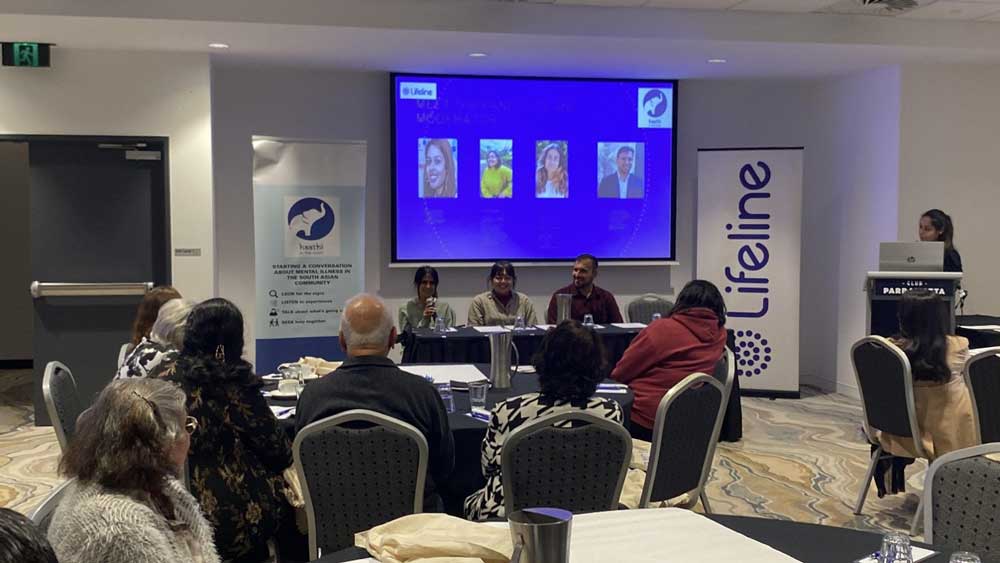
A panel featuring Varsha Yajman, Climate Justice and Mental Health Youth Advocate; Sayaka Sayeed, Counsellor and Sydney Hub Lead at Umeed Psychology; and Dr Suraj Samtani, Lecturer and Clinical Psychologist at UNSW, moderated by Nitasha Bhatia, Co-Founder of Haathi in the Room, explored the barriers that can make conversations about mental health difficult – from stigma and family expectations to questions of identity and the pressure to appear strong.

For some, asking for help can feel like admitting they are not coping. Others may fear judgement, worry about burdening their families or simply lack the language to describe what they are experiencing.
As General Practitioner specialising in mental health reflected Dershini Kumar reflected after the event, mental health struggles in South Asian communities can often remain “unspoken”, hidden behind stigma, shame and silence. She also highlighted the importance of culturally sensitive care, noting that understanding pressures such as family expectations, intergenerational tensions and the discomfort surrounding words like “therapy” can make a real difference to whether someone follows through with support.
The panel explored how community leaders can help change that environment – not by having all the answers, but by creating the conditions for people to feel heard.
Notice the change. Start the conversation.
One of the afternoon’s most practical messages was also one of its simplest: you do not need to diagnose someone to reach out to them.
A change in mood, behaviour, relationships, sleep, energy or everyday functioning can be a reason to check in, particularly when it persists.
The response does not need to be complicated.
Ask. Listen. Don’t judge.
Dr Suraj Samtani spoke about recognising changes in someone’s wellbeing and approaching them with care, while giving them the space to respond in their own time.
The distinction matters. Community leaders are not expected to become counsellors or diagnose mental-health conditions. Their role can be much more immediate: recognise a change, open a safe conversation and help someone connect with appropriate support.
As Lifeline emphasises, supporting someone is not about having all the answers or fixing their problems. Sometimes, it is simply about showing up, listening and helping a person find their next source of support.
From conversation to action
Following the panel and audience Q&A session, participants moved into facilitated round-table discussions.
In smaller groups, community leaders reflected on the realities within their own organisations and networks: how to recognise when someone may be struggling, how to approach them without judgement, and how to encourage help-seeking without making someone feel labelled.
The conversations then moved from awareness to practical support.
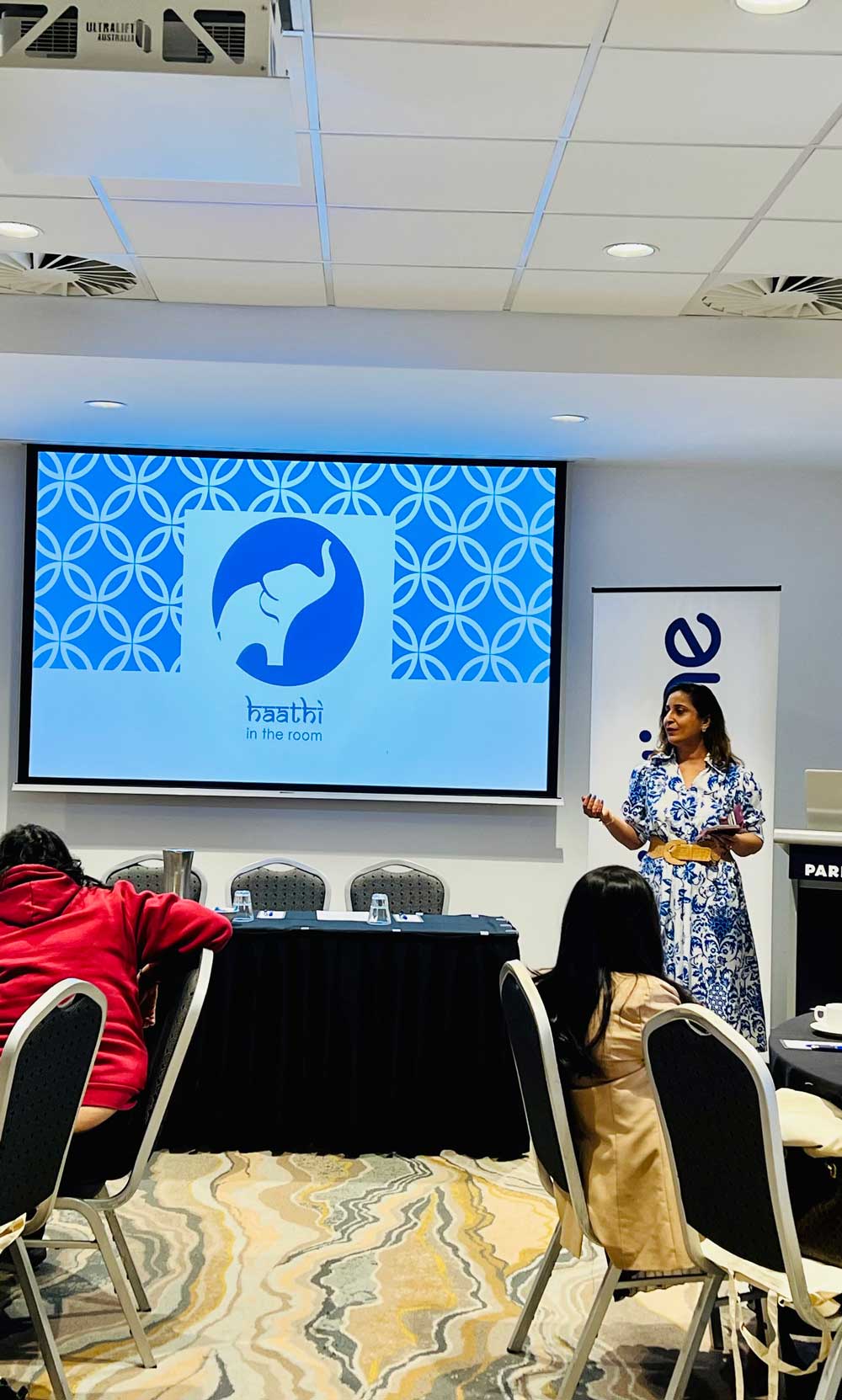
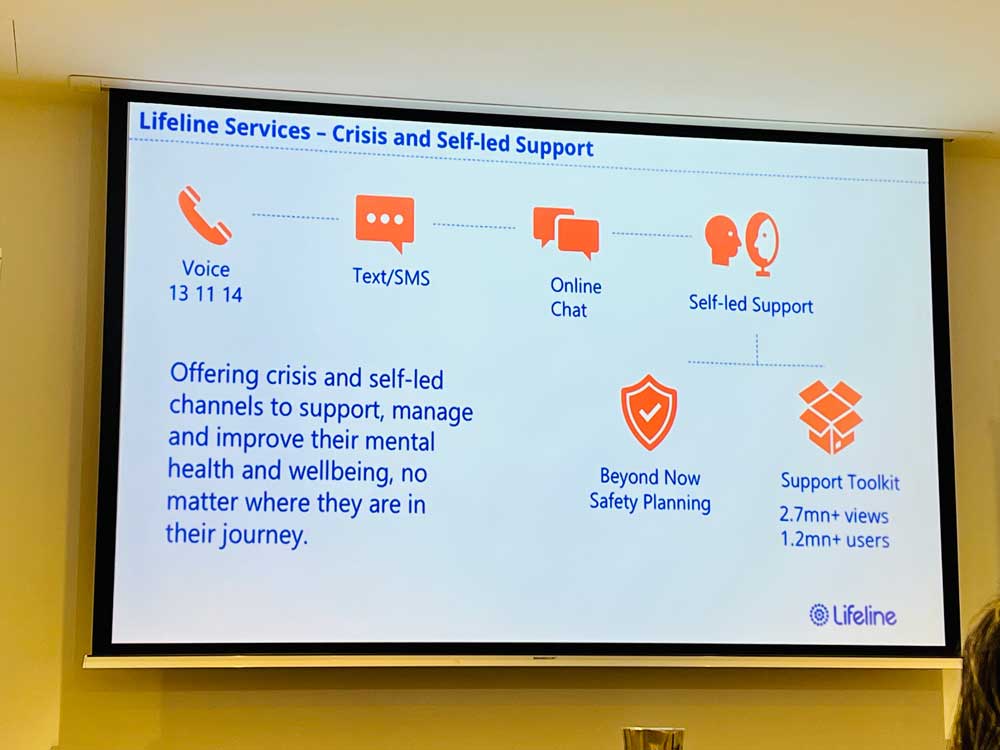
Abbivathana Deva from Lifeline Australia introduced Lifeline’s Support Toolkit, while Hindi-translated factsheets gave participants resources they could take back to their communities.
The organisers ensured participants could access support and speak privately if needed during or after the event.
Small actions, stronger connections
The discussion also turned to the role of everyday wellbeing.
Participants were encouraged to consider a simple “two social, two physical” approach each week: two opportunities to connect with other people and two opportunities to move.
That might mean having coffee with a friend, attending a community gathering, calling a family member or making plans with someone. It could mean walking, dancing, swimming, exercising or simply getting outside.
The point is not the formula. It is the habit.
Supportive relationships can help people feel less alone, while physical activity is an important part of maintaining mental wellbeing. Just as importantly, staying connected creates more opportunities to recognise when someone is no longer themselves.
But connection is not only about being present. It is also about creating an environment where people feel safe enough to be honest.
As panel speaker Sayaka Sayeed, Senior Counsellor at Umeed Pychology, reflected during the panel:
“If we want people to speak honestly about their mental health, we have to build communities where honesty doesn’t cost them their belonging.”
That idea goes to the heart of what creating safe conversations requires. It is not enough to tell people to speak up or ask for help. We also need to think about what happens when they do – and whether they will be met with judgement, discomfort or understanding.
Building psychologically safer communities means making room for vulnerability while still preserving the sense of connection and belonging that makes community so valuable.
Building communities that know what to do
The partnership between Haathi in the Room and Lifeline brought together two forms of expertise that are particularly important in conversations about mental health: community trust and professional support.
For Haathi in the Room, the event forms part of its broader work to challenge mental-health stigma in South Asian communities.
For Lifeline, it provided an opportunity to equip trusted community members with practical knowledge, resources and confidence to respond when someone may be struggling.
The afternoon concluded with group reflections, key takeaways, participant feedback and informal conversations over afternoon tea.
But its real impact will be measured beyond Club Parramatta.
It will be seen when community leaders feel confident to notice when someone is struggling, check in and encourage them to seek support.
They do not need to have all the answers or solve the problem themselves. They simply need to ask, listen without judgement and help connect people to the right support.
That is what creating safe conversations is about: making it easier for people to speak openly, ask for help and know that they are not alone.
Because sometimes, the most important thing we can do is simply ask: How are you going?
Continuing the conversation
Creating safe conversations does not end when the event does. The hope is that community leaders can take these conversations, tools and resources back into their own communities and organisations.
We are grateful to Lifeline Australia for helping make practical resources available to support those conversations.
The Lifeline Support Toolkit is available in English, Hindi, Punjabi and Nepali, providing accessible resources that community members and leaders can continue to use and share.
For further information and support, visit the Lifeline Australia website.
Community leaders can also access the Lifeline Support Toolkit in English, as well as resources available in Hindi, Punjabi and Nepali.
These resources are intended to help keep the conversation going – beyond the afternoon tea, and within the communities and organisations where people live, work and connect.
Haathi in the Room Inc was founded in 2017 to reduce the stigma around mental health and wellbeing within the South Asian Community. Haathi in the Room Inc executive committee members are Sue Advani, Nitasha Bhatia, Vidhisha Khetwani, Megha Agarwal, Honey Rupani, Sangeeta Thakwani, Monica Das and Annika. For more information, please visit our website www.haathiintheroom.com.au and FB page.
– Nitasha Bhatia