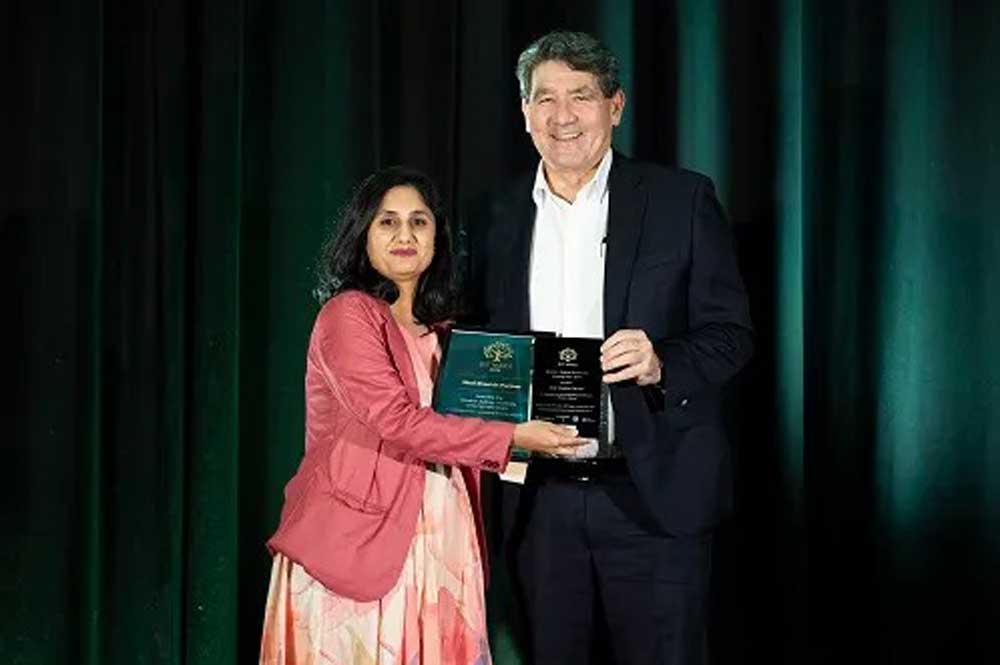
Indian-origin public health researcher and educator Jinal Shashin Parmar has been recognised with the 2026 Western Sydney University Unsung Hero Award, acknowledging her sustained contribution to community health, health equity and student wellbeing across Western Sydney.
Parmar is undertaking a Doctor of Philosophy in Public Health within the Health Equity across the Lifecourse (HEAL) Research Lab at Western Sydney University’s School of Medicine. Alongside her doctoral research, she works as a Sessional Academic in the School of Health Sciences, supporting undergraduate and postgraduate teaching in health science and public health.
The award forms part of the annual ZEST Awards, an initiative led by the Western Sydney Community Forum that recognises contributions made by the community sector across Greater Western Sydney. Western Sydney University also uses its Unsung Hero Award to recognise emerging leaders whose work is making a contribution to the region.
For Parmar, the recognition is closely connected to work that often happens away from the spotlight. Her research and community activities focus on the challenges experienced by culturally and linguistically diverse communities, particularly where language, cultural differences and health literacy can affect people’s ability to understand healthcare information and manage their health.
Her PhD research examines issues including health literacy, medication adherence and chronic disease management. The focus reflects a broader public health concern: access to healthcare does not always guarantee that people can confidently understand medical information, follow treatment plans or navigate health services.
Parmar’s research background includes work examining the relationship between health literacy and medication adherence among people from ethnic minority backgrounds living with Type 2 diabetes. A Western Sydney University study published in BMC Public Health found that evidence on the relationship remained limited and highlighted the need for research that better considers cultural and linguistic factors in healthcare.
Her community engagement extends beyond academic research. Parmar has worked with Multicultural Health Services across Western Sydney, Nepean Blue Mountains and South Western Sydney Local Health Districts, focusing on health equity and engagement with culturally diverse communities. Her work has also included participation in community programs aimed at improving health outcomes for children and families.

One such initiative is Bright Smiles Bright Futures, a community-based oral health promotion program conducted in collaboration with Colgate-Palmolive and preschools across Greater Western Sydney. The work provides opportunities to engage with diverse communities around children’s oral health and early intervention.
Parmar has also contributed to peer-support initiatives for university students, recognising that a student’s wellbeing, sense of belonging and academic experience can be closely connected. Through this work, she has helped create opportunities for students to develop connections and feel more supported within the university environment.
Her connection with Western Sydney University stretches back more than a decade. Parmar completed a Master of Public Health at the university between 2015 and 2017 before returning in 2021 to begin her PhD. She has said the university’s emphasis on community engagement, diversity, equity and real-world impact was an important reason for returning to Western Sydney for her doctoral studies.
Her research has also been developed alongside academic mentors and collaborators, including Associate Professor Amit Arora, who leads the HEAL Research Lab. Parmar has acknowledged the role of supervisors, mentors, colleagues and health-service collaborators in supporting her research and community work.
The significance of her research extends beyond academic publications. For culturally and linguistically diverse communities, health information can become difficult to understand when language barriers, unfamiliar healthcare systems and differences in cultural expectations intersect. Parmar’s work seeks to address these challenges by placing greater emphasis on health equity and community-informed approaches.
The recognition also highlights the importance of work that may not always generate immediate visibility. Community engagement can involve building relationships over time, listening to people’s experiences and developing trust before meaningful change can occur. Parmar has described these quieter contributions as an important part of the work recognised through the Unsung Hero Award.
Western Sydney University Chancellor Professor Jennifer Westacott AC supports the Unsung Hero Award each year by providing the recipient with a monetary gift to assist with their studies and ongoing community contribution. Westacott will also mentor Parmar during the year as she continues developing her leadership and community work. The award was presented by Western Sydney University’s Deputy Vice-Chancellor, Western Sydney and External Engagement, Professor Geoff Lee.
Parmar, who lives in the Parramatta local government area, has said she wants to continue supporting students and culturally diverse communities across Western Sydney. She has encouraged others to contribute through their own skills and interests, rather than focusing simply on activities that appear impressive, arguing that meaningful involvement is more sustainable when it is connected to genuine interests and capabilities.
Her recognition comes at a time when Western Sydney’s culturally diverse population continues to make health equity an important community issue. Parmar’s combination of research, teaching, student support and community engagement demonstrates how academic work can be connected directly to local needs.
For the Indian-origin researcher, the Unsung Hero Award is therefore not simply an individual academic achievement. It recognises an approach to public health that brings research, education and community engagement together, with a particular focus on ensuring culturally diverse communities are better equipped to understand and navigate healthcare.
As Parmar continues her PhD and community-focused work, her efforts are contributing to a wider conversation about how health services, researchers and communities can work together to reduce barriers to care and create more inclusive health outcomes across Western Sydney.