Australian Prime Minister Anthony Albanese has launched the Pacific Australia Skills program and officially opened the new Vuvale Skills Hub in Suva, Fiji, reinforcing Australia’s long-term commitment to education, workforce development and economic growth across the Pacific. The initiative forms a key pillar of the newly signed Vuvale Union between Australia and Fiji, with both nations aiming to equip thousands of Pacific Islanders with industry-ready skills while strengthening regional prosperity.
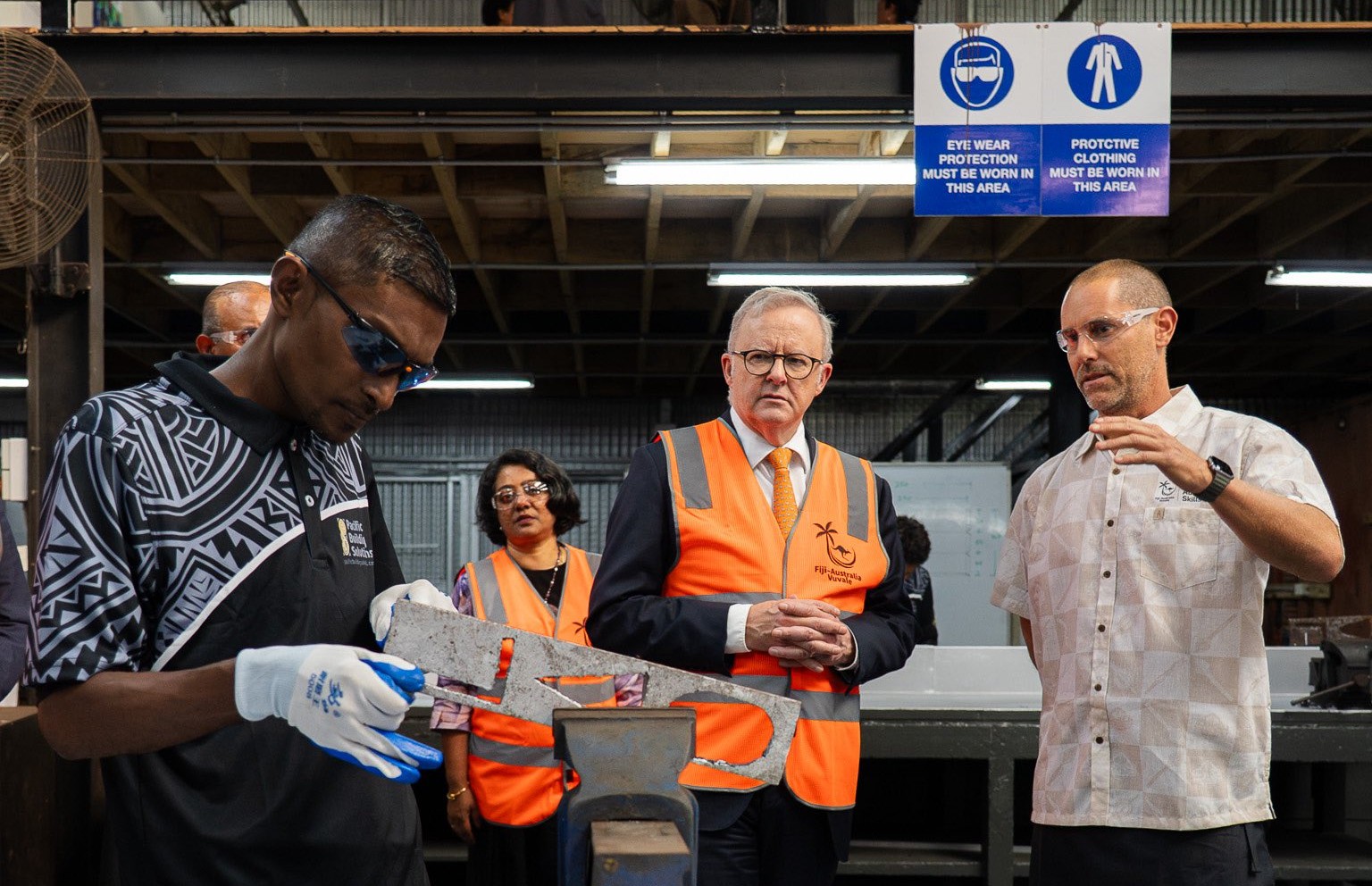
Speaking at the launch, Prime Minister Albanese described education as one of the most powerful investments any nation can make, saying it has the ability to transform lives, strengthen communities and create lasting economic opportunities. He said Australia is committed to helping Pacific nations build skilled workforces capable of meeting the demands of rapidly evolving industries while supporting sustainable development across the region.
The Pacific Australia Skills program will support the development of Technical and Vocational Education and Training (TVET) Centres of Excellence in Suva, providing modern facilities for vocational education, trade training and professional skills development. The newly opened Vuvale Skills Hub has been refurbished to deliver practical, industry-focused training that aligns with Fiji’s future workforce needs and broader economic priorities.
Australia has committed approximately FJ$500 million (around A$360 million) towards skills development initiatives in Fiji through the Pacific Australia Skills program. The investment is expected to expand access to vocational education, improve workforce capability and create new employment opportunities for young people across the country.
The initiative builds on the success of the former Australia Pacific Training Coalition (APTC) and places strong emphasis on inclusion, ensuring greater participation by women, young people, people living with disabilities and under-represented communities. By improving access to quality training, Australia hopes to help Pacific nations develop highly skilled workforces capable of driving long-term economic growth.
The launch comes alongside a broader strengthening of Australia–Fiji relations following the signing of the historic Vuvale Union and the Ocean of Peace Alliance. Together, the agreements deepen cooperation across education, economic development, security, climate resilience and people-to-people connections, reflecting the growing strategic partnership between the two countries.
Prime Minister Albanese said investment in education and skills remains central to Australia’s engagement with the Pacific, noting that building local capability creates stronger economies while enabling communities to benefit from new employment and business opportunities. He emphasised that Australia’s partnership with Fiji extends beyond infrastructure projects to investing directly in people and future generations.

Fijian Prime Minister Sitiveni Rabuka welcomed the initiative, describing skills development as essential to Fiji’s long-term economic ambitions. The new training facilities are expected to support a wide range of industries, including construction, engineering, hospitality, renewable energy and emerging technologies, helping prepare workers for both domestic employment and international opportunities.
The Pacific Australia Skills program also reflects Australia’s broader strategy of strengthening partnerships across the Pacific through practical cooperation in education, workforce development and economic resilience. Alongside investments in infrastructure and regional security, skills development has become an increasingly important component of Australia’s engagement with Pacific Island nations.
As Australia and Fiji continue expanding their partnership under the Vuvale Union, the launch of the Pacific Australia Skills initiative represents another milestone in a relationship built on shared growth, opportunity and regional collaboration. By investing in education, vocational training and workforce capability, both countries are seeking to create lasting benefits that extend well beyond today’s students, helping shape a stronger, more prosperous Pacific for future generations.