In a display of global diplomacy, Indian Prime Minister Narendra Modi, Chinese President Xi Jinping, and Russian President Vladimir Putin came together for high-level discussions at the Shanghai Cooperation Organisation (SCO) Summit. The gathering underscored the bloc’s role in shaping regional and international cooperation, while leaders also united in strongly condemning the recent terrorist attack in Pahalgam, Jammu & Kashmir, which claimed the lives of innocent civilians.
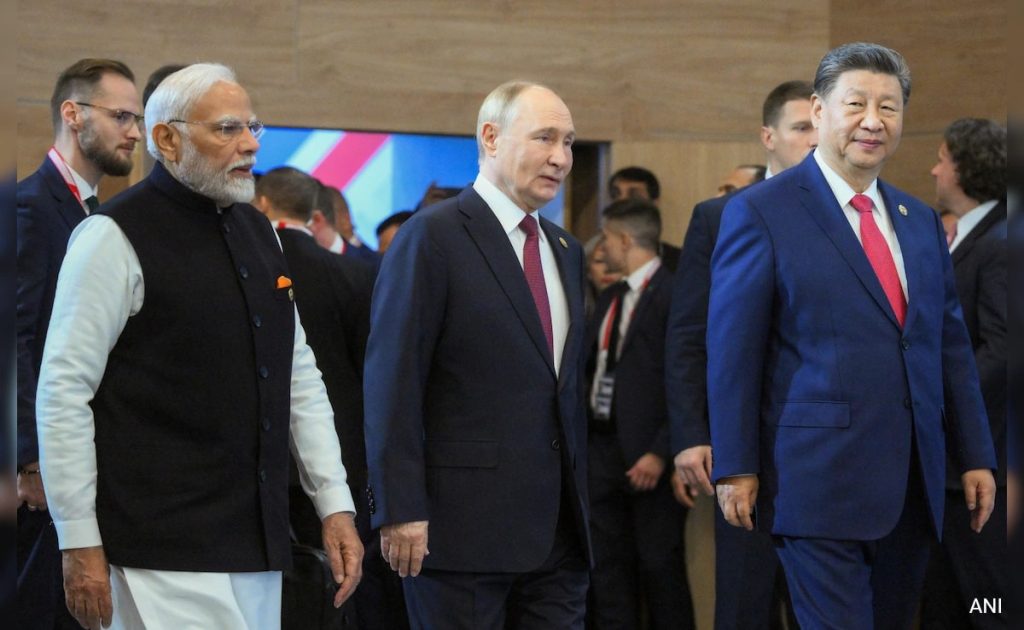
The summit highlighted critical conversations on security, economic cooperation, and multipolarity in global governance. Modi reiterated India’s stance on counter-terrorism, calling for a zero-tolerance approach towards nations and entities supporting extremist networks. Xi stressed the importance of economic collaboration and connectivity within the region, while Putin emphasized strengthening security partnerships to safeguard sovereignty and stability.
At the SCO Summit in Tianjin. pic.twitter.com/GbhyyxMDmL
— Narendra Modi (@narendramodi) September 1, 2025
The condemnation of the Pahalgam attack was a rare yet powerful moment of collective agreement among SCO members, who pledged to increase intelligence sharing and enhance counter-terrorism cooperation. The statement reflects a growing consensus on the urgency of addressing threats that destabilize the region.
Interactions in Tianjin continue! Exchanging perspectives with President Putin and President Xi during the SCO Summit. pic.twitter.com/K1eKVoHCvv
— Narendra Modi (@narendramodi) September 1, 2025
The trilateral presence of Modi, Xi, and Putin also drew global attention, as the discussions come amid shifting geopolitical equations—from the Ukraine war to Indo-Pacific tensions and evolving China-India relations. Analysts suggest that while strategic differences remain, the summit served as a platform for dialogue, signaling cautious but necessary cooperation among the three powers.
Had a fruitful meeting with President Xi Jinping in Tianjin on the sidelines of the SCO Summit. We reviewed the positive momentum in India-China relations since our last meeting in Kazan. We agreed on the importance of maintaining peace and tranquility in border areas and… pic.twitter.com/HBYS5lhe9d
— Narendra Modi (@narendramodi) August 31, 2025
As the SCO expands its influence beyond Central Asia, the summit is being viewed as a turning point in strengthening regional multilateralism. For India, it reaffirmed its leadership role in shaping global security narratives while balancing complex ties with both China and Russia.