Dr Neha Umaretiya, an Indian-origin STEM educator whose journey began on a small farm in India, has been recognised with the 2026 People’s Choice Award at the Western Australian Premier’s Science Awards, highlighting her contribution to modernising horticulture education and preparing students for the technology-driven future of agriculture.
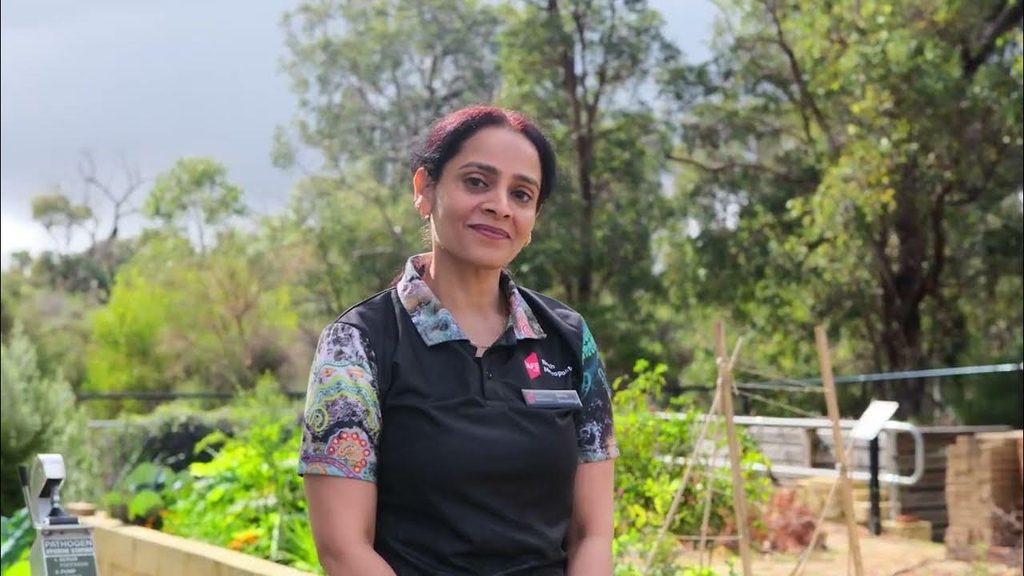
The award was announced on 22 September 2026 as part of the 25th anniversary celebrations of the Premier’s Science Awards. Dr Umaretiya, an Advanced Skills Lecturer at North Metropolitan TAFE, received the highest number of public votes in this year’s People’s Choice category. The Western Australian Government said the award attracted 4,036 votes from the scientific community.
Dr Umaretiya’s recognition comes from work that brings advanced technology directly into vocational education. Her work combines horticulture with emerging digital technologies, giving students practical experience with systems that are increasingly being used to improve agricultural productivity, efficiency and sustainability.
According to the Western Australian Government, Dr Umaretiya holds a PhD in Horticulture and has 15 years of experience in the field. At North Metropolitan TAFE, she has developed an automated hydroponic greenhouse incorporating cloud-connected sensors and a live Digital Twin. The system allows students to gain hands-on experience with precision horticulture while learning how technology can be integrated into agricultural production.
A Digital Twin is a digital representation of a physical system that can be connected to real-time information from sensors. In an educational setting, the technology gives students an opportunity to understand how data can be collected, monitored and used to make decisions about growing conditions and other aspects of horticultural production.
Dr Umaretiya’s approach reflects the changing nature of agriculture, where traditional farming knowledge is increasingly being combined with automation, sensors, data analysis and connected technologies. Her work is aimed not only at teaching students how to operate modern systems but also at developing skills that can be applied to the future workforce.
Her work also extends beyond technology. The WA Government says she collaborates with industry, government and Aboriginal communities to develop inclusive and future-focused curriculum. Her teaching is aligned with areas including food security, green skills and biosecurity, connecting classroom learning with wider challenges facing Western Australia and the horticulture sector.

Accessibility and inclusion have also formed part of Dr Umaretiya’s contribution to education. She has been recognised as an Accessibility and Learning Support Champion, with her work focused on helping students from diverse backgrounds participate successfully in STEM education and develop skills relevant to changing horticulture industries.
The People’s Choice Award is one of the categories within the Premier’s Science Awards, which recognise scientific research, education and engagement across Western Australia. The 2026 program recognised winners across 11 award categories, covering areas ranging from scientific research and STEM education to government science projects and science engagement initiatives.
This year’s awards also marked a significant milestone, with the Premier’s Science Awards celebrating 25 years of recognising scientific achievement across Western Australia. The 2026 program featured a total prize pool of $140,000, including the major $50,000 Scientist of the Year award and prizes across other categories.
Dr Umaretiya was one of five finalists in the 2026 STEM Educator of the Year – Tertiary category before being recognised through the public-voted People’s Choice Award. Her fellow finalists were Associate Professor Alison Blyth, Professor Marco Ghisalberti, Dr Katrina O’Mara and Yvette Vos.
Her journey is particularly notable because it connects agricultural roots with advanced STEM education in Australia. Moving from an early connection with farming to a career involving horticultural research, vocational education and emerging agricultural technology, Dr Umaretiya’s work demonstrates how different forms of knowledge can come together in a modern education environment.
The recognition also places attention on the growing role of vocational education in developing Australia’s future STEM workforce. As industries adopt automation, connected devices, artificial intelligence and data-driven systems, training institutions are increasingly expected to provide students with practical exposure to technologies they may encounter in their careers.
For Western Australia’s horticulture sector, such skills have broader significance. Food production, biosecurity, sustainability and workforce development are interconnected challenges, and educators working at the intersection of agriculture and technology can play a role in preparing students to respond to those changes.
The 2026 Premier’s Science Awards therefore recognised more than an individual achievement. Through the People’s Choice Award, Dr Neha Umaretiya’s work received public recognition for its focus on making STEM education practical, inclusive and closely connected to the future needs of Western Australia’s horticulture industry.