
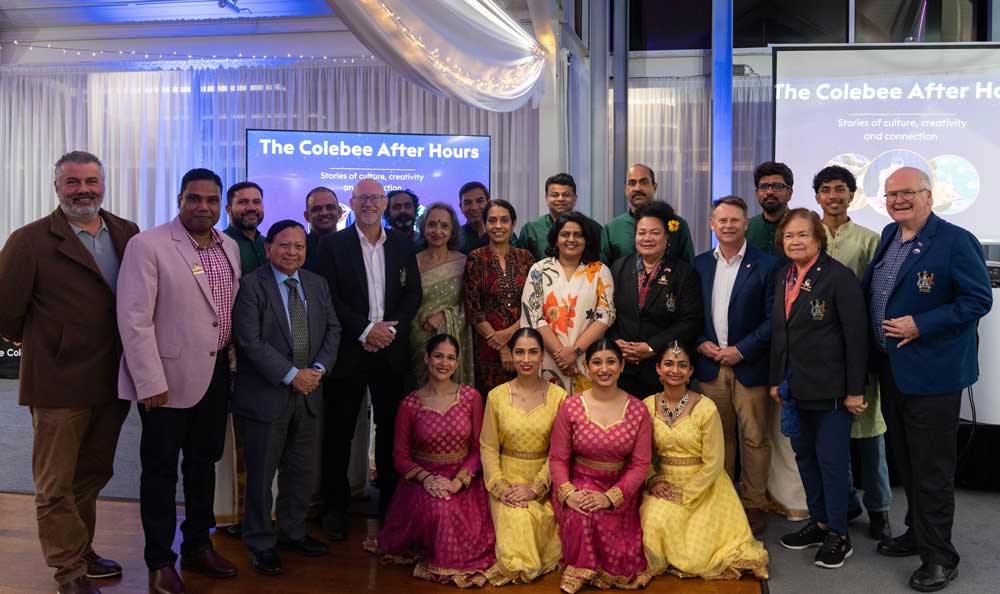
I recently had the privilege of attending The Colebee After Hours: Stories of Culture, Creativity and Connection, following an invitation from filmmaker Emie Roy.
Held at the picturesque Colebee Centre in the heart of Nurragingy Reserve, Doonside, the Celebration of India event in an intimate setting brought the Indian community together through short films, live performances and conversations about culture, heritage and storytelling.
The evening was emceed by Tania Buxton from Blacktown City Council, with speakers Elfa Moraitakis, CEO of SydWest Multicultural Services and Board Member of Multicultural Australia and SSI, and Gary Paramanathan.
As Tania reflected in her write-up of the event, the evening created an opportunity for people to connect, reflect on shared experiences and strengthen community ties in a welcoming and engaging setting. The location itself contributed to this feeling. Surrounded by the natural beauty of Nurragingy Reserve, the Colebee Centre provided an inspiring space for creativity, conversation and connection.
The evening featured three short documentary films written and directed by Emie Roy: Lines. Life. Art, Twirl and Chenda Finds Home in Sydney.
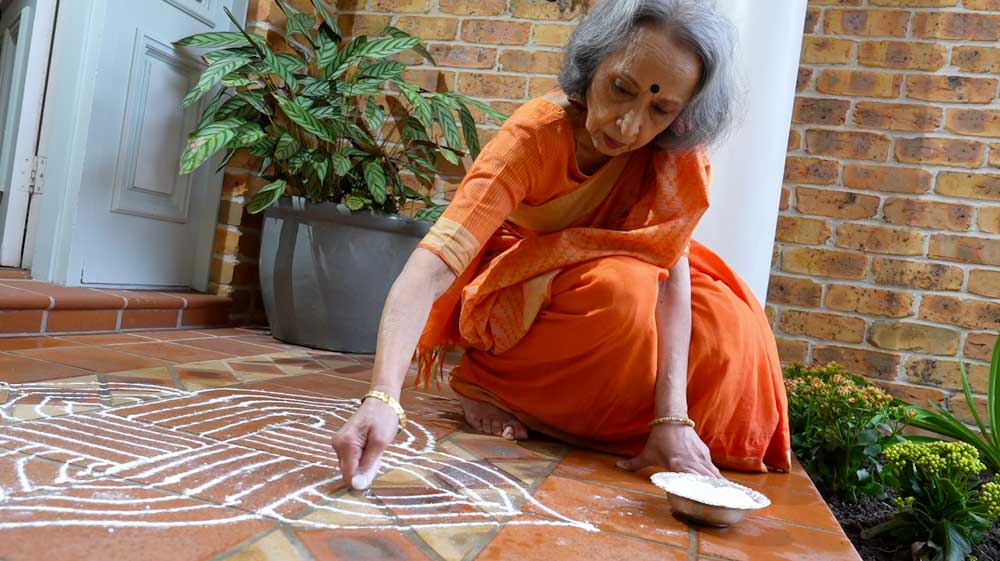
Lines. Life. Art
Of the three, Lines. Life. Art resonated most deeply with me. The film follows Shantha Viswanathan and Uma Sekhar, who practise the cultural art forms of kolam and rangoli respectively. As someone whose own work sits at the intersection of culture, identity and art practice, I was moved by the way the film presented these traditions not simply as decorative art forms, but as living practices carrying memory, meaning and legacy.
Twirl
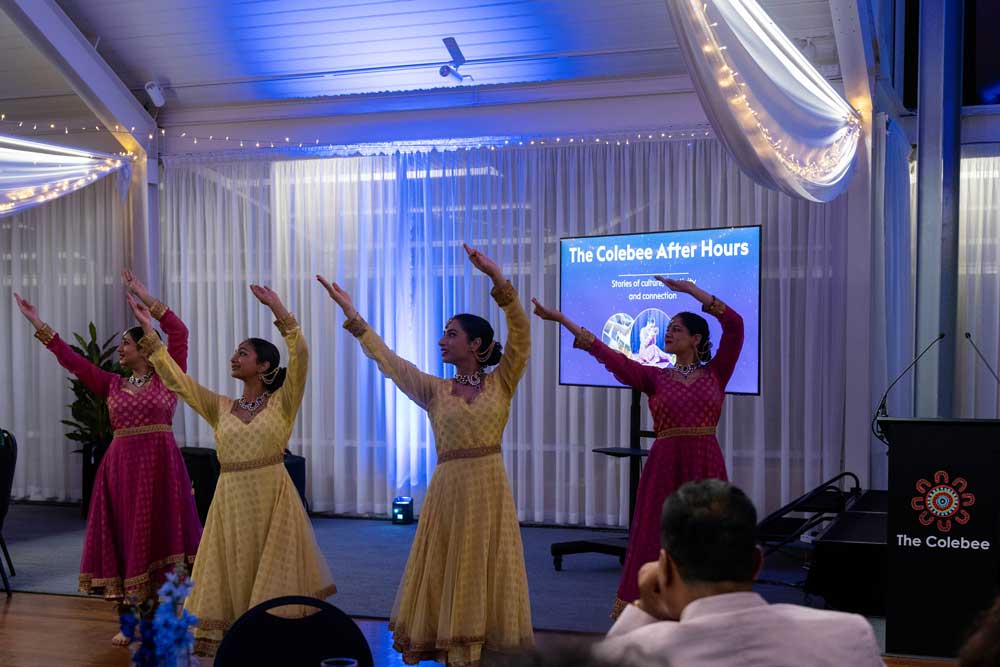
Twirl tells the story of second-generation Indian Australian Kathak artist Niharika Sanghi, who trained under her mother, Ruchi Sanghi, and now works within the Ruchi Sanghi Dance Company. The film gently explores what it means for an art form to be passed from mother to daughter, and how cultural inheritance can be preserved while continuing to evolve within an Australian context.

We also had the pleasure of watching Niharika and her troupe perform Kathak live. Experiencing the movement, rhythm and storytelling in the room added another dimension to the film. The energy of the performance could not simply be watched; it could be felt.
Chenda Finds Home in Sydney
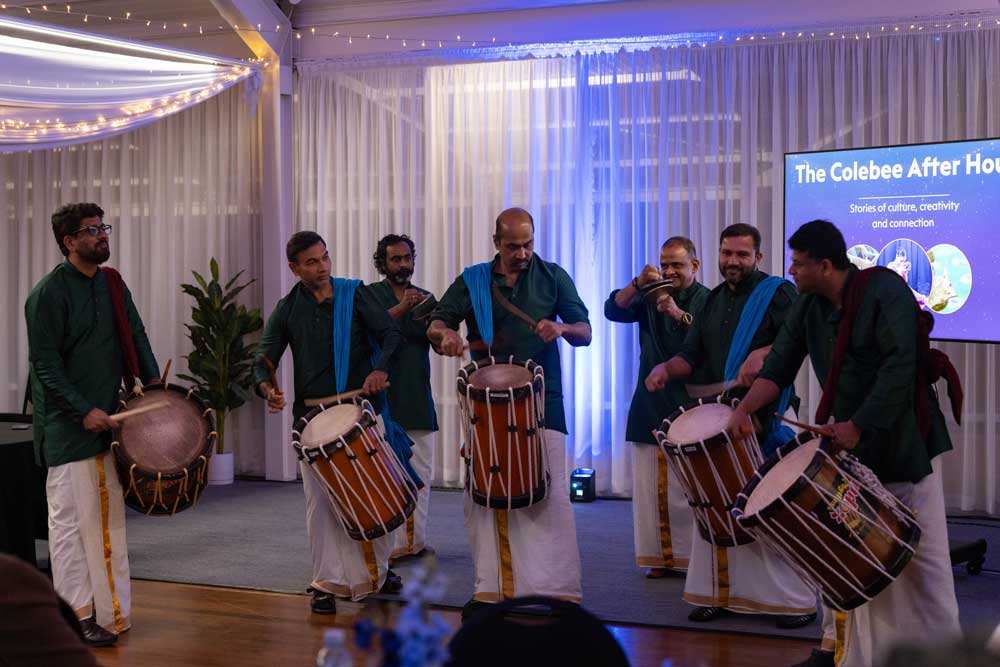
Chenda Finds Home in Sydney follows a group of men who meet each week to practise Chenda, a traditional percussion instrument from Kerala, and perform at community and temple events. It is a beautiful reflection on migration, friendship and the communities we create around shared cultural practices. Here, the drum becomes more than an instrument; it becomes a way of finding home.
The film also made me reflect on how stories about South Asian men are represented. Although history is filled with the stories and achievements of men, it can sometimes be difficult to find contemporary community narratives that explore their everyday experiences of migration, friendship, creativity and belonging. Their stories can become confined to familiar roles or stereotypes, leaving little room for vulnerability, connection and self-expression. Chenda Finds Home in Sydney offers a refreshingly nuanced portrayal of men finding friendship, purpose and belonging through a shared cultural practice.
We then had the opportunity to experience Chenda performed live. Its sound filled the room-not only as music, but as something deeply physical and collective. The graceful rhythms of the Kathak performance and the powerful beat of the Chenda created vibrations that stayed with me long after both performances had finished.
Stories told from within community
Across all three films, what stood out was the sensitivity with which the stories were told. The subjects were not reduced to cultural symbols or familiar migrant stereotypes. They were given the space to speak their own truths, in their own voices. Emie’s filmmaking did not try to speak for them; it allowed their experiences, relationships and creative practices to lead each story.
This is what made the evening particularly significant. Storytelling is not only a way of preserving culture. It is an expression of identity and a means through which communities can see themselves, understand one another and claim their place within the wider Australian story.
Tania described Emie’s award-winning storytelling as work that promotes cultural exchange and inclusion. This was evident throughout the evening. The films highlighted the diverse voices, talents and contributions of the Indian community while creating space for meaningful conversations, belonging and cultural pride.
The importance of institutional support
It was also incredibly heartening to be in a room where Blacktown City Council was keen to celebrate and promote these stories. Institutional support for community-led storytelling matters. It communicates that our cultural practices, memories and lived experiences are not peripheral; they are an important part of the cultural landscape of Western Sydney and Australia.
Projects such as these become possible when artists, communities and funding bodies recognise the value of working together. I acknowledge SydWest Multicultural Services for funding Lines. Life. Art; Randwick City Council and Welcome Merchant for funding Twirl; and the Australian Government through the Australia Council, with support from Create NSW and Blacktown City Council, for supporting Chenda Finds Home in Sydney. I also acknowledge Blacktown City Council for creating the space in which these films, performances and conversations could be shared.
Emie spoke during the evening about representation, breaking stereotypes and telling stories from the perspectives of the people who have lived them. These films demonstrate exactly why that matters. They remind us that cultural stories do not need to be made larger, louder or more dramatic to be worthy of attention. Sometimes their power lies in allowing people to speak, create, dance and make music as themselves.
It was a privilege to be in that room-to witness these stories, listen to the people at the heart of them and see community-led storytelling being valued and supported.
It was a meaningful evening of art, identity and belonging, and an important reminder of what becomes possible when communities are trusted to tell their own stories.
– Rupa Parthasarathy