A catastrophic flash flood has devastated communities along Nepal’s northern border with China, killing at least 162 people in Nepal and leaving hundreds more unaccounted for as rescue teams continue searching through areas cut off by destroyed roads, bridges and communications. The disaster struck on Wednesday, 26 August, after a sudden surge of water and debris swept through the Bhotekoshi River corridor in Nepal’s Rasuwa district and continued downstream.
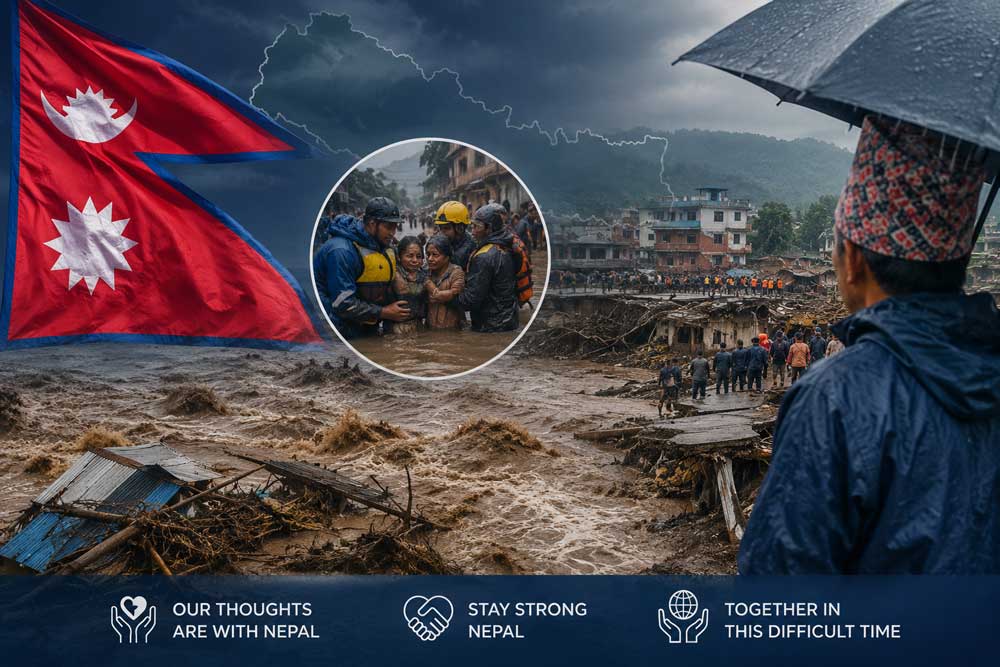
The scale of the disaster has continued to emerge as authorities reach locations that were initially inaccessible. Nepal Police reported that the death toll had reached 162 by Thursday, while separate reports from China said three people had died in Tibet and hundreds remained missing there. Because casualty and missing-person figures are being compiled separately by authorities on either side of the border, the figures should not simply be added together.
Latest Developments
At least 162 people have died in Nepal following the devastating flash floods, with hundreds still missing across Nepal and Tibet. Chinese authorities have separately reported 558 people unaccounted for in Tibet, including 260 foreign nationals, while 34 Australians are among those reported missing. Australian consular teams and Nepalese authorities continue search and rescue operations.
How the disaster unfolded
The flooding began in the Himalayan border region on Wednesday morning, with an enormous volume of water, mud, ice and rock suddenly entering the river system from the direction of Tibet. The initial surge hit the Lhende Khola area before moving into the Bhotekoshi River and then downstream through communities in Nepal. The speed and force of the water left people with very little time to respond.
The event was initially linked in some reports to seismic activity, but subsequent analysis pointed towards a glacial collapse or major ice-and-rock failure as the immediate trigger. Reuters reported that the lower section of a glacier collapsed and generated an avalanche of ice and rock, producing a powerful surge through the river system. The United States Geological Survey subsequently identified the event as a glacial collapse rather than the earthquake that was initially suspected.
There is still some uncertainty over the precise chain of events that produced the flood. Nepali experts initially considered several possibilities, including a glacial lake outburst, an avalanche or landslide that temporarily blocked a river and then released a large volume of water. Reports from Nepal on Wednesday said the exact source had not yet been independently confirmed. Later international reporting increasingly identified a glacial collapse as the principal explanation.
Rasuwa bears the brunt
Rasuwa district has emerged as the centre of the disaster. The flood moved through the Bhotekoshi corridor, striking places including Timure, Rasuwagadhi and Syafrubesi, before affecting communities farther downstream. Timure, located close to the Nepal-China border, was among the hardest-hit settlements. The nearby Rasuwagadhi border and customs area also suffered severe damage.

Before the disaster, the corridor was an important transport and commercial route connecting Nepal with the Tibetan border. Timure and Rasuwagadhi supported border trade, customs operations, tourism, transport services, accommodation, shops and other businesses serving residents and travellers. The road network through the mountainous region was also a critical lifeline for people living in the surrounding settlements.
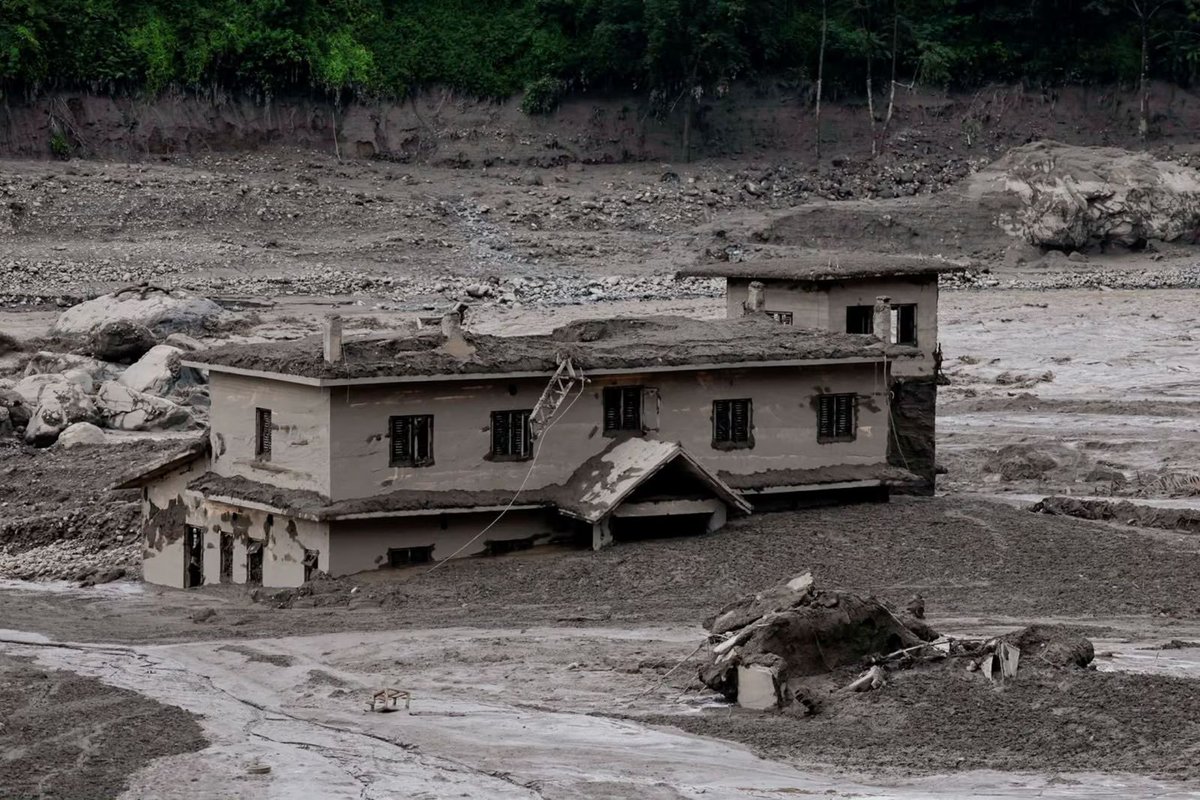
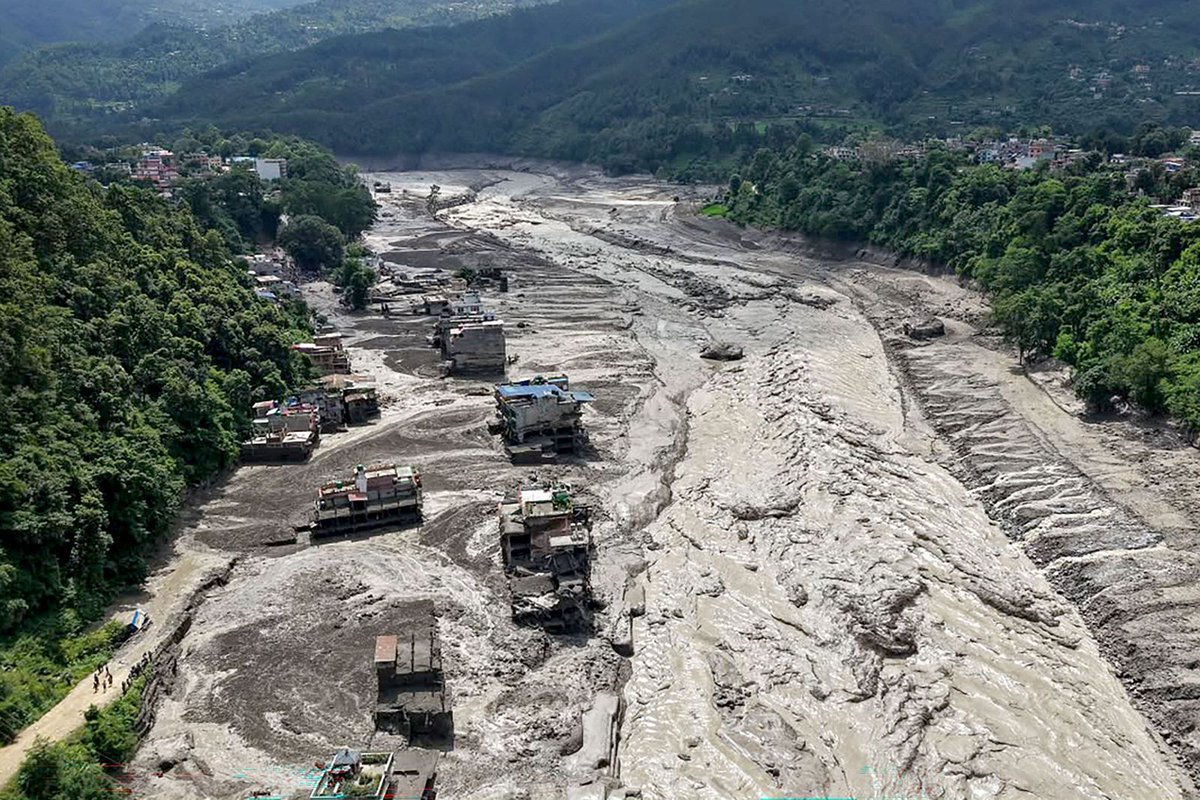
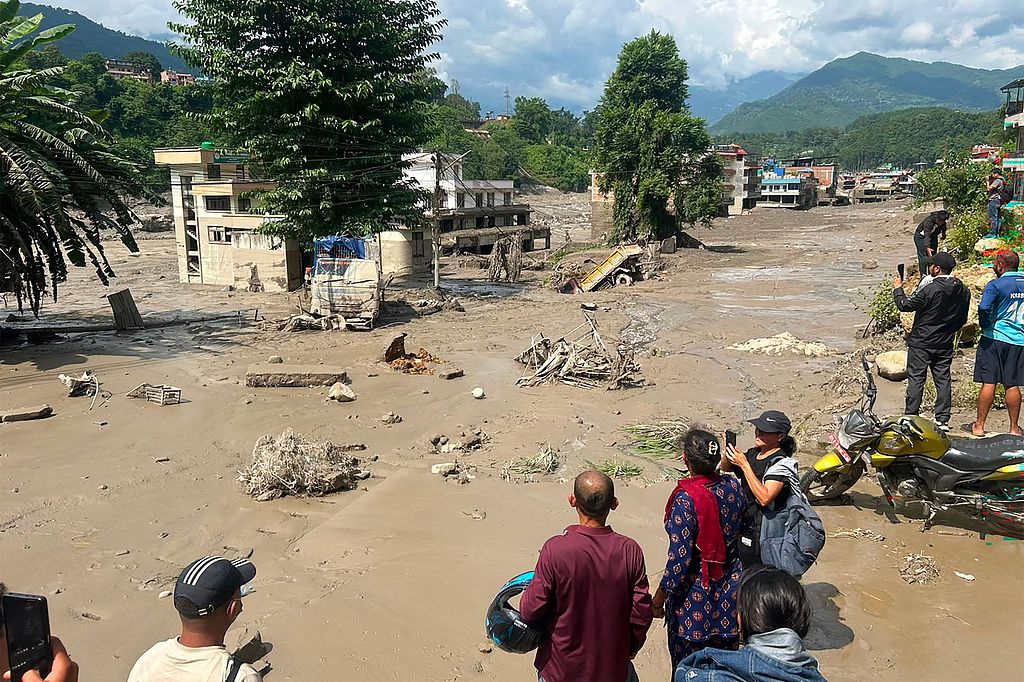
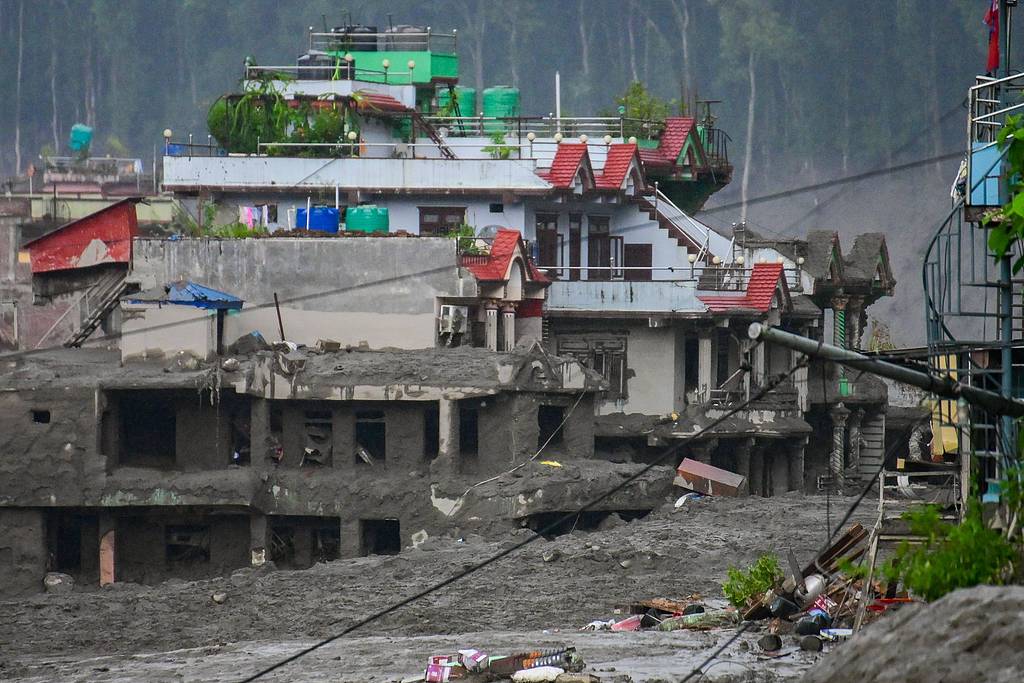
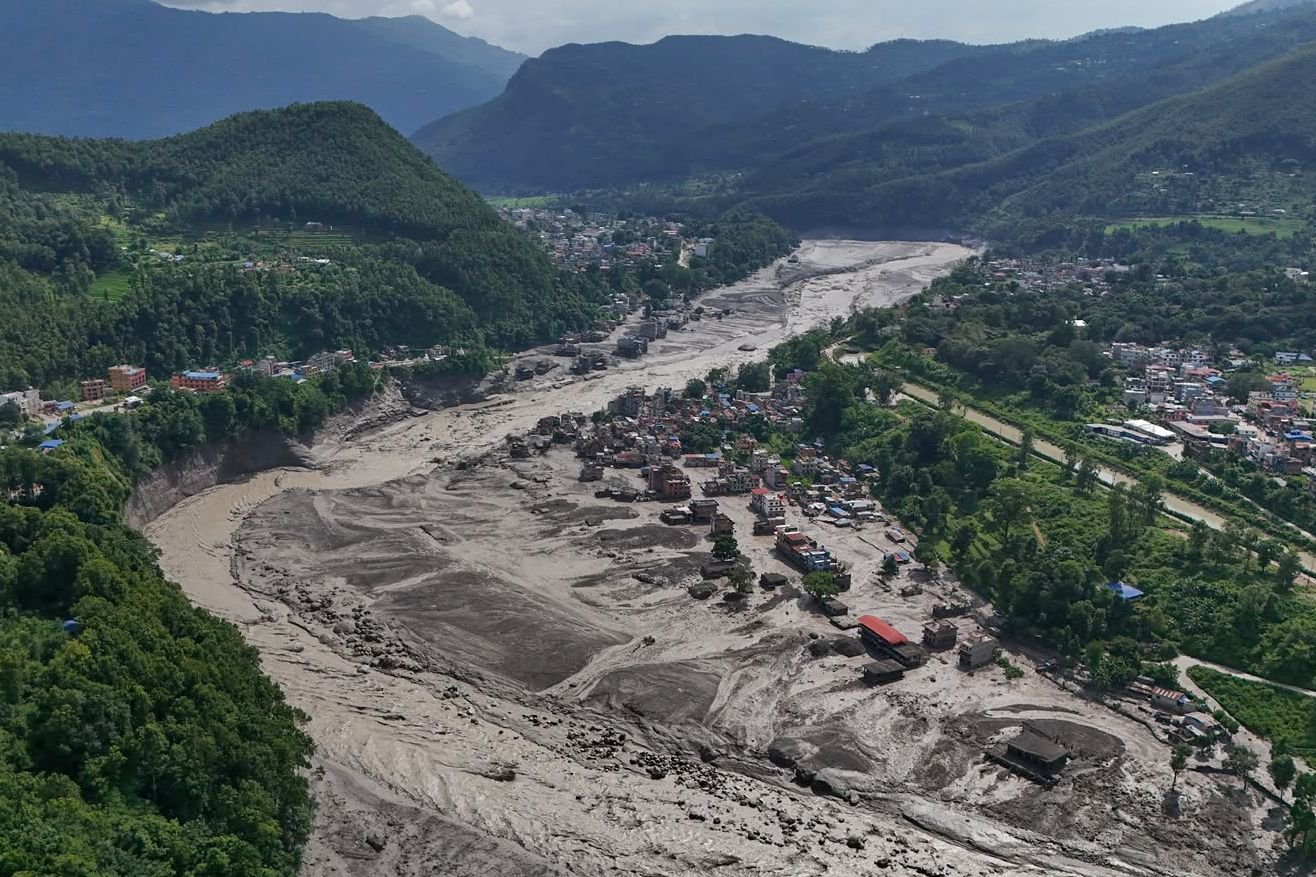
Within a short period, the landscape changed dramatically. Roads and bridges were washed away, vehicles were swept from their positions, buildings were inundated or buried beneath mud and debris, and sections of infrastructure disappeared beneath the floodwater. Images and aerial assessments showed thick layers of sediment across areas that had previously contained roads, markets and buildings.
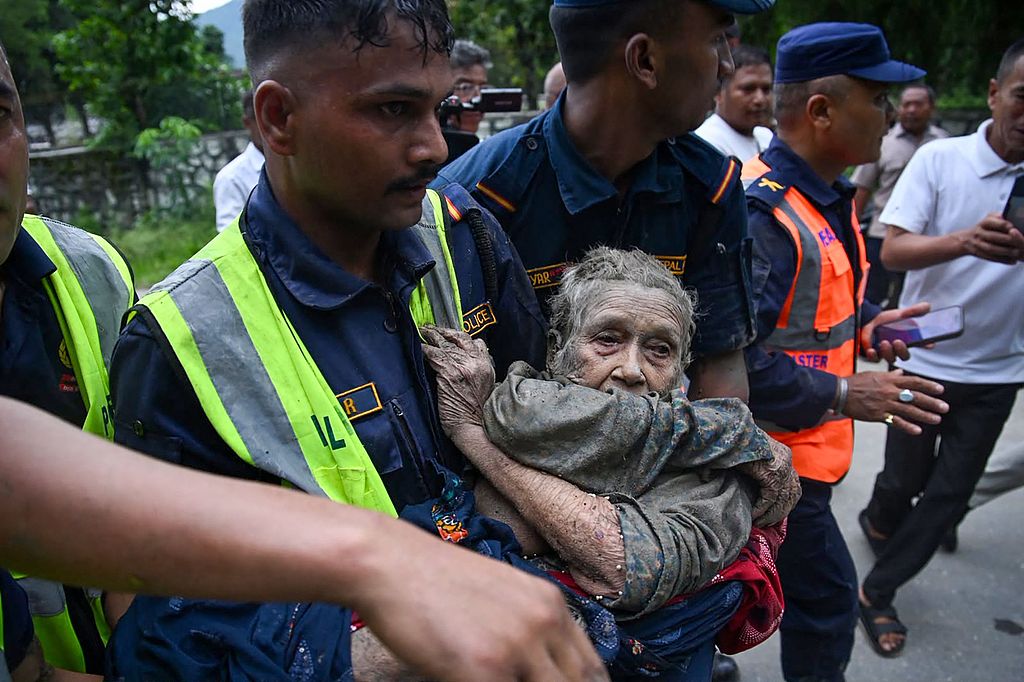
Local reporting described floodwaters reaching exceptionally high levels above the normal river channel in some locations. Survivors moved towards higher ground, while some people remained stranded on rooftops waiting for assistance. In places, the destruction was so extensive that rescuers initially struggled to determine who had survived and how many people were missing.
The damage moved far beyond Rasuwa
The disaster did not remain confined to the border district. As the flood travelled downstream through the Bhotekoshi and Trishuli river systems, communities in Nuwakot, Dhading, Chitwan and other areas were affected. Nepal Police reported fatalities across several downstream districts, demonstrating the distance over which the flood’s effects spread.
Nepal Police’s initial casualty distribution included deaths recorded in Rasuwa, Nuwakot, Dhading, Chitwan, Gorkha, Tanahun and Nawalparasi East. The numbers have continued to change as bodies are recovered and identified, making the geographical picture of the disaster broader than the initial reports from the Bhotekoshi valley suggested.
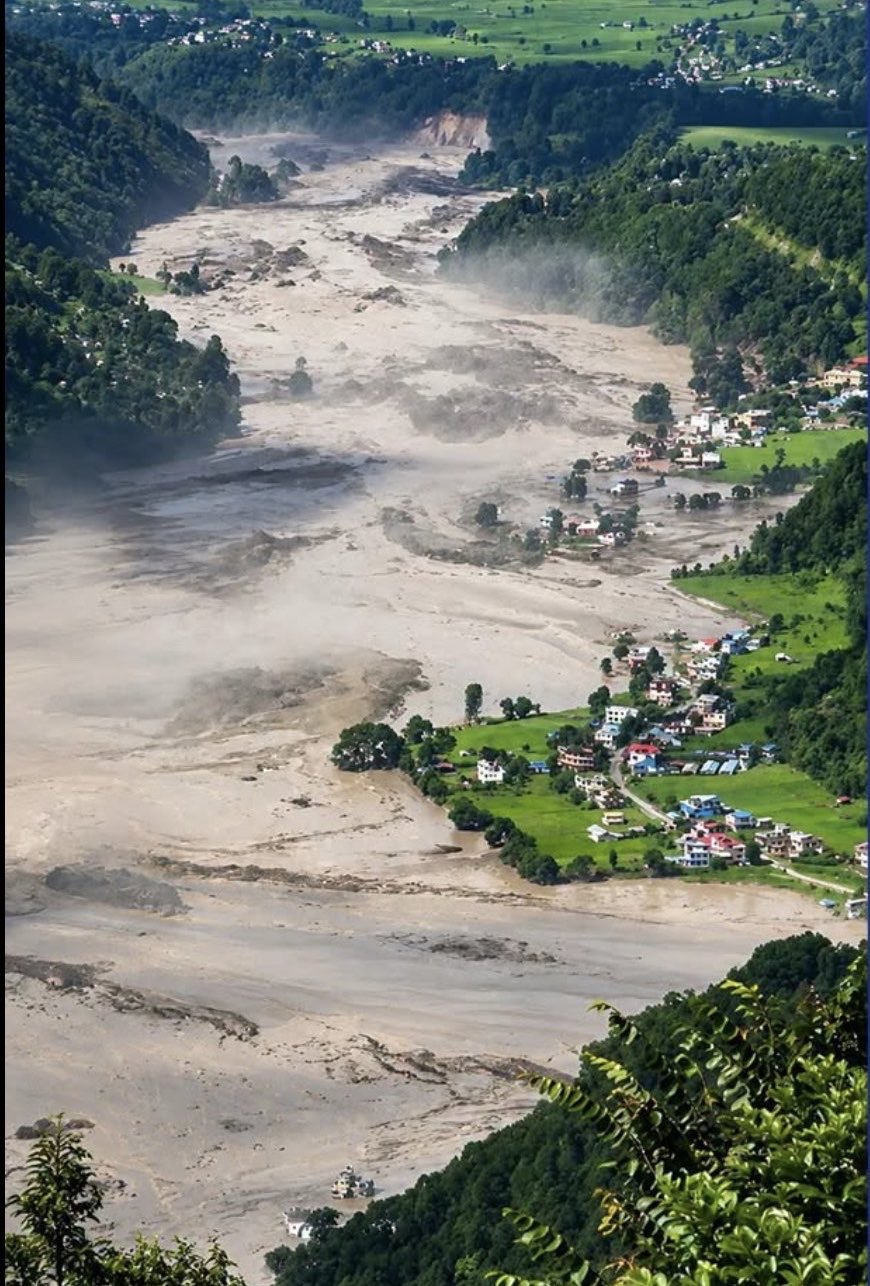
The destruction has also affected critical infrastructure. Hydropower facilities, transmission infrastructure, roads, bridges and border facilities were among the assets damaged or swept away. At least one hydropower project was reported to have been washed away, while other projects in the area were damaged.
Communities transformed within minutes
The contrast between the affected areas before and after the flood is particularly stark because many of these settlements were functioning normally when the disaster struck.
Residents in the Bhotekoshi corridor were beginning their working day on Wednesday morning when the water arrived. A local resident quoted by The Associated Press described people preparing to go to work when the flood suddenly moved through the market area. The speed of the event meant that conventional flood preparation offered little protection.
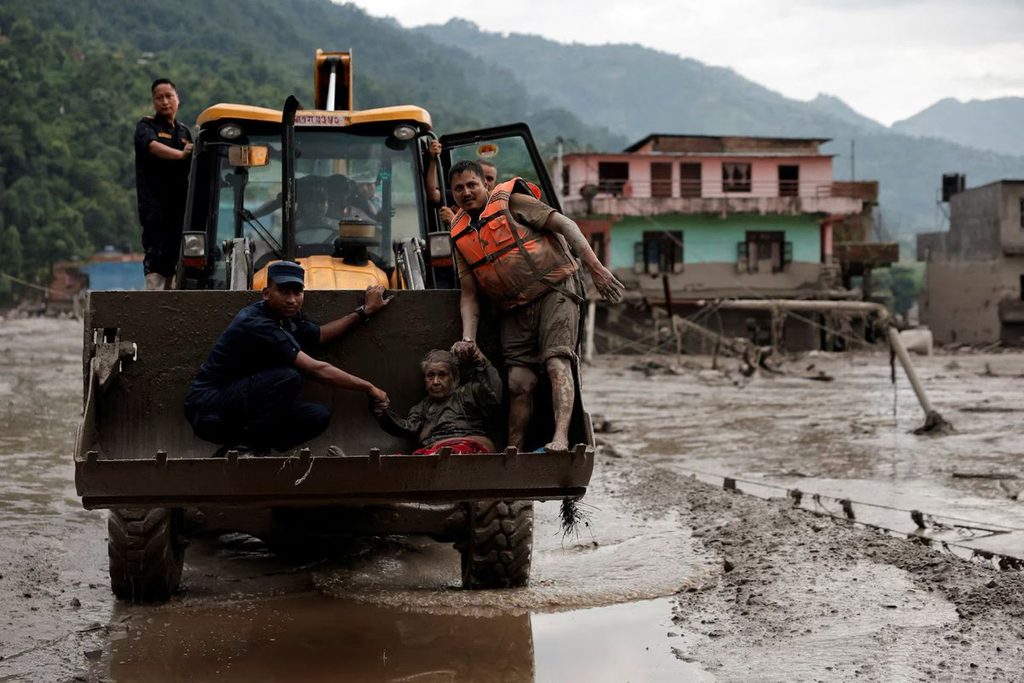
Afterwards, roads were covered with mud and debris, buildings were damaged or buried, vehicles were displaced and communications were disrupted. Photographs from Timure, Syafrubesi and other settlements showed a landscape dramatically different from the functioning commercial and residential corridor that existed before the flood.
For communities already accustomed to living with steep terrain, rivers and landslide risks, the disaster demonstrated how vulnerable Himalayan settlements can be when an unusually large volume of water and debris arrives without sufficient warning.
Hundreds remain missing
The number of people still unaccounted for is one of the most difficult aspects of the disaster.
Nepal authorities reported 403 people missing, including 341 foreign nationals, according to figures cited by The Associated Press. Those missing included 133 Indian nationals, many of whom were travelling towards Mount Kailash, as well as citizens from the United States, Australia, Britain and Canada.
The Australian connection has attracted particular attention. Australian reporting has said 34 Australians were initially listed as missing, including members of a tour group travelling in the affected region. Australian authorities have been working to establish the whereabouts and safety of citizens caught up in the disaster.
The situation is complicated by the fact that the border region is used by tourists, pilgrims, workers, traders and local residents. Some people were travelling through the area towards the Mount Kailash pilgrimage route, while others were working at hydropower and border facilities when the flood struck.
China has reported a separate and substantial number of people missing on the Tibetan side. Chinese state media reported 558 people unaccounted for, including 260 foreigners, following mudslides associated with the disaster. Three deaths had been confirmed in Tibet in the latest report. These figures relate to the Tibetan side and should be treated separately from Nepal’s missing-person count.
Search and rescue operation underway
Nepal has mobilised police, armed security personnel, medical teams, trained search dogs, drones and other emergency resources. Nepal Police said specialist teams were deployed for rescue operations, searching for missing people, recovering bodies, distributing relief supplies and clearing blocked routes.
Medical teams have also been sent into affected areas, while authorities have established coordination arrangements involving hospitals and emergency services. Search teams are particularly focused on people who remain unaccounted for, including missing police personnel and workers from hydropower projects.
The response has been complicated by the geography. The affected settlements are located in steep Himalayan valleys, where damaged roads and bridges can isolate communities rapidly. Thick sediment, debris, unstable terrain, disrupted communications and continuing bad weather have all made rescue operations more difficult. Helicopter operations have also faced challenges in reaching or landing at some severely affected locations.
Nepal Police said 28 police personnel from Rasuwa remained unaccounted for in its latest operational update, while other workers and residents were also being sought.
Why the disaster is particularly dangerous
The Bhotekoshi and Trishuli corridors are naturally vulnerable because rivers run through narrow valleys surrounded by steep Himalayan terrain. A sudden release of water from high elevations can rapidly gain destructive force as it travels downhill, carrying rocks, soil, trees and other debris with it.
That makes this type of disaster different from a conventional river flood that gradually rises over several hours or days. In this case, the initial surge reportedly arrived with little warning, giving communities limited opportunity to evacuate. The resulting mixture of water and debris was capable of destroying structures rather than simply inundating them.
The event has also renewed attention on the risks associated with rapidly changing Himalayan environments. Scientists and disaster experts have increasingly warned that warming temperatures can destabilise glaciers, increase meltwater and alter the conditions around high-altitude lakes and ice formations.
However, it would be premature to attribute this individual disaster solely to climate change without a complete scientific assessment. The immediate physical mechanism is increasingly being described as a glacial collapse, but researchers will need to determine the precise sequence of geological and hydrological events that produced the flood.
A warning from a similar event
The region is not unfamiliar with sudden flooding. The Kathmandu Post reported that a comparable event struck the Bhotekoshi River in July 2025, with Nepal’s Department of Hydrology and Meteorology concluding at the time that a glacial lake outburst in the Lhende River near the Nepal-China border had caused the flooding.
The recurrence of dangerous events in the same mountainous corridor raises questions about early-warning systems, monitoring of glaciers and glacial lakes, evacuation planning and the resilience of infrastructure serving border communities.
The current disaster has also damaged automatic flood-monitoring infrastructure in the upper Bhotekoshi area, according to Nepali reporting. That creates an additional challenge because monitoring systems are particularly important in a region where sudden changes in water levels can have severe consequences downstream.
India also watches downstream risks
The flood’s movement through the Trishuli and wider river system has implications beyond Nepal. The downstream water eventually connects with river systems flowing towards India, prompting monitoring and precautionary measures in parts of northern India.
Indian authorities and media have reported concerns about the downstream flood pulse, particularly in Bihar, where communities can be exposed to water flowing through the Nepal-linked river network. Reports said thousands of people in Bihar were evacuated or placed on alert following warnings.
This geographical connection demonstrates why a disaster originating high in the Himalayas can quickly become a regional concern. Water flowing from mountainous Nepal can affect communities hundreds of kilometres downstream, making cross-border monitoring and information sharing important during major flood events.
International response
The disaster has prompted international attention because of the large number of foreign nationals among those missing. Governments have been working with Nepalese authorities to establish the whereabouts of their citizens and support rescue efforts.
India and South Korea have been involved in coordination efforts, while the United Nations has indicated that it is preparing assistance and personnel. The international response is expected to evolve as Nepal gains better access to isolated locations and establishes a clearer picture of casualties and damage.
For Australia, the situation is particularly significant because Australians are among those reported missing. Australia’s Department of Foreign Affairs and Trade maintains information and consular assistance for Australians overseas, while authorities work to determine the circumstances affecting Australian travellers.
What happens next
The immediate priority remains finding survivors and establishing the whereabouts of missing people. Rescue teams must first reach isolated communities, clear debris and damaged roads, search collapsed structures and riverbanks, and establish safe routes for medical and humanitarian assistance.
The next phase will involve assessing damage to homes, businesses, roads, bridges, power facilities and border infrastructure. Rebuilding the region will be complicated because many of the damaged assets are located along narrow river valleys where future floods and landslides remain possible.
Authorities will also need to determine whether existing early-warning systems were sufficient and whether monitoring infrastructure can be strengthened. That includes better surveillance of glaciers, glacial lakes and unstable slopes, as well as stronger communication networks capable of reaching communities rapidly when a sudden flood threat emerges.
For the people living in Rasuwa and downstream districts, however, the immediate concern is more basic: finding missing family members, securing shelter and restoring access to food, water, healthcare and transport.
Latest situation as of 27 August 2026
As of Thursday, 27 August 2026, the confirmed death toll in Nepal stands at at least 162, according to Nepal Police reporting cited by international media. Hundreds remain unaccounted for, while authorities continue identification and search operations. China has separately reported three deaths and 558 missing people on the Tibetan side.
The casualty figures are expected to change as rescue teams reach more remote areas. The number of missing people is also subject to revision because authorities are still reconciling information from residents, tourists, pilgrimage groups, employers, security agencies and border authorities.
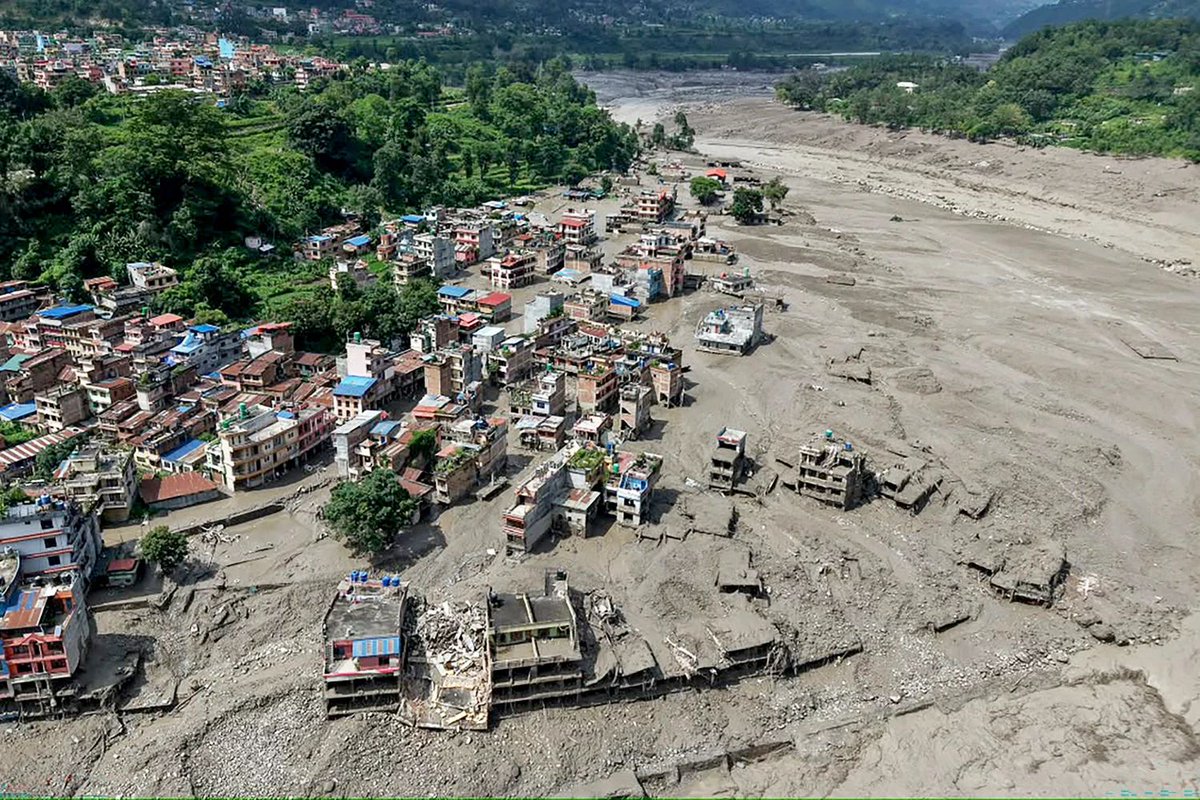
The disaster has left a trail of destruction stretching from the Nepal-China border through Rasuwa and into downstream districts. What began as a sudden high-altitude geological and glacial event has become a national emergency involving loss of life, international travellers, damaged infrastructure, disrupted trade and a major search-and-rescue operation.
For Nepal, the flood is now not only a rescue challenge but also a warning about the increasing complexity of hazards in the Himalayas. The recovery will require emergency relief in the short term and careful reconstruction, environmental monitoring and disaster preparedness in the years ahead.
Emergency assistance for Australians in Nepal
Australians requiring urgent consular assistance can contact the Australian Government’s 24-hour Consular Emergency Centre on 1300 555 135 within Australia or +61 2 6261 3305 from overseas. The Australian Embassy in Kathmandu can also be contacted on +977 1 437 1678.
Desi Australia will continue to update this story as authorities release verified casualty figures, information about missing nationals and further details about the cause and impact of the disaster.