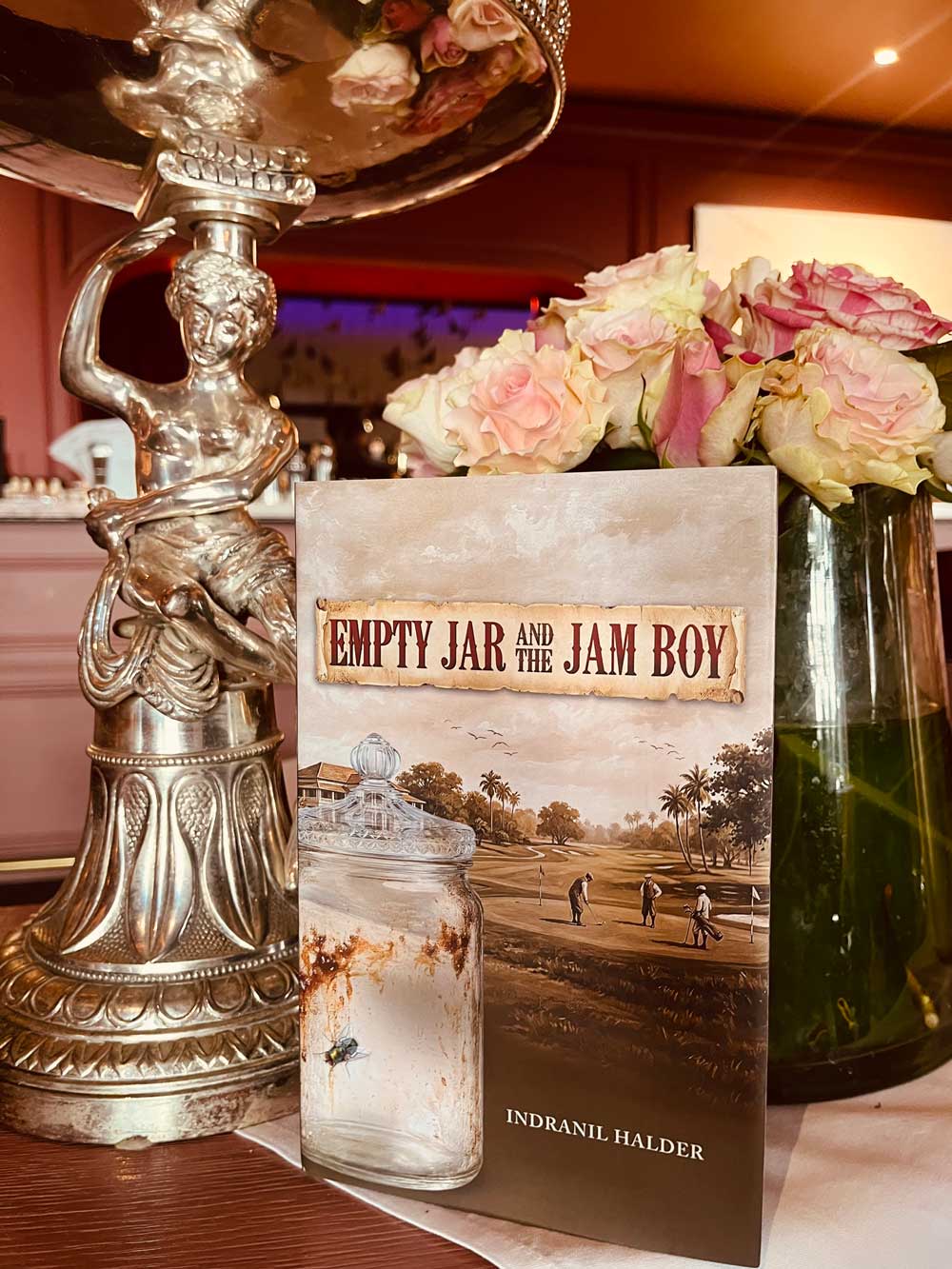
A new work of historical fiction, Empty Jar & The Jam Boy, by author Indranil Halder, takes readers deep into the extraordinary history of 19th-century Bengal, combining commerce, colonialism, art, folklore and personal tragedy. Set against the backdrop of a rapidly changing Bengal, the book explores both the immense prosperity of the region and the human stories hidden beneath its transformation.
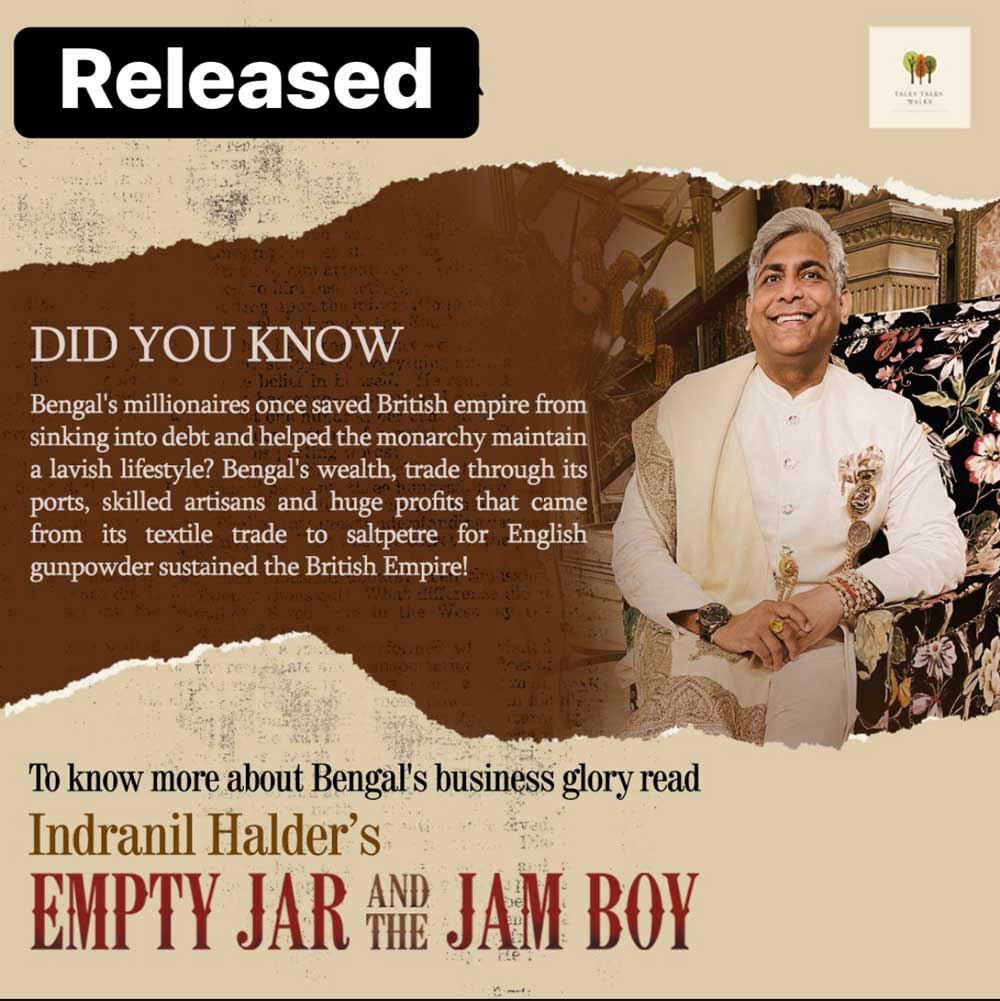
At the heart of the book is the metaphor of the “Empty Jar”, representing Bengal itself. The narrative presents Bengal as a region that had once been a major centre of wealth, agriculture, craftsmanship and international trade. Its fertile land, renowned textiles and skilled artisans attracted merchants from different parts of the world, creating a commercial landscape that connected Bengal with wider international markets.
The book then examines the forces that gradually transformed that prosperity. According to its premise, successive invasions, exploitative economic policies, devastating famines and eventual partitions contributed to the hollowing out of Bengal’s economic strength. It also explores how revenue and local resources were channelled during British rule, placing Bengal within the larger economic expansion of the British Empire.
Running alongside this larger historical narrative is “The Jam Boy”, a darker and more intimate story rooted in colonial Calcutta. The book draws on a haunting piece of folklore and follows Hori, a young man whose life changes dramatically as he moves from a quiet Bengal village into the extraordinary world of 19th-century Calcutta.
The story begins around the arrival of Lord Canning and his wife in Bengal. One of the parallel narratives follows the ambitious development of Port Canning on the Matla River, a project associated with Lord Canning and supported by members of Bengal’s business community. Alongside this commercial ambition, his wife pursues an artistic interest in Bengal’s flora and fauna, with assistance from a young local man named Hori.
The narrative unfolds against a period of extraordinary global disruption. The story references the Panic of 1857, described in the book’s framing as an early interconnected financial crisis, as well as London’s notorious Great Stink of 1858. The destruction of Canning Port by a cyclone in the Bay of Bengal further changes the course of events and becomes part of the turbulent backdrop surrounding Hori’s journey.
Hori eventually travels from rural Bengal towards Calcutta, a city portrayed through its extraordinary wealth, architecture, commerce and cultural life. The book brings attention to landmarks and establishments associated with the city’s colonial-era grandeur, including Rainey Castle, once located on Ballygunge Circular Road, and Spence’s Hotel, described in the supplied material as Asia’s first hotel.

Another historical setting highlighted in the book is the Felicity Room in Murshidabad, which is presented as a venue where elite gatherings, important meetings and significant business discussions once took place. Through such locations, Empty Jar & The Jam Boy seeks to recreate a Calcutta and Bengal that were deeply connected to international commerce and cultural exchange.
Art also occupies an important place in the story’s depiction of Calcutta. The city attracted artists who attempted to capture its architecture, landscapes and extraordinary urban character. The book refers to Robert Burford, whose panoramas included Calcutta alongside cities such as Paris, Quebec and Hobart, as well as William Wood, who created a series of 28 panoramic lithographic views titled Views of Calcutta.
The narrative also recalls Jacob Janssen, the Prussian-born artist whose view of Calcutta was exhibited in 1841 and subsequently received attention in Australia’s Sydney Gazette. These artistic references reinforce one of the book’s central themes: Calcutta was not simply a colonial administrative centre but a city whose scale, wealth and visual character attracted international attention.
Yet beneath the prosperity and prestige lies Hori’s increasingly difficult personal experience. The story follows the contrast between Calcutta’s extraordinary commercial and cultural world and the experiences of an individual caught within the social realities of colonial Bengal. Ultimately, a series of cruel and systemic experiences leads Hori to make the painful decision to leave his homeland behind.
That tension between prosperity and loss forms the emotional core of Empty Jar & The Jam Boy. The book asks readers to look beyond the grand buildings, commercial success and historical narratives surrounding colonial Bengal and consider the people whose lives were shaped by the same forces.
The book was launched on 8 August 2026 and is authored by Indranil Halder, with Saheli Mitra of Kolkata serving as editor. It is published by Virasat Art Publication, Kolkata. Future editions are reportedly being prepared in Bengali, French and Chinese, with an audiobook release also in development.
For international readers, the book is being made available through online retailers including Amazon and Blue Pencil, while the publisher is also taking direct orders. In India, the book is listed for availability through established Kolkata bookstores including Dasgupta, U.N. Dhur & Sons, Chakrabarti & Chatterjee, Oxford Book Store, STORY Bookstore and The Book Nook.
Readers in West Bengal will also be able to look for the book at literary and cultural events including the Shobhabazar Rajbari Book Festival, Berhampore Book Festival and the International Kolkata Book Fair. In Australia, the supplied publication information lists Harry Hartog in Sydney as a location where readers can find the book, while Barnes & Noble in New York is listed for readers in the United States.
Ultimately, Empty Jar & The Jam Boy presents an invitation to rediscover Bengal through the intersection of history and fiction. Its story moves between commerce and folklore, palaces and villages, artists and businessmen, global financial developments and deeply personal experiences. At its centre is one enduring question: why did Hori leave Calcutta despite living in a city associated with extraordinary prosperity, prestige and power?
For readers interested in Bengal’s history, colonial Calcutta, Indian art, forgotten landmarks and historical fiction, the book offers a journey into a world that has largely disappeared — while placing a deeply personal human story at the centre of that history.
Book Details
Title: Empty Jar & The Jam Boy
Author: Indranil Halder
Editor: Saheli Mitra, Kolkata
Publisher: Virasat Art Publication, Kolkata
Launch Date: 8 August 2026
Future Editions: Bengali, French and Chinese translations; audiobook in preparation

Indranil Halder
Corporate Medical Sales Consultant, Global Heritage Tourist, Writer, Video Producer, former ambassador for the India Australia Business & Community Alliance (IABCA) and polo enthusiast.